DbcultAccessing Vault...
4.8/10
Senior Film Conservator
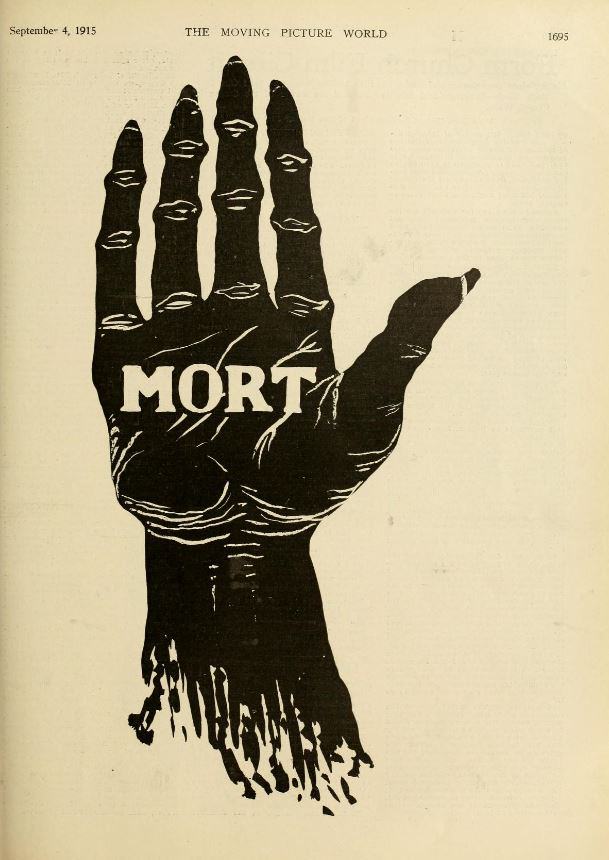
A definitive 4.8/10 rating for a film that redefined the boundaries of cult cinema. Mortmain remains a cornerstone of transgressive art.
Mortmain arrives like a moth-eaten confession found wedged behind a velvet arras—sepia, sibilant, reeking of carbolic and rosewater. The picture is quintessentially 1915: gaslit interiors painted onto glass, irised close-ups that bloom and wither like bruised lilies, and title cards bristling with Victorian periphrasis. Yet beneath the nickelodeon quaintness squirms something surprisingly modern—an anxiety that limbs might become commodities, that identity may be repossessed as casually as a past-due automobile.
Director Marguerite Bertsch, seldom celebrated outside archival footnotes, orchestrates this danse macabre with a suffragette’s defiance. She understands that the true horror is not the grafting of bone to bone but the mortgaging of affection, the collateral of love. Notice how she frames Russell’s first entrance: a diagonal shaft of top-light carves his cheekbones into usurer’s calipers, while the backdrop’s arabesque wallpaper seems to coil like unpaid interest. The visual grammar announces the theme—debt—long before the characters mouth the word.
Arthur Chesney Train’s scenario, distilled from his own pulp novella, is a Rube Goldberg contraption of coincidence, yet Bertsch slows the gears so we feel every tooth. The surgeon’s lecture, for instance, is lingered over: forceps gleam like secular reliquaries; students’ eyes glaze with quasi-religious hunger. The film suspends us between miracle and violation—exactly where Mortmain himself will soon dangle.
Robert Edeson’s Mortmain is a study in velvet decrepitude. His monocle does not merely glint; it accuses, reflecting creditors’ tallies superimposed on the iris. Watch the moment Flynt utters the word “ruined.” Edeson’s shoulders sag as though the spine itself were repossessed; his left eyebrow arches with the brittle elegance of a cracked Meissen cup. Because silent acting so often tips into hieroglyphic excess, Edeson’s restraint feels almost shockingly intimate—like stumbling upon a stranger’s suicide note in a library book.
Donald Hall’s Dr. Crisp provides the counterweight—rational, brisk, a man who believes ethics are soluble in alcohol. Hall swaggers through the operating theatre as if he owns evolution itself, yet his eyes betray a collector’s lust akin to Mortmain’s. He does not want to heal; he wants to possess the patent on transfiguration. The film’s most chilling cut juxtaposes Crisp’s gloved hand with Mortmain’s amputated wrist: two forms of ownership clasped across the abyss of consent.
Bella Forsythe, essayed by Muriel Ostriche, could have been mere chattel in a boys’ morality play. Instead she flickers with unspoken calculations. In the engagement scene her smile arrives a half-second late, as though minted under duress; the spectator senses a mind tabulating escape routes. Ostriche lets ambiguity fester—does Bella love the wastrel, or does she barter herself for her brother’s skin? That the film refuses to answer is its canny feminist feint.
Cinematographer Lucien Andriot, later famed for sun-drenched westerns, here revels in tenebrism worthy of de la Tour. Notice the nocturnal street outside Russell’s townhouse: fog smothers the arc-lights until they resemble infected moons. Mortmain’s carriage glides through the murk like a hearse borrowed from Doré. These textures anticipate the Germanic nightmare of Die Doppelnatur yet remain rooted in Anglo-Saxon guilt.
Interior spaces are equally eloquent. Russell’s study is a mausoleum of Empire: tiger-skin rug with snarling head, escritoire bursting with parchment ultimatums, a clock whose pendulum beats like a metronome for debtor’s prison. When Mortmain receives his fiscal death-sentence, Bertsch blocks him before a gilt mirror; the camera holds until his reflection becomes a doppelgänger of insolvency. One thinks of Poe’s William Wilson, or of the doppleganger motif threaded through The Tangle.
Archival records suggest the picture toured with a prepared score for theatre organ: a Gallic waltz under the courtship, a staccato scherzo during the operation. Contemporary restorations often substitute a drone of string harmonics, evoking the thrum of ether. I recommend viewing with headphones; the absence of synchronized speech allows the spectator’s own pulse to inhabit the soundtrack, so that when Mortmain’s new hand clenches, you feel a sympathetic twitch in your metacarpals—a corporeal echo worthy of Cooee and the Echo.
Yes, the final reel reveals the amputation, the death of Tom, the transfusion of guilt—all a fever dream. Cue dismissive harrumphs about “it was only a dream” rug-pulls. Yet the device feels earned because the film’s visual rhetoric has primed us for epistemological slippage. Early on, when Crisp displays a bisected forearm preserved in spirits, the specimen drifts eerily across the jar—a subtle superimposition that destabilizes documentary veracity. Likewise, intertitles shrink, enlarge, tremble, as though printed on flayed parchment. By the time Mortmain’s hallucination arrives, we inhabit a world where flesh and phantasm negotiate joint custody of reality.
Compare this strategy to Through Dante’s Flames, where dream merely provides a loophole for censorship; in Mortmain the dream is the moral reckoning, the moment conscience sutures itself to the body politic.
Silent melodrama habitually treats heroines as promissory notes passed from father to husband. Bertsch complicates the ledger. Bella’s body becomes collateral, yet she negotiates terms, however desperately. In one intertitle she declares, “I will marry Mortmain to erase my brother’s IOUs,” the verb “erase” striking a proto-feminist note—marriage as white-out. Later, when she believes Tom dead, her scream is not decorative but fiscal: the bankruptcy of the last family asset. The film indicts a society where solvency is gendered masculine, insolvency feminine—a critique sharper than anything in the more bucolic Sweet Alyssum.
Unmentioned yet hovering is the imperial context. Crisp’s medical breakthrough occurs in a city whose wealth flows from Caribbean sugar, Indian cotton, South African diamonds. The donor arm—Tom’s—symbolizes expendable colonial muscle feeding the metropole’s desire for reassembly. The operation is filmed like a sacrificial rite: dark-skinned orderlies glide in periphery, anonymous, while white genius claims the graft. Thus the film whispers what Uncle Tom’s Cabin shouts: bodies trafficked, re-commodified, re-territorialized.
If The Might of Gold treats avarice as spectacle, Mortmain treats debt as ontology. In the former, wealth glitters; here it festers. Similarly, For $5,000 a Year flirts with the same amount Russell demands, yet that film resolves through comic restitution; Bertsch denies such absolution.
And beside the Russian epics—War and Peace or Madame Butterfly—this chamber piece looks modest. Yet its very claustrophobia intensifies the ethical pressure-cooker, prefiguring the domestic sadism of When It Strikes Home.
The script leans on coincidence the way a drunk steadies himself on cemetery railings. Flaggs’ motivation—resentment over a minor slight—feels undernourished. The comic relief ushered in by Joseph Weber’s bumbling notary belongs to another film, puncturing the cadaverous mood. And the racialized extras, alas, remain footnotes.
Yet these cracks hardly fracture the porcelain; they merely remind us the vessel is human-forged.
What lingers is the film’s central oxymoron: ownership of body parts divorced from ownership of self. Mortmain begins as proprietor of curios, ends as a curiosity—his own limb re-possessed by the nightmare of debt. The graft, supposedly liberating, becomes a debtor’s shackle, a memento vivere inked in scar-tissue.
In an age of transplanted faces, 3-D printed organs, and biometric mortgages, Mortmain reads less like antique hokum than prophetic fever-chart. It cautions that when bodies enter the marketplace, the soul is the final collateral, and foreclosure is eternal.
Seek it out on the festival circuit, on 16 mm in a repurposed chapel, on a streaming platform that smells of nitrate and neglect. Let its shadows crawl under your epidermis; let its yellowed intertitles audit your own ledger of affections. You will leave the theatre rubbing your wrists, half-certain the hand you call yours carries an unpaid balance.
IMDb 5.2
1930
Community
Log in to comment.