DbcultAccessing Vault...
2.9/10
Senior Film Conservator
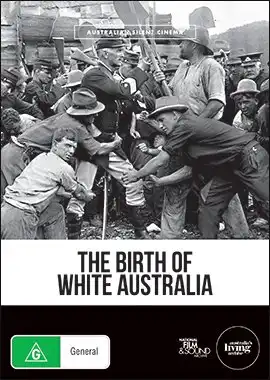
A definitive 2.9/10 rating for a film that redefined the boundaries of cult cinema. The Birth of White Australia remains a cornerstone of transgressive art.
Okay, so right off the bat, this isn't exactly a casual Friday night flick.
If you're into early Australian cinema, or maybe you're a history buff curious about the roots of some really uncomfortable national policies, then sure, give it a look.
But if you're hoping for anything remotely entertaining by modern standards, or if you're not prepared for some deeply problematic messaging, you'll probably want to give The Birth of White Australia a wide berth.
This silent film from 1912 takes us back to the 1861 gold rush in what was then called Lambing Flat. It's about the very real, very ugly riots where Chinese miners were attacked and pushed out of the goldfields. The film then tries to paint this moment as the "birth" of the White Australia policy. Yeah, that policy.
It's a strange experience to watch. The whole thing feels like a staged play more than a film, with actors like Frank Hardingham and Rita Aslim doing these big, sweeping gestures that were typical for the era. The intertitles, which pop up every few seconds, really drive home the film's agenda, leaving little room for interpretation.
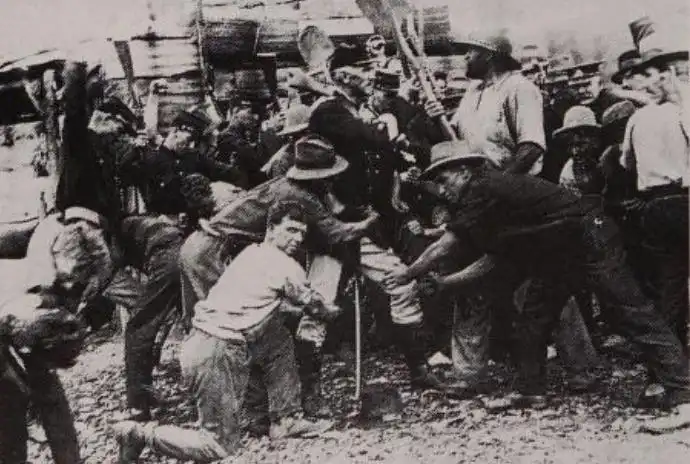
There's a scene, or rather a series of shots, depicting the actual riot. The "Australian" miners, portrayed as these robust, determined figures, charge into the diggings. The Chinese miners, in contrast, seem almost like props, scrambling and fleeing in what feels like a rather chaotic, yet oddly choreographed, panic.
One shot lingers on an Australian miner, almost heroic, raising a pickaxe. It’s supposed to be a moment of triumph, but from today's vantage point, it feels heavy and wrong. You can almost feel the movie trying to convince you this moment matters in a positive way.
The production itself is pretty simple. Outdoor scenes on what looks like actual fields. The crowd scenes have this oddly empty feeling sometimes, like they didn't quite have enough extras to fill the frame for the "massive riot" they wanted to show.
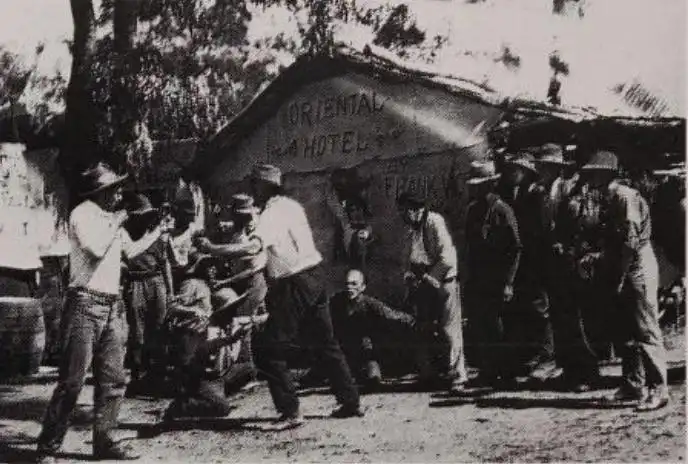
What's striking is how unapologetic it is. The film isn't just documenting history; it’s arguing a point. It sets up the conflict, presents the "solution" (driving out the Chinese), and then frames this as a foundational moment for a national identity.
It's a tough watch because of the subject, but also because it is a silent film. The pacing is deliberate, sometimes painfully slow. Every action feels stretched out, and you have to read a lot.
The performances by the named actors, like Pietro Sosso, are hard to judge by modern standards. Everyone is very expressive, often to an almost comical degree. It’s hard to tell if someone is just very sad or about to sneeze, sometimes.
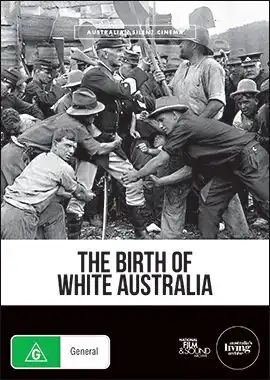
This film is less about enjoying a story and more about understanding a particular mindset from over a century ago. It’s a document, really. A snapshot of a time when these ideas were being pushed quite openly.
It's a stark reminder of how narratives are constructed, especially early on in a nation's history. And it’s a good example of how film, even in its infancy, was used to shape public opinion. Not necessarily for the better, in this case.
Did I enjoy it? No, not really. But was it interesting? Absolutely. Like looking at an old, faded, but really important and frankly, quite disturbing, photograph. 🖼️
IMDb —
1922
Community
Log in to comment.