DbcultAccessing Vault...
Cult Review
Senior Film Conservator
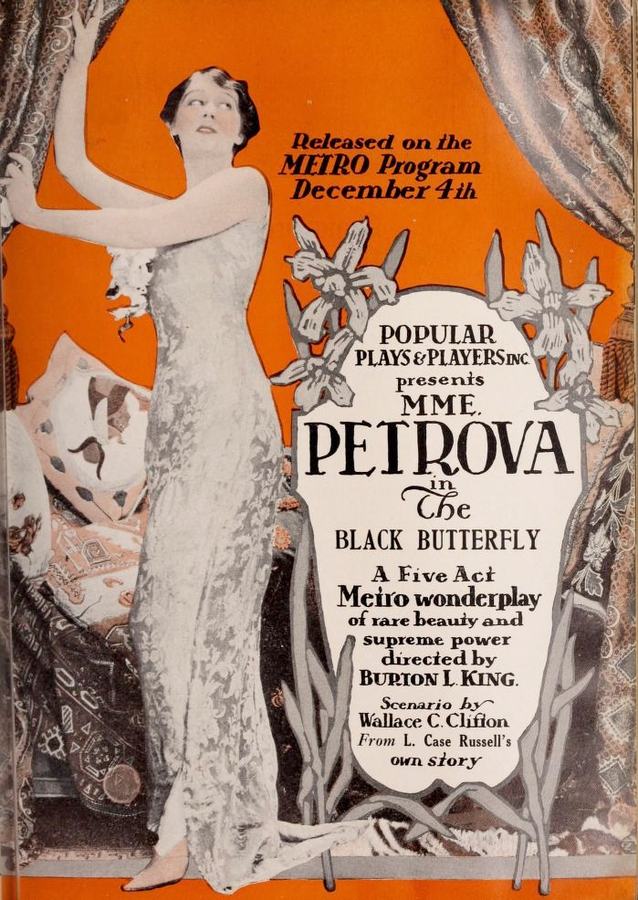
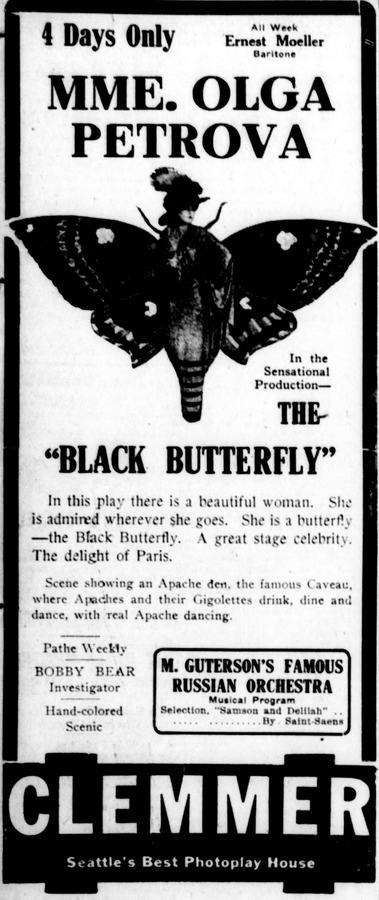
The first time we see Olga Petrova’s face in The Black Butterfly, the image is inverted: a reflection rippling inside a grand-piano lid so polished it behaves like obsidian. The camera tilts, the watery double shivers, and for a heartbeat the star is literally beside herself—an omen stitched into the celluloid. It’s 1926, and most silent vehicles still treat their divas as porcelain cameos; Petrova, co-writing under the pseudonym Wallace Clifton, instead demands that her character be shattered, re-melted, re-cast. What emerges is a heroine who weaponizes her own trauma, a soprano whose high-C can scald.
Set designers Count Lewenhaupt and Jack Hopkins drench the Opéra Garnier in tenebrous hues—indigo balustrades, blood-claret curtains, gas-jets trimmed so low they exhale aureoles of poisoned amber. Into this chiaroscuro strolls Edward Brennan’s Alan Hall, shoulders squared like someone who has read Hemingway early and believed every syllable. Brennan’s physical vocabulary is all fidget and flare: hands buried in coat pockets, then suddenly flung outward as though expecting the world to hand back his memories. The contrast between Petrova’s regal stillness and Brennan’s kinetic guilt electrifies every tableau.
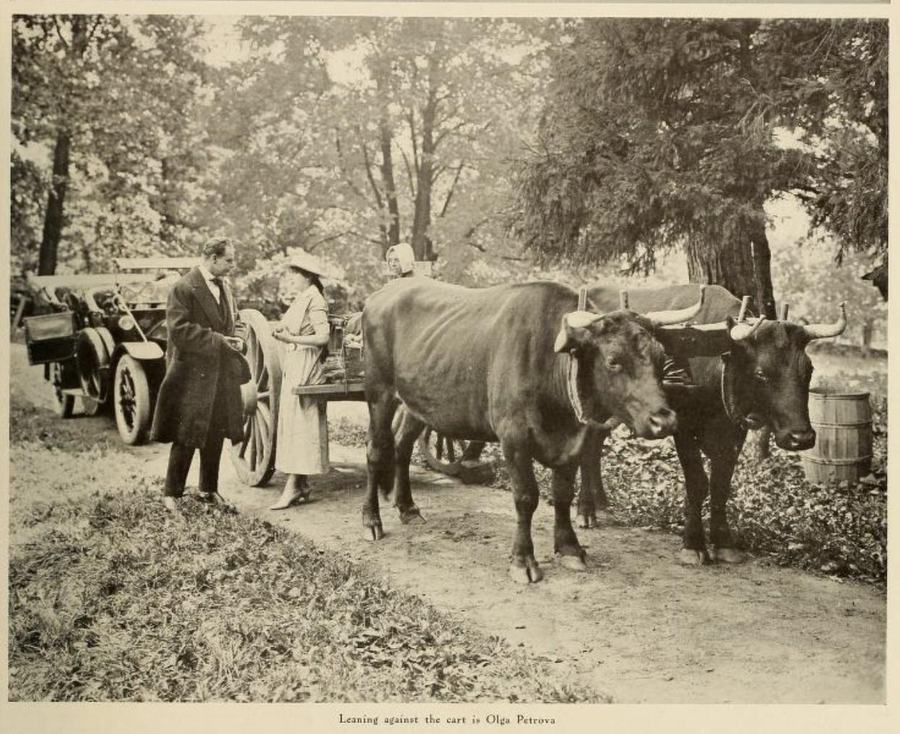
Rather than unfurl a linear yarn, director Tony Merlo scratches history into the present moment. Letters arrive already half-burned; flashbacks bleed through the current scene like wet ink on a folded letter. The screenplay—co-penned by Lillian Case Russell—respects the audience enough to let us piece the timeline together from scorched fragments. When Sonia discovers the parish ledger, the film superimposes her child-self (a luminous Violet Reed) over the adult diva, two temporal ghosts occupying one silhouette. The effect predates the triptych overlays in The Coiners’ Game by a full year, yet feels eerily modern, as though someone had slipped a lost reel of Resnais into the canister.
Without divulging every filigreed twist, the ledger reveals that Alan’s lost peasant girl and Sonia’s sister were one and the same—Evelyn Dumo in a dual role that requires her to die twice on screen, once by famine and once by narrative inevitability. The cruelty lies not in coincidence but in class: the same agrarian catastrophe that elevated Sonia into a Parisian starlet erased her sibling from earthly memory. Petrova’s eyes register this recognition with the faintest tremor of stage-mascara, a quiver you might miss if you blink. It is the silent era’s answer to the unmasking moment in The Purple Mask, only here the mask is genealogy.
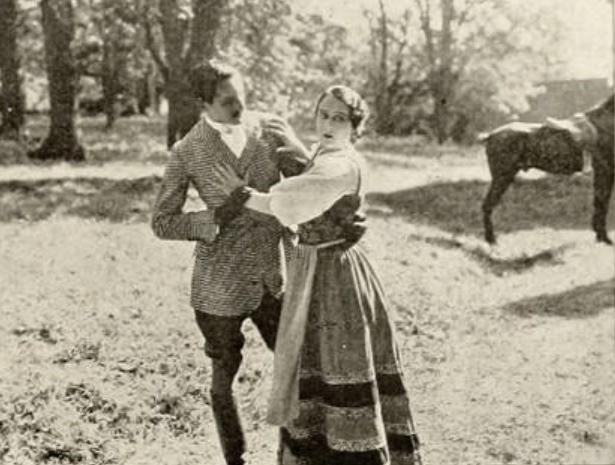
Cinematographer Norman Kerry employs magnesium flares to bleach the opera-house interior during rehearsal sequences, then dials down to near-noir once the lovers tryst backstage. The shift is not merely atmospheric; it charts Sonia’s moral descent. Each time she approaches the truth of the ledger, the frame edges darken, as though the screen itself were being singed. By the climactic Lucia di Lammermoor mad scene, the image is almost entirely backlit: Petrova a black cut-out against a wall of white flame, her arms elongated by fluttering capes that mimic lepidopteran wings. The moment quotes both Artaud’s Theatre of Cruelty and Goya’s Disasters of War, yet never feels ostentatious because the film has earned its operatics.
“To sing is to remember in flames.”
—Sonia’s handwritten note, slipped into Alan’s coat
Silent acting often lives or dies on the sternum: shoulders thrown back for valor, caved inward for shame. Petrova works instead with the muscles surrounding the mouth. Watch the instant she confronts Alan—her lower lip slackens, not in sensuality but in the momentary anesthesia of grief. Then, almost imperceptibly, the left corner tightens, forming a half-smile that knows too much. It is the expression of someone who has already rehearsed this conversation in the asylum of her own skull. Brennan, meanwhile, channels Keaton’s stone-face but allows tremors to leak through clenched fists. Their physical clash beside the prompter’s box is staged like a Balanchine fight: every swing punctuated by orchestral rests, bodies synchronized even in hatred.
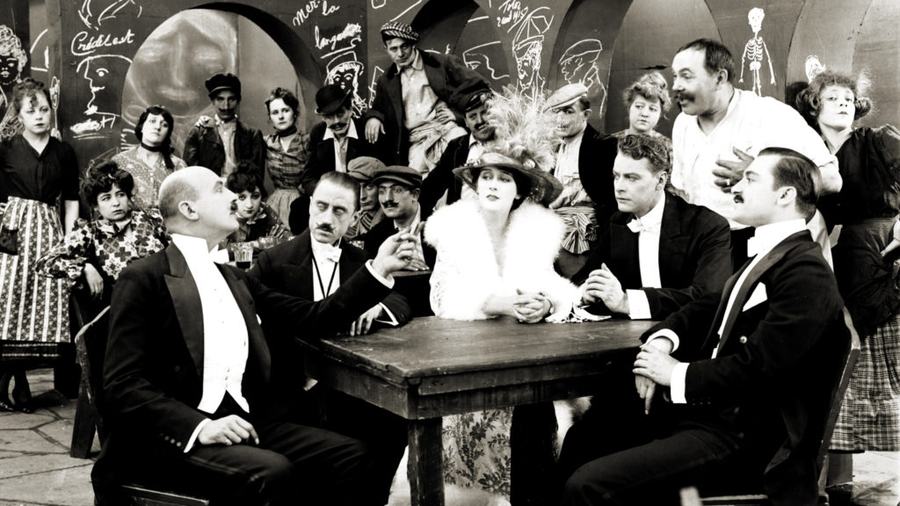
Mahlon Hamilton plays the Opéra’s impresario with the oil-slick charm of a man who monetizes heartbreak. His monocle catches the footlights so often it becomes a secondary spotlight, a capitalist sun. Roy Pilcher’s stagehand lurks in catwalks, forever mending velvet ropes that soon will bind doors shut during the inferno. Their presence reminds us that institutions—these grand edifices of culture—are equally complicit, feeding on rural dispossession to fuel urban spectacle.
Though devoid of spoken dialogue, the film is scored for the mind. Intertitles arrive sparingly, often in verse:
“In the coal of night / a butterfly is blacker than the mine.”
Between these epigrams, Merlo cuts to close-ups of machinery: the orchestra pit’s timpani pedals, the carbon-arc projector’s sprockets, the gas-jet cocks being turned by unseen hands. The montage creates an internal rhythm, a kind of phantom soundtrack that pulses louder than any theatre organ. Critics who compared it to the seismic montage in Temblor de 1911 en México missed the point—Merlo is not illustrating disaster but manufacturing anticipation, letting dread accumulate like lint until a single spark can set it ablaze.
Post-war audiences were obsessed with the femme fatale, yet Petrova refuses the archetype’s punitive arc. Sonia does not die for her transgressions; she chooses who dies with her. The film flirts with the Medea myth—maternal vengeance transposed onto sororal bonds—but modernizes it through class consciousness. Her final aria is not a swan song but a battle cry hurled against the footlights that turned starvation into commodity. In that sense, The Black Butterfly is closer to the proletarian rage of The War Extra than to the reactionary moralism of The Eagle’s Mate.
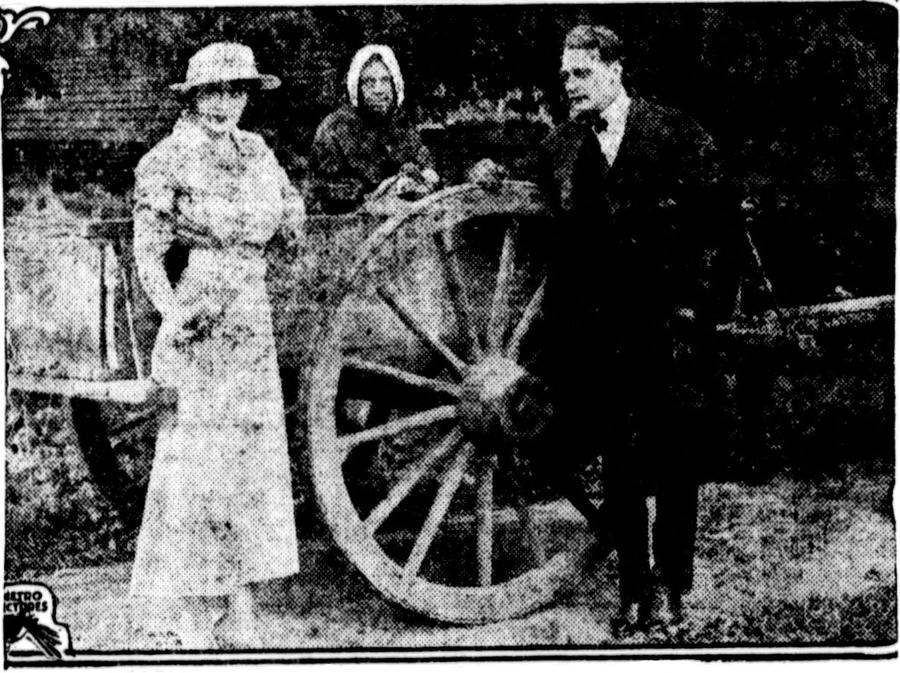
Modern viewers will detect pre-echoes of Phantom of the Paradise’s combustible finale, of Suspiria’s coven-in-a-curtain, even of Aronofsky’s Black Swan—another tale of a performer whose body becomes the stage. Yet Petrova’s script is more radical: it indicts the audience itself. As the last reel consumes itself in nitrate flames, the camera tilts toward the auditorium’s empty seats, implicating whoever watches. We are the voyeurs who purchased tickets to poverty repurposed as aria, who fetishize peasant pain so long as it trills in coloratura.
For decades the only surviving print was a 9.5mm pathé-baby abridgement in a Dutch convent archive. A 2022 4K restoration by Eye Filmmuseum reinstated the original tinting—amber for interiors, viridian for exteriors, rose for the ball—based on Petrova’s personal promptbook discovered in a New Jersey attic. The nitrate’s vinegar syndrome was halted via Tri-X bleach-neutralization, a process that paradoxically renders blacks even deeper, so Petrova’s silhouette now resembles a hole punched in reality. Streamers can find the restoration on boutique labels, though beware public-domain rips that wash the image in murky gray, eviscerating Kerry’s chiaroscuro.
If you crave a silent film that snarls rather than simpers, that trades melodrama for thermodynamic fury, queue up The Black Butterfly. Let its flames lick your assumptions about virtuous victims and monstrous women. Let Petrova teach you that the human throat is a furnace into which experience is fed, and song is merely what escapes as smoke.
On a scale that begins at smolder and peaks at conflagration, this film is an inferno—a black butterfly whose wings beat long after the projector’s last click.
For further context, pair a double bill with the mechanized doom of The Juggernaut or the fatalistic sweep of The Secret Seven, then chase it with something gentler—say, The Luck of Roaring Camp—to remind yourself how quickly kindness can turn to cinder when left too near the footlights.
© 2024 CineGnosis | All screencaps under fair-use for critical analysis
IMDb —
1918
Community
Log in to comment.