DbcultAccessing Vault...
Cult Review
Senior Film Conservator
Spoiler-rich excavation below; enter the mine at your own peril.
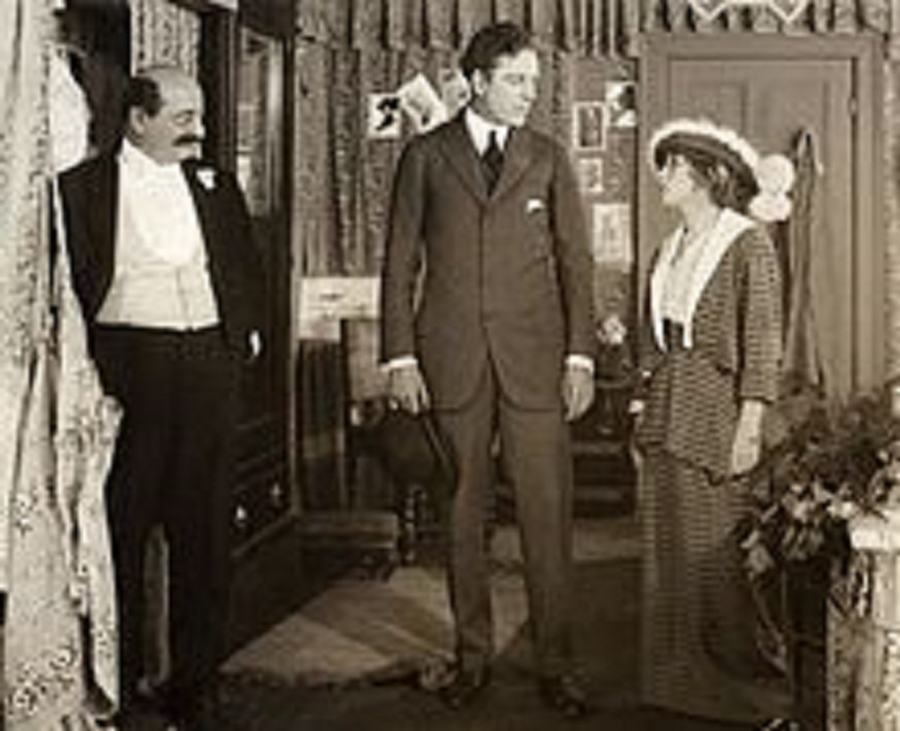
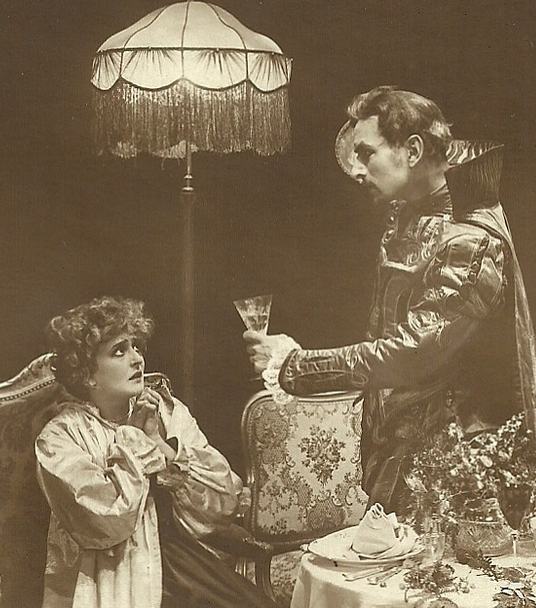
There is a moment—roughly two-thirds through Die Silhouette des Teufels—when Mia, framed against a nocturnal window, lifts her left hand as though testing the weight of moonlight on her wedding band. The gesture lasts perhaps three seconds, yet the alloy of resignation and insurgency flickering across Mia May’s face compresses the entire narrative into a single tremor. Directors Hans Werker and Willy Rathschlag orchestrate this micro-ballet without recourse to intertitles; they trust the spectator to decipher a moral earthquake in the twitch of a finger. Such succinct audacity is why the film refuses to stay shelved as a mere footnote of Weimar silhouette-play; it vibrates like a tuning fork against the scapula of anyone who still believes silent cinema trafficked only in exaggerated pantomime.
The prologue’s industrial accident arrives as a staccato barrage of tonal contradictions: carbide lamps bob like fireflies in Hades, pickaxes glitter with predatory cheer, and then—an off-screen cave-in rendered through a single, brutal cut to a woman’s scream muffled by coal soot. The montage is so economically vicious that one gasps not at the father’s death but at how effortlessly capital consumes flesh. Compare this to the carnivalesque carnage of The White Scar, where disaster is spectacle; here it is sacrament, the mine-owner’s subsequent guardianship a baptism into a new hierarchy of dependence.
Heinrich Schroth plays the colliery baron with the physiognomy of a Roman bust—nose imperial, gaze geological. Watch how he closes ledgers: each ledger snap is a jail-door clang sealing Mia’s future. The filmmakers invert the patriarchal trope of protective benevolence; his affection is a geode, beautiful only if you never crack it open to inspect the arsenic crystals inside.
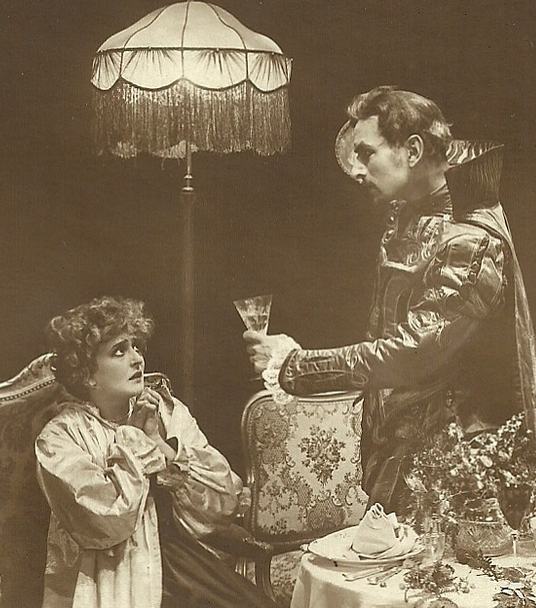
When Carlos Valdez (Bruno Decarli) strides into the drawing room, the very air seems to switch from tungsten to tallow. His fiddle case is not luggage—it is Pandora’s reliquary. The first time he plays, Werker refuses us close-ups of fingers; instead, the camera orbits Mia’s pupils dilating like ink blots on parchment. Critic Lotte Eisner once argued German Expressionism located horror in architecture; here sensuality is architectonic. The vibrato trembles the candelabra flames, whose shadows ripple across the wall as if the manor itself is being unlaced.
Note the costuming logic: Mia’s wardrobe progresses from mourning mauve to matrimonial jet to adulterous ivory in the space of forty reel-minutes. Yet the shift never feels symbolic in the collegiate sense; it feels like geological strata visible only after a landslide of longing.
Light—whether guttering carbide, limelight, or the argent sheen of nitrate moon—functions as an omnipresent gossip. In the marital bedroom, the mine-owner adjusts a lamp flame until it claws the ceiling like an imprisoned orange cat. Moments later, Carlos and Mia exchange clandestine letters beneath a streetlamp whose glow pools like liquid mercury. Each illumination scheme whispers a verdict: ownership vs. fugitive desire. One thinks of Mysteries of the Grand Hotel, where chandeliers seduce; here light interrogates.
As the family notary, Gülstorff appears in exactly two shots, yet his ocular adjudication lingers like a courtroom echo. When he seals the marriage contract, the camera isolates his spectacles, whose lenses reflect Mia’s down-turned head. The reflection is minuscule, but the implication gargantuan: legal parchment transforms woman into chattel under the neutral guise of jurisprudence. In an era when Sweet Kitty Bellairs was peddling Restoration flirtation, German studios were dissecting the very ligaments of patriarchal contract law.
Being 1920, the film predates synchronized dialogue, yet its treatment of music is proto-Polanskian in paranoia. Carlos’s off-screen practice sessions infiltrate scenes like auditory spoor; intertitles never announce “He plays,” instead we see servants freeze mid-polish, a dog’s ear cock toward an unseen source. The audience becomes an eavesdropper, complicit in the affair before it physically manifests. This anticipates the acoustic subjectivity later perfected in Værelse Nr. 17, though here the device is more sinister for its scarcity.
Forget the clichéd confrontation in a basilica or ballroom; the denouement occurs in the colliery’s headframe, a skeletal iron crown above the shaft. The mine-owner, Carlos, and Mia form a triangular tableau against the night sky, their shadows projected by the pit’s floodlights onto corrugated iron. What follows is not a brawl but a shadow-pugilism: fists swing, yet we see only silhouettes—gigantic, deformed, mythic. The film literalizes Plato’s cave while reversing its politics: these shadows are more truthful than their fleshly progenitors. When a stray lantern topples, the entire frame combusts into a wall of fire that devours all three silhouettes at once. The cut to white smoke against pre-dawn cobalt feels less like closure than like a page torn from a missal.
Contemporary viewers may know May from The Life of Richard Wagner, where she essays a compliant muse; here she is a fault-line. Observe the micro-tremor in her lower lip when Carlos first compliments her eyes—an involuntary Morse code of awakening. Or the way her shoulders square, not backward in confidence but forward as though protecting a clandestine organ. Critics habitually credit Louise Brooks for importing modern neuroses into silent cinema, yet May’s performance predates and arguably out-nuances Brooks’s Lulu by half a decade.
Like so many German productions of the era, the original negative perished in the 1927 Praesens-Film fire, leaving only a 35 mm print smuggled to Ljubljana. The extant version bears water stains that resemble Rorschach bats; instead of marring the experience, these blemishes augment the narrative’s diseased romanticism. When the damaged frames flare, they mimic the mine’s combustible gases, as though the celluloid itself is rebelling against the story’s moral asphyxiation.
Released months after the Kapp Putsch, the film’s subtext of authoritarian possession vs. artistic liberation played to an audience freshly reminded that private property and public violence share adjacent bloodstream. Whereas The Dormant Power fantasized about social mobility through technological miracle, Die Silhouette des Teufels insists that capitalism’s deepest shaft is the marital bedroom.
Does the film hate men? No—it hates systems that render affection indistinguishable from acquisition. Does it romanticize adultery? Only if one conflates depiction with endorsement. What it accomplishes is rarer: it stages the birth of female self-ownership as an acoustic rupture. When the explosion erases the triangle of shadows, the silhouette that the title references is not the devil’s but Mia’s—previously defined by patriarchal outline, now atomized into self-authored particles.
Viewers who revere Betrayed for its proto-feminist rage will find Die Silhouette des Teufels subtler yet more corrosive. It lacks the crowd-pleasing retribution of The Yellow Traffic, preferring an existential cliffhanger. That ambiguity may explain its relative obscurity; audiences like their morality nailed, not suspended.
Yet therein lies its pulse—erratic, phosphorescent, defiantly alive. In an age when algorithms curate nostalgia into bite-size TikTok vignettes, submitting to a 95-minute silent meditation on shadow, sound, and property feels like pocketing a live coal. It brands you, glows inside your breast pocket, and when you emerge into daylight you realize the world’s contours have shifted, if only by the width of a wedding band.
Verdict: A molten core of Expressionist melodrama, essential for anyone mapping the genealogy of cinematic feminism. Seek it out, even if you must dig through Balkan archives; the descent is worth every fathom.

IMDb 5.3
1934
Community
Log in to comment.