DbcultAccessing Vault...
Cult Review
Senior Film Conservator
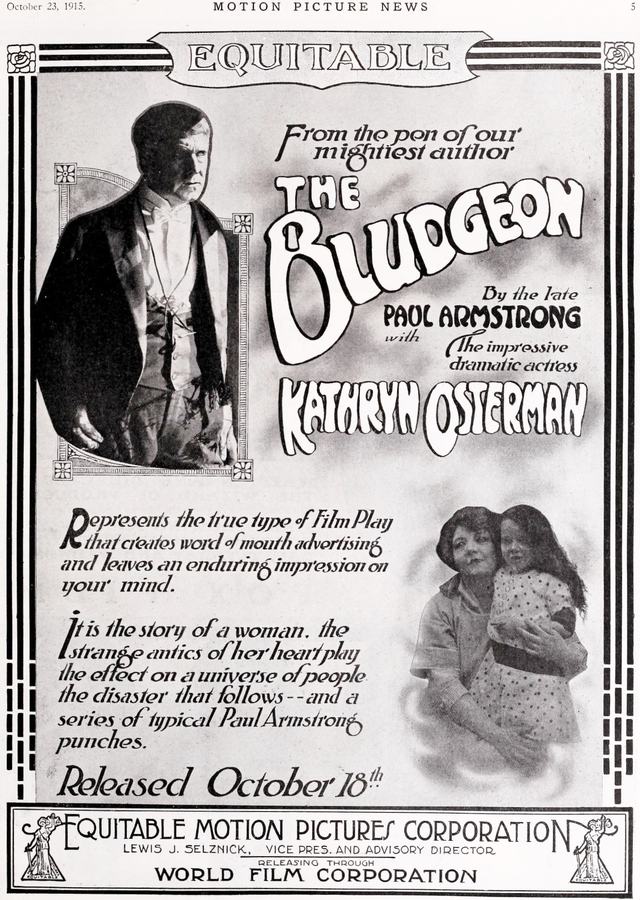
Step into the dramatic chiaroscuro of early cinema with Paul Armstrong's "The Bludgeon," a 1915 silent film that masterfully dissects the insidious allure of social ambition and its devastating consequences. This isn't merely a period piece; it's a timeless morality play, meticulously crafted to expose the fragile veneer of high society and the human cost of its pursuit. As an ardent observer of cinematic history, I find "The Bludgeon" to be a compelling artifact, a testament to the power of visual storytelling in an era where words were scarce but emotions ran unbound across the silver screen. It serves as a stark reminder that the human heart, susceptible to temptation and prone to folly, often finds its greatest trials not in external calamities, but in the subtle erosion of its own moral compass.
At its core, "The Bludgeon" commences with an idyllic tableau: Carl Evendorr (Frank Beamish), a brilliant chemist, shares a life of quiet contentment with his devoted wife, Irene (Kathryn Osterman), and their cherished daughter, Rose (Katherine Lee). Their existence, grounded in intellectual pursuit and domestic harmony, seems impervious to the wider world's complexities. However, fate, or perhaps a cruel twist of irony, intervenes in the form of Carl's scientific triumph – the perfection of a formula that promises immense wealth. This sudden influx of fortune, rather than solidifying their happiness, acts as the Trojan horse of their undoing. Irene, swayed by aspirations of grandeur, persuades Carl to abandon their modest dwelling for more opulent, "pretentious quarters." It is here, amidst the gilded cages of newfound wealth, that the narrative truly begins its descent into the maelstrom of societal deceit.
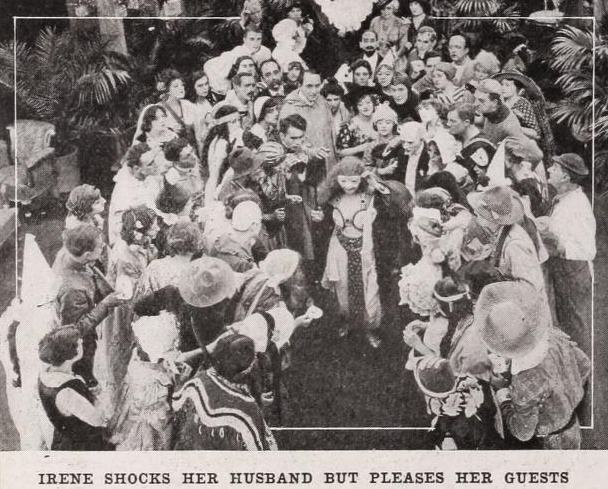
The film deftly introduces Mrs. Wharton (Clara Whipple), a character so exquisitely rendered in her villainy that she becomes the very embodiment of the "social leech." Wharton, with her polished charm and predatory instincts, swiftly ensnares Irene, drawing her into a vortex of lavish entertainments and superficial pursuits. This pivotal shift in Irene's character, from loving wife to socialite-in-training, is portrayed with a subtle yet potent theatricality, typical of the era's dramatic conventions. Her appearance as an "Odalisk" at their inaugural high-society gathering, a costume chosen under Wharton's persuasive hand, is a visual metaphor for her burgeoning moral compromise. It's a moment pregnant with symbolism, as Irene, adorned in exotic finery, becomes an object of male admiration, a spectacle that deeply troubles Carl. His remonstrances, however earnest, are tragically dismissed, echoing the futility of reason against the overwhelming tide of social ambition. This initial confrontation sets the stage for a marital rift that will widen into an abyss.
As the Evendorrs' funds inevitably dwindle, a consequence of their unsustainable lifestyle, Irene finds herself increasingly entangled in Mrs. Wharton's manipulative schemes. The card games, initially a pastime, morph into a mechanism for debt, with Irene "winning" large sums intentionally lost to her. This subtle form of financial exploitation underscores Wharton's cunning, portraying her as a puppet master pulling the strings of her unwitting protégé. Carl, ever the scientist, retreats into his laboratory, perfecting yet another formula, hoping to salvage their financial standing. His departure to sell this new invention, a desperate bid for solvency, leaves Irene vulnerable and exposed to Wharton's ultimate treachery.
The film's emotional core truly splinters upon Carl's return. Having sold his formula for a pittance, a bitter irony given the initial windfall, he discovers Irene in the arms of "Stoney" Brooke (John J. Dunn), a sycophantic admirer whose liaison with Irene was meticulously orchestrated by Mrs. Wharton to settle Irene's mounting debts. The scene is a masterclass in silent film melodrama, the shock and heartbreak etched onto Carl's face palpable even without spoken dialogue. Brooke, a coward at heart, falsely confesses his guilt to save his own skin, a deceit that precipitates Irene's divorce from Carl. In a gesture of profound, almost biblical, self-sacrifice, Carl shoulders the blame, preserving Irene's reputation, even as his own world crumbles. This act of quiet martyrdom is a thematic precursor to the later, equally impactful sacrifices within the narrative, resonating with the moral dilemmas explored in films like As Ye Sow, where characters grapple with the bitter harvest of their choices.
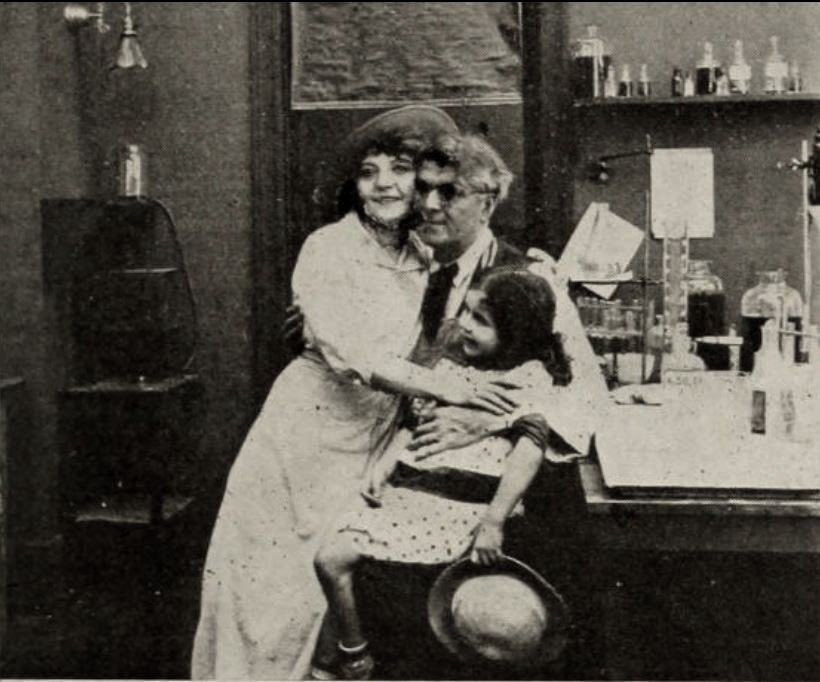
The narrative then fast-forwards ten years, a significant temporal leap that underscores the lingering repercussions of past transgressions. Irene has since married Hillman (Roy Applegate), a lawyer and Carl's erstwhile friend, a union that, while providing stability, perhaps lacks the genuine warmth of her first marriage. Meanwhile, Brooke, having been imprisoned due to Mrs. Wharton's machinations – a delicious irony given her prior complicity – is released. His return heralds a new wave of threats and blackmail, this time targeting Irene, who is forced to pay him hush money. This cyclical nature of cause and effect, where past sins invariably return to haunt the present, is a powerful motif, reminiscent of the inexorable fate woven through classics like Anna Karenina, albeit with different societal pressures at play.
The climax of this decade-spanning drama arrives with a sudden, violent crescendo. Brooke, having secured his illicit gains from Irene, prepares to depart, only to encounter Mrs. Wharton, the architect of his original downfall. A struggle ensues, culminating in Brooke fatally shooting Wharton. This act of retributive violence, while shocking, feels almost inevitable, a grim resolution to the toxic relationship between the two schemers. Simultaneously, Carl, now working diligently in a laboratory, driven by an unyielding desire to reconnect with his estranged daughter, Rose, arrives at the fateful scene. He is discovered bending over Wharton's lifeless form just as Irene and the police burst into the room, creating a tragic tableau of mistaken identity and agonizing suspicion.
In a moment of profound selflessness that elevates the film beyond mere melodrama, Hillman steps forward, confessing to the murder to spare Carl. This act of heroic altruism is particularly poignant, given his marriage to Irene and his long-standing friendship with Carl. Hillman’s sacrifice, echoing the themes of unmerited suffering and moral fortitude found in films like The Galley Slave or even the social commentary of The Crucible (though vastly different in setting), underscores the film's exploration of true nobility. It highlights the stark contrast between the venal motivations of Wharton and Brooke, and the pure, unconditional love and loyalty embodied by Hillman. The subsequent deaths of Brooke and Hillman, the latter in his prison cell, bring a somber finality to the cycle of crime and sacrifice. Brooke's demise represents the ultimate consequence of a life steeped in opportunism, while Hillman's passing marks the tragic culmination of an extraordinary act of friendship.
The concluding moments of "The Bludgeon" offer a poignant, if not entirely joyous, resolution. Carl and Irene, having endured a decade of separation, pain, and profound loss, finally reunite. Their contentment is not born of a return to their former idyllic happiness, but rather a quiet, mature understanding forged in the crucible of shared suffering. Their love for their daughter, Rose, becomes the unifying force, the unbreakable bond that transcends the wreckage of their past. This bittersweet ending suggests that while innocence may be irrecoverably lost, and happiness forever tinged with sorrow, the enduring power of familial love can still provide a measure of peace and solace. It’s a conclusion that resonates with the emotional depth often found in films exploring the complexities of human relationships under duress, such as A Butterfly on the Wheel, where characters navigate scandal and moral quandaries to find a new equilibrium.
The effectiveness of "The Bludgeon" relies heavily on the evocative performances of its cast, a hallmark of the silent film era where exaggerated gestures and facial expressions conveyed the full spectrum of human emotion. Frank Beamish, as Carl Evendorr, delivers a nuanced portrayal of a man whose integrity is constantly challenged by forces beyond his control. His silent suffering, his moments of quiet despair, and his unwavering devotion to his daughter are conveyed with compelling sincerity. Kathryn Osterman's Irene is equally captivating, charting a complex arc from innocent wife to misguided socialite and finally to a woman chastened by experience. Her vulnerability and eventual remorse are palpable, making her a sympathetic figure despite her earlier missteps.
Clara Whipple's Mrs. Wharton is a standout, a truly memorable villain whose manipulative charm is chillingly effective. Her ability to exude both sophistication and malice makes her a formidable antagonist, driving much of the plot's tragic momentum. John J. Dunn's "Stoney" Brooke is the quintessential cad, his opportunistic nature clearly defined through his actions and expressions. Roy Applegate's Hillman, though appearing later in the narrative, leaves an indelible impression through his ultimate act of selfless sacrifice, a performance that speaks volumes about the power of loyalty. The collective efforts of this ensemble, under Paul Armstrong's direction, create a rich tapestry of human drama that transcends the limitations of its medium. The narrative, penned by Armstrong, demonstrates a keen understanding of dramatic pacing and character development, building tension and emotional resonance through a series of escalating crises.
Beyond its intricate plot, "The Bludgeon" serves as a potent social commentary. It critiques the corrosive influence of wealth when divorced from moral principles, and the superficiality of a society that values appearance over substance. The film implicitly warns against the dangers of unchecked ambition and the seductive power of those who prey on human vanity, personified perfectly by Mrs. Wharton. This theme of societal critique, where the pursuit of status leads to moral decay, finds echoes in many literary and cinematic works, from the Gilded Age novels to contemporary dramas. The film's examination of justice, or the lack thereof, is also compelling. Carl's initial unjust suffering, Brooke's eventual comeuppance, and Hillman's noble, yet tragic, sacrifice all contribute to a nuanced exploration of what it means to seek and find redemption in a flawed world.
The journey of Irene, from a loving wife to a woman led astray by social pressures and then ultimately finding a form of peace, is a testament to the film's complex characterizations. It avoids simplistic moralizing, instead presenting characters who are products of their environments and their choices, capable of both great error and profound growth. The film's title itself, "The Bludgeon," might refer not just to the violent act near its climax, but metaphorically to the brutal, crushing impact of societal expectations and personal betrayals on the human spirit. It's a reminder that sometimes, the most devastating blows are not physical, but emotional and psychological, slowly eroding one's sense of self and purpose.
"The Bludgeon" stands as a significant example of early silent film melodrama, offering a window into the narrative conventions and moral preoccupations of its era. Its intricate plot, compelling characters, and themes of wealth, betrayal, sacrifice, and eventual, albeit bittersweet, redemption ensure its lasting resonance. While the cinematic techniques of 1915 might seem rudimentary by today's standards, the emotional core of the story, the universal struggles of its characters, and the timeless warnings it imparts remain as powerful as ever. It invites contemporary audiences to appreciate the foundational artistry of filmmaking and to reflect on the enduring human condition.
In an age increasingly preoccupied with instant gratification and superficial success, "The Bludgeon" offers a poignant counter-narrative, reminding us that true wealth lies not in material possessions or social standing, but in integrity, loyalty, and the unbreakable bonds of family. It’s a compelling cinematic experience that, despite its age, continues to speak volumes about the complexities of human nature and the societal forces that shape our destinies. For enthusiasts of classic cinema and those interested in the evolution of dramatic storytelling, "The Bludgeon" is an essential watch, a powerful testament to the timeless art of the moving picture.
Review by Your Expert Film Critic Alias
IMDb 5.2
1924
Community
Log in to comment.