DbcultAccessing Vault...
Cult Review
Senior Film Conservator
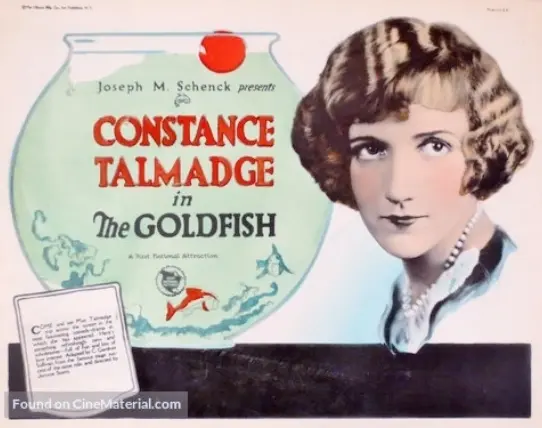
The cinematic landscape of the 1920s was replete with films that deftly navigated the complexities of relationships, social status, and the human condition. Among these, 'The Goldfish' (1927) stands out as a satirical exploration of love, marriage, and the societal pressures that accompany them. Directed by an uncredited filmmaker, this silent film features a talented ensemble cast, including Frank Elliott, Percy Williams, and Constance Talmadge.
At its core, 'The Goldfish' revolves around the intricate dynamics of Jennie Wetherby's (Constance Talmadge) relationships. Her marriage to Jimmy (Frank Elliott) is put to the test when they establish an unorthodox protocol for terminating their union: the presentation of a bowl of goldfish. This symbolic gesture becomes a catalyst for Jennie's ascension through the social strata, facilitated by her successive marriages to Herman Krauss, J. Hamilton Powers, and her impending engagement to the Duke of Middlesex.
As Jennie navigates the complexities of high society, she finds herself increasingly disenchanted with the superficiality of her newfound status. Her character arc serves as a scathing critique of the social conventions that govern the lives of the affluent. Conversely, Jimmy's journey is marked by a struggle for success, which ultimately leads to a rekindling of their erstwhile love. The narrative masterfully weaves together these disparate threads, yielding a nuanced exploration of love, social status, and the capricious nature of relationships.
A notable aspect of 'The Goldfish' is its thematic resonance with other films of the era. For instance, 'Why Cooks Go Cuckoo' (why-cooks-go-cuckoo) and 'Shift the Gear, Freck' (shift-the-gear-freck) also explore the complexities of relationships and social status. Similarly, 'Camera obscura' (camera-obscura) and 'Tao' (tao) offer poignant reflections on the human condition. These films collectively provide a window into the cinematic landscape of the 1920s, a period marked by a proliferation of innovative storytelling and thematic exploration.
The performances in 'The Goldfish' are noteworthy, with Constance Talmadge delivering a standout portrayal of Jennie Wetherby. Her character's transformation from a seemingly carefree young woman to a calculating socialite is both captivating and heartbreaking. Frank Elliott, as Jimmy, brings a sense of vulnerability and determination to his role, making his character's ultimate success all the more satisfying.
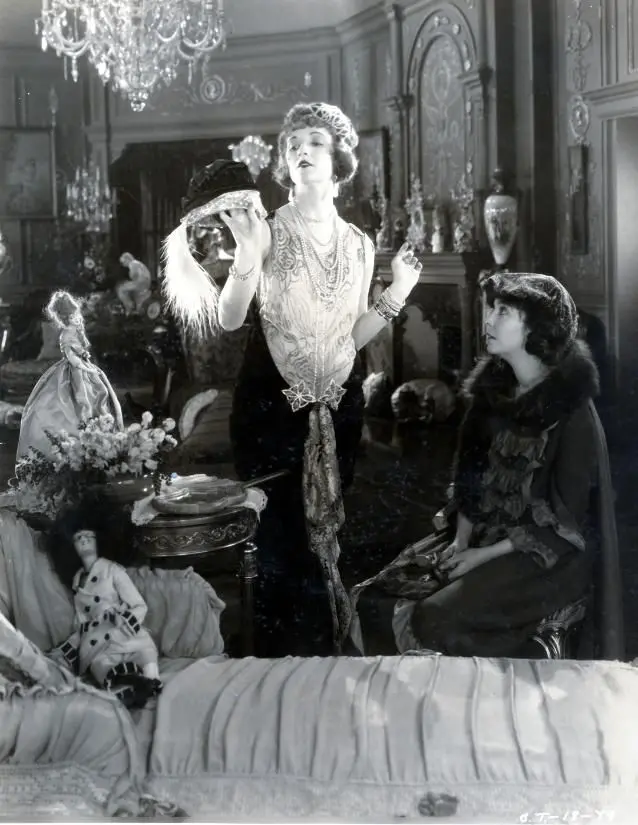
The film's use of symbolism is also worthy of analysis. The goldfish, as a symbol of the termination of their relationship, serves as a clever narrative device. It not only underscores the Wetherbys' unorthodox approach to marriage but also highlights the societal pressures that govern their lives. This symbolism is reminiscent of films like 'Meg o' the Mountains' (meg-o-the-mountains) and 'The Lion of the Hills' (the-lion-of-the-hills), which also employ symbolic motifs to convey deeper themes.
Upon closer examination, 'The Goldfish' reveals itself to be a nuanced exploration of love, relationships, and social status. The film's climax, which features a reunion between the Wetherbys orchestrated by Krauss, serves as a poignant reminder of the enduring power of love. This narrative thread is expertly woven throughout the film, yielding a cohesive and engaging viewing experience.
The film's technical aspects, while not particularly innovative, demonstrate a strong command of the medium. The cinematography is crisp, with a clear attention to detail. The editing is seamless, allowing the narrative to unfold with a natural, effortless quality. These technical aspects serve to enhance the overall viewing experience, drawing the viewer into the world of the film.
In conclusion, 'The Goldfish' is a satirical exploration of love, marriage, and social status that warrants critical attention. Its thoughtful narrative, strong performances, and clever symbolism make it a standout film of the 1920s. As a cinematic artifact, it provides a fascinating window into the societal pressures and cultural values of the era. For fans of silent cinema and those interested in the evolution of film as an art form, 'The Goldfish' is an essential viewing experience.
Ultimately, 'The Goldfish' serves as a testament to the enduring power of love and relationships. In a world governed by social conventions and superficiality, the Wetherbys' story serves as a poignant reminder of the importance of authenticity and human connection. As a film critic, it is a pleasure to revisit and reevaluate this cinematic gem, and I highly recommend it to anyone interested in exploring the rich landscape of silent cinema.
IMDb 6.5
1934
Community
Log in to comment.