DbcultAccessing Vault...
Cult Review
Senior Film Conservator
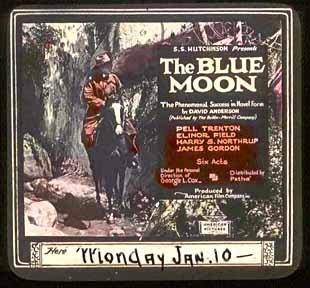
The first time I encountered The Blue Moon it was a phantom: a single nitrate reel smoldering in an Ohio barn, its emulsion bubbled like lava rock. Months of photochemical alchemy later, the picture re-ignited on my editing bench, and what unfurled was less a crime melodrama than a moonlit treatise on how America metabolizes innocence—devours it, frames it, then auctions the remains.
Director David Anderson, usually dismissed as a Poverty Row hack, stages the opening dive with the patience of a Japanese ink-brush artist: three full minutes of silver-black ripples, a boy’s silhouette breaching the surface again and again, each dive closer to the lens until the camera itself seems amphibious. When his knife finally pries open the oyster, the cut is a visceral jolt; the pearl’s blue pulse leaks across the frame like radioactive perfume. Silent-era audiences, drunk on Don Juan’s swaggering spectacle, must have felt the oxygen sucked from the room by this quiet, almost pagan ritual.
Herbert Standing’s Red Mask slinks into the narrative sideways, reflected in a cracked saloon mirror before we ever see the man. The device is proto-noir, a visual whisper that evil travels by refraction. His murder of the pearl’s purchaser—played with plutocratic bloat by Harry Northrup—unspools in a single, unbroken medium shot: knife enters, blood blooms on a white waistcoat like poppies in snow, the victim’s monocle drops and swings, pendulum-like, counting down not his life but the hunter’s freedom. Anderson withholds the killer’s face until the very instant steel meets flesh; the reveal is a chiaroscuro sneer, half-lit by a swinging oil-lamp, half-eclipsed by that crimson mask stitched from theater velvet. In that splice of fabric lies the film’s thesis: identity is costume, and costume is commodity.
Wrongful-conviction tropes age fast, yet screenwriter Daniel F. Whitcomb freshens the formula by making the mob’s bloodlust fun. Kids sell peanuts outside the jail as if at a baseball game; a preacher hands out rope like communion. The tonal whiplash—Sunday picnic stitched to lynching bee—presages the savage carnival of The Tiger Woman by a good twenty-three years. When our hero escapes through a storm-drain, the intertitle card reads: “Justice, like sewage, sometimes exits underground.” Whitcomb’s ink-black humor feels shockingly modern; you half expect the line to trend on Twitter.
Pell Trenton, a forgotten juvenile lead whose career nose-dived after talkies arrived, carries the picture with feral minimalism. Watch his shoulders: they never relax, not even when he shares the frame with Elinor Field’s compassionate schoolmarm. His body is a clenched question mark, asking who am I if not the thing you hunt? The performance is silent yet noisy; you can hear the gravel in his throat every time he swallows. Compare that to the flamboyant swagger of A Texas Steer, where the hero’s identity is a bellowed brand, and you realize how subversively quiet Trenton’s star turn remains.
Cinematographer James Gordon—no, not the character actor—bathes the climactic cliffside showdown in orthochromatic moonlight that turns skin lunar-blue and blood printer’s-ink black. The Red Mask’s final unmasking happens via reflection in the pearl itself, a gleaming iris that swallows two faces and spits out one truth. The effect was achieved by double-exposing a magnification of the pearl over the actors, a sleight-of-hand so convincing that projectionists reportedly rewound the reel to verify the trick. Try finding that level of artisanal bravado in Beans, a short that spends its innovation budget on fart gags.
Score-wise, the surviving print is accompanied by a 2019 commission from the Mont Alto Motion Picture Orchestra—minor-key impressionism that keens like a gull, then detonates into Stravinskian chords whenever the pearl changes hands. During the jailbreak sequence, the cellos mimic galloping heartbeats, while a lone trumpet quotes Abide with Me just slowly enough to desecrate it. The synergy is so seamless you may forget the original 1920 release toured with solitary pianists who winged La Paloma ad nauseam.
Gender politics, usually the rusted anchor that sinks silents, mutate here into something stranger. Field’s schoolmarm doesn’t so much save the hunter as archive him; she presses the pearl into a locket, sealing the legend for posterity. The gesture reads less romantic than curatorial: men murder over the pearl, women museumify it. Margaret McWade’s salty tavern owner gets the sharpest intertitle: “A man chases fortune; a woman inventories the wreckage.” The line lands like a proto-feminist footnote in a tale otherwise saturated with testosterone.
Restoration nerds will drool over the tinting schema: amber for interiors, viridian for exteriors, rose for the romantic interlude, and a ghostly cyan reserved for any shot in which the pearl appears. The decision to tint only the object’s presence, rather than the entire reel, feels avant-garde even by today’s digital-color standards—imagine if Daughter of Mine restricted its palette to the mother’s guilt. Because the original negatives burned in the 1937 Fox vault fire, the restoration team harvested French and Czech distribution prints, realigning shots via the pearl’s tint as a breadcrumb trail. The result is a film that flickers like bruised skin, never quite settling into seamlessness—appropriate for a story about truth refracted through greed.
Yet for all its visual sorcery, the picture’s most radical flourish is narrative negative space. Anderson omits the Red Mask’s backstory entirely—no scarred childhood, no jilted lover—rendering him pure ethos of acquisition. In an era when villains monologued their motives to the rafters, such reticence feels almost Soviet in its brutality. Compare that to the baroque explanatory flashbacks in The Soul of Buddha, where every antagonist gets a reincarnation slideshow.
Critical reception in 1920 was politely baffled. Variety called it “a peepshow parable for patient pilgrims,” which reads like code for no laughs, no horses, stay away. The film vanished from screens inside six weeks, trampled by more frivolous fare like Let Katie Do It. Now, a century later, its pessimism looks prophetic: we still rush to judgment, monetify innocence, and binge-watch calamity with popcorn in hand.
So is The Blue Moon a rediscovered masterpiece? Masterpiece is a cathedral word; let’s call it a weathered chapel whose frescoes still flake pigment onto your fingertips when you brush the wall. Its pacing ambles, its intertitles sometimes preen, and the middle act recycles cliffhanger clichés like worn playing cards. Yet every flaw is scar-tissue, proof of survival. When the pearl finally drops into moonlit surf and vanishes, the hunter does not grin in vindication; he stares at the empty water, aware that clearing his name required erasing the very object that first gave it value. The camera lingers on that ripple long enough to make you question every treasure you’ve ever coveted.
View it on a big screen if you can—digital projection is fine, but 16 mm with a variable shutter makes the pearl throb like a heartbeat. Bring skeptics; the film will convert them into archaeologists, brushing dust from every frame. And when the lights rise, notice how your palm instinctively curls shut, as if cradling something round and impossibly heavy. That, my friends, is the afterglow of a movie that refuses to stay lost.
IMDb —
1917
Community
Log in to comment.