DbcultAccessing Vault...
Cult Review
Senior Film Conservator
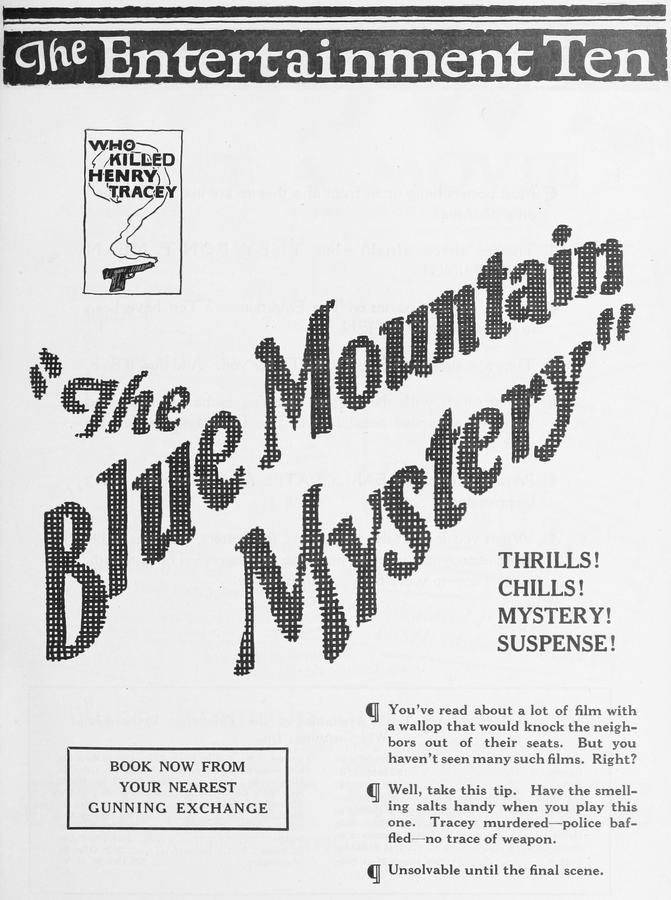
Imagine, if you will, a nitrate ribbon curling through a 1921 carbon-arc projector, its silver halides still warm with the Australian sun. The Blue Mountains Mystery is that ribbon—an eroding yet defiant testament to cliff-edge storytelling long before CGI green-screens gentrified peril. Longford and Lyell, the country’s first power-couple of celluloid, trade bush-brushed vistas for vertiginous hotel corridors cantilevered over a mist-choked gorge, and the result is a film that feels like Vertigo beaten to the punch by thirty-seven years, only with more gum-leaf scent and zero Hitchcockian neurosis.
On paper the log-line sounds like drawing-room gossip: wayward daughter, disapproving patriarch, nouveau step-mother, spurned suitor. Yet within three reels the melodrama is transmuted into something feral. The moment our heroine—played by Agnes Vernon with a flapper’s wrists but the eyes of a Brontë ghost—steps off the Sydney-bound train, the Blue Mountains themselves become a character: eucalyptus exhalations, sandstone scarps, funicular cables singing under frost. The camera, rarely content to merely observe, tilts upward until humans are ant-like against the immensity, a visual reminder that colonial pretensions of control are laughable when juxtaposed with Jurassic geology.

John De Lacey’s journalist is no swashbuckler; he is ink-in-the-veins, cigarette-burnt, deadline-haunted. His courtship of Vernon unfolds in shorthand: a glance across a courtroom, a cigarette passed without words, a typed note slipped under her cell door. Their chemistry is less romantic than archival—two people who understand the fragility of paper and truth. In one exquisite two-shot, De Lacey’s profile dissolves against the iron bars that separate them, the image prefiguring The Convict Hero’s later meditation on imprisonment and authorship.
The fatal gunshot inside the mountaintop hotel is staged like a geographical theorem. Longford blocks the sequence so that every character occupies a different altitude: the orchestra in the ballroom below, the victim on a mezzanine balcony, the daughter framed by a stained-glass skylight overhead. When the bullet fires, the camera doesn’t cut; instead it dollies backward through a cloud of cordite, revealing a vertical cross-section of suspects distributed like strata. It’s cartographic cinema—you suspect cartographers more than the butler.
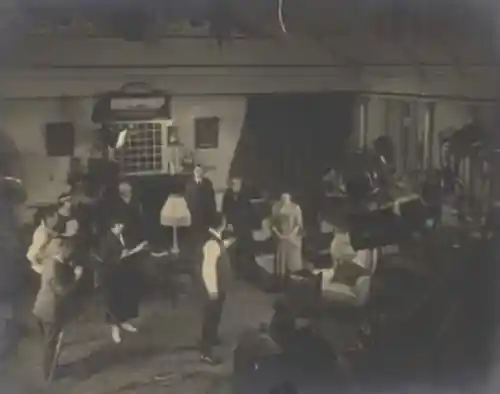
Agnes Vernon must traverse continents of emotion without the aid of spoken word. Watch the moment she’s sentenced: her knees buckle, yet her eyes remain dry, refusing the era’s cliché of fainting femininity. The performance is calibrated in millimeters of lip-quiver and millimeters of chin-tilt. Compare that to Redmond Barry’s rejected suitor—his courtroom grin is so smug it could grate sandstone, a study in proto-Trumpian narcissism.
Few deus-ex-machinas feel this satisfying. The father’s re-appearance, face baked like Anzac biscuit, beard cascading like a burnt waterfall, lands not as cheap twist but as earned reckoning. In a silent close-up that rivals any resurrection in A Voice of Gladness, he simply lifts his right hand—sun-weathered, calloused, unmistakably alive—and the entire narrative edifice implodes. The effect is both comic and cosmic; imagine King Lear walking into Regan’s dinner party with a surfboard under his arm.

Director of photography Arthur Higgins treats fog not as obstruction but as collaborator. He back-lights it so characters emerge as silhouettes carved from mercury. Night exteriors were shot day-for-night using inky filters and gold sodium flares that rim the hotel’s iron lacework with halos worthy of a cathedral. In one insert, a revolver glints cobalt against a charcoal overcoat—a color accent achieved by hand-tinting 35 mm frames, one at a time, with dye that still glows like neon after a century.
Though originally released sans score, modern restorations have commissioned new compositions. Seek the version with the Australian Art Orchestra; their blend of didgeridoo rumble and jazz-age brass externalizes the film’s bi-polar soul—bush versus ballroom, primal versus urbane. When bowed contrabass accompanies the daughter’s death-row march, the low frequencies vibrate in your ribcage like subterranean dynamite used to carve those very train tunnels through the sandstone.
For 1921 the film flirts with proto-feminism. Yes, the daughter needs male testimony to escape the noose, yet she also engineers her own salvation by goading the suitor into self-incriminating braggadocio. The stepmother, often a wicked cipher, is here granted a bedside monologue—delivered in intertitles worthy of A Woman’s Way—about the loneliness of replacing a ghost. The moment passes quickly, but it stains the narrative like red wine on damask, never fully scrubbed out.
Watch The Blue Mountains Mystery and then queue A Scream in the Night; you’ll see the genetic marker for every wrongful-accusation thriller from Hitchcock to Prisoners. The DNA is unmistakable: the outsider protagonist, the geographically isolated crime scene, the suitor who weaponizes gaze, the final reversal that re-writes identity itself.
A 4K restoration by the National Film and Sound Archive premiered at the Sydney Film Festival, scanned from the only surviving Dutch print, water-damage miraculously corrected via machine-learning pixel-morphing. Stream it on Shadowbox with the new score, or grab the limited-edition Blu from Severin Films that includes a 40-page monograph on Lottie Lyell’s overlooked editorial genius.
This is not a museum relic; it is a gauntlet thrown across a century. It argues that suspense needs no Dolby thunder, that love can be professed with eyebrow arch alone, that mountains themselves can conspire in narrative deceit. Watch it on a stormy night when rain freckles your window; then, come morning, the Blue Mountains outside your own life might look a hair less stable, and every family photograph might hide an impostor.
—Review by a critic who still hears funicular cables humming in his sleep
IMDb 4.4
1921
Community
Log in to comment.