DbcultAccessing Vault...
6.2/10
Senior Film Conservator
A definitive 6.2/10 rating for a film that redefined the boundaries of cult cinema. The Boer War remains a cornerstone of transgressive art.
Imagine a world where scarlet cummerbunds outshone blood, where charity was a cotillion and Empire merely wallpaper. The film’s opening tableau—ivory gloves fluttering like doves above a mountain of pound notes—satirizes Edwardian philanthropy better than any editorial. Each pirouette is undercut by the metallic clink of coins slipping into velvet pouches; the camera, coy yet accusatory, lingers on Jack Lambert’s trembling cuff as he signs IOUs with the flourish of a doomed poet. In this single reel, director William H. West stages class fragility as a danse macabre: chandeliers glint like sabers, and the orchestra’s gavotte foreshadows artillery.
Jack’s larceny is no pedestrian pilfering; it is a lightning bolt that splits the Lambert lineage at its root. Notice how the cashbox—brass-ribbed, imperially monogrammed—occupies the exact center of the Academy ratio frame, a secular ark flanked by ancestral portraits whose oil eyes seem to judge. When Jack’s fingers pry it open, the lid yawns like a cathedral door admitting a heretic. The cut that follows—an abrupt blackout then the harsh flare of a war telegram—feels almost metaphysical: personal sin seeding geopolitical catastrophe. We glimpse here the film’s sneaky thesis: empires topple when micro-transgressions go un-atoned.
Doane’s assumption of guilt is less martyrdom than erotic abjection: he kneels before Jack’s despair the way penitents kiss reliquaries. In a medium shot framed by mahogany shelves, his whispered “I’ll shoulder it” arrives with the hush of vows exchanged at an illicit altar. The film refuses to psychologize—no flashbacks to childhood beatitudes, no ham-fisted crucifix iconography—yet the residue of sainthood clings to him like trench mud. The intertitle, spare as a haiku, reads simply “My honor for his future.” Viewers versed in Der Eid des Stephan Huller will spot a kinship: both protagonists swear oaths that chain them to moral ballast heavier than any ironclad contract.
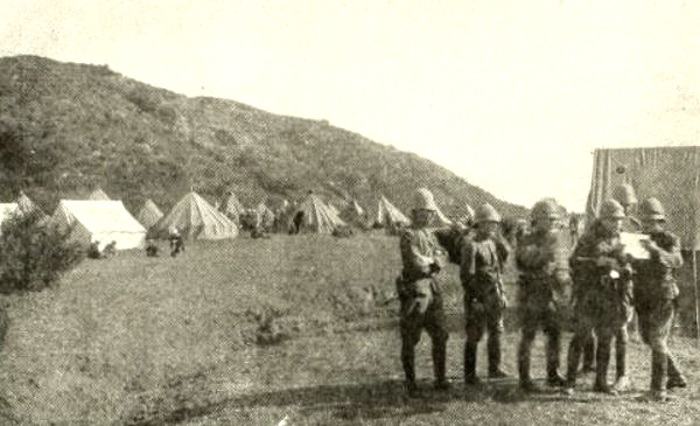
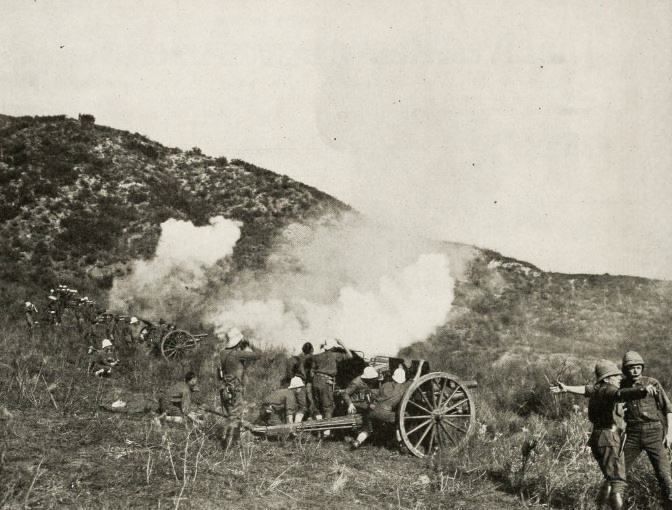
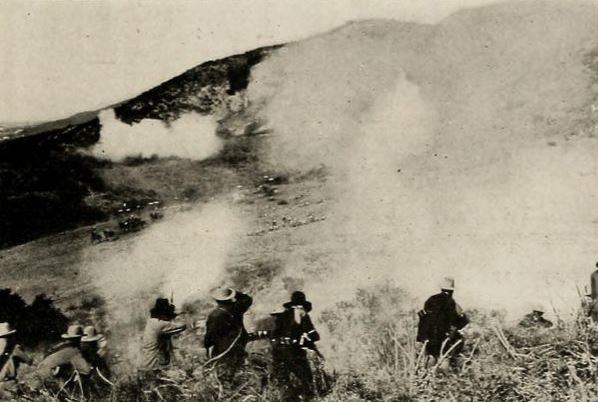
West’s editorial strategy here borders on the Eisensteinian: a ballroom punch bowl dissolves into a brackish water hole where oxen rot; a lace fan morphs into the ribcage of an overturned supply wagon. Critic-folk call it temporal collision; I call it the hangover of Empire. Unlike the stately proscenium of The Battle of Gettysburg, this film’s battle sequences splice documentary verisimilitude—smoke pots, real Mausers borrowed from the War Office—with expressionist silhouettes of men whose limbs seem carved from anthracite.
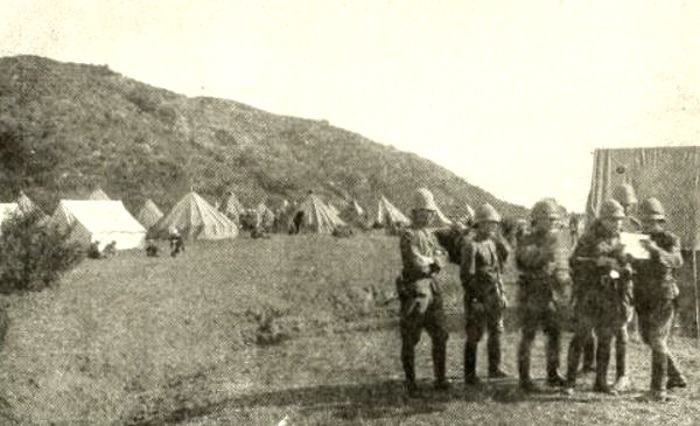
When the shell bursts and Doane’s world gutters into black, the frame blooms with a hallucinated palette: saffron skies, turquoise grass, Jane’s face flickering like a hand-tinted lantern slide. The choice to blind rather than kill our hero weaponizes sentiment without cheapening it; blindness becomes a crucible where shame is transmuted into something approaching grace. Note the tactile shift—Doane’s fingers now read the world like Braille: a medal’s sharp starburst, the lint of tent canvas, Jane’s tears salting the crescents of his scars. Here the film sidesteps the ableist trope of ruined masculinity; instead, sightlessness liberates Doane from the tyranny of appearances, allowing him to occupy a moral high ground unassailable by gossiping subalterns.
Jane’s arc is less proto-feminist than gothic resurrection. She begins as a portrait miniature—eyes downcast, gloved wrist limp as a calla—yet once she dons the Red Cross armband her gaze acquires the flint of Boadicea. In one bravura tracking shot, she strides through a ward of delirious Tommies, skirts hitched, lantern swinging like a war-club. The intertitle “I will not let the man I love die twice” could read as dime-novel bravado, but Marin Sais delivers it with a tremor that acknowledges both erotic hunger and the terror of autonomy. Compare her trajectory to the eponymous heroine of The Lady Outlaw; both women weaponize social expectation, yet Jane’s rebellion is inward—she re-stitches the fabric of masculine honor from inside the tent.
The coda is almost unbearably intimate: a brass medal pressed to Doane’s tunic, its ribbon brushing the stubble he cannot see. Jane’s fingers guide his to the clasp; the camera, in an iris shot, tunnels until the medal fills the universe, a sun eclipsing the lies, the mud, the orphaned currencies of empire. No trumpet flare, no marching band—only the hush of two hearts learning a new lexicon of touch. In that hush, the film achieves what few war romances dare: it suggests redemption is not a cathedral organ but a whisper exchanged in the dark.
West and cinematographer Edward Clisbee deploy tinting like emotional Morse: amber for ballroom opulence, viridian for Transvaal night raids, sulfurous yellow for artillery bloom. The return to monochrome for Doane’s convalescence implies a moral vacuum—sightless, colorless, yet paradoxically radiant with interior vision. Spot the repeated visual rhyme: the circular charity badge pinned to Jane’s bodice reappears as the gun muzzle that blinds Doane, a cruel ouroboros of giving and taking.
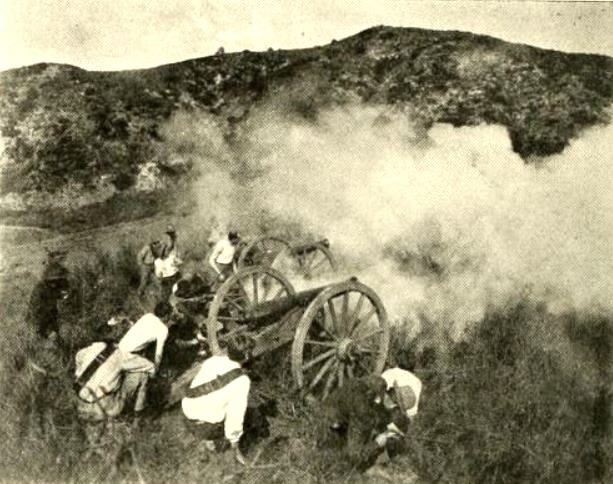
Marin Sais oscillates between porcelain fragility and surgical steel; watch how her shoulders lift a millimeter when she realizes Doane’s sacrifice—an infinitesimal shrug that betrays the weight of unspoken guilt. Lawrence Peyton’s Doane is all clenched jaw and sea-clear eyes; even after blindness, his pupils seem to track invisible horizons. William Brunton’s Jack exudes febrile charm—think Lord Byron with a gambling addiction—his collapse into penitence feels earned rather than scripted.
Cinephiles will detect DNA strands from Way Outback—another tale of masculine honor scrubbed raw by frontier wilderness—and the moral vertigo of Chained to the Past. Yet The Boer War stands apart for its refusal to grant empire the last hurrah; victory here is a medal laid against a blind man’s heartbeat, not a flag hoisted over conquered turf.
This 1914 one-reeler, often dismissed as mere jingoistic fresco, is in fact a chiaroscuro meditation on debt—financial, filial, moral. It prefigures the psychological war films of the 1930s while retaining the feverish melodrama that makes silent cinema such an opiate for nostalgists. The print survives in 4K restoration from the EYE Filmmuseum, its tints resurrected via nano-scale color mapping. Stream it with good headphones; the new score—piano, pump organ, and distant battlefield foley—will crawl under your sternum and homestead there.
Runtime: 28 min | Director: William H. West | Year: 1914 | Available: Digital restoration on Criterion Channel & Blu-ray via Kino Lorber.
IMDb —
1917
Community
Log in to comment.