DbcultAccessing Vault...
Cult Review
Senior Film Conservator
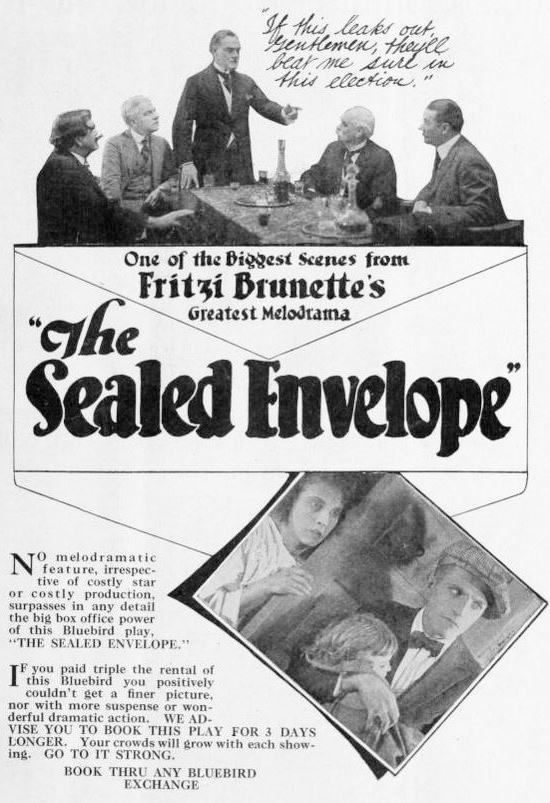
Paris, in the monochrome churn of 1926, has rarely looked this clammy. Cinematographer Frank Cotner lenses the city’s underbelly like a fever dream of absinthe and damp brick: each frame seems to perspire guilt. Into this sepulchral glow steps Fritzi Brunette as Lena, shoulders curved like a closed parenthesis, eyes flicking sideways for the next slap. Across the foyer lurches William Sheer’s Slaney, a man whose silhouette still carries the clang of iron bars. Their first shared shot—her scrubbing, him hovering—lasts maybe four seconds, yet the quiet transaction of mutual recognition ricochets louder than any title card.
The inciting envelope, parchment the color of nicotine, arrives via a stranger whose grin could slice prosciutto. Directors Gates & Soutar withhold a close-up; we glimpse only the gloved hand and the throaty scrawl of threat. It’s a Hitchcockian maguffin a decade early, but the film refuses to stay hypnotized by its own plot device. Instead, it detonates expectation: Slaney, meant to be a mere courier, becomes accessory to a kidnapping he never signed for, once the sobbing child (a heartbreaking Catherine Wallace) pleads for rescue.
What follows is a triptych of pursuit—legal, criminal, and moral. Police drag Slaney back into a vanishing cage; political henchmen kick ribs like dented tubas; Lena, suddenly the strategist, trades secrets for leverage. The editing rhythm—courtesy of Clara Stein—accelerates from languid cross-fades to staccato smash-cuts whenever Biggs’s monocle fills the screen, as though the film itself is hyperventilating.
Brunette’s Lena could have been a textbook sufferer, yet she threads sardonic humor into the tremor of her wrists. Notice how she pockets a stolen coin: fingers flutter like moth wings, then clamp with predatory certainty. Sheer, often typecast as a blunt hooligan, here underplays magnificently; his Slaney watches the world through the resigned half-liddedness of a man who expects betrayal and is still curiously relieved when it arrives on schedule.
As Biggs, Joseph W. Girard oscillates between bonhomie and venom without the aid of spoken inflection—only the tilt of a cigar and the dilation of his nostrils signal the switch. In a year crowded with mustache-twirling heavies (see Witchcraft for comparison), his understated menace feels modern, almost Kazan-esque.
While American crime pictures of the mid-20s still bathed in expressionistic sunbeams, The Sealed Envelope predicts the chiaroscuro of post-war noir. Staircase rails cast zebra-stripes across faces; windows become hostile rectangles of overexposure; the Seine at dusk is a sheet of molten pewter swallowing evidence. A standout shot—Lena clutching the child under a bridge—frames them against a graffiti-scrawled wall: the word "FORGIVE" looms overhead, half-scrubbed yet legible, a moral graffiti that substitutes for the film’s absent voice-over.
Biggs’s electioneering shenanigans—phony parades, newspaper payoffs, and the commodification of a child—mirror the Teapot Dome cynicism rotting the American psyche. Yet the film’s sharpest political incision is gendered: Lena’s transformation from drudge to blackmailer inverts power dynamics without a single suffragette speech. Her climactic confrontation with Biggs, shot in a cavernous office where his towering desk resembles a barricade, plays like a dry-run for later office-power standoffs in The Woman in the Case.
Stack it beside The Auction of Virtue’s melodramatic moralizing or Young America’s peppy reformism, and Envelope feels like a scalpel amid butter knives. Only Hell Bent rivals its existential fatigue, though that film mythologizes the outlaw; here, society itself is the penitentiary. The picture even anticipates the structural fatalism of Der Erbe von ‘Het Steen, albeit stripped of Gothic embellishment.
Harvey Gates’s scenario, adapted from Andrew Soutar’s pulp serial, jettisons fat with ruthless efficiency. Every seeming aside—the child’s marble game, the landlady’s yapping Pomeranian, the shot of a campaign banner flapping in rain—loops back as payoff. Midway, the narrative appears to lose the envelope itself, and the audacity of that elision hits us: the maguffin was never the point; the ethical rupture was.
Surviving prints circulate sans original Movietone discs, so modern festivals commission new scores. I caught a 2023 restoration with a trio wielding lap-steel, muted trumpet, and hand-percussion. Their motif for Lena—a descending three-note figure soaked in reverb—echoed the harmonic language of late-period Bill Frisell, while dissonant clusters announced each envelope close-up. The synergy proved that silent cinema, far from ossified, can breathe anew when musicians treat it as a living score rather than a museum relic.
For decades the film slumbered in a Parisian basement, mislabeled as L’Homme Sans Nom. A 2018 nitrate excavation by Cinémathèque Française yielded a 4K scan that exposes every cigarette burn and lens crack, paradoxically enhancing the tawdry verisimilitude. Streaming rights currently ping-pong between Kino and Criterion; physical media remains elusive, though gray-market rips circulate with Portuguese intertitles. If you snag a festival slot, sprint—35mm prints are down to two, vinegar syndrome nipping like starved hounds.
The Sealed Envelope is less a relic than a prophecy: of film noir, of female agency, of the realization that every sealed fate can be torn open by an act of fragile, human grace. It shuns the sentimental exit—no iris-in on a kissing couple—opting instead for a long shot of a country road dissolving into morning haze. The couple departs frame left; the camera lingers on dust spirals where their feet last stood, as if reminding us that redemption is merely the space between one footprint and the next gust of wind.
Seek it, exhale, and when the lights rise, notice how your own envelope—of cynicism, of comfort—feels suddenly less secure. That tremor? That’s 1926 tapping you on the shoulder, whispering that the deal is never closed, the ink never dry, and the next stranger with a glove and a grin might already be walking toward you, parchment in pocket, price unnamed.
IMDb —
1920
Community
Log in to comment.