DbcultAccessing Vault...
6.7/10
Senior Film Conservator
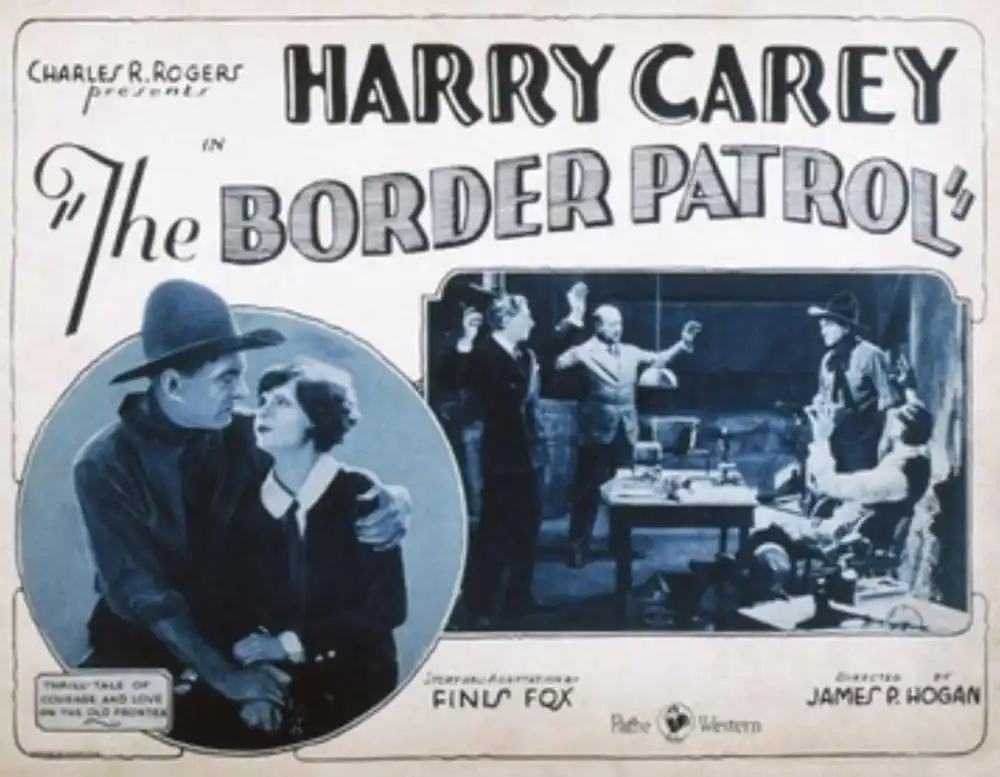
A definitive 6.7/10 rating for a film that redefined the boundaries of cult cinema. The Border Patrol remains a cornerstone of transgressive art.
For anyone approaching The Border Patrol today, the immediate question is context. This 1925 silent Western, starring Harry Carey as a Texas Ranger tracking counterfeiters, is less a thrilling genre entry for modern audiences and more a historical artifact. It will appeal most strongly to silent film enthusiasts, particularly those with an interest in early Westerns and Harry Carey’s specific brand of laconic heroism. Casual viewers, accustomed to faster pacing and more complex narratives, will likely find its rhythms challenging and its dramatic stakes muted.
The film centers on Texas Ranger Bill Storm, played by Harry Carey, who is tasked with infiltrating a counterfeiting ring in El Paso. Carey, a veteran of the silent era, brings his characteristic understated toughness to Storm. He’s a man of few gestures, conveying resolve through his posture and steady gaze, which works well for the character. His performance is one of the more grounded elements, avoiding the broader theatrics common in some silent films.
His foil arrives in the form of New York socialite Beverly Dix, portrayed by Kathleen Collins, whose car has been wrecked on the way to El Paso. Collins’ interpretation of Beverly is initially quite broad; she’s all dramatic sighs and exaggerated frustration, fitting the stereotype of an urbanite out of her element. There’s a curious moment early on when, after her car breaks down, she seems more concerned with the dust on her dress than the actual damage, a small but telling detail about her character's initial detachment from the harsh realities of the frontier. As the narrative progresses, however, her performance settles, and she begins to convey a growing awareness and resilience that feels more authentic, especially as she becomes inadvertently embroiled in Storm’s investigation.
The dynamic between Storm and Dix is the film’s emotional core, such as it is. Their initial interactions are marked by a polite but palpable awkwardness, a clash of worlds that feels natural. The script, credited to Finis Fox, leans into this, using intertitles to highlight their differing perspectives without overstating the obvious. It’s not a romance brimming with sparks, but rather a slow burn of mutual respect, occasionally punctuated by moments where Dix’s naiveté clashes with Storm’s pragmatism.
As with many films of its era, The Border Patrol demands patience. The pacing is deliberate, allowing scenes to unfold without the rapid-fire editing modern audiences expect. Action sequences, particularly the pursuit of the counterfeiters, are staged with a certain earnestness, but they lack the visceral impact or intricate choreography that would come later in the genre. The climactic shootout, while energetic, suffers from a bewildering cutaway to a lone horse grazing nearby, momentarily shattering the tension without apparent thematic purpose. It’s a small detail, but one that pulls you out of the moment.
The plot itself is fairly straightforward: a good guy tracking bad guys. Richard Tucker and James A. Marcus play the primary antagonists, the leaders of the counterfeiting ring. Their villainy is established quickly, mostly through scowling close-ups and furtive glances. There isn’t much depth to their motivations beyond greed, which is typical for the era. The narrative progression feels functional, moving from one plot point to the next without much in the way of subplots or character development beyond the core duo.
Visually, the film benefits from its location shooting, lending a degree of authenticity to the desert landscapes. The cinematography, though largely uncredited, effectively captures the vastness of the Texas borderlands, using wide shots to establish the isolation and scale of the environment. Interior scenes, however, often feel static, relying on simple setups and flat lighting. There’s a particular sequence inside the counterfeiters' hideout where the shadows are meant to imply menace, but the execution feels a bit rudimentary, making it hard to discern specific actions.
Costume design is period-appropriate, with Storm’s Ranger uniform striking a balance between practical workwear and heroic iconography. Beverly Dix’s initial sophisticated attire contrasts sharply with the rugged environment, visually reinforcing her fish-out-of-water status. As she spends more time in the West, her wardrobe subtly shifts, shedding some of its initial fussiness, a small visual cue of her adaptation.
Strengths:
Weaknesses:
The Border Patrol is a film that exists more for its historical significance than its entertainment value for a broad modern audience. It’s a competent, if unremarkable, silent Western that showcases Harry Carey’s enduring appeal. If you have a deep appreciation for silent cinema, particularly the Westerns that helped define early Hollywood, it’s worth seeking out as a curio. However, if you’re looking for a gripping, fast-paced narrative or groundbreaking visual artistry, this 1925 production will likely leave you wanting. It’s a film that asks you to meet it on its own terms, and for some, that journey will be its own reward.
IMDb 6.9
1920
Community
Log in to comment.