DbcultAccessing Vault...
5.4/10
Senior Film Conservator
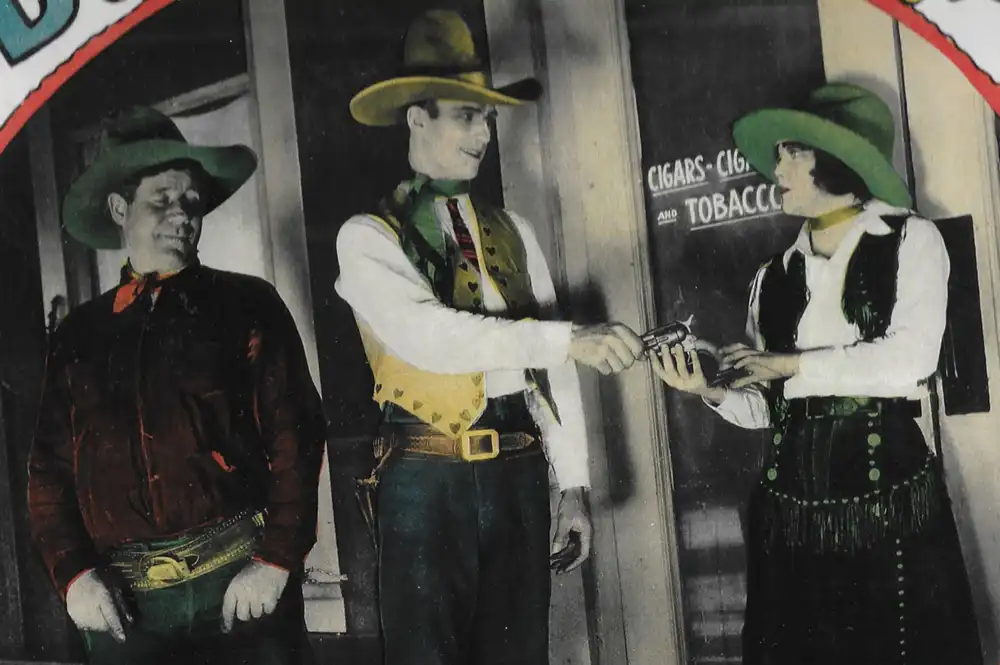
A definitive 5.4/10 rating for a film that redefined the boundaries of cult cinema. The Boss of Rustler's Roost remains a cornerstone of transgressive art.
“The Boss of Rustler's Roost” isn't a film for everyone, let's be clear. If you're looking for a meticulously restored classic or some lost masterpiece of silent cinema, you're going to be deeply disappointed. This is for the dedicated Western completist, the kind of person who finds joy in the sheer raw output of 1920s B-pictures, or maybe someone just curious about how basic, no-frills storytelling unfolded on screen back then. Everyone else? You can probably give this a pass.
The first few minutes hit you with a kind of... well, bluntness. There’s a title card, then a shot of a dusty road, then Tom London – playing the hero, naturally – just appears. No grand entrance, no real setup. He’s just there. If you’re not already adjusted to the particular cadence of these quick-and-dirty silent Westerns, that initial lack of ceremony can be a bit jarring. It’s less "cinematic event" and more "let's get this over with."
The plot, what there is of it, concerns rustling. Shocking, I know. London’s character, Jim, rides into a town where cattle are disappearing, and a local strongman, a fellow named 'The Boss' (played with a certain heavy-handed menace by Frank Clark), clearly runs things. Eugenia Gilbert is the standard-issue rancher's daughter, May, who quickly becomes Jim's reason for sticking around, beyond just general do-goodery. Their chemistry is... functional. They share glances. He saves her from a mild predicament. It’s all very by-the-numbers, which isn't a criticism in itself, but it does mean you’re constantly waiting for something, anything, to elevate it.
And sometimes, it almost does. There’s a scene early on where Jim is trying to get information, and the townspeople are all so clearly terrified of The Boss. One old man just shakes his head repeatedly, his eyes wide, and the camera just holds on him for a beat too long. It’s not a brilliant performance, but that extended silence, that slightly overdone fear, somehow makes the threat feel a little more real than the actual villain's posturing. It's like the film accidentally stumbles into something resonant.
Then you get a horse chase. And another. And another. They all sort of blend together after a while. The camera work is often utilitarian, just capturing the action without much thought for composition. You see the same few hills, the same dusty trails. It feels less like a journey and more like a loop. You can almost feel the budget constraints breathing down the director's neck.
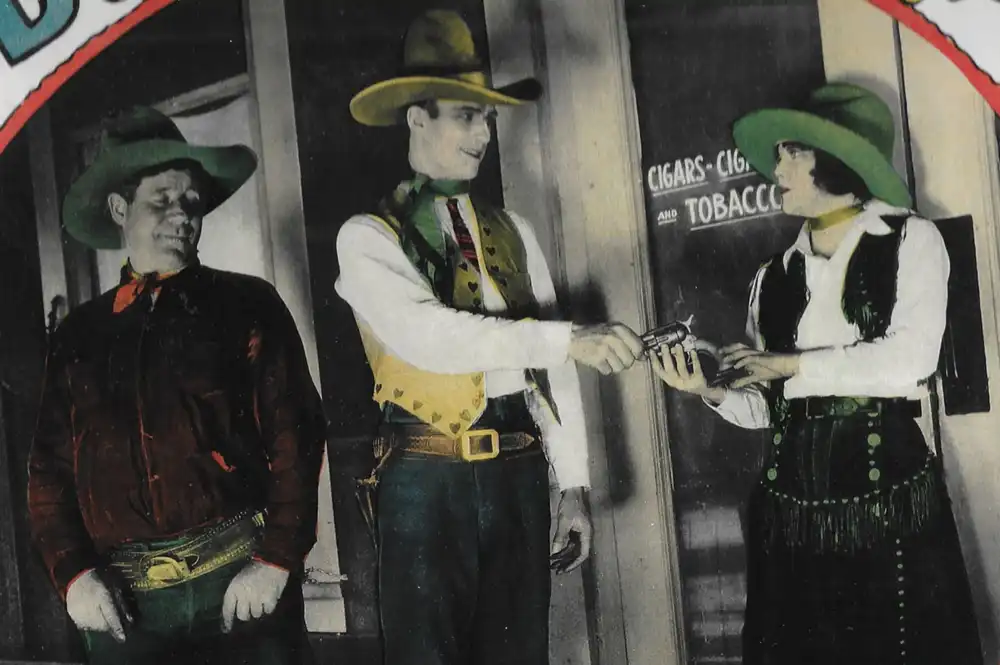
Ben Corbett, playing a henchman, actually provides a few unintentional laughs. His expressions are so wildly exaggerated, even for a silent film, that you start to wonder if he's in a different movie. There's a moment where he's caught doing something nefarious, and his face goes through about five different stages of surprise, anger, and cartoonish villainy in quick succession. It's less acting and more a series of poses. A genuine smile crept onto my face during that bit. It's a welcome break from the earnest, if somewhat dull, heroics.
The editing is often peculiar. Scenes cut abruptly, sometimes mid-gesture, as if someone decided the previous shot had gone on long enough and just lopped off the end. There’s one particular sequence where Jim and May are talking (via intertitle, of course), and the camera cuts between their faces with such speed that it feels like a jump scare. It doesn't build tension; it just feels choppy. It’s the kind of editing that makes you wonder if they were trying to save on film stock or if it was just a typical day in the cutting room for these types of productions.
The climax, when it finally arrives, feels a bit rushed after all the slow build-up of disappearing cows. It’s a standard shootout, a bit of fisticuffs, and the bad guys get their comeuppance. There’s a specific shot of The Boss falling from a cliff – clearly a dummy, and not a very convincing one – that just makes you chuckle. It’s not meant to be funny, but the sheer lack of illusion makes it so.
One thing that sticks with you, oddly, is the sheer emptiness of some of the backgrounds. When the characters are out in the "wilderness," it's just... scrub. No interesting rock formations, no dramatic skies. Just endless, flat scrubland. It adds to the feeling that this whole world exists only for these few characters, and nothing else matters. It's a stark contrast to the epic scope some silent Westerns managed, even on a budget. This one feels contained, almost claustrophobic in its openness.
Is “The Boss of Rustler's Roost” a good film? Probably not, by most metrics. But it's a fascinating artifact. It’s a glimpse into the churn of early Hollywood, where stories were simple, emotions were broad, and efficiency was king. You watch it not for the artistry, but for the accidental moments of charm, the technical quirks, and the sheer historical curiosity of seeing what passed for entertainment almost a century ago. It’s a film that definitely was. And that, sometimes, is enough.
IMDb 4.9
1929
Community
Log in to comment.