DbcultAccessing Vault...
6.5/10
Senior Film Conservator
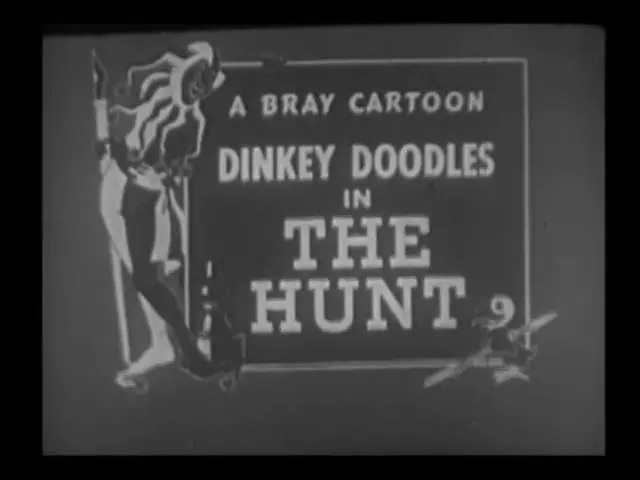
A definitive 6.5/10 rating for a film that redefined the boundaries of cult cinema. Dinky Doodle in the Hunt remains a cornerstone of transgressive art.
The silent era of animation remains a fertile ground for those seeking the primordial soup of cinematic visual language. Among the most idiosyncratic artifacts of this period is Dinky Doodle in the Hunt, a work that showcases Walter Lantz not merely as a technician, but as a visionary architect of the impossible. While contemporary audiences might associate Lantz exclusively with the manic energy of Woody Woodpecker, his earlier experiments with the Dinky Doodle series reveal a sophisticated preoccupation with the intersection of live-action reality and the limitless potential of the inkwell.
In Dinky Doodle in the Hunt, the narrative architecture is deceptively simple. Dinky and his faithful, if somewhat inept, dog Weakheart set out on a hunting expedition. However, the film quickly abandons the linear progression of a traditional sporting tale in favor of a series of surrealist vignettes. This is not the gritty realism found in Up and Going; rather, it is a playground of elastic physics. Lantz utilizes the 'interact with the creator' trope—pioneered by the likes of Max Fleischer—but imbues it with a distinct sense of playfulness that feels remarkably modern.
The interaction between Lantz’s live-action hand and the animated Dinky serves as a precursor to the postmodernist breaking of the fourth wall. Unlike the dramatic tensions explored in Bella Donna, the conflict here is whimsical, revolving around the artist's ability to manipulate the environment of his subjects. When Lantz draws a weapon or a trap, he is not just facilitating a plot point; he is asserting the dominance of the creator over the created, a theme that resonates through the history of the medium.
When we look at the broader landscape of 1920s cinema, Dinky Doodle in the Hunt stands out for its technical audacity. While films like John Heriot's Wife or Builders of Castles were grounded in the burgeoning conventions of social drama and architectural melodrama, Lantz was busy dismantling the very notion of a fixed frame. The fluidity of Dinky’s movements suggests a kinship with the kinetic energy of Look Out Below!, yet there is an added layer of artifice here that demands a different kind of engagement from the viewer.
Consider the sequence where the hunt goes awry. The slapstick is not merely physical; it is ontological. The prey becomes the predator, and the environment itself shifts with the stroke of a pen. This fluidity is a far cry from the rigid theatricality of Willy Reilly and His Colleen Bawn. Lantz is experimenting with the idea that in animation, the only limit is the edge of the paper. This sense of unbound potential is what makes the Dinky Doodle shorts so vital even a century later.
Walter Lantz’s contribution to the medium is often overshadowed by the Disney behemoth, but Dinky Doodle in the Hunt proves that his early work was just as innovative. The film’s pacing is relentless, a characteristic it shares with Hick Manhattan, but its focus is narrower and more intense. By centering the action on a small boy and his dog, Lantz taps into a primal sense of wonder and mischief that is universal. It lacks the heavy-handed moralizing found in Everyman's Price, opting instead for a pure, unadulterated exploration of visual gags.
The character of Weakheart, the dog, deserves special mention. In an era where animal companions were often relegated to background noise or simple plot devices, Weakheart exhibits a range of emotive responses that prefigure the great animated sidekicks of the 1930s and 40s. His interactions with Dinky are characterized by a pathetic yet endearing loyalty that provides the film’s emotional core. This relationship is a stark contrast to the more cynical depictions of companionship in Singer Jim McKee.
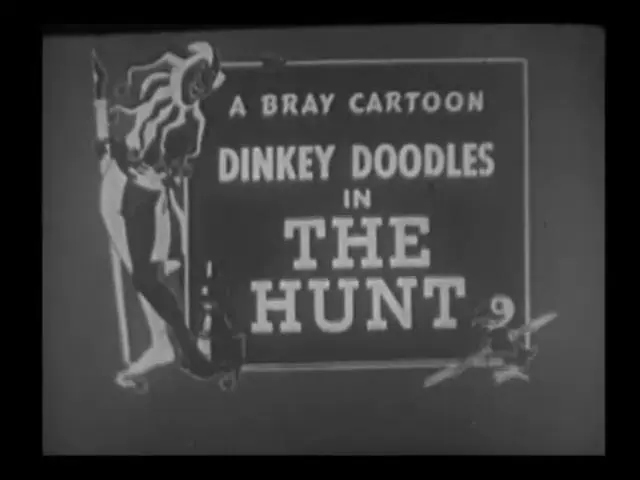
The technical hurdles Lantz overcame to produce Dinky Doodle in the Hunt are staggering. The registration of live-action footage with hand-drawn animation required a precision that few possessed in 1925. Each frame where Lantz’s hand enters the frame is a testament to meticulous planning. This isn't the grand spectacle of Minaret Smerti, but a miniature marvel of engineering. The way the light hits the paper, the shadows cast by the 'real' objects on the 'drawn' world—these are the details that elevate the short from a mere novelty to a piece of art.
Furthermore, the film’s use of negative space is masterful. Lantz understands that in a hunt, the silence and the emptiness of the woods are just as important as the action. This use of space evokes a sense of isolation that we might find in Wild, though filtered through the lens of a Saturday morning serial. The 'woods' in Dinky’s world are a construct, and Lantz never lets us forget it, occasionally stripping back the background to remind us of the white abyss of the drawing board.
To view Dinky Doodle in the Hunt today is to gaze into a mirror of 1920s American sensibilities. There is a rugged individualism at play, a fascination with the frontier—even if that frontier is made of celluloid. While international cinema was producing works as diverse as Eine weisse unter Kannibalen or the German expressionist echoes of Der verlorene Schuh, American animation was carving out a niche of pure, joyous kineticism. Lantz was at the forefront of this movement, creating a language that spoke to children and adults alike.
The film also touches upon the innocence of the era, a quality it shares with Kids and Kidlets. There is no malice in Dinky’s hunt; it is a game, a performance for the unseen audience. This lack of cynicism is refreshing in our modern, hyper-aware age. Even when the gags lean into the absurd—such as a bear being outsmarted by a drawing of a trap—the logic remains consistent within the world Lantz has built. It is a world where a child can be a master hunter and a dog can be a philosopher of the pratfall.
Ultimately, Dinky Doodle in the Hunt is a triumph of imagination over artifice. It serves as a crucial link in the chain of animation history, connecting the early experiments of Winsor McCay to the later brilliance of the Looney Tunes era. It lacks the heavy dramatic weight of A kölcsönkért csecsemök, but it makes up for it with sheer, unbridled creativity. Walter Lantz proved that a man with a pen could be a king of a thousand worlds, and Dinky Doodle was his most charming ambassador.
For the modern cinephile, this short is more than a historical curiosity. It is a masterclass in visual storytelling, a reminder that before there were pixels and polygons, there was the line, the ink, and the infinite ingenuity of the human hand. As Dinky and Weakheart fade back into the white of the page at the film's conclusion, one cannot help but feel a sense of loss—not for the characters themselves, but for the era of experimental freedom they represent. This is essential viewing for anyone who wishes to understand the DNA of the animated form.
In the grand tapestry of silent film, Lantz’s work remains a vibrant, golden thread, shimmering with the wit of a pioneer who knew that the best way to capture reality was to draw a better one.
IMDb 6.7
1923
Community
Log in to comment.