DbcultAccessing Vault...
6.5/10
Senior Film Conservator
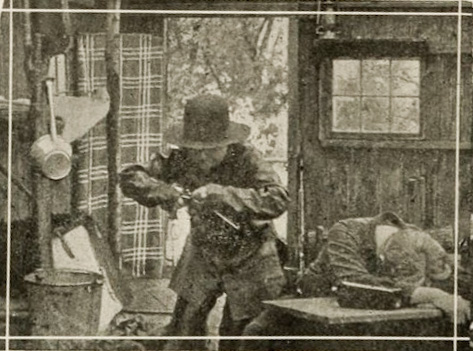
A definitive 6.5/10 rating for a film that redefined the boundaries of cult cinema. The Boundary Rider remains a cornerstone of transgressive art.
Step back into an era when cinema was still finding its voice, an epoch of raw narratives and burgeoning storytelling techniques, and you might stumble upon a cinematic artifact like The Boundary Rider. This film, a testament to the early 20th century's fascination with crime, justice, and the dramatic turns of fate, unfurls a sprawling tapestry of urban intrigue and frontier resilience. It's a journey that begins in the smoky, clandestine corners of New York City and culminates in the rugged, untamed wilderness, all against the backdrop of a relentless pursuit of truth.
The narrative thrust of The Boundary Rider is immediately compelling, drawing the viewer into the high-stakes world of federal revenue agents battling the insidious scourge of opium smuggling. From the outset, the film establishes a palpable sense of urgency, with the authorities meticulously tracking a network that funnels the illicit drug into the city's veins. Their initial focus on a particular Chinaman, a seemingly minor cog in the vast machinery of the drug trade, serves as the critical thread that, when pulled, begins to unravel the entire illicit operation. It's a classic investigative setup, but one imbued with the moral gravitas of a society grappling with the profound social costs of addiction and organized crime.
The plot, surprisingly intricate for its time, hinges on a seemingly mundane financial transaction gone awry. The Chinaman's failure to make timely payment for his last consignment of opium precipitates a crisis further up the chain, ultimately drawing the shadowy chief of the international syndicate out of the ether and into the harsh glare of New York's underbelly. This forced emergence of the mastermind is a stroke of narrative genius, transforming an abstract threat into a tangible, dangerous presence. His visit to his local broker, John Maxwell, is intended to be cloaked in secrecy, a testament to his paranoia and the inherent risks of his trade. However, a sharp-eyed stenographer witnesses this clandestine meeting, a seemingly minor detail that will prove to be a cataclysmic turning point.
The film swiftly escalates into a maelstrom of events. No sooner has the Chinaman finally settled his overdue account than the revenue agents, having patiently stalked their prey, descend upon the broker's office. What they discover, however, is far more grim than a simple drug bust: the lifeless form of John Maxwell. In a cruel twist of fate, all circumstantial evidence points directly to the clerk, a man caught in the wrong place at the utterly wrong time. He is summarily accused of murder, his life irrevocably altered in an instant. This sudden, brutal injustice is the emotional core of the film, transforming a crime procedural into a deeply personal quest for vindication. The swiftness of his arrest, and the palpable sense of a system rushing to judgment, evokes a strong sense of pathos for the protagonist.
Forced into a desperate flight, the clerk, whose name we are not explicitly given but whose plight becomes universally relatable, makes a daring escape from the clutches of the law. His journey takes him far from the suffocating confines of the city, into the vast, unforgiving landscape of the North Country. Here, amidst the rugged beauty and isolation, he seeks not just refuge, but a chance at a new identity, a new purpose. His application to join the Boundary Riders—a group synonymous with upholding law and order in the wild frontier—is a poignant irony. The accused murderer seeks to become an agent of justice, a testament to his inherent moral compass despite the shadow cast upon him. His acceptance, after a period of rigorous probation, solidifies his transformation, allowing him to embody the very principles he was unjustly denied.
This shift in setting and character arc is particularly noteworthy. It allows the film to explore dualities: the corruption of urban life versus the perceived purity of the wilderness, the rigid application of law versus a more nuanced understanding of justice. The clerk's new life as a Boundary Rider is not merely a hiding place; it's a crucible in which his character is forged anew, preparing him for the ultimate confrontation with his past. One can draw parallels to other narratives of frontier justice, though perhaps less grimly than a From Dusk to Dawn, instead focusing on the moral rectitude of the individual against systemic failure, much like the themes of duty and perseverance found in the spirit of Northern Lights, if we imagine its core to be about individuals upholding order in challenging environments.
The threads of fate, once severed, begin to re-entwine with a startling precision. During one of his patrols, the clerk discovers a cryptic note, a seemingly innocuous piece of paper that, in the hands of a man with a burning desire for truth, becomes a critical clue. This note, an unexpected echo from his past, points directly to the headquarters of the very opium smugglers who indirectly led to his framing. The universe, it seems, is conspiring to bring him face to face with his tormentors, offering a serendipitous path to redemption.
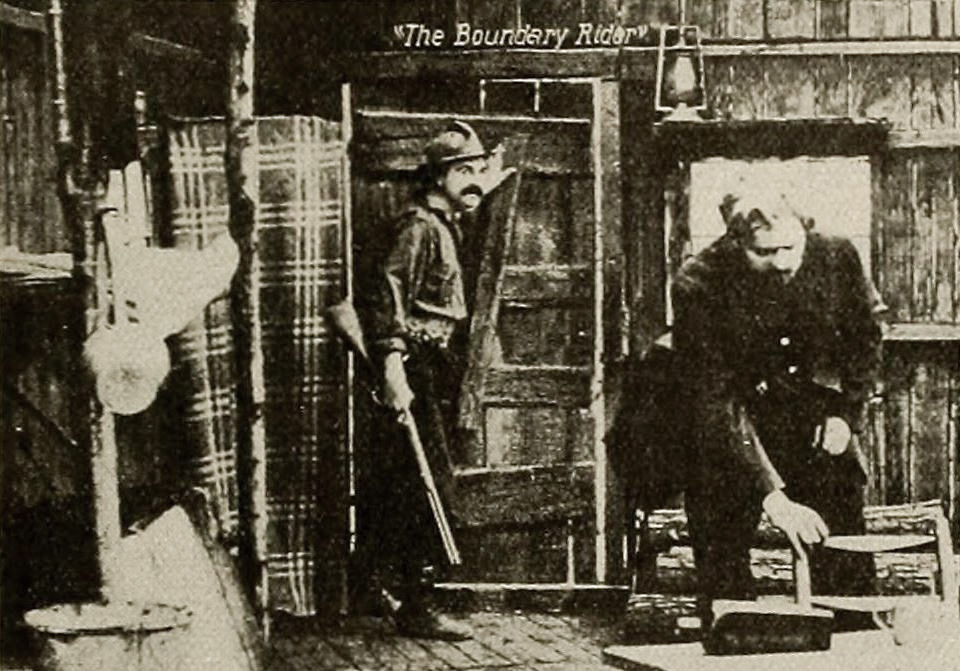
Just as this new lead emerges, the tenacious detective from the New York Revenue Service, relentlessly pursuing his initial investigation, arrives at the Boundary Rider camp. The moment of recognition between the detective and the clerk is charged with dramatic tension. It's a collision of past and present, of accusation and newfound authority. The clerk, however, now stands on firmer ground, his character having been tested and proven within the ranks of the Boundary Riders. He is no longer merely a fugitive, but a man of purpose, equipped with both a clue and the moral high ground.
Understanding the delicate nature of his predicament and the need for irrefutable evidence, the clerk enlists the aid of a truly clever woman investigator. Her role is pivotal, injecting a crucial element of ingenuity and female agency into a narrative that might otherwise have been dominated by masculine tropes of justice. In a stroke of brilliant subterfuge, she assumes the guise of a Chinaman and infiltrates the smugglers' headquarters, securing employment as a cook. This act of daring infiltration, a testament to her intelligence and courage, is perhaps one of the most compelling aspects of the film. It highlights the power of observation and the meticulous gathering of intelligence, a stark contrast to the initial, hasty accusations that framed our protagonist.
Armed with the invaluable intelligence meticulously gathered by the investigator, the clerk leads the revenue men to the very heart of the opium ring. The ensuing raid is depicted with an inevitable sense of triumph, a culmination of sustained effort and strategic planning. The criminal enterprise is dismantled, its nefarious operations brought to a definitive halt. As the dust settles and congratulations are showered upon the new member of the Boundary Riders for his instrumental role in the successful operation, a shadow falls over the celebration.
The New York detective, ever vigilant and bound by his earlier duties, steps forward and arrests the clerk on the original charge of murdering his employer. It's a moment of profound dramatic irony, a cruel twist of fate that threatens to snatch victory from the jaws of justice. The audience, having witnessed the clerk's arduous journey and his heroic efforts, feels the sting of this renewed accusation keenly. This scene, a powerful example of tension building, showcases the narrative's ability to keep the audience on the edge, even when a resolution seems imminent.
However, the clever investigator, whose quiet diligence has underpinned the entire operation, emerges as the true deus ex machina. Her work, far from being confined to infiltration, extends to meticulous forensic detail. She produces a crucial piece of evidence: a coat belonging to the head smuggler, from which two pieces of cloth have been torn. These fragments, when matched against two pieces found clutched in the hand of the deceased John Maxwell, provide irrefutable proof. The match is perfect, a silent scream from the grave, definitively exonerating the clerk and exposing the true murderer – the chief smuggler himself. This dramatic reveal is not just a plot device; it's a powerful statement on the nature of truth and the often-unseen work required to bring it to light. It elevates the film beyond a simple chase narrative to a sophisticated exploration of justice. The precision of this evidence, a 'smoking gun' of fabric, is a satisfying resolution, offering a cathartic release after sustained tension.
The characters, though perhaps broadly drawn in the style of early cinema, are nonetheless compelling in their respective roles. The unnamed clerk, presumably played with a mix of earnestness and desperation by F.W. Stewart, undergoes a profound transformation. He begins as a victim of circumstance, a man caught in a web of criminal activity he doesn't understand. His flight and subsequent integration into the Boundary Riders represent a conscious choice to align himself with justice, even while under a cloud of suspicion. His arc is one of self-redemption, a testament to the human spirit's capacity to seek righteousness even when unjustly condemned. This journey from accused to accuser, from fugitive to law enforcer, is the narrative backbone of the film, giving it a moral weight that resonates beyond its simple plot mechanics.
The chief smuggler, likely portrayed by Thurlow Bergen, embodies a classic villain archetype: ruthless, calculating, and ultimately undone by his own hubris and a fatal flaw in his planning. His decision to personally intervene, and the subsequent murder, are born of a desire to maintain control and eliminate witnesses, a common characteristic of criminal masterminds. His eventual downfall, orchestrated by the very man he framed, provides a satisfying sense of poetic justice. The detective, whose relentless pursuit drives much of the early plot, represents the unwavering, methodical arm of the law. His initial focus on the clerk, though misguided, highlights the challenges of early criminal investigation and the reliance on circumstantial evidence, making his eventual acceptance of the truth all the more significant.
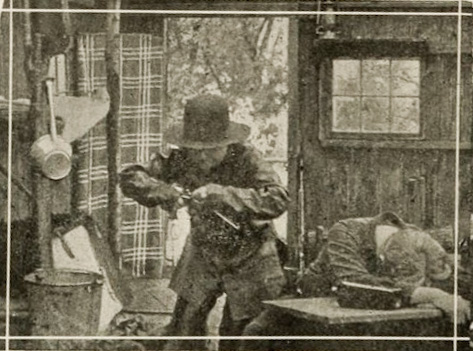
However, it is the clever woman investigator, possibly Elsie Esmond or Frances White bringing depth to this role, who stands out as a truly progressive and pivotal figure. In an era where female roles in cinema were often relegated to damsels in distress or romantic interests, her character is an active agent of change, a testament to intelligence, disguise, and meticulous investigative work. Her ability to infiltrate the criminal organization, coupled with her forensic acumen, makes her the true hero of the piece. She is not merely an assistant; she is the architect of the final revelation, demonstrating that intellect and cunning can be as potent as brute force in the pursuit of justice. Her character elevates the film, offering a glimpse into the evolving portrayal of women in early cinema.
While specific directorial choices are often lost to the mists of time for films of this vintage, one can infer much about The Boundary Rider's cinematic language from its narrative structure. The film likely relied on strong visual storytelling, expressive acting (a hallmark of silent cinema), and the strategic use of intertitles to convey dialogue and crucial plot points. The pacing, though perhaps slower by modern standards, would have been deliberate, building suspense through gradual revelations and dramatic confrontations. The contrast between the shadowy urban scenes and the expansive, natural landscapes of the North Country would have been visually impactful, reinforcing the thematic tension between civilization and wilderness, corruption and purity.
Thematically, The Boundary Rider delves into timeless questions of justice, identity, and redemption. It explores how easily an individual can be caught in the gears of a larger, unjust system, and the profound struggle required to reclaim one's name and honor. The film also touches upon societal anxieties surrounding organized crime, particularly the opium trade, which was a significant concern in the early 20th century. The portrayal of the 'Chinaman' character, while perhaps reflecting the racial stereotypes prevalent at the time, serves primarily as a narrative device to expose the larger criminal network, rather than as a character study in itself. The film’s focus remains firmly on the clerk’s personal journey and the broader mechanisms of justice.
The concept of the Boundary Riders itself is fascinating. It evokes a sense of rugged individualism and self-reliance, a law unto themselves in a territory beyond established urban jurisdiction. This setting allows for a more fluid and morally ambiguous form of justice, where the clerk can operate outside the strictures that initially condemned him. It's a space where ingenuity and personal courage triumph over bureaucratic limitations. This romanticized view of frontier justice provides a compelling counterpoint to the more rigid, and initially flawed, justice system of New York.
When placed within the broader context of early cinema, The Boundary Rider stands as a robust example of a well-constructed crime drama. It shares thematic DNA with other films of its era that grappled with crime and detection, such as the intricate mysteries often found in series like Fantomas: The Man in Black, where cunning masterminds and resourceful investigators clash in elaborate schemes. The dramatic reveal of the true killer through a physical piece of evidence is a trope that has endured for decades, a foundational element of detective fiction that The Boundary Rider employs with satisfying efficacy.
The film's exploration of mistaken identity and the quest for vindication also finds echoes in later cinematic narratives, solidifying its place as a precursor to countless 'framed man' thrillers. One might even draw a very loose thematic thread to films like The Fatal Wedding, which, while perhaps different in plot specifics, would have also relied on dramatic revelations and the unraveling of complex personal stakes in a similar era of filmmaking. The emotional resonance of an innocent person fighting against overwhelming odds is a universal narrative, expertly tapped into here.
Ultimately, The Boundary Rider is more than just a historical curiosity; it's a compelling piece of early filmmaking that demonstrates a sophisticated understanding of narrative tension, character development (even within the constraints of silent film), and thematic depth. Its intricate plot, driven by a compelling central mystery and a protagonist's journey of self-discovery and vindication, ensures its enduring appeal. The film reminds us that the fundamental elements of powerful storytelling—conflict, consequence, character, and resolution—transcend the technological limitations of any given era, continuing to captivate audiences with their timeless allure. It's a journey well worth taking, a ride through the boundaries of justice and injustice that still feels relevant today.
IMDb 5.3
1932
Community
Log in to comment.