DbcultAccessing Vault...
Cult Review
Senior Film Conservator

The Boy in Blue emerges from the cinematic ether as a profoundly unsettling yet mesmerizing experience. Directed by Monty Banks, this film is an intricate, multi-layered tapestry of mystery and the supernatural, where the delicate balance between the tangible and the ethereal is delicately maintained. Monty Banks, a filmmaker known for his innovative approach, has once again outdone himself with this gem of a production.
The narrative is centered around a young boy who, inexplicably, appears in various locations and times without any concrete explanation. This enigmatic figure, his spectral nature never fully explained, serves as a conduit for a series of interconnected stories that span multiple decades and continents. The viewer is drawn into this labyrinthine plot, a journey that is as much a psychological exploration as it is a visual odyssey.
Monty Banks' direction is a masterclass in ambiguity and visual storytelling. The use of lighting and shadow is particularly noteworthy, creating an atmosphere that is both inviting and chilling. The cinematography by Banks himself and the production design by Jane Hedges are integral to the film's success, effectively conveying the otherworldly nature of the story's setting. The costume design, by the always impeccable Mr. E. F. Smith, adds a touch of period authenticity and a dash of the fantastical, perfectly complementing the narrative's mystical elements.
The supporting cast, including notable actors such as Isabella St. Clair and Charles Delarue, provide a robust tapestry of performances that enhance the film's depth. Each character's arc is intricately woven into the larger tapestry, contributing to the overall thematic resonance of the film. Isabella St. Clair, in particular, delivers a nuanced and deeply moving performance as a character whose life is irrevocably altered by the boy's presence. Her portrayal adds a layer of emotional complexity that resonates throughout the film.
However, the real star of the show is undoubtedly Monty Banks. His performance as the enigmatic boy is a tour de force, capturing the essence of mystery and innocence in a way that is both captivating and unsettling. The dialogue is sparse, allowing the visuals and the performances to do the heavy lifting, and the result is a film that demands the viewer's full attention and engagement.
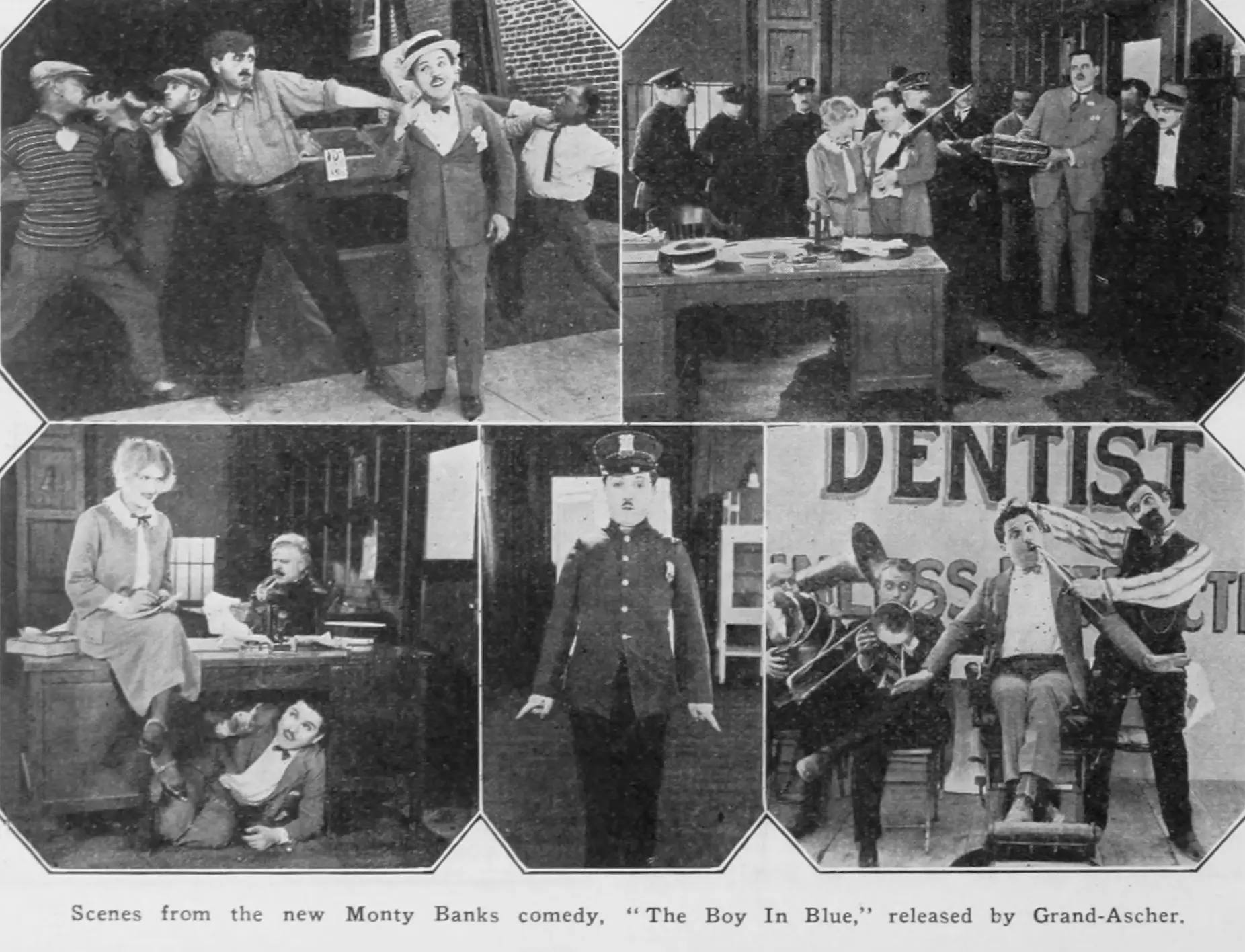
The soundtrack by Frederick W. Gifford is a crucial element, blending dissonant musical motifs with a haunting ambient score that complements the on-screen action perfectly. The cyclical nature of the story, with moments of revelation and despair, is underscored by Gifford's score, which serves as a constant reminder of the film's overarching themes.
'The Boy in Blue' is not without its challenges. The intentionally obscured narrative can be frustrating for those seeking straightforward answers, but for those willing to embrace the ambiguity, the rewards are significant. The film's reliance on visual and auditory cues to convey its message is a bold and effective choice, marking a departure from linear storytelling conventions. This approach demands a more active engagement from the audience, but the payoff is a much richer and more immersive viewing experience.
It is worth noting that 'The Boy in Blue' shares thematic and stylistic similarities with other films in the period, such as 'Love's Redemption' (1921) and 'The Sign of the Rose.' These films, like 'The Boy in Blue,' delve into the supernatural and explore the psychological impact of unexplained phenomena. However, Monty Banks elevates the genre with his unique vision and the impeccable craftsmanship of his production team.
The Boy in Blue is a film that defies easy categorization. It is a work of art that demands to be seen, not just watched. The intricate plot, the masterful direction, the powerful performances, and the haunting atmosphere all contribute to a viewing experience that is both intellectually stimulating and emotionally gripping. It is a film that challenges the viewer to question the nature of reality and the boundaries between the seen and the unseen.
In conclusion, 'The Boy in Blue' is a triumph of cinematic artistry. It is a film that should be on every film lover's radar, especially those who appreciate the nuances of storytelling and the power of ambiguity. Monty Banks has crafted a work that is not only visually stunning but also deeply thought-provoking, making it a must-see for cinephiles and lovers of atmospheric cinema alike.

IMDb 6.7
1926
Community
Log in to comment.