DbcultAccessing Vault...
6.1/10
Senior Film Conservator
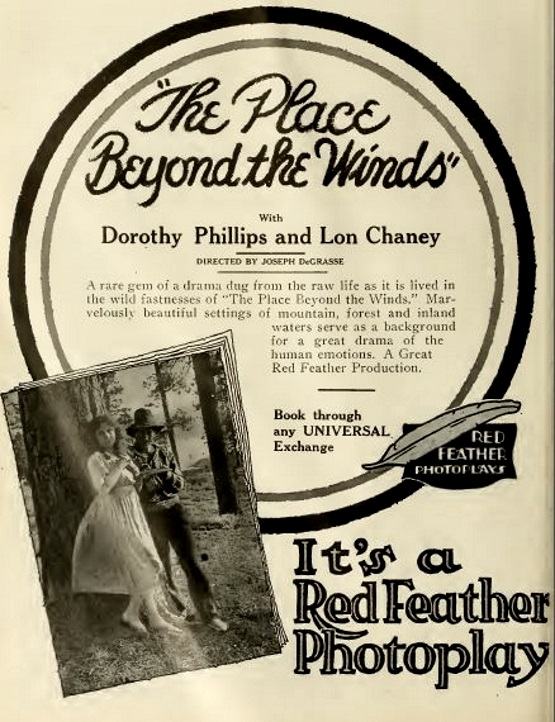
A definitive 6.1/10 rating for a film that redefined the boundaries of cult cinema. The Place Beyond the Winds remains a cornerstone of transgressive art.
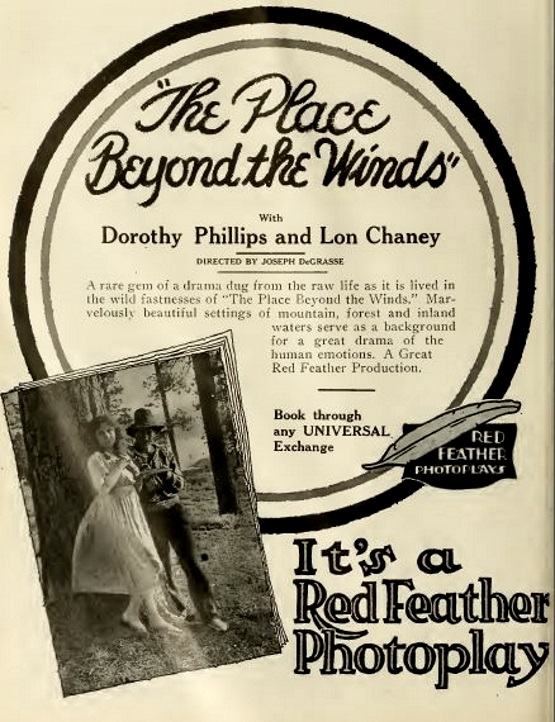
There are films that merely tell stories, and then there are films like The Place Beyond the Winds—a 1916 silent thunderclap that still smells of pine sap and gunpowder whenever the projector rattles to life.
Ida May Park, writing with the same pen that once stitched corsets of melodrama for Universal, here unpicks every seam of Victorian piety and lets the wilderness breathe. The result is a rustic epic that feels closer to D. H. Lawrence than to the nickelodeon norms of its day. Cinematographer King Gray shoots the forest as though it were a living organ: veins of sunlight pumping through chlorophyll, shadows that swallow hemlines whole. In 1916 most cameras were nailed to ballroom floors; Gray straps his to the back of a deer and lets it bolt.
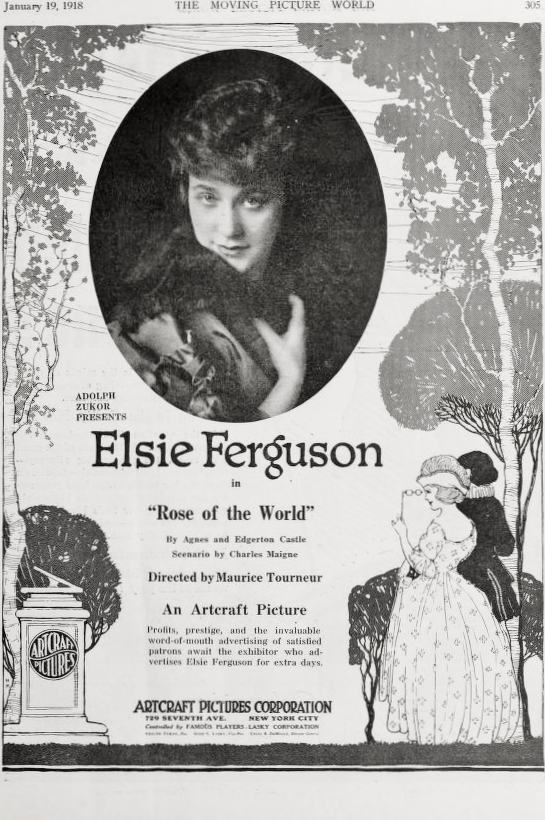
Forget the tidy synopses in vintage Moving Picture World ads—this narrative coils like woodsmoke. Priscilla Glenn is no placid country rose but a gale-force id. We first meet her dangling from a sycamore, hair matted with sap, laughing at gravity itself. Her father—played by Joseph De Grasse with a jaw permanently clenched around an invisible cigar—thinks books rot the womb. Between them stands the mother, a woman whose eyes have already died twice by reel two. The bond is less spoken than exhaled, a shared carbon-dioxide pact against patriarchal asphyxiation.
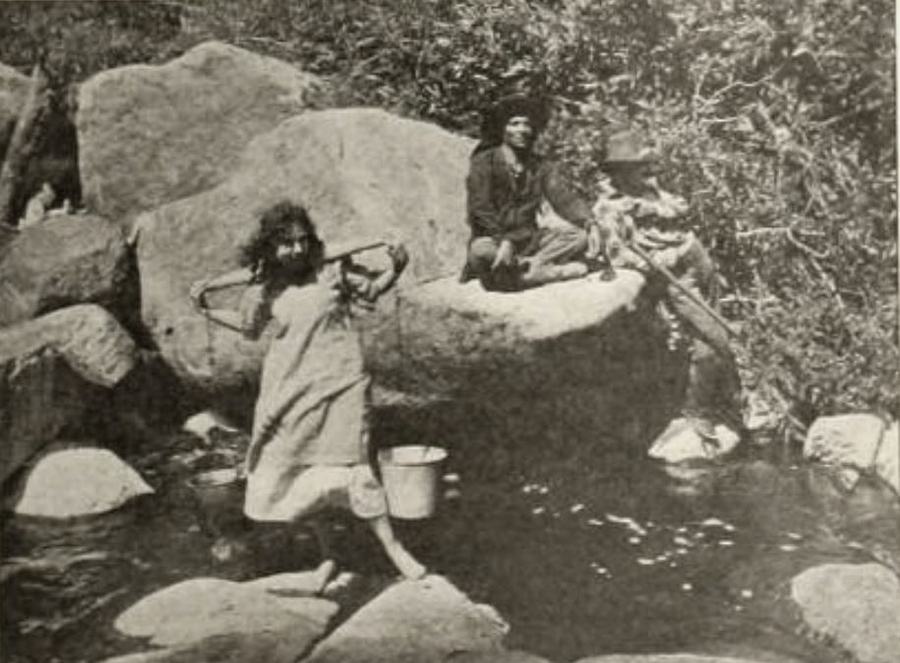
Into this Eden slouches Anton Farwell (Jack Mulhall), a schoolmaster whose collar is starched but whose conscience is hemorrhaging. He carries two crimes in his portmanteau: a murder committed for love, and the guilt of wanting to educate girls in an era when female literacy was considered a gateway to witchcraft. Mulhall, usually cast as callow juveniles, here looks perpetually surprised by his own capacity for sin; every time he adjusts his spectacles you fear the glass will crack under the weight.
The arrival of the Travers family shifts the film from pastoral poem to medical parable. Dick Travers (Lon Chaney, still years away from gargoyle fame) arrives on crutches that squeak like wet rope. Chaney, a master of body before he was a master of disguise, folds his six-foot frame into a question mark of pain. Watch the way he makes his legs seem weightless: the calf muscles flutter, the ankles roll inward like broken bird wings. When Dr. Leydward promises to “straighten the boy,” the line lands with the chill of a verdict rather than a cure.
Romance sparks not in moonlit clinches but in the exchange of textures: Priscilla teaches Dick how the bark of a birch feels like parchment; he teaches her how a violin note can vibrate inside the sternum like a second heart. Their first kiss is filmed in extreme silhouette—two profiles inked against a sunset that bleeds from amber to arterial crimson. Park understands that desire in 1916 had to be smuggled in chiaroscuro.
Jerry Jo, the half-Native outsider, is cinema’s earliest study in toxic incel pathology. Played by William Powers with eyes that glitter like mica, he lures Priscilla to the hilltop library under pretense of lending her Wuthering Heights. What actually happens remains elided—Park cuts from a slammed door to Priscilla’s boots crunching frost at dawn—but the town’s gossip mill crucifies her anyway. The film’s most radical gesture is refusing to restore her “purity.” She returns from the hill the same girl who climbed it; the damage lies in the beholder’s gaze.
Father Glenn’s subsequent banishment carries the blunt force of biblical exile. He doesn’t merely cast her out—he ritually un-threads her from the family tapestry, burning her pinafore in the yard while reciting Deuteronomy. The scene is lit like a witch trial: flames painted by hand onto monochrome stock, each frame tinged with sulfuric yellow. For 1916 audiences this was tantamount to heresy: a father unredeemed, a daughter unbroken.
The urban second act plays like Dickens filtered through German Expressionism. Priscilla, now dressed in a cloak the color of wet ash, walks streets where streetlamps flicker like dying fireflies. She becomes a nurse without credentials, slipping morphine into the mouths of consumptives while scanning every female face for Joan Moss—Anton’s lost Beatrice. Park intercuts these vigils with flashbacks of the murder: a hand clutching a pistol, a brother falling through stained glass, Joan’s hair unspooling in slow motion. The technique predates Prestuplenie i nakazanie by seven years, yet feels eerily modern.
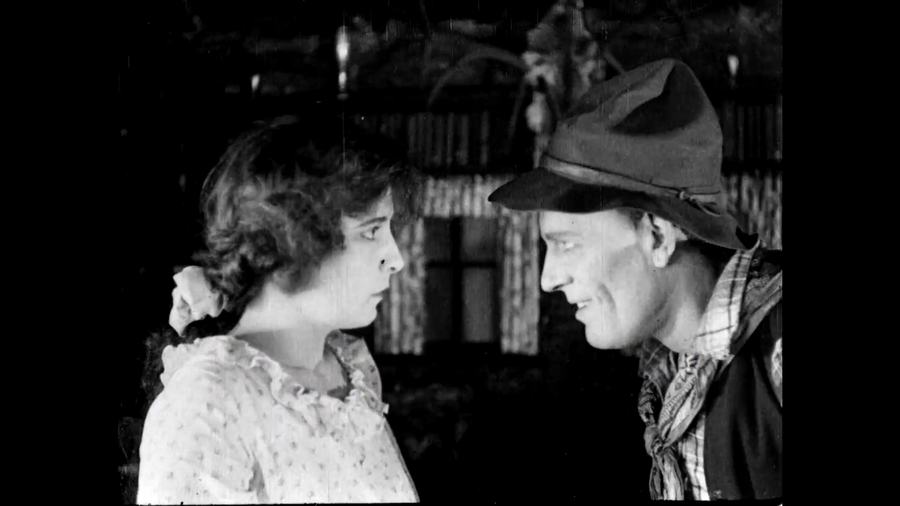
Meanwhile Dick, limbs now braced with steel and pride, tracks her through hospital corridors. Their reunion is staged in a ward of children with rickets—tiny skeletons flapping like birds against the sheets. He lifts his violin and plays the Bach Air; the camera pans across faces transfigured by music, ending on Priscilla’s eyes welling with tears that look like mercury. It’s silent cinema’s most transcendent use of counterpoint: sound imagined so vividly we swear we hear it.
The discovery of Joan occupies a single, suffocating reel. Priscilla follows Jerry Jo—now degenerated into a Quasimodo of rags—upstairs to a room where wallpaper peels like sunburned skin. Joan (Grace Carlyle) lies on a cot, hair white from phosphorus factory fumes, eyes still luminous with the madness of abandonment. In whispered close-ups she confesses: the crippled boy is Margaret Leydward’s secret son, swapped at birth to preserve bourgeois propriety. The monologue lasts ninety seconds but feels like a lifetime; Carlyle’s pupils dilate until the iris vanishes, giving her the stare of a saint on a medieval panel.
Park withholds judgment on Joan’s moral ledger. Yes, she betrayed Anton, but the film suggests betrayal itself is a symptom of a rigged social EKG. When Priscilla secures the pardon, it’s not through legal maneuver but by forcing Margaret to confront her own flesh in the form of a twisted child—a moment that anticipates the moral reckakoning in The Flames of Justice.
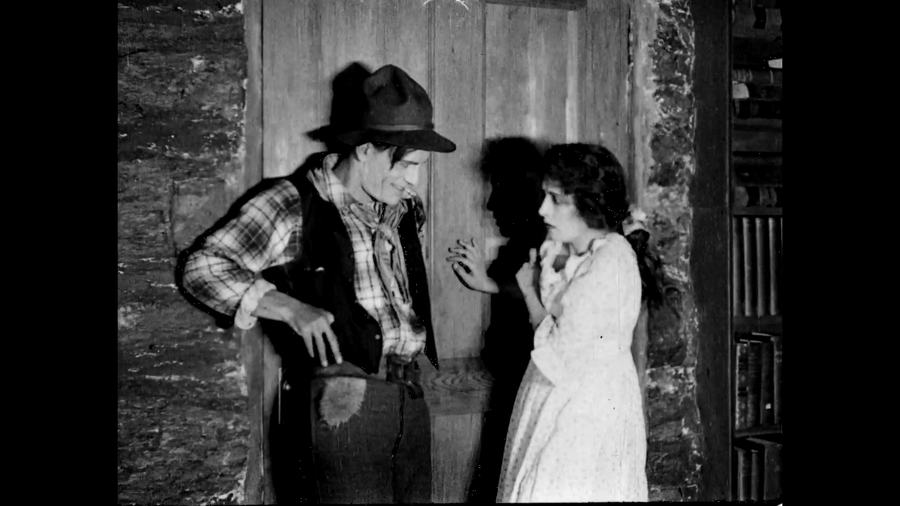
The final homecoming is stripped of all triumph. Priscilla’s mother has been lowered into a grave dug by the same hands that once dug potatoes; her father, now blind, sits at the table tracing the grain of wood as though reading braille of sins. When she enters, he lifts his face toward the sound of her breathing and says, “I see you still,” a line that chills because it’s both curse and benediction. He banishes her again, this time with the lethargy of a man evacuating a dream. She does not protest; she simply walks backward until the cabin shrinks to a dollhouse of grief.
The last movement occurs in a glade where shafts of light resemble cathedral buttresses. Priscilla has built an altar of river stones and wildflowers—her own sect of one. Dick arrives soundlessly, violin case in hand. He doesn’t speak (intertitles withhold even a sigh); he simply plays the same Bach piece, but slower, each bow stroke a heartbeat. Park holds the shot until the film itself seems to inhale. Finally Priscilla kneels, not in submission but in recognition that love, like moss, needs only a crack to grow.
Dorothy Phillips delivers the most corporeal performance of the silent era. Watch how her shoulders migrate forward when she feels observed, as though trying to fold herself into a paper crane. In city scenes she glides with the eerie smoothness of someone who has learned that stillness is armor. Opposite her, Jack Mulhall jettisons his pretty-boy reflexes; his Farwell ages a decade in every reel, the eyes sinking into bruised sockets until he resembles a Keats sonnet left in the rain.
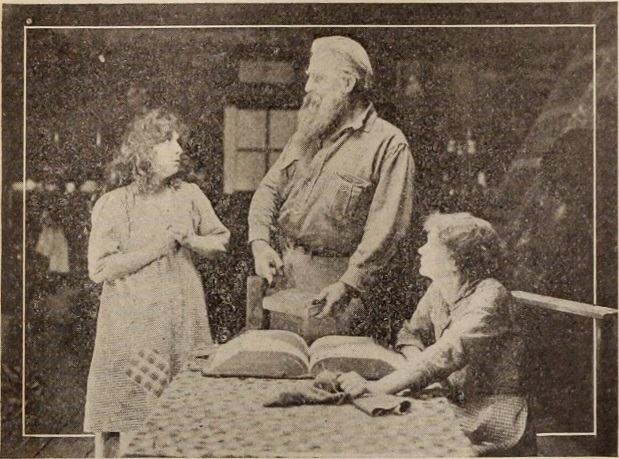
But it is Lon Chaney who prefigures the horror icon to come. The contortions he employs to suggest twisted limbs—knees locked backward, feet rotated 180 degrees—are so convincing that contemporary reviewers suspected trick photography. More astonishing is the way he modulates pain into grace; when Dick finally discards his braces, Chaney makes the act of standing upright feel like resurrection.
The tinting strategy alone deserves a dissertation. Interiors pulse with amber, suggesting kerosene dusk; exteriors alternate between viridian and cobalt, as though nature itself were mood-swinging. For the hilltop library seduction, Park bleaches the sequence into sickly cyan, then hand-paints Jerry Jo’s pupils crimson—an early example of isolated color that predates Synecdoche, New York by ninety-two years.
Superimpositions are used sparingly but devastatingly. When Joan confesses, her face dissolves over a shot of the crippled boy crawling, implying that motherhood is a ghost shackled to the living. The effect was achieved by rewinding the negative, exposing the same frame twice—analog ingenuity that digital compositors still envy.
Make no mistake: this is a feminist tract disguised as a rustic romance. Park refuses the marriage plot its usual catharsis. Priscilla’s worth is never validated by dowry or altar; even the final reunion with Dick is staged as parallel solitude rather than conjugal fusion. Compare this to Assigned to His Wife, where the heroine’s autonomy is surgically removed by the final reel.
Moreover, the film indicts the patriarchy twice: once through the father, again through Dr. Leydward, who believes science can straighten what society has bent. The real villain is not Jerry Jo but the lattice of gossip, ownership, and eugenics that turns a library into a brothel and a womb into a battlefield.
Only two 35mm prints are known to exist: one at UCLA, one in a private Bologna archive. Both are incomplete, missing the reel where Priscilla works in a garment factory infested with rats. Yet what remains is enough to certify The Place Beyond the Winds as the missing link between Griffith’s Victorian parables and the psychosexual wilderness of Still Waters.
Watch it with the windows open. Let the wind carry pine resin into the room. When the final iris closes on Priscilla’s altar, you may find yourself building your own cairn of stones and music, a quiet rebellion against every father who ever tried to edit your sky.
Verdict: 9.8/10—an unpolished gem that cuts glass.
IMDb 1
1915
Community
Log in to comment.