DbcultAccessing Vault...
Cult Review
Senior Film Conservator
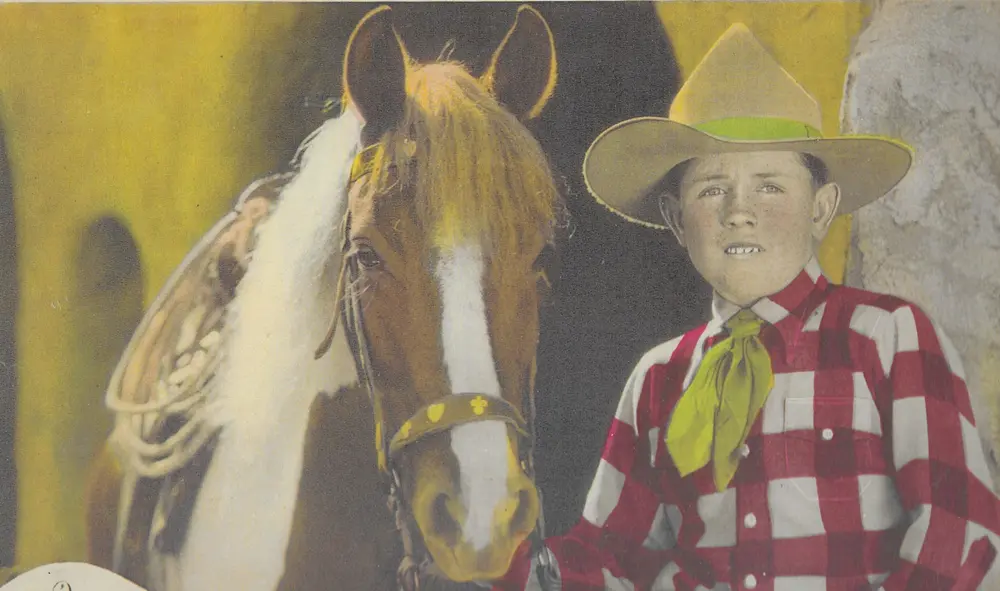
Short answer: No, unless you are a dedicated historian of the silent era or a fan of trick riding. This film is a relic of a vanished sub-genre known as the 'juvenile Western' that prioritized physical stunts over narrative depth.
This film is specifically for archival enthusiasts and those curious about the career of Buzz Barton. It is definitely not for viewers who require modern pacing, high-stakes dialogue, or complex character arcs.
1) This film works because of Buzz Barton’s genuine athleticism and the raw, unpolished energy of 1920s stunt work.
2) This film fails because the script is a skeletal framework that lacks even the basic emotional stakes found in contemporary dramas like Nobody's Wife.
3) You should watch it if you want to understand the transition of Western tropes from the silent era to the early talkies.
By 1927, the Western genre was already beginning to feel the weight of its own repetition. Producers were looking for a fresh angle, and they found it in the 'Boy Rider' archetype. Buzz Barton wasn't just a child actor; he was a phenomenon. Watching him mount a horse while it's in full gallop is a visceral reminder of a time when 'stunt doubles' were a luxury many B-units didn't use. In one specific scene during the first act, Barton evades a group of pursuers by sliding under the belly of his horse—a move that feels remarkably dangerous even by today's standards.
The film attempts to balance this physical spectacle with a plot involving a land dispute, but the stakes never feel real. When compared to the atmospheric tension of The Lure, The Boy Rider feels lightweight. It’s a matinee product, designed to capture the imaginations of children in 1927, and it carries that simplistic DNA in every frame. The script by Frank Howard Clark is efficient but utterly predictable. It hits the necessary beats—the arrival, the confrontation, the chase, the resolution—without ever deviating from the established path.
Buzz Barton is the sun around which the rest of the cast orbits. His performance is less about acting and more about presence. He has a natural, unforced charisma that makes his character’s impossible victories feel somewhat earned. However, the supporting cast often feels like they are acting in a different movie entirely. David Dunbar, playing the primary antagonist, uses the exaggerated gestures common in silent cinema, which often clash with Barton’s more naturalistic, movement-based style.
Frank Rice and William Ryno provide the necessary grit to ground the film, but they are given very little to do besides look concerned or menacing. Lorraine Eason, as the female lead, is unfortunately relegated to the 'damsel' role that was already becoming a tired trope. Unlike the more nuanced female portrayals in Mirandy Smiles, Eason is simply a prize to be protected, which limits the film's emotional resonance for a modern audience.
Director Sam Nelson, who also appears in the film, displays a functional understanding of the Western landscape. The cinematography isn't revolutionary, but it utilizes the natural light of the California desert to create a sense of scale. The wide shots of the chase sequences are the film’s strongest visual asset. There is a specific moment where the camera tracks alongside the riders at high speed; the dust clouds and the rhythmic pounding of hooves create a sense of immersion that static dramas like Props lack.
However, the pacing is uneven. Between the bursts of action, there are long stretches of static dialogue (via intertitles) that kill the momentum. The editing, handled by the standards of 1927, feels choppy. It lacks the lyrical flow of international silent films like El apóstol or the experimental edge of La bruja. It is a workmanlike production—sturdy, but uninspired.
To truly appreciate The Boy Rider, one must understand its place in history. 1927 was the year of 'The Jazz Singer,' the beginning of the end for silent film. You can almost feel the desperation in these late-period silents to provide something sound couldn't: pure, kinetic motion. While films like Sein letzter Trick were experimenting with narrative trickery, The Boy Rider doubled down on the fundamentals of the Western. It’s a 'pure' movie in the sense that it relies almost entirely on visual storytelling and physical prowess.
Yet, this purity is also its downfall. By stripping away complexity to make room for stunts, it becomes forgettable. It lacks the thematic weight of The Mating or the cleverness of The Splendid Crime. It is a popcorn movie before popcorn was a cinematic staple. The film is a dusty artifact. It works. But it’s flawed.
Pros: The film features some of the most authentic horse-work of the silent era. It’s short, punchy, and doesn't overstay its welcome. It provides a fascinating look at the 'Boy Hero' marketing machine of the 1920s.
Cons: The characters are two-dimensional archetypes. The intertitles are often redundant, explaining things that the visuals have already made clear. The villain's motivations are generic 'bad guy' tropes with no nuance.
The Boy Rider is a fascinating historical footnote, but it isn't a lost masterpiece. It serves as a reminder that the 'blockbuster' mentality—prioritizing spectacle over substance—is as old as the medium itself. While Buzz Barton is a joy to watch in motion, the film around him is a hollow shell. If you’ve already exhausted the greats of the genre like those found in Cupid's Brand or Home Brew, then give this a look. Otherwise, it’s a skip. It’s a film that lives and dies by its lead’s ability to stay in the saddle. Fortunately for Barton, he was a master of that craft, even if the film itself is a bit wobbly.
IMDb 5.8
1927
Community
Log in to comment.