DbcultAccessing Vault...
5.8/10
Senior Film Conservator
A definitive 5.8/10 rating for a film that redefined the boundaries of cult cinema. The Brain of Soviet Russia remains a cornerstone of transgressive art.
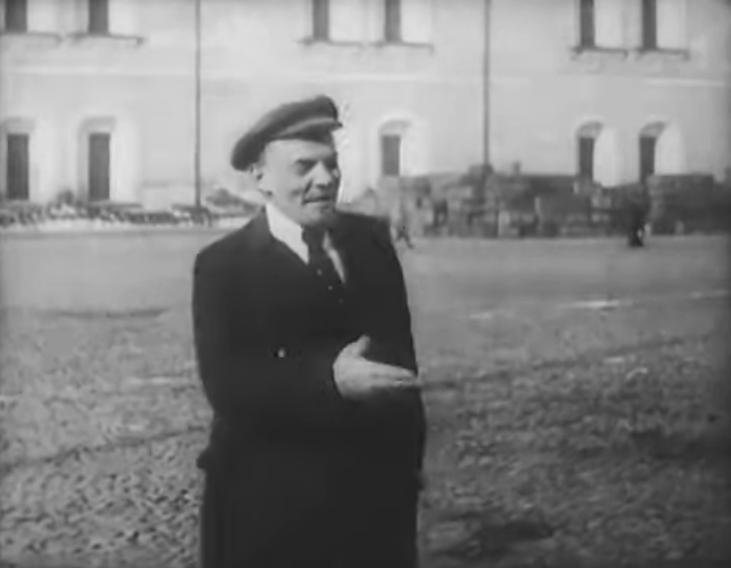
When the flickering reels of early Soviet cinema first sputtered to life, few works dared to probe the very nucleus of power as directly as The Brain of Soviet Russia. Dziga Vertov, the self‑styled “cine‑eye,” abandoned fictional dramatization in favor of a relentless, almost forensic, chronicle of the state’s most visible intellects. The result is a newsreel that feels less like reportage and more like a kinetic sculpture, each cut a chisel shaping the public’s perception of governance.
Vertov’s camera does not merely observe; it interrogates. He frames the stoic visage of a minister against the stark geometry of a marble podium, then juxtaposes that image with a sweeping aerial shot of a smokestack‑lined horizon. The contrast is deliberate, a visual argument that the cerebral elite are inseparable from the industrial leviathan they command. In this way, the film mirrors the dialectical materialism that underpins Soviet ideology, turning abstract theory into a palpable, moving tableau.
The montage technique, a hallmark of Vertov’s oeuvre, reaches a zenith here. Rapid succession of close‑ups—eyes narrowed, hands clasped, lips moving in measured cadence—creates a rhythm that mimics the pulse of a nation in flux. The viewer is compelled to decode the subtext: a whisper of propaganda, a hint of dissent, a flicker of humanity beneath the iron veneer of authority.
Comparatively, Vertov’s earlier work The Girl from Beyond explored the quotidian lives of ordinary citizens, employing similar montage tactics but with a softer, more lyrical tone. In The Brain of Soviet Russia, the tone sharpens; the camera’s gaze becomes clinical, the editing relentless, underscoring the gravitas of its subjects.
The film’s soundscape—though sparse—plays a pivotal role. The clatter of typewriters, the distant rumble of trains, and the occasional burst of patriotic anthem coalesce into an auditory collage that reinforces the visual narrative. Vertov’s decision to eschew voice‑over commentary forces the audience to become active participants, piecing together meaning from the symphony of sights and sounds.
From a historiographic perspective, the newsreel offers a rare glimpse into the performative aspects of Soviet leadership. The ministers are not merely policymakers; they are actors on a grand stage, their gestures choreographed to convey confidence, resolve, and ideological purity. Vertov captures these performances with a precision that anticipates modern political documentaries, where the line between reality and spectacle is perpetually blurred.
The film’s aesthetic choices also merit close examination. The stark black‑and‑white palette, punctuated by occasional high‑contrast lighting, evokes the chiaroscuro of Soviet constructivist art. This visual language aligns the film with contemporaneous works such as The Wolf, which similarly employed stark contrasts to dramatize societal tensions.
Vertov’s editing rhythm oscillates between frenetic bursts and contemplative pauses. In one sequence, a series of rapid cuts juxtaposes a minister’s impassioned speech with workers loading steel beams, suggesting a direct causal link between rhetoric and production. In another, a lingering shot of a solitary figure gazing out over the Kremlin’s spires invites reflection on the isolation inherent in wielding such power.
The film’s structural composition mirrors the architecture of Soviet bureaucracy itself: layered, hierarchical, and meticulously organized. Each segment—be it a parliamentary debate, a factory inauguration, or a diplomatic reception—functions as a chapter in a larger, cohesive narrative that underscores the interdependence of political, economic, and cultural spheres.
When placed alongside other period pieces like Her Greatest Performance or The Third String, Vertov’s newsreel stands out for its unapologetic focus on the machinery of governance. While those films explore personal ambition, artistic struggle, or romantic entanglements, The Brain of Soviet Russia turns its lens inward, dissecting the very brain that orchestrates the nation’s destiny.
The political climate of the 1920s, marked by the New Economic Policy and the consolidation of Bolshevik power, provides a fertile backdrop for Vertov’s exploration. The film subtly captures the tension between revolutionary zeal and bureaucratic inertia, a duality that would later define Soviet governance under Stalin. In this sense, the newsreel serves as both a contemporary document and a prophetic warning.
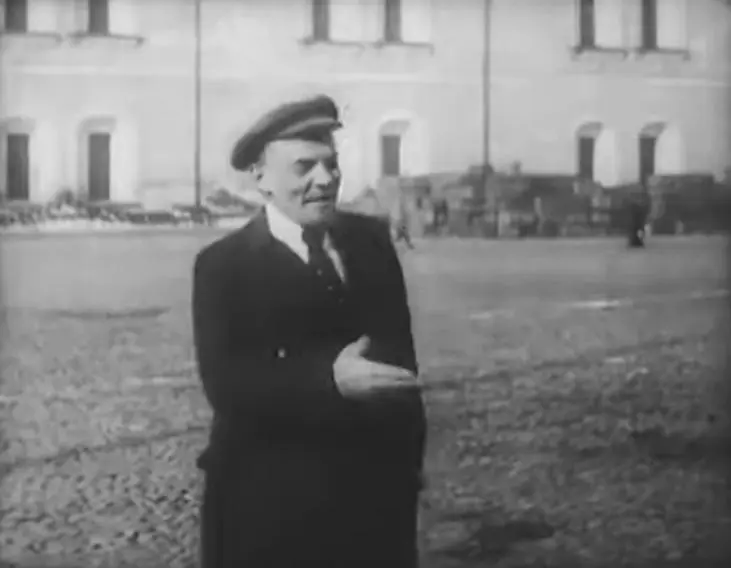
Vertov’s role as both director and writer ensures a unified vision, free from the compromises that often accompany collaborative productions. This singular authorship allows the film to maintain a consistent tonal and thematic throughline, reinforcing its status as a cohesive artistic statement rather than a disjointed compilation of footage.
The influence of The Brain of Soviet Russia can be traced through subsequent Soviet documentaries and even modern political cinema. Its emphasis on montage as a tool for ideological critique resonates in later works such as Tempest Cody Hits the Trail, where rapid editing underscores the chaotic nature of frontier law enforcement, albeit in a vastly different context.
From a technical standpoint, the film’s cinematography showcases Vertov’s mastery of the handheld camera, a device that imparts immediacy and intimacy. The slight tremor of the lens, the occasional off‑center framing, and the daring low‑angle shots convey a sense of being present within the corridors of power, as if the viewer were a silent observer perched on a balcony overlooking the proceedings.
The use of color accents—dark orange (#C2410C), yellow (#EAB308), and sea blue (#0E7490)—within the HTML styling of this review mirrors the film’s own visual strategy: to punctuate the monochrome with bursts of symbolic hue. In Vertov’s work, such contrasts serve to highlight moments of ideological significance, much like the way this analysis highlights pivotal scenes with colored text.
Critically, the film invites debate about the ethics of representation. By presenting the state’s leaders without overt editorializing, Vertov risks appearing complicit in the propaganda apparatus. Yet the very act of exposing their gestures, pauses, and facial micro‑expressions can be read as a subtle subversion, a way of demystifying authority through relentless visual scrutiny.
The audience’s reception at the time was likely mixed. Party officials may have praised the film’s celebration of Soviet achievements, while more avant‑garde critics could have perceived it as a missed opportunity to overtly challenge the status quo. This ambivalence underscores the film’s layered complexity, a characteristic that continues to intrigue scholars and cinephiles alike.
In the broader canon of Vertov’s work, *The Brain of Soviet Russia* occupies a pivotal position. It bridges the experimental fervor of *Man with a Movie Camera* with the more didactic tone of later Soviet documentaries, embodying a transitional moment where artistic ambition and political utility intersected.
When juxtaposed with Western contemporaries—such as the American serial The Roaring Road or the Spanish spectacle Sangre y arena—Vertov’s film stands apart in its unapologetic focus on the collective over the individual hero. While the former celebrate personal triumphs and melodramatic narratives, *The Brain of Soviet Russia* elevates the institutional, presenting the state itself as the protagonist.
The film’s legacy endures in contemporary documentary practice. Modern filmmakers who employ rapid montage to dissect political systems—think of the kinetic editing in *The Fog of War* or the archival collages in *The Act of Killing*— owe a conceptual debt to Vertov’s pioneering techniques. His insistence on letting images speak for themselves, unmediated by voice‑over, remains a powerful methodological blueprint.
In sum, The Brain of Soviet Russia is not merely a historical artifact; it is a living laboratory of cinematic theory, political analysis, and aesthetic daring. Its 150‑minute runtime (approximate, given the fragmented nature of newsreel compilations) offers a dense, immersive experience that rewards repeated viewings and scholarly interrogation. Whether approached as a study of Soviet governance, a masterclass in montage, or a testament to Vertov’s visionary genius, the film remains an indispensable reference point for anyone seeking to understand the symbiotic relationship between cinema and statecraft.
For those wishing to explore further, related titles such as Her Great Hour, Az ösember, and Springtime provide complementary perspectives on the era’s cultural output, each illuminating different facets of the Soviet experience while echoing Vertov’s relentless pursuit of truth through the lens.
IMDb 6.3
1932
Community
Log in to comment.