DbcultAccessing Vault...
Cult Review
Senior Film Conservator
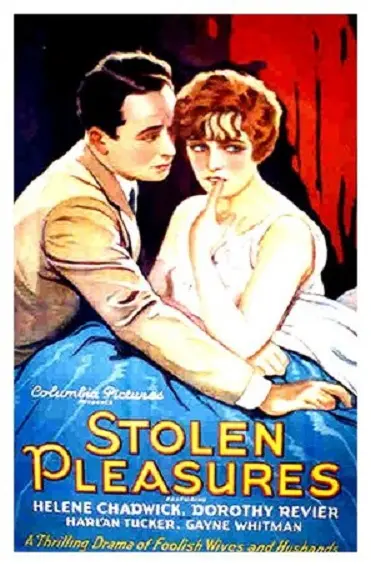
Is Stolen Pleasures worth your time in the 21st century? Short answer: No, unless you are a dedicated archivist of 1920s social mores or a completionist of silent-era domestic dramas.
This film is specifically for those who enjoy the slow-burn melodrama of the pre-code era and the specific screenwriting voice of Leah Baird. It is absolutely not for viewers who demand logical character motivations or a pace that exceeds a funeral march.
This film works because it captures the genuine claustrophobia of early 20th-century marriage through its cramped set design and the weary performances of its lead actresses.
This film fails because the central conflict relies entirely on the 'idiot plot' device, where five minutes of honest conversation would have ended the movie in the first act.
You should watch it if you want to see how the silent era transitioned from broad slapstick like Three Wise Goofs into the more serious, albeit melodramatic, social critiques of the late 1920s.
To be blunt: only for historical curiosity. While it lacks the raw emotional power of a masterpiece like Ingeborg Holm, it offers a fascinating window into what passed for 'scandalous' entertainment in 1927. The stakes feel incredibly low by modern standards, but the performances by Dorothy Revier and Helene Chadwick provide enough gravity to keep the screen from floating away into total irrelevance.
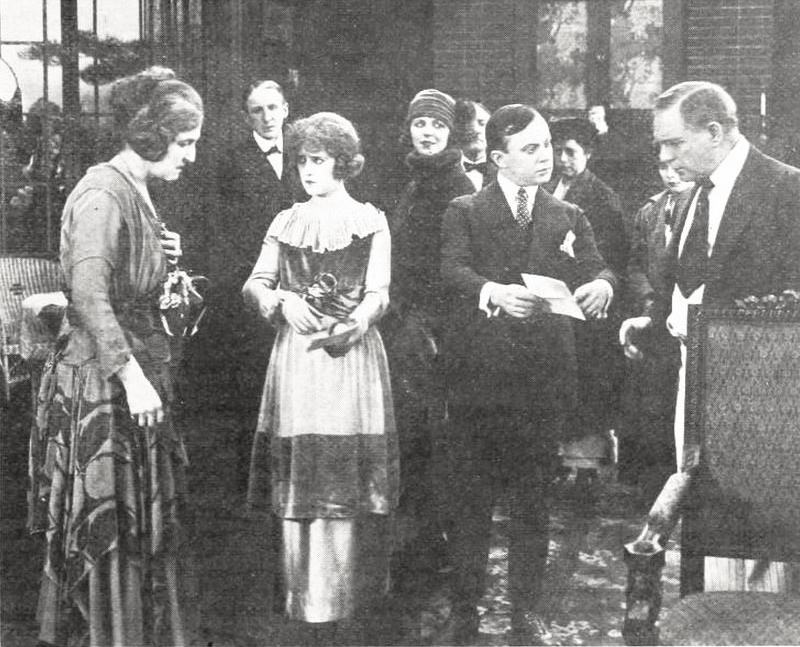
Stolen Pleasures is a film obsessed with walls. Not just the physical walls of the Manning and Bradley households, but the social barriers that kept men and women in states of perpetual misunderstanding. The direction uses these spaces to emphasize isolation. In one specific scene, John Manning stands by a window, the light cutting across his face in a way that suggests a prison cell. It’s a subtle touch in a film that is otherwise about as subtle as a sledgehammer.
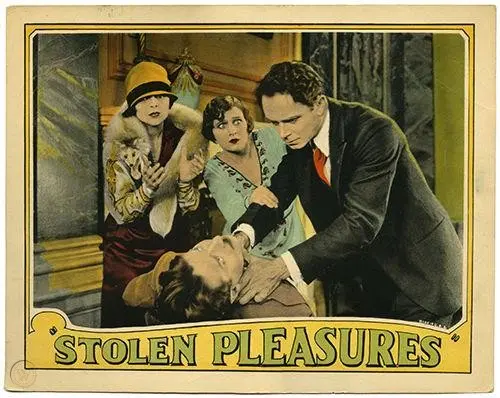
The plot kicks off with a domestic argument that feels shockingly modern in its pettiness. It isn't over grand betrayals or hidden fortunes. It's about the exhaustion of being seen. When Doris and John separate, the film doesn't treat it as a tragedy but as an inevitability. This cynicism is the film's strongest asset. It avoids the sugary sentimentality found in films like Paradise Garden, opting instead for a cold, almost clinical look at how marriages rot from the inside out.
However, the 'pleasures' promised by the title are rarely seen. The characters don't seem to be having fun in their rebellion. Instead, they look terrified. This tension drives the second act, where the misunderstandings pile up. The 'false accusation' trope is used here with exhausting frequency. When Clara and John are spotted together, the assumption of guilt is immediate. It reflects a society where the mere appearance of impropriety was equivalent to a confession.
Leah Baird was a powerhouse of the silent era, and her script for Stolen Pleasures shows both her strengths and her limitations. She had a keen eye for the power dynamics between genders. Unlike the more traditional narratives of The Mother of His Children, Baird allows her female characters to be frustrated and flawed. They aren't just victims; they are active participants in their own unhappiness.
But Baird also leans heavily on the moralizing expected by 1920s audiences. The third act feels like a lecture. The resolution, where peace is returned to the home front, feels unearned. It’s as if the film spent sixty minutes arguing that these people are incompatible, only to change its mind in the last five minutes because the censors demanded a happy ending. It’s a compromise that weakens the overall impact. The ending is a lie. But it's a well-told lie.
One specific moment that stands out is the confrontation between Herbert and Clara. The intertitles are sharp, cutting through the silence with a vitriol that feels personal. 'You have stolen the only thing I valued,' Herbert claims. It’s a line that rings with the possessive toxicity of the era. It makes the viewer realize that in this world, spouses are property. This realization is more horrifying than any of the film's intended drama.
Dorothy Revier, often called the 'Queen of Poverty Row,' is the standout here. She possesses an internal engine that many silent actors lacked. While others are flailing their arms to convey distress, Revier uses her eyes. There is a scene where she realizes her reputation is being dismantled in real-time, and her expression shifts from confusion to a cold, hard acceptance. It is the best piece of acting in the entire film.
Helene Chadwick, as Doris, plays a more traditional role. She is the 'good' wife whose primary job is to look pained. It’s a thankless task, but she performs it with a dignity that prevents the character from becoming a caricature. She provides the necessary foil to Revier’s more volatile energy. The chemistry between the two women—or rather, the lack thereof—perfectly illustrates the social divide the film tries to bridge.
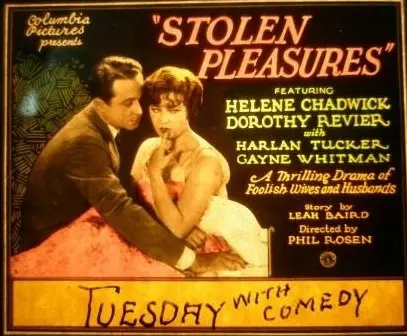
The men, played by Ray Ripley and Gayne Whitman, are largely interchangeable. They represent the 'husband' as an institution rather than as individuals. This might be an intentional choice by the director, but it makes the 'accusation' scenes feel repetitive. You’ve seen one angry 1920s husband, you’ve seen them all. They lack the nuanced desperation found in the male leads of The Bolted Door.
Visually, the film is competent but uninspired. It lacks the experimental flair of European silents or the grand scale of something like The Fighting Trail. The camera stays mostly at eye level, acting as a passive observer to the domestic carnage. This creates a sense of voyeurism, but it also leads to a stagnant visual rhythm. The film feels like a filmed play, which was a common trap for domestic dramas of this period.
The pacing is where the film truly struggles. The 'misunderstandings' mentioned in the plot summary take far too long to manifest. We spend a significant portion of the first half watching people sit in rooms and look unhappy. While this establishes the mood, it tests the patience of a modern audience. A tighter edit would have turned this into a sharp 40-minute short; at feature length, it feels bloated.
There is, however, one sequence that breaks the monotony. The scenes of the separation are handled with a montage-like quality that briefly injects some energy into the proceedings. We see the packing of suitcases and the closing of doors in a rhythmic fashion that mirrors the finality of the act. It’s a rare moment of visual storytelling that doesn't rely on intertitles to explain the emotion.
Pros:
Cons:
Stolen Pleasures is a dusty relic. It works as a time capsule, but it fails as a gripping narrative. The film is stuck between two worlds: the theatrical melodrama of the past and the psychological realism that would soon define the talkies. It’s a fascinating failure. It’s flawed. But it’s worth a look if only to see how far we’ve come—or how little has changed—in the way we depict the breakdown of a marriage.
If you’ve already seen Stepping Out and are looking for something with a bit more bite, this might satisfy your craving. Just don't expect a masterpiece. Expect a well-acted, poorly-paced examination of people who are too proud to talk to each other. In the end, the only thing 'stolen' is the audience's time, but at least the theft is performed with a certain amount of silent-era style.
IMDb 6.3
1926
Community
Log in to comment.