DbcultAccessing Vault...
Cult Review
Senior Film Conservator
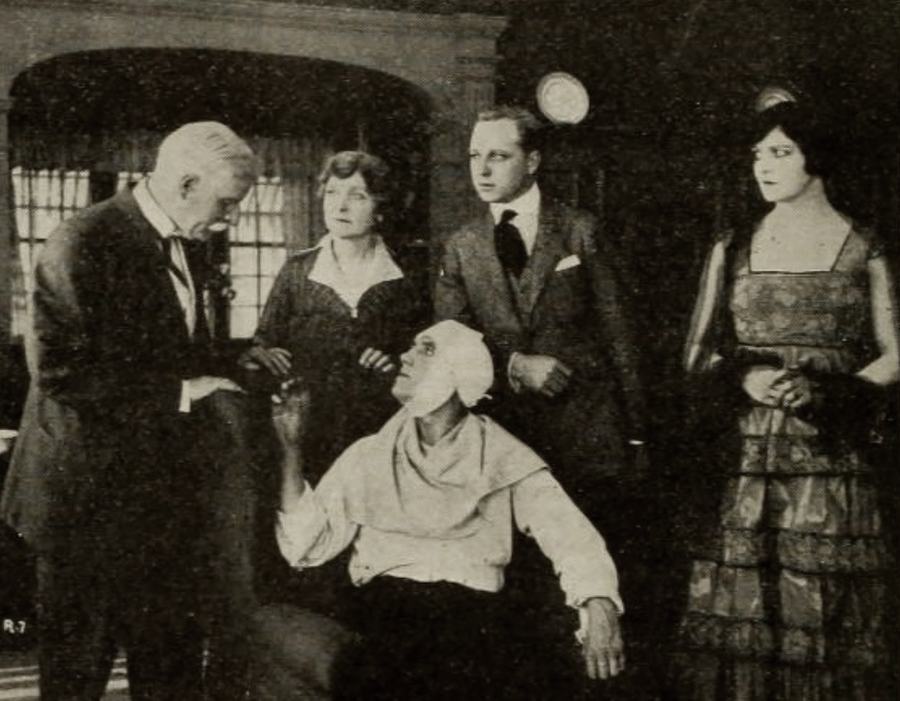
In the pantheon of early American cinema, specifically the era preceding the United States' full immersion into the Great War, there exists a fascinating subset of films that bridge the gap between Victorian morality and the burgeoning anxieties of the modern machine age. Paying the Price, released during this pivotal transition, serves as a quintessential example of how the silent screen utilized the tropes of the melodrama to explore themes of national security and personal treachery. The film does not merely present a love triangle; it constructs a moral laboratory where the stability of the state is inextricably linked to the integrity of the individual heart. Unlike the more whimsical narratives found in Little Miss Optimist, this work delves into the darker recesses of human motivation, where desperation and avarice collide with the cold precision of naval engineering.
The character of Paul Towne, portrayed with a stoic, perhaps overly-cerebral gravitas by Robert Cummings, represents a specific archetype of the era: the man of science whose devotion to the collective defense blinds him to the immediate needs of those he loves. His procrastination is not born of malice, but of a profound intellectual preoccupation. In the lexicon of 1916 cinema, Towne is the anchor of stability, yet his lack of emotional kineticism is the catalyst for the ensuing tragedy. This thematic preoccupation with the 'slow-moving hero' can be contrasted with the more visceral struggles found in The Stain in the Blood, where the internal conflicts are worn much closer to the surface. Towne’s failure to secure Judith’s hand is the first 'price' paid in the film—a cost measured in lost years and the introduction of a predatory element into their inner circle.
Richard Tracy, the film’s antagonist, is a fascinating study in the banality of evil. He is not a mustache-twirling villain of the stage, but rather a man of social standing who is hollowed out by the vice of gambling. His pursuit of Judith is framed less as a romantic conquest and more as a desperate bid for social and financial scaffolding. When the marriage fails to provide the expected solvency, his pivot to international espionage feels like a natural extension of his moral decay. The film brilliantly juxtaposes the creation of the explosive—a tool intended for national protection—with Tracy’s attempt to use it as a tool for personal extraction. This exploration of greed as a destabilizing force mirrors the narrative weight seen in The Might of Gold, where the corrupting influence of wealth acts as a primary antagonist.
Gail Kane’s performance as Judith Corbin is the emotional heartbeat of the production. In an era where female characters were often relegated to the roles of either the virtuous maiden or the predatory vamp, Kane finds a middle path of weary realism. Judith’s decision to marry Richard is not portrayed as a flight of fancy, but as a pragmatic response to Paul’s inertia. It is a heartbreaking moment of self-betrayal that sets the stage for the film’s second act. Her realization of Richard’s true nature is handled with a subtlety that avoids the histrionics common to the period. Her journey from a hopeful bride to a woman trapped in a web of debt and treason provides a stark contrast to the more idealistic portrayals of womanhood found in Womanhood, the Glory of the Nation.
Technically, Paying the Price utilizes the fixed-camera aesthetic of its time to create a sense of theatrical intimacy. The interior sets, particularly the laboratory and the drawing rooms, are designed with a density of detail that reflects the stifling social expectations of the characters. The director uses deep staging to keep Paul’s scientific work ever-present in the background of the domestic scenes, a constant reminder of the high stakes involved. The outdoor sequences, specifically the testing of the explosive, offer a rare moment of cinematic expansion. The explosion itself is not just a plot point; it is a visual metaphor for the shattering of the false lives the characters have been leading. It is a moment of catharsis that is as destructive as it is clarifying, reminiscent of the high-stakes tension found in The Brass Bullet.
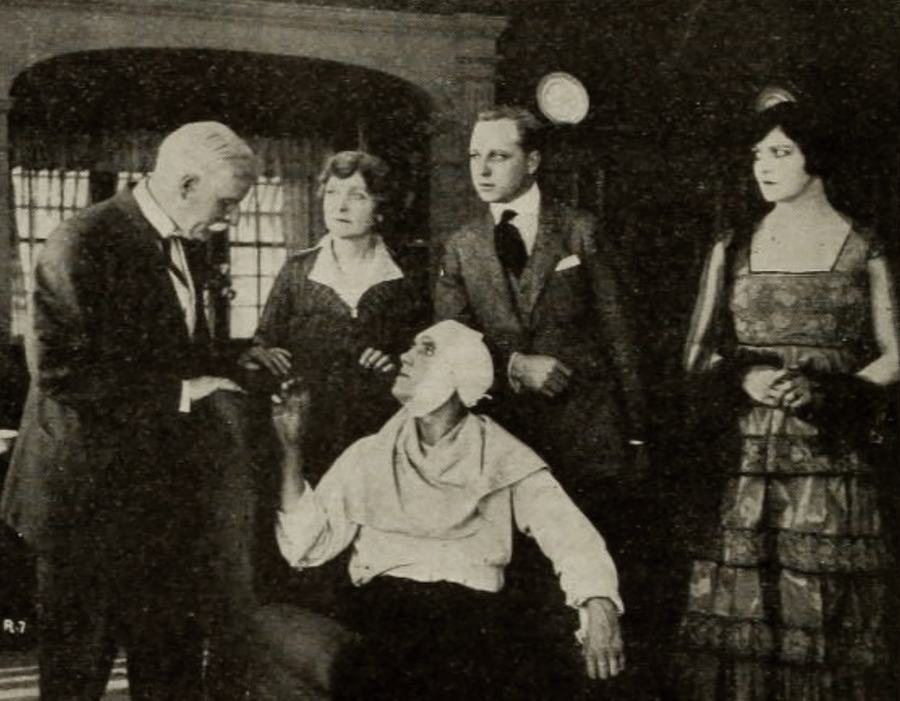
One cannot fully appreciate Paying the Price without acknowledging the global context of its production. In 1916, the threat of espionage and the necessity of military innovation were not mere narrative tropes; they were daily headlines. The film taps into a collective paranoia regarding the 'enemy within'—the idea that the greatest threat to American security might not be a foreign fleet, but a domestic failure of character. Richard Tracy’s willingness to sell his country’s secrets for gambling debts would have resonated deeply with an audience increasingly aware of the fragility of peace. This thematic gravity elevates the film from a standard domestic drama to a piece of relevant social commentary, much like the somber overtones of Wenn Tote sprechen.
The screenplay by Gardner Hunting and Burton E. Stevenson is a model of narrative symmetry. Every action has a corresponding consequence, and every character eventually reaps what they have sown. Richard Tracy’s death by the very explosive he tried to steal is a masterstroke of poetic justice, albeit a violent one. It serves as a literal and figurative cleansing of the narrative space. The subsequent reconciliation between Paul and Judith is not portrayed as a joyous triumph, but as a sober acknowledgement of their mutual failures. They have both 'paid the price'—Paul with the loss of his friend and the near-loss of his invention, and Judith with the trauma of a fraudulent marriage. This nuanced ending avoids the easy sentimentality of films like From Gutter to Footlights, opting instead for a resolution that feels earned through suffering.
While Paying the Price may not have the avant-garde reputation of European silents like Il mistero dei Montfleury, it stands as a robust example of the American studio system's ability to craft compelling, high-stakes drama. The film’s focus on the intersection of technology and morality foreshadows the techno-thrillers of later decades. It understands that the most dangerous element in any scientific breakthrough is the human factor. The performances, particularly those of Kane and Elvidge, provide a layer of psychological complexity that keeps the film relevant over a century later. It is a work that demands the viewer's attention, not through rapid editing or spectacle, but through the slow, deliberate unfolding of a tragic inevitability.
When comparing this work to other contemporary titles, such as the Australian adventure The Mutiny of the Bounty, one sees a stark difference in the treatment of duty. While the latter focuses on the external rebellion against authority, Paying the Price focuses on the internal rebellion against conscience. It is a more claustrophobic, intense experience. Similarly, while The House of Mystery relies on gothic tropes to generate suspense, Paying the Price finds its tension in the mundane realities of debt and the cold logic of the laboratory. It is this grounding in reality that gives the film its enduring power.
Ultimately, Paying the Price is a film about the weight of time. It is about the cost of waiting too long to speak, the cost of making a choice out of desperation, and the cost of valuing gold over honor. In the final frames, as Paul and Judith stand together, the viewer is left with a sense of profound relief, but also a lingering sadness for the path they had to walk to reach one another. It is a sophisticated, deeply human work that remains a vital piece of cinematic history, offering a window into a world on the brink of change, where the old virtues were being tested by the new fires of the twentieth century. It stands tall alongside the dramatic intensity of A Fool There Was, proving that the silent era was more than capable of exploring the darkest corners of the human condition with eloquence and grace.
IMDb 4.6
1929
Community
Log in to comment.