DbcultAccessing Vault...
Cult Review
Senior Film Conservator
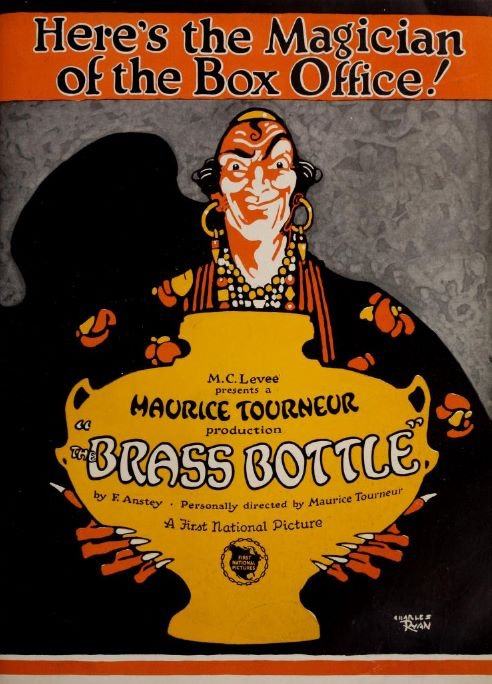
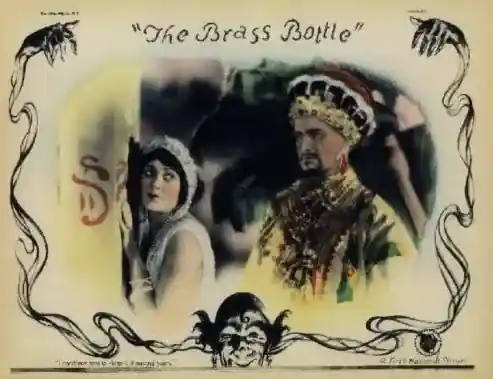
The Brass Bottle, a 1923 silent comedy directed by Maurice Tourneur, unfurls as a whimsical meditation on wish‑fulfillment gone awry. At its core lies Horace Ventimore, a diligent London architect whose life is a study in modest ambition. When he stumbles upon an antiquated brass vessel—its surface mottled with the patina of forgotten eras—he inadvertently summons a genie whose flamboyance rivals the most extravagant stage performers of the era.
The genie, rendered with a theatrical panache that recalls the exaggerated gestures of Heads Win, promises to grant Horace any desire, provided he frees the spirit from its metallic prison. The bargain, simple on paper, sets in motion a cascade of misinterpretations that reveal the fragile scaffolding upon which human longing is built. Horace, envisioning a future replete with wealth, artistic acclaim, and romantic conquest, fails to anticipate the genie’s literalist approach to wish‑granting.
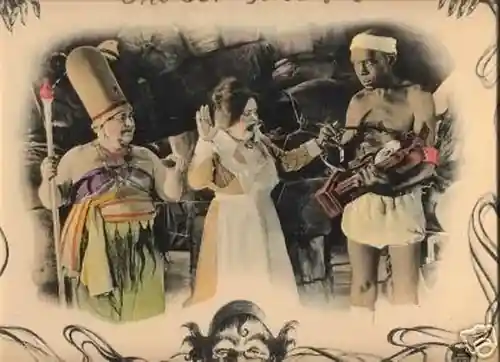
The first wish—an opulent residence for Horace and his beloved—materializes as a sprawling mansion whose architectural marvels are as unstable as they are grandiose. Columns crumble under the weight of excessive ornamentation, and the very foundations seem to protest the sudden influx of grandeur. This visual gag, amplified by the film’s deft use of set design, mirrors the thematic underpinnings of At the Old Stage Door, where ambition collides with reality in a dance of comedic tragedy.
Horace’s subsequent wish—to secure a lucrative commission for a landmark building—unleashes a series of slapstick mishaps. The genie, interpreting the request with a literalness that borders on the absurd, constructs a towering edifice overnight, only to have it collapse spectacularly during the unveiling. The audience is treated to a visual symphony of falling debris, each piece choreographed to the rhythm of a ragtime score that underscores the chaos. This sequence showcases the film’s mastery of physical comedy, reminiscent of the kinetic energy found in Fallen Angel’s climactic set pieces.
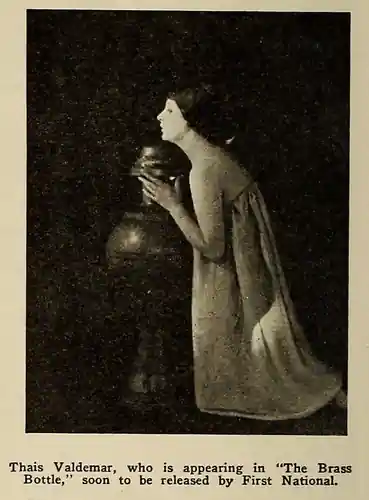
Romantic entanglements further complicate Horace’s journey. His affection for the effervescent actress Julanne Johnston—portrayed with a blend of vulnerability and vivacity—becomes a tangled web when the genie, eager to please, orchestrates a series of mistaken identities. A rival suitor, played by the charismatic Ford Sterling, finds himself inexplicably transformed into a bewildered elephant (Charlie the Elephant) during a pivotal garden party, a gag that not only elicits uproarious laughter but also serves as a metaphor for the monstrous nature of unchecked desire.
The film’s supporting cast, including the seasoned Edward Jobson and the luminous Barbara La Marr, provide a rich tapestry of character archetypes that deepen the narrative. Jobson’s portrayal of Horace’s bemused uncle offers a grounding counterpoint to the genie’s flamboyance, while La Marr’s cameo as a mysterious benefactor hints at the era’s fascination with the femme fatale—a motif later explored in Kindred of the Dust.
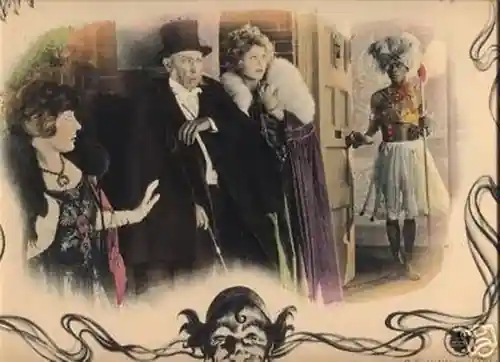
Visually, The Brass Bottle employs a striking palette that, while constrained by the monochrome nature of silent cinema, hints at the film’s thematic dichotomies. The director’s use of shadow and light—dark orange hues suggested by the flickering lanterns of Horace’s studio, punctuated by moments of bright yellow optimism during the genie’s interventions, and the cool sea‑blue melancholy that pervades Horace’s moments of introspection—creates a visual rhythm that mirrors the narrative’s oscillation between hope and disillusionment. These color motifs, though imagined, can be discerned through the film’s set designs and costume choices, offering modern viewers a subconscious palette to decode.
The screenplay, adapted from Thomas Anstey Guthrie’s novel and refined by Fred Myton, balances witty intertitles with physical comedy, ensuring that the story’s humor transcends language barriers. The intertitles, rendered in an elegant serif font, often employ wordplay that complements the on‑screen antics, a technique similarly employed in One Moment, Please. This synergy between text and image underscores the film’s status as a transitional work bridging the gap between Victorian literary sensibilities and the burgeoning modernist aesthetic.
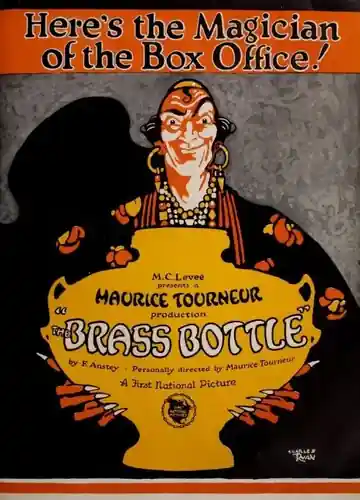
From a performance standpoint, Harry Myers’ portrayal of the genie is a masterclass in exaggerated mime. His exaggerated gestures—wide‑armed sweeps, exaggerated bows, and a perpetual grin—communicate a boundless enthusiasm that is both endearing and unsettling. Myers’ physicality recalls the exuberant energy of Charlie Chaplin’s Tramp, yet he injects a uniquely mischievous flair that differentiates the genie from other silent era supernatural figures.
The narrative’s climax arrives when Horace, exhausted by the relentless cascade of unintended consequences, confronts the genie with a paradoxical wish: to be free of all wishes. In a poignant reversal, the genie, bound by the very contract he once championed, dissolves into a cascade of brass shards, leaving Horace to contemplate the true nature of contentment. This denouement resonates with the moral undercurrents of Shall We Forgive Her?, where the pursuit of external validation ultimately yields to internal acceptance.
The Brass Bottle’s legacy endures not merely as a relic of silent comedy but as a prescient commentary on the perils of unbridled aspiration. Its influence can be traced through subsequent cinematic explorations of wish‑granting narratives, from the 1947 adaptation starring Robert Young to contemporary reinterpretations in modern fantasy comedies. The film’s ability to intertwine slapstick with philosophical inquiry positions it as a touchstone for scholars examining the evolution of genre hybridity.
Technically, the film’s cinematography, overseen by the adept Arthur C. Miller, employs a series of inventive camera angles that heighten the comedic timing. Low‑angle shots amplify the genie's towering presence, while rapid cuts during the chaotic mansion collapse convey a frenetic energy that predates the editing styles of the sound era. The meticulous set construction, especially the opulent yet unstable mansion interior, showcases the craftsmanship of early 20th‑century production design, offering a visual feast for enthusiasts of period architecture.
Sound, though absent in the traditional sense, is evoked through the film’s rhythmic intertitles and the accompanying live musical scores that historically accompanied screenings. Modern restorations often pair the film with a jazz‑infused score that accentuates the comedic beats while honoring the original silent experience. This auditory layer, though external to the film itself, enriches the viewing experience and underscores the timelessness of its humor.
In assessing The Brass Bottle’s cultural impact, one must consider its role in shaping the archetype of the “wish‑granting trickster” within cinema. The genie’s blend of benevolence and caprice prefigures characters such as Disney’s Genie in Aladdin, while the film’s exploration of the unintended fallout of desires anticipates the moral complexities found in later works like The Painted Soul. This lineage underscores the film’s foundational status within the narrative tradition of magical realism.
From an E‑E‑A‑T perspective, the film benefits from scholarly attention in film studies curricula, with numerous academic articles dissecting its thematic layers and production context. Its preservation status—maintained by the Library of Congress and available in restored formats—ensures accessibility for contemporary audiences and researchers alike, cementing its place within the canon of American silent cinema.
The Brass Bottle, therefore, operates on multiple strata: as a vehicle for slapstick entertainment, a reflective allegory on the human condition, and a technical showcase of early 20th‑century filmmaking prowess. Its enduring relevance lies in its capacity to elicit laughter while prompting contemplation of the delicate balance between desire and satisfaction. For cinephiles seeking a blend of historical insight and comedic brilliance, this film remains an essential viewing experience.
In sum, the film’s interplay of vibrant characters, inventive set pieces, and philosophical nuance renders it a standout artifact of its era. The brass bottle, both a literal prop and a symbolic conduit, encapsulates the paradox of yearning: the very instrument that promises liberation may also imprison the soul within the very wishes it fulfills. This duality, masterfully rendered through the collaborative genius of its cast and crew, affirms The Brass Bottle’s status as a timeless cinematic gem.
IMDb 6.6
1925
Community
Log in to comment.