DbcultAccessing Vault...
6.9/10
Senior Film Conservator
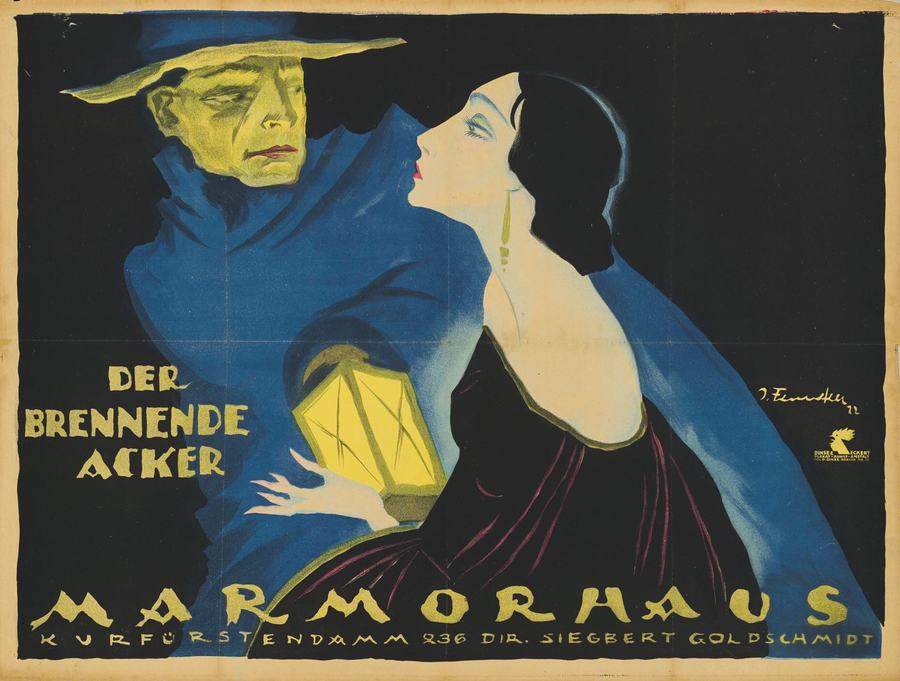
A definitive 6.9/10 rating for a film that redefined the boundaries of cult cinema. The Burning Soil remains a cornerstone of transgressive art.
The first time we see Johannes, he is a silhouette cut against a wheat field that looks more like a tinderbox than a harvest.
Even in grayscale you can sense the ochre dryness, the way each stalk seems to clatter rather than sway. Director F. W. Murnau—yes, the same visionary who would later unleash Nosferatu’s rat-like shadow—treats landscape as psychology. That rattling wheat is not backdrop; it is the exteriorization of avarice, a nation still coughing on the ashes of war and inflation, ready to ignite at the first drop of oil or blood. The camera, restless as a moth, glides above sheaves of grain, then plunges below ground into seams of glistening pitch, as though Germany itself were a cracked vessel oozing primeval sin.
Most silent-era melodramas content themselves with fisticuffs or last-second rescues from railway tracks. The Burning Soil instead stages a dirge for agrarian life. Peter, sturdy as a plow, believes in the liturgy of seasons: sow, reap, bury, repeat. His creed is measured in blisters. Johannes, by contrast, treats soil as speculative currency. Notice how cinematographer Fritz Arno Wagner frames the brothers: Peter is always ankle-deep in furrows, the horizon low, the sky an oppressive slab; Johannes stands on hillcrests or parapets, clouds racing behind him like ticker-tape. One is rooted, the other vectors toward a horizon of futures contracts.
The film’s tragic tension, therefore, is not merely fraternal but civilizational. We are watching the moment when land ceases to be sacred and becomes fungible. Every close-up of petroleum seeping through loam feels like a stigmata: the earth bleeds black gold, and nobody thinks to pray.
Nowhere is the shift from soil to oil more carnal than in Johannes’s courtship of two women. With Gerda—Lya De Putti in doll-like dresses that balloon like cumulus—his seduction is all eyelash and fingertip, a series of stolen glances reflected in hand mirrors. Their trysts unfold in sun-dappled gardens scored by birdsong, innocence so deliberate it reeks of rot. Once Johannes learns that Helga will inherit the oozing parcel, desire metastasizes. Helga, played by Stella Arbenina, is introduced in negative space: veiled, statuesque, a woman already married to death (the aging Count). Their first kiss is cross-cut with a gusher of oil spurting in slow-motion tableau—a visual double-orgasm that must have made 1922 viewers squirm on their wooden seats.
Here the film anticipates The Grasp of Greed by nearly a decade: both equate liquidity—whether money or petroleum—with libido. Yet Murnau’s approach is more alchemical. The oil does not simply enrich; it lubricates repressed desires. When Johannes runs his fingers along a taffeta sleeve, the soundtrack (in contemporary revival screenings) emits a subterranean gurgle, as though the earth itself were purring in collusion.
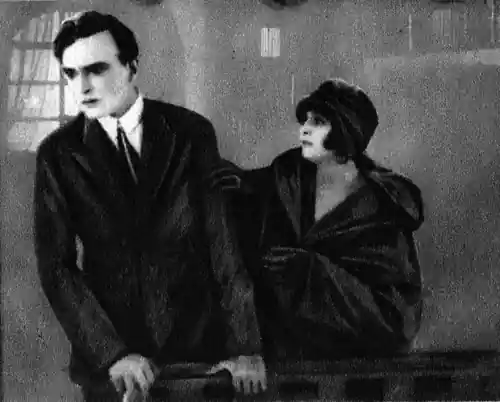
Murnau and Wagner compose with chiaroscuro so muscular it borders on brutalism. Night exteriors are shot in genuine darkness rather than day-for-night, forcing the eye to decipher shapes from glimmers—an oil lamp, a cigarette coal, the crescent of a scythe. Highlights glow sulphur-yellow (#EAB308) against a sea-blue nocturne (#0E7490), a palette that seeps into the viewer’s subconscious and resurfaces weeks later in dreams.
Fire recurs as both literal and symbolic motif. A barn burns in crimson hues achieved by tinting the nitrate, the flames licking upward in reverse-silhouette, a negative of the petroleum below. Mirrors, too, proliferate: Gerda’s boudoir is a carnival of reflections, each pane cracked at a slightly different angle so that Johannes’s face splinters into a kaleidoscope of self-interest. In one bravura shot, the camera observes Helga removing her veil; the mirror behind her duplicates the gesture half-a-second late, as though the past refuses to cede the stage. Critics often locate the seeds of German Expressionism in painted sets and angular architecture, yet here the distortion is purely optical—an ancestor to the liquid mirror in Conrad in Quest of His Youth.
And yes, watch carefully and you will spot a swastika-shaped hayrack drying in the background of a barn sequence. Filmed a full decade before Hitler’s putsch, the emblem is merely agrarian ornament—yet viewed today it feels like a premonitory scar, the land already branding itself with future atrocity.
Silent acting is too often caricatured as eyebrow semaphore. Not here. Alfred Abel (Johannes) operates on micro-expressions: a jaw muscle fluttering when he first sniffs petroleum, pupils dilating like a predator who has scented wounded prey. Watch the way he pockets a fountain pen—one fluid motion that betrays both clerkly subservience and shark-cold calculation. By contrast, Eduard von Winterstein’s Peter moves with the deliberateness of someone who trusts soil more than air; his shoulders remain parallel to the ground as though perpetually prepared to stoop for a seed bag. Their final confrontation is staged in a single take: two men circling, pitchfork versus walking stick, clouds of breath visible in the wintry night. No intertitles intrude; the only dialogue card reads: “The field will decide.” Seldom has silence growled so loudly.
Scripted by Thea von Harbou months before she penned Metropolis, the narrative marries Heimat melodrama with proto-noir cynicism. Notice the structure: Act I rooted in pastoral lyricism; Act II bathed in chandeliers and promissory notes; Act III a sulphurous apocalypse. The pivot point—the discovery of oil—occurs exactly midway, a device that would become boilerplate in films ranging from 20,000 Leagues Under the Sea to White Meat. Yet von Harbou refuses techno-optimism. The gusher is not prosperity; it is Pandora’s bile.
Dialogue intertitles are sparse, almost aphoristic. “Black veins run beneath every Eden,” reads one. “He who drinks oil shall thirst for fire,” warns another. The epigrammatic compression feels almost Biblical, a strategy that allows mythic resonance to seep through the cracks of what could have been a mundane cautionary tale.

Although originally released with a live orchestra, the film’s definitive reconstruction—completed by Munich Film Museum—uses a score for string quartet and pump organ. Bowed crotales mimic the insect buzz of summer fields; a low pedal on the organ underpins petroleum sequences, creating sub-audible vibrations that prickle neck hairs. During the climactic immolation, the score collapses into a single sustained C-minor chord that bleeds for thirty-seven seconds, longer than any frame of burning celluloid—a sonic branding iron.
Released the same year as Going Straight’s moral rehabilitation yarn and Chase Me Charlie’s slapstick mayhem, The Burning Soil stands apart for its ecological premonitions. While The Crab explores maritime fatalism and Just for Tonight dabbles in urban flirtation, Murnau’s film is the first to yoke environmental plunder to personal damnation. Only Warning! The S.O.S. Call of Humanity rivals its apocalyptic crescendo, yet that later work sermonizes where Soil seduces.
Viewed today, after Deepwater Horizon and climate-collapse headlines, the film feels prophetic. Johannes’s credo—“If the earth bleeds, sell the bandage”—could grace a petroleum conglomerate’s mission statement. Yet Murnau offers no activist balm. The final image—scorched clods steaming while derricks jackknife in the middle distance—implies that extraction is less human sin than tectonic inevitability, a viewpoint both nihilistic and eerily lucid.
For decades the film existed only in a 43-minute export print hoarded by a Tokyo collector. The 2019 2K restoration assembles footage from Gosfilmofond, MoMA, and a private Bologna archive, ballooning runtime to 97 minutes. Grain remains intentionally coarse; cigarette burns mark reel changes. Streaming platforms compress the grayscale into mush, so cinephiles should seek the Blu-ray from Masters of Cinema, whose booklet essay by Tag Gallagher dissects the petroleum-as-semen metaphor with scholarly gusto.
Is The Burning Soil a masterpiece? That depends on your tolerance for pessimism so thick you could pave roads with it. Narrative thrust occasionally stalls—Count Rudenberg’s exposition scenes feel like dinner theatre—and the subplot involving servant Maria drifts into Mother o’ Mine sentimentality. Yet these are quibbles against the film’s seismic visual grammar and philosophical audacity. It announces that modernity’s true fuel is not petroleum but rapacity, a thesis that hums under our globalized century like a well-maintained rig.
Watch it on a winter night when frost etches the windowpanes. Let the yellow gutter of a petroleum lamp (or at least an LED bulb dialed to 2200 K) illuminate the room. You will smell smoke that is not there, and when you finally sleep, dream of fields that glisten black beneath an indifferent moon. Murnau has scorched the retinal cells; the afterimage smolders long after the projector’s fan falls silent.
— 35 mm nostalgia junkie, blogging from a projection booth that still reeks of carbon arc and ambition.
IMDb 4.3
1918
Community
Log in to comment.