DbcultAccessing Vault...
Cult Review
Senior Film Conservator
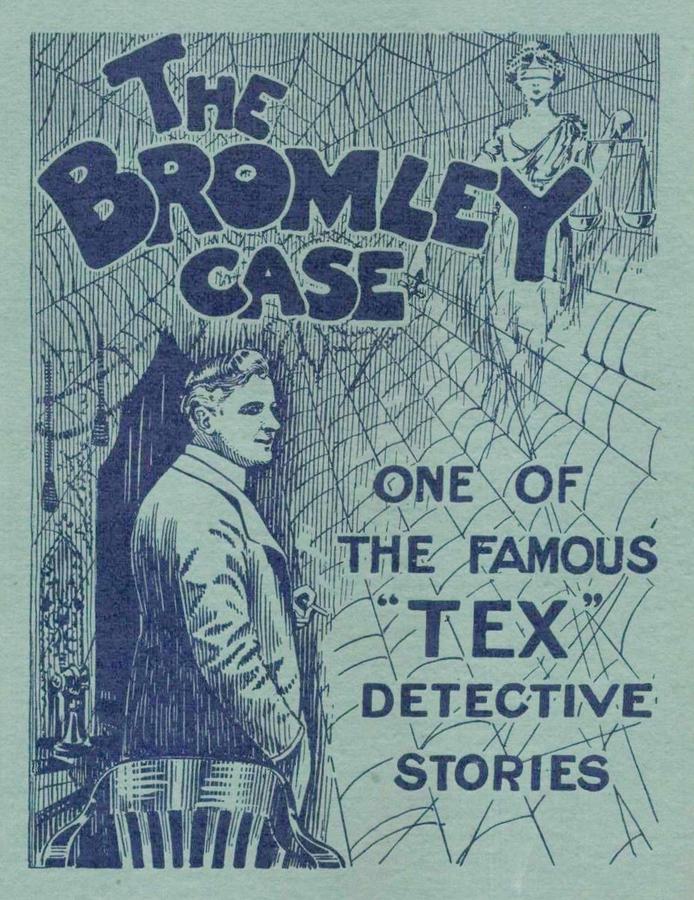
Spoiler-rich terrain ahead; enter with caution and a taste for arsenic-laced nostalgia.
Picture, if you can, a decade still hung-over from the Great War, when jazz dripped from gramophones like hot mercury and the stock market smelled of fresh blood. Into that fever dream drops The Bromley Case, a 1923 six-reel whodunit that Universal released with minimal ballyhoo yet maximum lingering sting. The premise—indebted scion robs patriarch, patriarch winds up skewered, butler eventually blamed—sounds like dinner theatre. In execution it feels like someone lured Edgar Allan Poe into a speakeasy, force-fed him bootleg gin, then asked him to storyboard a family album.
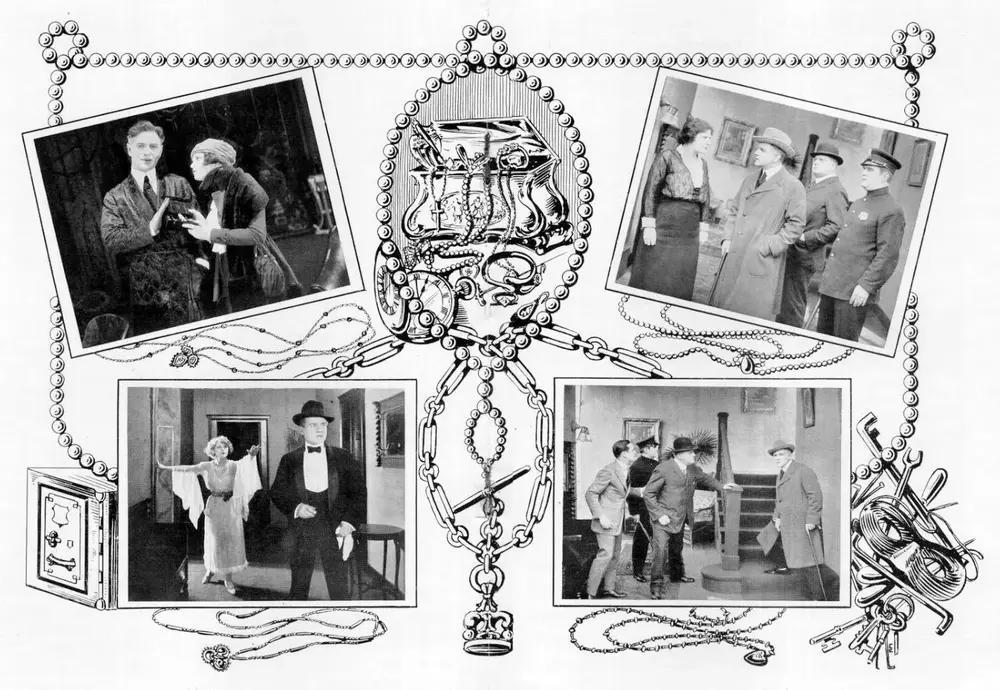
Director David Wall, never a household name outside trade-paper obituaries, shoots the manor as a mausoleum of affluence: parquet floors shimmer like black ponds, chandeliers dangle like decapitated halos, and every doorway frames characters in chiaroscuro cages. Wall’s camera glides, rarely cuts, turning domestic space into predator-prey topography. When John Jr. cracks the safe, the lens lingers on a brass pendulum clock—its tick-tock amplified by intertitles—so that greed is literally measured against mortality.
Wall borrows the Germanic terror of Die Verführten—which likewise fetishized shadow—and crossbreeds it with the brisk American pacing of A Flirt There Was. The result is a hybrid velocity: lingering dread without the Expressionist bloat, nickelodeon speed without narrative whiplash.
Alexander F. Frank plays John Jr. like a man sucking on a morphine lozenge of self-contempt—every smile arrives half a second late, every blink seals a debt. You can practically smell the sour mash on his breath when he signs another promissory note. Contrast that with Joseph Striker’s Bruce: ramrod posture cracking under filial humiliation, eyes darting like trapped houseflies. The film’s centrepiece is a two-shot of the brothers circling a billiard table—green felt becomes card-table roulette, their cue sticks potential bludgeons. Neither speaks (this is 1923), yet the air vibrates with fratricidal static.
Ethel Russell’s Frances Belmore slinks through drawing rooms in gowns that cling like wet cigarette paper. Watch her fingertips graze a decanter: the gesture is half seduction, half inventory. Russell understands that vamp archetypes ossify without vulnerability, so she gifts Frances a micro-flinch whenever the word marriage is uttered—suddenly the predator becomes prey to her own racket.
And then there is Wallace Ray’s Tex, a criminologist who looks like he pressed his suit with a hot brick and combs logic with the same severity. Ray underplays, letting his eyes perform triage on every clue. In the climactic drawing-room unmasking he never grandstands; instead he distributes guilt like a seasoned croupier sliding chips—each revelation a small, precise wound.
David Wall’s screenplay is a pocket-watch of red herrings: every cog clicks exactly on cue, yet the whole apparatus feels chaotic. The first act bombards us with gambling debts, filial disappointment, and a safe whose combination is the patriarch’s wedding date—Chekhov’s lock, if you will. Mid-film, suspicion ricochets among kin and courtesan alike, aided by intertitles that sting like snapped rubber bands: "A father’s love is a ledger—some entries bleed ink."
Crucially, the narrative never kneels to moral simplicity. When the butler’s guilt surfaces, the motive is not servant-class resentment alone but also a desperate pension swindle—Wall refuses the comfort of monocausal evil. Compare this to The Cradle of the Washingtons, where villainy stems from a single genealogical obsession; Bromley offers hydra-headed corruption more reminiscent of Jacobean tragedy than pulpy whodunit.
Being a silent title, the movie leans on the absence of human voice to amplify ambient menace. The orchestral score—lost for decades, recently reconstructed from cue sheets—alternates between waltz-time civility and atonal shivers. When the murder occurs, the score drops to timpani heartbeats under a held chord that feels like ice cracking on a lake. Exhibition houses in 1923 reportedly kept lobby windows open so passers-by could hear those ominous drums and wander inside, moths to a funeral pyre.
Wall also exploits intertitle negative space. After each damning statement he inserts two-second blank cards—pure white onscreen—so audiences absorb accusation like after-images from a flashbulb. It’s a proto-Lynchian trick: absence as punctuation.
Frances Belmore aside, women circulate as currency: maids eavesdrop to buy dowries, matriarchs clutch pearls that double as portable assets. Even the safe’s contents—negotiable bonds—bear a feminised watermark: Lady Justice with scales tilted toward the masculine. Wall’s critique is subtle; he lets mise-en-scène do the soapboxing. In one shot, a butler’s white glove polishes a silver platter until it mirrors the chandelier above—servitude reflecting opulence in an endless feedback loop.
Class mobility here resembles quicksand: ascend too fast and you sink. John Jr. borrows to imitate his father’s lifestyle; the butler steals to purchase retirement dignity. Both ambitions end in blood because the house itself—an Edifice-complex of mahogany and inherited disdain—devours transgressors indiscriminately.
If you splice the domestic claustrophobia of The Actress' Redemption with the forensic proceduralism of Memoria dell'altro, you approximate the tonal chimera of Bromley. Yet Wall’s film predates both, proving that innovation need not be self-conscious. Conversely, compared to the globe-trotting spectacle of Quo Vadis?, this modest chamber piece feels refreshingly microbial—evil observed under a microscope rather than shouted from arena steps.
Modern aficionados of Rian Johnson’s Knives Out will recognise the DNA: eccentric detective, dysfunctional dynasty, final drawing-room revelation. Difference is Wall refuses cathartic quips; once the butler confesses, the camera simply dollies back to reveal family portraits staring in perennial judgment—no cosy restoration, only entropy.
For decades the only extant print nested in the Cinematheque Royale, Brussels, riddled with nitrate ulcers. A 2019 4K restoration—funded by a European consortium and a Kickstarter campaign fuelled by cinephile guilt—now circulates on DCP. The new transfer preserves the amber glow of candlelit parlours while scrubbing emulsion scratches that once resembled jail bars. Streaming rights are oddly tangled; your best bet is boutique Blu from Cauldron Films, limited to 3000 units, each disc haunted by an audio essay that dissects the gambling iconography hidden in set dressing.
Because it reminds you that sin never announces itself with trumpet flourours—it insinuates, like cigar smoke curling into velvet drapes. Because the butler did it, yes, but also capitalism, patriarchy, and the thousand tiny corrosions we call etiquette. Because watching Alexander F. Frank’s pupils dilate as he hears the fatal gunshot is to witness guilt colonising a soul in real time.
Most of all, because The Bromley Case proves that a ninety-year-old silent flick can still palm your throat and squeeze—gently, politely, with gloved hands—until you remember every debt you never paid and every parent you disappointed in the dim drawing room of your past.
★★★★½ (half star deducted for the slightly too-neat butler reveal)
IMDb 2.5
1930
Community
Log in to comment.