DbcultAccessing Vault...
Cult Review
Senior Film Conservator
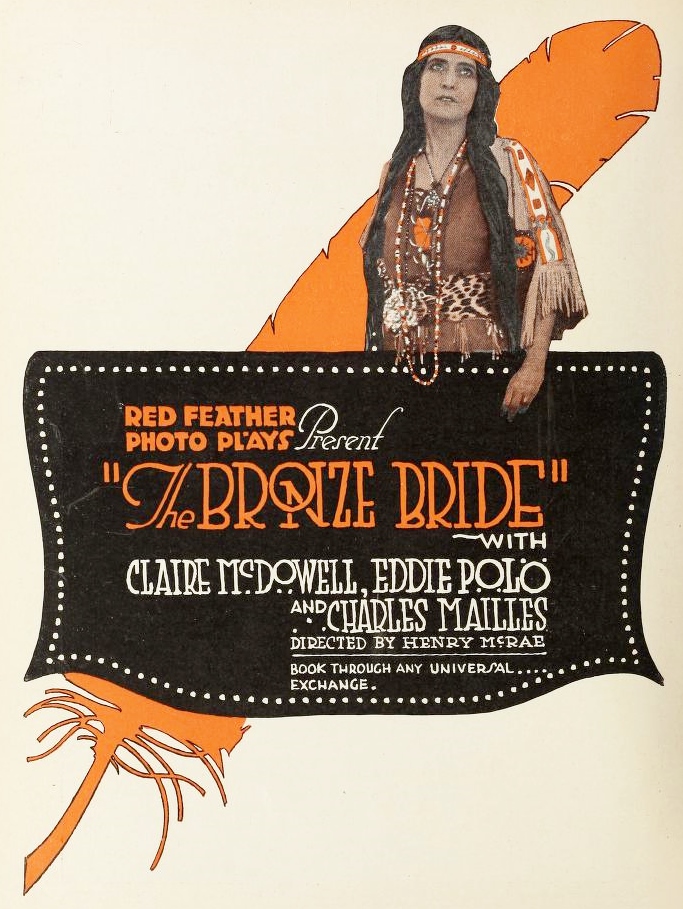
The year 1917, a tumultuous period globally, also witnessed the quiet revolution of cinema pushing against societal strictures. Among the films brave enough to tackle complex social issues was "The Bronze Bride," a cinematic endeavor that, even today, resonates with profound relevance regarding themes of love, prejudice, and the transformative power of innocence. Directed with a keen eye for human drama, this film, penned by the collaborative talents of W.B. Pearson, Maud Grange, and J.R. Burkey, attempts to navigate the treacherous waters of interracial relationships in an era where such unions were often met with virulent condemnation.
The narrative centers on Harvey Ogden, portrayed with a compelling ruggedness by Frank Mayo, a fur-trapper whose existence is intrinsically woven into the fabric of the untamed wilderness. His world, devoid of the stifling conventions of "civilized" society, allows for a love to blossom with A-Che-Chee, an Indian maiden brought to life with understated grace by Claire McDowell. Their marriage, a testament to genuine affection rather than societal dictate, forms the bedrock of the film's central conflict. This union, forged in the crucible of frontier life, stands as a symbol of a different kind of freedom—a freedom from the rigid social taxonomies that governed urban existence. The beauty of their initial scenes, one can surmise, would have been imbued with a sense of natural harmony, a stark contrast to the discord that awaits them.
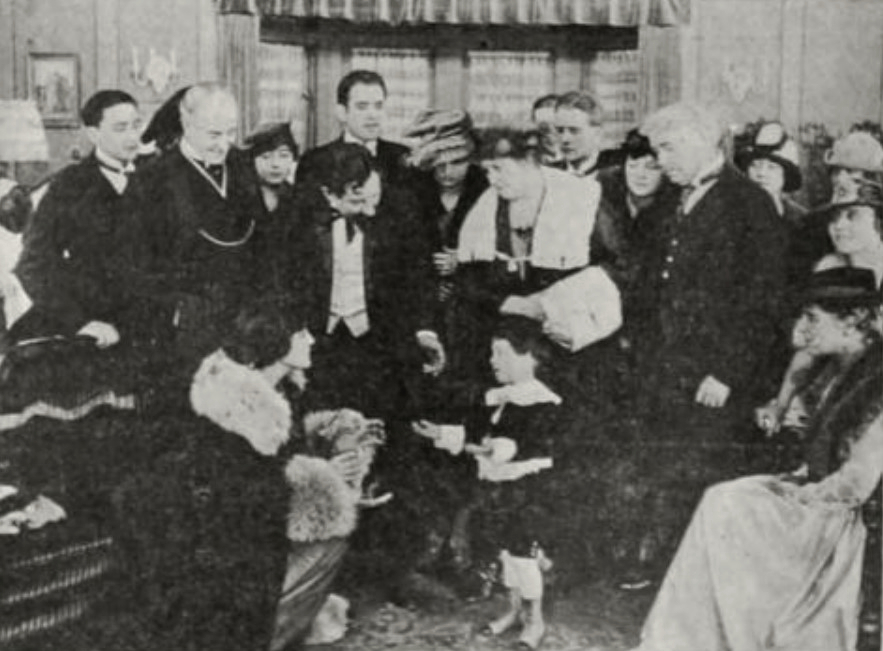
Upon their return to the ostensibly progressive enclaves of civilization, the couple is confronted by a phalanx of disapproval. The societal mechanisms of judgment, rooted in racial prejudice and an entrenched fear of the "other," are vividly depicted. This wasn't merely a polite snub; it was likely a barrage of ostracization, whispers, pointed stares, and perhaps even overt hostility. The film doesn't shy away from illustrating the harsh realities faced by those who dared to defy the era's rigid social stratification. This initial rejection sets a bleak stage, underscoring the formidable barriers erected by ignorance and intolerance. The "civilized" world, ironically, reveals its own savagery in its inability to accept a love that transgresses its arbitrary boundaries. The portrayal of this societal resistance is crucial, painting a picture of an America grappling with its own identity, torn between its ideals of liberty and the deeply ingrained prejudices of the time.
However, the film introduces a pivotal element that shifts the entire dynamic: their child, a boy, played with remarkable poignancy by Frankie Lee. This innocent figure becomes the unexpected harbinger of change, a living bridge between two seemingly irreconcilable worlds. The child's presence, pure and unburdened by the prejudices of adults, begins a slow, arduous process of chipping away at the hardened attitudes of the community. It's a poignant exploration of how the unadulterated love and innocence of a child can disarm even the most entrenched biases. The child, being both "of them" and "of us" in the eyes of the community, forces a re-evaluation. He is not just A-Che-Chee's son; he is Harvey's son, a tangible link to the familiar, yet undeniably carrying the lineage of the "other." This duality is key to his transformative power. His simple existence challenges the binary thinking of the townspeople, compelling them to confront their own humanity.
Frank Mayo's portrayal of Harvey Ogden is crucial. He embodies the spirit of a man caught between two worlds, fiercely loyal to his chosen family yet yearning for acceptance within his ancestral community. His struggle is palpable, a silent plea for understanding in the face of unyielding judgment. Mayo, a prominent leading man of the era, brings a stoic strength to Ogden, conveying a deep inner conflict and unwavering commitment through subtle gestures and powerful expressions characteristic of silent film acting. One can imagine his eyes conveying both defiance and a longing for peace. Claire McDowell, as A-Che-Chee, delivers a performance that transcends mere exoticism. She embodies resilience, dignity, and a quiet strength, navigating a world that is both foreign and hostile, yet steadfast in her love and commitment. McDowell, known for her dramatic roles, avoids caricature, portraying A-Che-Chee as a fully realized individual, not just a symbol. Her ability to convey vulnerability alongside an unshakeable inner resolve would have been central to the film's emotional impact, allowing the audience to empathize deeply with her plight. The chemistry between Mayo and McDowell, though conveyed through the expressive language of silent film, feels authentic, grounding the extraordinary premise in believable human emotion. Their shared glances, protective gestures, and moments of quiet comfort would have powerfully communicated their bond against the backdrop of societal scorn.
The writers, W.B. Pearson, Maud Grange, and J.R. Burkey, deserve commendation for crafting a narrative that, while perhaps simplistic by today's standards, was remarkably progressive for its time. They dared to explore a topic that many would have deemed taboo, presenting a nuanced perspective on cultural integration and the inherent humanity that transcends racial lines. Their script, even without spoken dialogue, manages to convey complex emotional states and societal pressures through character actions and intertitles. The collaborative nature of their writing might suggest a desire to approach the subject from multiple angles, ensuring a multifaceted portrayal of the challenges and eventual triumphs. In 1917, America was on the cusp of entering World War I, and societal norms, while seemingly rigid, were also undergoing subtle shifts. Films like "The Bronze Bride" were part of a nascent movement in cinema to address social issues beyond mere entertainment. This was an era where films like D.W. Griffith's "The Birth of a Nation" (1915) had entrenched racial stereotypes, making "The Bronze Bride"'s attempt at a more empathetic portrayal all the more significant. One could draw parallels to the daring social commentaries found in other films of the era, though few tackled interracial marriage with such directness. For instance, while The Natural Law might have explored societal expectations and moral dilemmas concerning fidelity or moral choices, "The Bronze Bride" delves into the very fabric of racial integration, presenting a more direct challenge to the status quo regarding who is deemed acceptable for marriage and community belonging.
The film's visual language, typical of early cinema, relies heavily on strong compositions and expressive acting. The contrast between the expansive, free-spirited wilderness and the claustrophobic, judgmental town serves as a powerful metaphor for the clash of cultures and values. One can imagine sweeping shots of the natural landscape emphasizing the freedom of Harvey and A-Che-Chee's initial life, juxtaposed with tighter, more confined frames once they enter the town, visually representing the societal pressures closing in on them. The cinematography, while constrained by the technology of the time, effectively conveys emotional states and narrative progression. The use of close-ups, though perhaps not as refined as later techniques, still manages to draw the audience into the characters' inner worlds, particularly during moments of profound emotional conflict or tender family interaction. The visual cues—a downturned mouth, a hesitant gesture, the way characters avert their gaze or stand apart—would have been meticulously choreographed to communicate the complex emotional landscape of the narrative. The director skillfully uses these visual tools to tell a story that transcends the limitations of silent film, making the unspoken dialogue profoundly eloquent.
"The Bronze Bride" stands as a significant artifact in the history of American cinema, not just for its narrative ambition but for its willingness to confront uncomfortable truths. It implicitly argues that genuine acceptance stems not from forced assimilation, but from an open heart capable of recognizing shared humanity, regardless of superficial differences. This message, delivered through the innocent eyes of a child, possesses a timeless quality. The film suggests that society's moral compass can indeed be recalibrated, albeit slowly and often through the most unexpected catalysts. This theme of a child's innocence breaking down adult prejudice is a powerful, recurring motif in storytelling across various cultures and eras. While a film like The Poor Little Rich Girl might showcase a child's impact on a dysfunctional family or a specific individual's life, "The Bronze Bride" elevates this theme to a societal level, demonstrating how a single, innocent life can challenge deeply ingrained prejudices across an entire community. It's a testament to the enduring hope that empathy can triumph over division, a hope that resonates deeply even in our contemporary, often polarized world. The film becomes a compelling precursor to later works that would more explicitly champion civil rights and cultural understanding, laying some of the groundwork for a more inclusive cinematic landscape.
The supporting cast, including Betty Schade, Charles Hill Mailes, Edward Clark, Eddie Polo, Harry Archer, and Winter Hall, contribute significantly to the tapestry of the community, embodying both the initial hostility and the gradual shift in attitudes. Their collective performances create a credible backdrop against which the central drama unfolds, reflecting the diverse reactions one might expect in such a scenario. It's important to note that the film likely avoids painting all "civilized" people with a single brush of bigotry. Instead, it probably shows a spectrum of reactions, from outright rejection to hesitant curiosity, and eventually, to grudging or even genuine acceptance. This nuance is vital, preventing the film from becoming a simplistic morality play and instead allowing it to explore the complexities of human nature and social evolution. The adjustments to attitudes are not instantaneous but are depicted as a gradual process, influenced by the child's presence and the unwavering dignity of Harvey and A-Che-Chee. This slow thawing of hearts is far more impactful than a sudden, unearned change.
In an era often characterized by melodramatic excesses, "The Bronze Bride" manages to maintain a degree of earnestness that elevates its message. It's a testament to the power of storytelling to transcend its immediate context and speak to enduring human experiences. The film's legacy lies in its courageous attempt to tackle a sensitive subject with a degree of empathy and foresight, paving the way for future cinematic explorations of diversity and inclusion. The resolution, while perhaps appearing somewhat idealistic from a modern vantage point, nonetheless offers a hopeful vision of reconciliation and understanding. It's a vision that, despite its simplicity, carries profound weight, especially when considering the social climate in which it was produced. The film's artistic merit is not just in its pioneering subject matter, but in its ability to communicate such a complex socio-emotional journey through the limited technical means of early silent cinema. The emotional arc, from initial bliss to crushing rejection, and then to eventual, hard-won acceptance, is handled with a narrative clarity and emotional resonance that speaks volumes about the filmmakers' skill.
This film, then, is more than just a historical curiosity; it is a profound commentary on the human capacity for both prejudice and compassion. It challenges viewers to look beyond superficial differences and embrace the common threads that bind us all. The journey of Harvey, A-Che-Chee, and their son is not merely a personal saga but a microcosm of broader societal evolution, a quiet plea for a more tolerant and accepting world. Its significance as an early cinematic work grappling with such weighty themes cannot be overstated. "The Bronze Bride" remains a powerful reminder that the path to true civilization is often paved not with grand pronouncements, but with small, courageous acts of love and acceptance, nurtured by the innocent hope embodied by a child. It serves as a valuable historical document, reflecting both the prejudices and the nascent progressive impulses of its time, while simultaneously delivering a message that continues to resonate with compelling force. The film, in its quiet determination, stands as a beacon for understanding and acceptance, a bronze testament to the enduring power of the human spirit to bridge divides.

IMDb —
1928
Community
Log in to comment.