DbcultAccessing Vault...
4/10
Senior Film Conservator
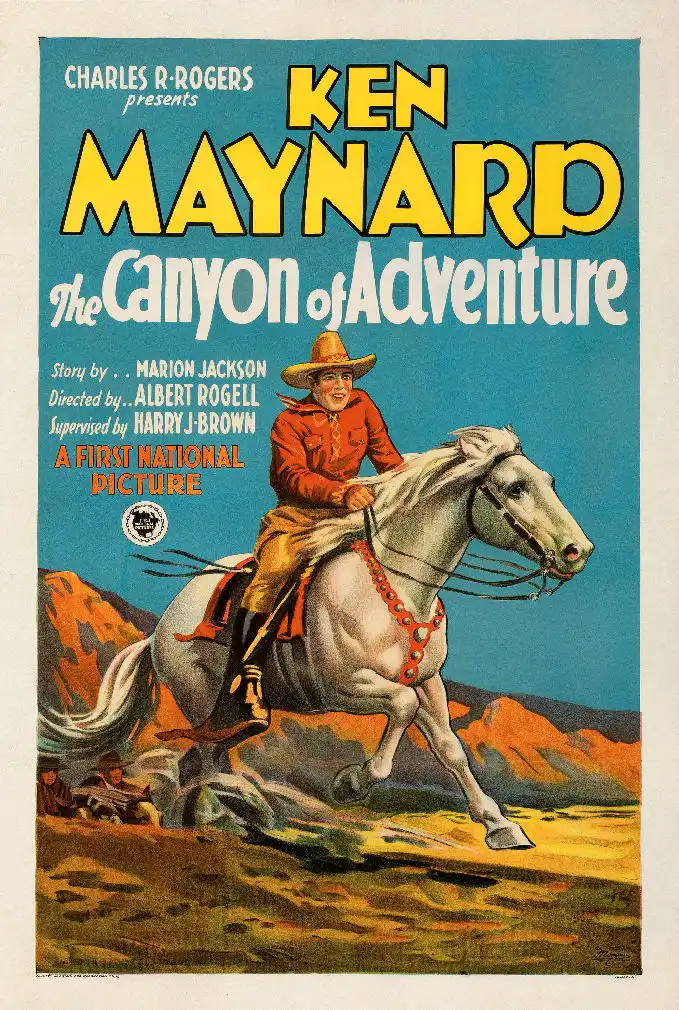
A definitive 4/10 rating for a film that redefined the boundaries of cult cinema. The Canyon of Adventure remains a cornerstone of transgressive art.
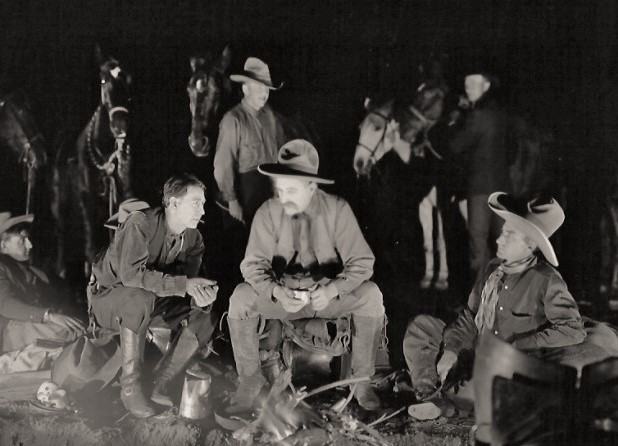
If you aren’t already a fan of silent Westerns, The Canyon of Adventure probably won't be the thing that converts you. It’s a bit of a relic, even by 1928 standards. But if you have a soft spot for pre-statehood California history being treated like a playground for rodeo stunts, or if you just want to see a horse that is smarter than the entire supporting cast, this is actually a pretty fun hour. It’s for the person who likes seeing how movies used to handle scale before they had the budget to actually show an army.
Ken Maynard plays Steven Bancroft. He’s a Cavalry officer, but mostly he’s just Ken Maynard—which means he spends half the movie jumping off of things or onto things. The plot is weirdly ambitious for a B-Western. It’s trying to juggle the interests of Spain, Mexico, and Russia all wanting a piece of California before it joins the Union. It’s a lot of geopolitical talk for a movie that ends with a guy getting punched into a dusty ravine. You get these title cards explaining international stakes, and then it cuts to Maynard wearing a hat that looks slightly too large for his head, looking determined.
The real star isn't Maynard, though. It’s Tarzan. Not the jungle guy, but the horse. There is a scene early on where Tarzan has to help Bancroft out of a jam, and the way the horse is framed—it’s like the director, Ford Beebe, knew the animal had better timing than the human actors. Tarzan has this way of looking into the camera that feels almost self-aware. At one point, the horse has to untie a rope, and the camera stays on it for so long you start to wonder if the horse is going to get a SAG card. It’s much more engaging than the actual romantic subplot with Virginia Brown Faire, which feels like it was filmed in a completely different building on a different day.
There’s a specific shot where Maynard is riding down a steep embankment that actually made me lean forward. There are no safety wires here. You can see the dirt crumbling under the horse’s hooves, and for a second, it stops being a 'movie' and just becomes a guy trying not to break his neck for a nickelodeon audience. It’s that raw, physical energy that makes these old silents better than something like The Man in the Saddle, which feels a bit more choreographed and safe.
The villains are a bit of a mess. You have these 'agents' who are supposed to be from Russia or Spain, but they all just look like the same three guys in different capes. There’s one guy—I think it’s Theodore Lorch—who does this villainous sneer that is so exaggerated it becomes the most entertaining thing in the scene. He doesn't just look evil; he looks like he's smelling something incredibly foul just off-camera. It’s the kind of acting that only exists in the silent era, where if you aren't moving every muscle in your face, the audience might think you've died.
The editing gets really choppy in the second act. There’s a transition from a dusty trail to a secret meeting that feels like a few frames are missing, or maybe the film stock just rotted away in a vault somewhere. It gives the movie a frantic, nervous energy. One minute Bancroft is talking to his superiors, and the next, he’s suddenly in the middle of a chase. The geography of the canyon itself is a bit of a mystery, too. Characters seem to arrive at 'the hidden pass' whenever the script needs them to, regardless of which direction they were riding five seconds ago.
I noticed a background extra in the town scene who is just standing there, staring directly at the lens with a look of pure confusion. He’s supposed to be a citizen of old California, but he looks like a guy who just realized he forgot to turn his oven off. It’s those little cracks in the 'prestige' of the film that I love. It reminds you that these were made fast and cheap.
The ending is abrupt, even for a 1920s Western. Bancroft settles the 'international law' debates with his guns—which is a very 1928 way of handling diplomacy—and then the movie just sort of stops. No long denouement, no deep reflection on the future of California. Just a job well done and a horse doing a trick. It lacks the weird, moody atmosphere of something like The Phantom Bullet, but it makes up for it with sheer movement.
If you’re looking for a deep dive into the tensions of 1840s border politics, you’re in the wrong place. But if you want to see a guy in a giant hat do a handstand on a moving horse while 'Russian agents' look on in confusion, The Canyon of Adventure delivers exactly that. It’s a clunky, dusty, fast-moving bit of nonsense that works because it doesn't know how to be boring.
IMDb —
1931
Community
Log in to comment.