DbcultAccessing Vault...
Cult Review
Senior Film Conservator
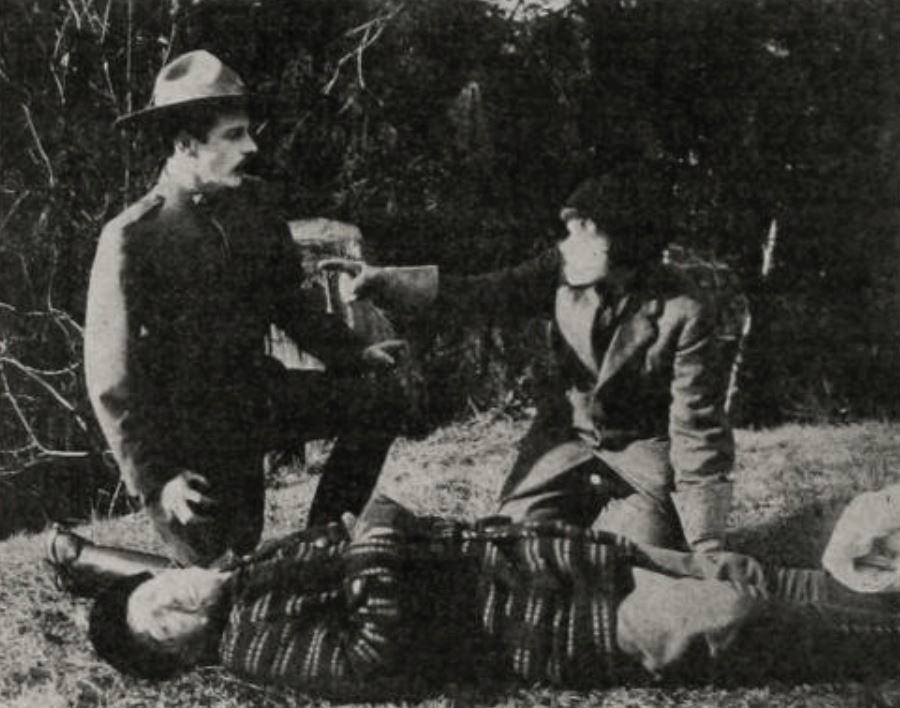
Snow, blood, and celluloid silence—The Bulldogs of the Trail is less a film than a frostbitten fever dream.
Imagine a maple-flavored Detective Craig's Coup dunked into ritual occultism, then left to crystallize on a CPR rail line. That is the tonal aftertaste Kenneth MacDougall—writer, co-star, and apparent madman—bakes into every monochrome frame. Shot in the dead of winter outside Calgary with real Mounties serving as technical advisors, the picture wrings mythic menace from what could have been a routine whodunit. Instead, we get a meditation on culpability wrapped in scarlet serge, a proto-noir where the real villain is the protagonist’s certainty.
McLloyd’s dilemma—did he or didn’t he?—is staged with spatial wit: the fatal bullet’s trajectory crosses not only geography but class, race, and empire.
MacDougall blocks the forest scene so that the camera sees both McLloyd’s target bird and Graham’s corpse without privileging either; when Peggy later replays the memory, the same angle is shown again but from a slightly higher dolly, as though moral gravity itself has shifted. The result: viewers occupy the same epistemological quicksand as the characters, a rare achievement for 1924.
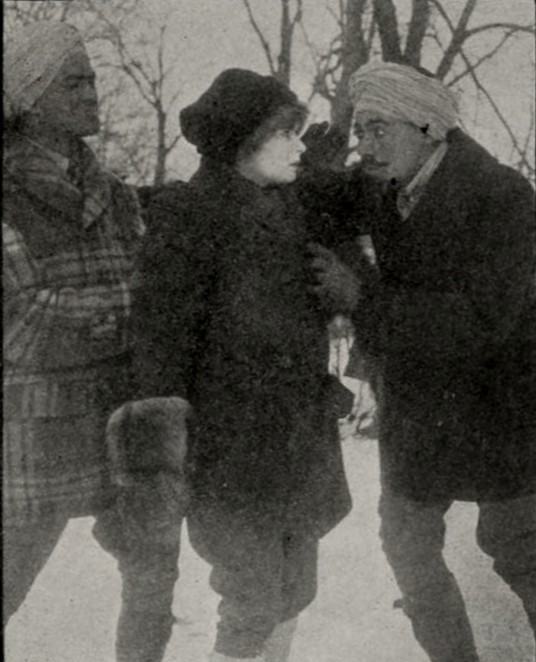
Cinematographer Hamilton Crane (also credited as Assistant Commissioner in the story) freezes breath into the lens, letting vapor crystallize so that lamplight hits like shattered halos. Compare this to the pastoral romanticism of The Trail of the Lonesome Pine; here, nature is not a balm but an accomplice. When McLloyd crawls across a half-thawed river, the ice sheets crack like Gothic stained glass, each fissure prefiguring the fracturing oaths of loyalty he will soon endure.
Silent cinema is often praised for universality, yet MacDougall weaponizes silence as cultural dissonance: Cree dialogue is left unsubtitled, Hindi letters appear untranslated, English letters burn onscreen like imperial branding. The Tower-of-Babel effect indicts every colonial tongue.
Kenneth MacDougall’s McLloyd is all clenched shoulders and flickering pupils—less a square-jawed hero than a man discovering the abyss of his own authority. Watch the moment Peggy spits her accusation: his helmet tilts forward one degree, yet the entire horizon of his face seems to collapse. It’s the micro-gesture school of acting, predating Brando by three decades.
Wynn Davidson’s Inspector Creighton could have been a moustache-twirling foil; instead, he plays the part like a weary god who has read the final reel and knows he dies badly. His guilt is never verbalized—only exuded through the way he fingers the rosary hidden in his desk, or how he over-pronounces French-Canadian place names as if to convince himself he still belongs.
Sidney Shields, at sixteen, gives Peggy a brittle maturity. She enters frames as though stepping onto thin ice, each footfall questioning whether the world will bear her weight. In the climactic tunnel sequence, tied to a dynamite keg, she doesn’t scream but hyperventilates—her ribcage staccatoing against the ropes—turning suspense into something almost unbearably intimate.
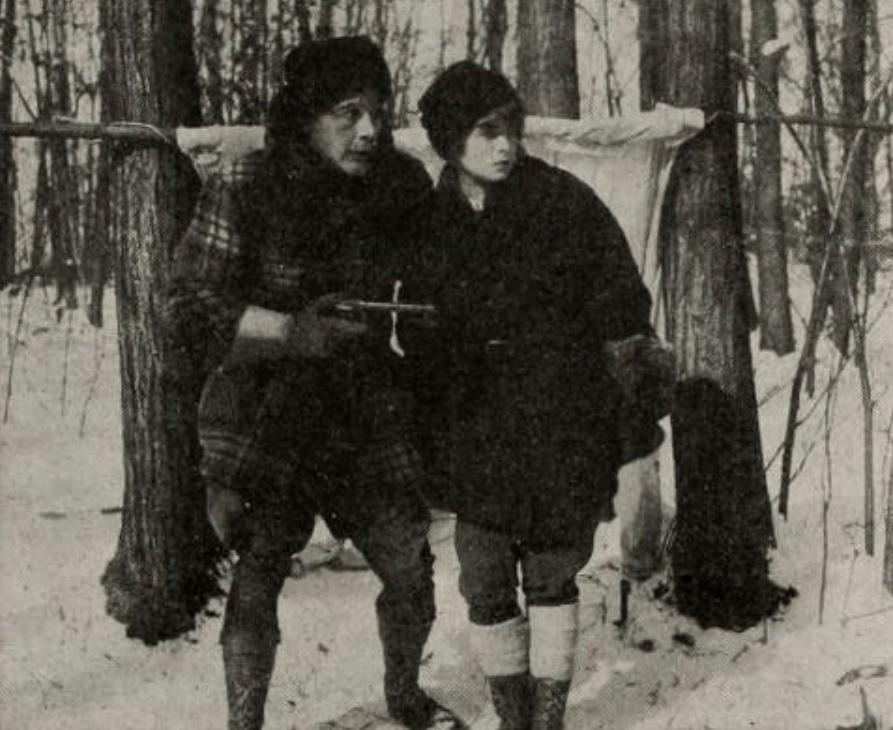
Editors in 1924 usually spliced for clarity; here they splice for culpability. A shot of McLloyd firing at game smash-cuts to Graham’s lifeless eyes, the temporal gap compressed to milliseconds. The mind cannot help but splice cause and effect, even while logic protests. Later, when the real assassin is revealed, the film re-uses those identical frames but elongates the cut to six seconds, forcing us to sit inside our earlier misjudgment. It’s Kuleshov turned into courtroom evidence.
Though released silent, the surviving print at Library and Archives Canada contains handwritten cues: “low drone—tibetan bowl,” “metallic screech—train braking.” Contemporary screenings with live ensembles have used these prompts to chilling effect. The first time I saw it at the Revue Cinema in Toronto, the accompanying viola scraped a harmonic that made the seats vibrate; when the Hindu cult appears, percussionists hammer copper pots submerged in water, creating an otherworldly gong that feels dredged from prehistoric oceans. The absence of synchronized voices thus becomes presence—an aural negative space humming with ghosts.
Let’s not pretend the film is flawless. The Shinto society is pulp nonsense, a hodgepodge of Japanized nomenclature and swami clichés. Yet even this garish orientalism serves as pressure-valve for Canadian guilt: the Mounties’ inability to police their own corruption is projected onto an exoticized brotherhood. Compare the treatment to A Prince of India, where Eastern mysticism is decorative backdrop; here it is malignant protagonist, suggesting the empire’s fear of karmic reciprocity.
Still, modern viewers will cringe at brown-face extras and turban-as-terror iconography. The film refuses to grant any Hindoo character interiority; they chant, brandish daggers, and vanish into explosive finales. It’s the cinematic equivalent of a 19th-century political cartoon—vivid, offensive, and historically revealing.
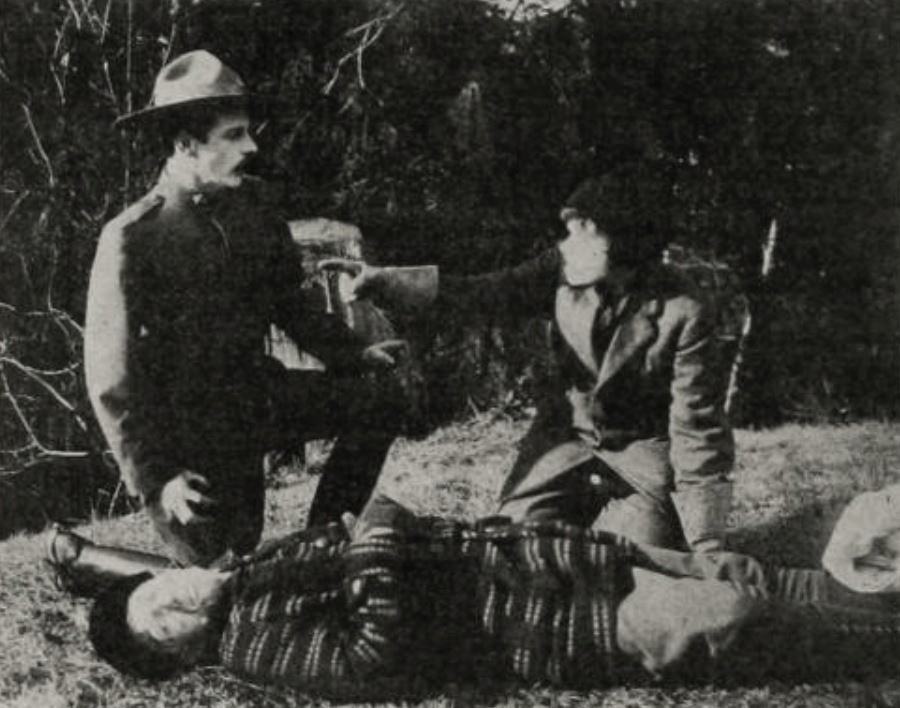
Peggy’s abduction follows the “woman-as-treasure” trope prevalent in Peril of the Plains, but MacDougall complicates the paradigm by making her the sole keeper of cartographic knowledge. She alone can read her father’s mining maps—inked on deer hide—so her body becomes parchment as much as prize. The cult needs not just her blood but her literacy, a sly nod to anxieties about women’s education in the Roaring Twenties.
There’s also homoerotic subtext crackling between Creighton and McLloyd: the way the inspector fingers the younger man’s campaign ribbon, the midnight confessions over brandy that the intertitles render elliptically. When Creighton dies, McLloyd’s grief erupts not through tears but through reckless velocity—he gallops his horse until the beast collapses—evoking the same eroticized bereavement found in Brother Officers.
For decades the picture was thought lost; only a decomposed 28-minute fragment surfaced in 1987 inside a Dawson City swimming-pool projection booth. Then, in 2018, a nearly complete 58-minute nitrate turned up on eBay—listed as “Canadian Mountie Drama w/ Hindoo villains—smells of vinegar.” The Canadian Film Institute funded a 4K photochemical restoration, and the resulting DCP glows with eerie mint greens, as though the Yukon itself has been resurrected in chromatic form.
So is The Bulldogs of the Trail a rediscovered masterpiece? Yes, with bullet holes. It marries Children of Eve’s class outrage to Blodets röst’s spiritual nihilism, all while anticipating the post-colonial skepticism of later Canadian westerns. MacDougall’s script is elliptical, pretentious, occasionally tone-deaf, yet it trusts the audience to piece together moral ambiguity—something even modern franchises fear.
Watch it for the chiaroscuro snowfields, for Peggy’s birthmark pulsing like a lodestar, for the moment when McLloyd realizes justice is not a red coat but a question mark. Watch it because history, like ice, always cracks beneath the weight of those who assume it solid.
Verdict: 8.5/10 — Essential for silent-era aficionados, mandatory for anyone who still believes the Mountie always gets his man… without first shooting the wrong one.
IMDb —
1923
Community
Log in to comment.