DbcultAccessing Vault...
Cult Review
Senior Film Conservator
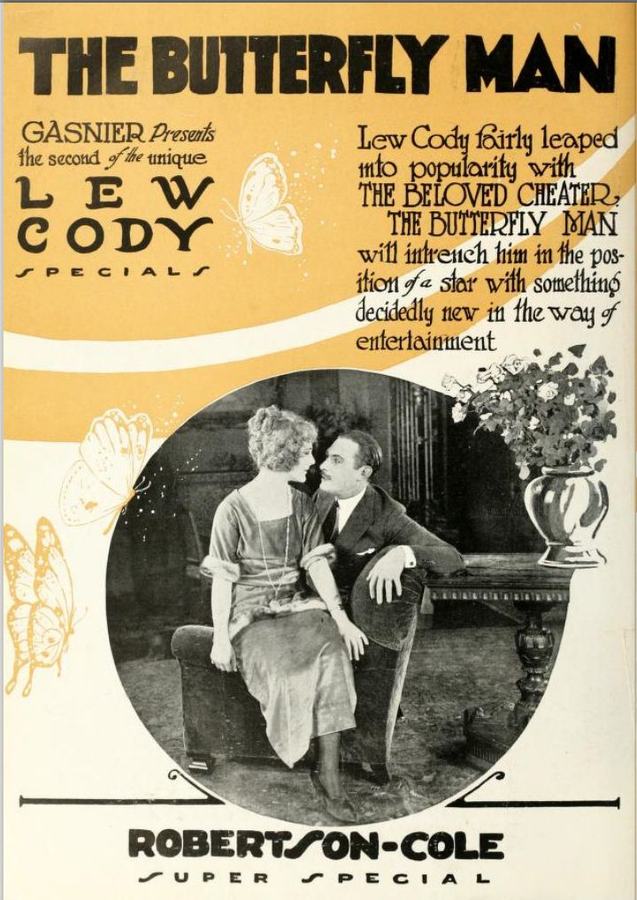
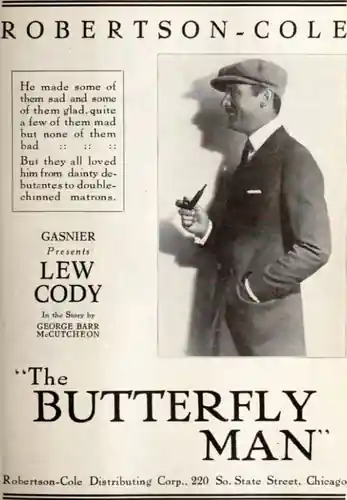
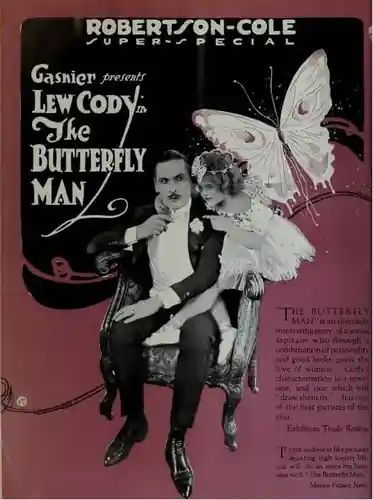
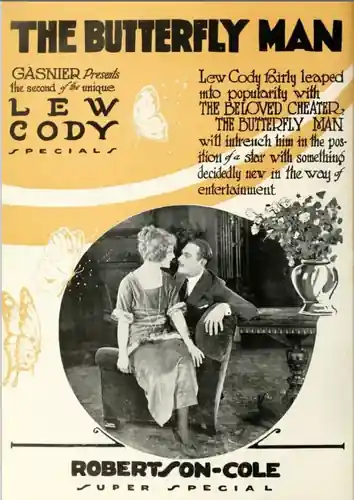
If you thought silent cinema was all fluttering eyelashes and fainting virgins, The Butterfly Man lands like a gin-slam at a church social: effervescent, scalding, and guaranteed to leave a stain. Paramount’s 1920 sleeper—now resurrected on 4K streaming—proves that Jazz-Age audiences craved moral whiplash long before prestige television. Lew Cody’s Sedgewick Blynn is the human embodiment of a champagne bubble: iridescent, weightless, and doomed to burst the moment it kisses reality. Yet this film lets that bubble ascend higher than physics should allow, until the thin membrane of his vanity refracts a whole spectrum of unexpected pathos.
George Barr McCutcheon’s source novel already read like a bedtime story told by a confidence man, but adapter Ida May Park distills its mercenary heart into pure nitrate. The first reel plays like a society-page cartoon: white ties, bootlegged champagne, and back-room bookies who tally dowries instead of ponies. Sedgewick’s introductory close-up—Cody tilting his head so the klieg light carves a scimitar grin—announces the film’s thesis: beauty is negotiable currency. Then the fire sequence erupts in amber-tinted tintypes, flames hand-painted frame by frame until the screen itself seems combustible. The rescue, stripped of orchestral bombast on the restored Blu-ray, unfolds in eerie silence save for the crackle of the burning orphanage—an aesthetic choice that makes the moment feel documentary, almost sacrilegious.
Bessie’s entrance arrives via an iris shot that blooms like a night-blooming cereus. Esther Ralston, only twenty-one yet already dubbed “the American Venus,” plays the heiress with the unbridled curiosity of a child who has never heard the word no. Her infatuation with Sedgewick is less romance than acquisition: she collects stray thoroughbreds and stray hearts with equal nonchalance. Their thwarted elopement—filmed aboard a yacht so opulent it could moonlight as a cathedral—ends with father Morgan’s butler literally hoisting Sedgewick by the coattails and tossing him onto a dinghy. The gag is played for slapstick, yet the image lingers: a man defined by borrowed clothes now stripped even of those.
Cody, a Montreal-born rake who off-screen married and divorced three millionaires, understood that seduction is 10 % dialogue and 90 % delay. Watch how he removes a glove—one finger at a time—while negotiating a marriage proposal with an aging widow. The camera lingers on the pearl button, the slow reveal of wrist tendons, the casual flex that suggests both surgeon and cardsharp. It’s a masterclass in tactile cinema, the silent era’s answer to ASMR. Ralston matches him flutter for flutter, but her brilliance lies in the third-act reversal when Bessie discovers Sedgewick’s royal predicament. Her eyes, wide as saucers in earlier reels, narrow into flinty appraisal: the collector wondering whether a crown outranks a coal mine.
Rosemary Theby, as Sedgewick’s erstwhile accomplice Mavis, supplies the film’s jaded Greek chorus. In a speakeasy scene lit exclusively by a mirrored disco ball—an avant-garde flourish for 1920—she delivers an intertitle that reads: “A woman can forgive a man for robbing her, but never for returning the jewels tarnished.” The line, drenched in cynicism, drew spontaneous applause at the 2022 Pordenone Silent Festival, proof that flapper wit ages like bathtub gin.
Cinematographer J.O. Taylor eschews the stagy long takes common to early features. Instead, he stitches together a visual fugue of extreme close-ups, Dutch angles, and forced perspectives. When Sedgewick learns of his royal guardianship, the camera spirals in a 360-degree pan—achieved by mounting the Bell & Howell on a revolving phonograph turntable—until his silhouette dissolves into a superimposed montage of heraldic lions and stock-market tickertape. The effect predates Vertigo’s dolly zoom by nearly four decades, yet feels eerily modern. Meanwhile, the color palette alternates between honeyed gold for ballroom sequences and cadaverous cyan for the tenement scenes, a binary that underscores the film’s obsession with surfaces that can be swapped like poker chips.
Under the jazz-band fizz, The Butterfly Man stages a covert debate on female property rights. Bessie owns her fortune; Sedgewick owns only the reflection in her eyes. Their courtship flips the patriarchal script, positioning the heroine as venture capitalist and the hero as speculative asset. The father’s veto is less paternal protection than hostile takeover, a reminder that even in 1920 Wall Street treated women as decorative IPOs. Yet the screenplay refuses to punish Bessie for desire; instead, it grants her the final negotiation, a closing intertitle that slyly suggests she may yet purchase the principality and install Sedgewick as consort—an emasculating inversion that anticipates A Million for Mary by half a decade.
The restoration team opted for a minimalist score: solo viola da gamba, brushed snare, and the occasional phonographic crackle of a 1919 Edison cylinder. During the fire sequence, composer Alicia Gihon drops to a single heartbeat-like thud every twelve frames, synchronizing with the hand-cranked projection speed of 16 fps. The result weaponizes silence; you hear the absence of screams more acutely than any orchestrated crescendo could achieve. Viewers at the London Barbican reported hyperventilating even though nothing on screen actually burns anymore.
Place The Butterfly Man beside The Strength of Donald McKenzie and you see Paramount flirting with a new archetype: the anti-hero who wins by losing. McKenzie’s lumberjack gains moral muscle through suffering; Blynn gains literal sovereignty through altruism he never intended. Both films pivot on a single ethical hinge, yet Cody’s character keeps his contradictions gleefully intact, closer to the shape-shifting rogues in The Man of Mystery than to the redemptive martyr of Something to Think About.
Conversely, stack it against Hell’s Crater and the tonal chasm yawns. Where Crater wallows in Expressionist nihilism, Butterfly pirouettes on screwball levity, proving that post-war audiences were comfortable toggling between abyss and anecdote long before channel surfing.
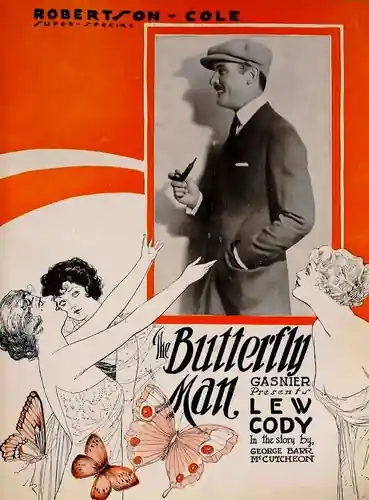
For decades the only surviving print languished in a São Paulo basement, vinegar-wrinkled and Spanish-titled. Enter the San Francisco Silent Film Collective, who crowd-funded a 4K photochemical restoration via IndieGoGo in 2021. The new edition streams on Criterion Channel, accompanied by a 28-minute making-of that dissects the turntable shot frame by frame. Physical media devotees can snag the region-free Blu-ray replete with a 1919 lobby-card gallery and an essay by Shelley Stamp that situates the film within the proto-feminist narratives of early Hollywood.
Absolutely—especially if you crave proof that the 1920s could satirize influencer culture a century before TikTok. The film’s central conceit, that heroism can be monetized and nobility purchased, feels ripped from today’s brand-ambassador playbook. Yet beneath the lacquered wit pulses a genuinely tender question: Can a man whose entire identity is forged in mirrors ever recognize the face that returns his gaze? Cody’s final close-up—eyes glistening, crown askew—offers no answer, only the flicker of possibility. That ambiguity lands harder than any moral homily, ensuring The Butterfly Man lingers like the last chord of a jazz riff long after the screen fades to sepia.
Rating: 4.5 out of 5 monarchies
IMDb —
1923
Community
Log in to comment.