DbcultAccessing Vault...
Cult Review
Senior Film Conservator
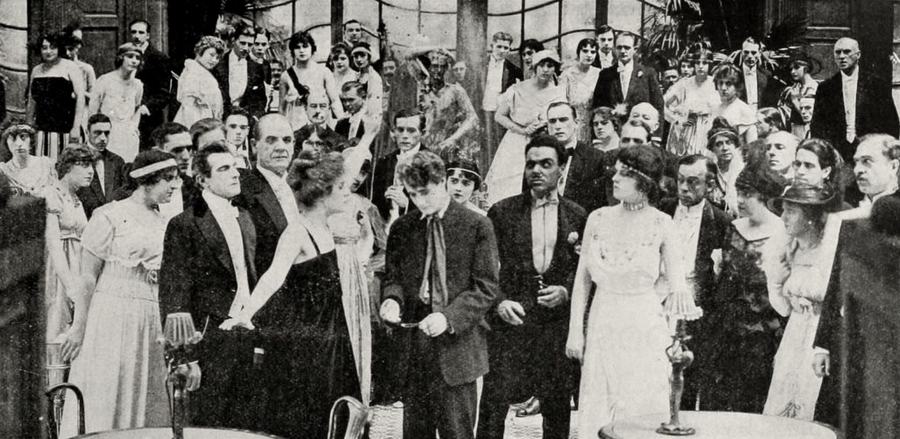
In the hallowed annals of early cinema, where narratives often grappled with the grand, sweeping themes of morality and the human condition, certain films emerge as incandescent beacons, illuminating the timeless struggles that define our existence. Destiny: or, the Soul of a Woman, a title that itself reverberates with an almost operatic gravitas, stands as a profound testament to this era's ambition. This is not merely a film; it is a philosophical treatise rendered in flickering light and shadow, a deeply moving exploration of the labyrinthine paths of sin, the crushing weight of societal judgment, and the arduous, often solitary, journey towards redemption. It dares to ask, with unflinching honesty, what constitutes a soul's true destiny when confronted with the inexorable forces of fate and human frailty.
The narrative commences with a scene steeped in domestic tranquility and artistic devotion. Standish, a painter of considerable repute, is putting the finishing touches on his latest masterpiece: a Madonna, imbued with an ethereal grace, for which his own wife, Mary, has served as the serene, beatific model. This tableau of marital harmony and creative synergy is, however, a fragile construct, destined for an abrupt and catastrophic undoing. The arrival of a Connoisseur and a Parishioner, ostensibly to appraise and perhaps acquire the artwork, introduces the serpent into this Eden. The Connoisseur, with a casual yet devastating observation, recognizes Mary not as the Madonna of Standish's canvas, but as a former paramour, a ghost from a forgotten liaison. This revelation detonates Standish's world, transforming his artistic adoration into a furious, possessive rage. Mary's desperate plea—her earnest assertion that she genuinely believed herself to be legally wed to the Connoisseur at the time—is utterly dismissed. Her explanation, a fragile shield against the storm, offers no solace to a man whose trust has been so spectacularly eviscerated. The ensuing scene of her expulsion, clutching her infant son, is a visceral depiction of patriarchal judgment, a stark reminder of the precarious position of women in a society quick to condemn. This moment, raw and unforgiving, sets the stage for Mary's long, arduous pilgrimage of suffering and sacrifice. It echoes the profound societal condemnation seen in works like The Ticket-of-Leave Man, where a character's past indiscretions irrevocably alter their future, or even the moralistic parables of The Prodigal Son, though here, the 'sin' is arguably one of circumstance rather than deliberate transgression.
Cast adrift, bereft of husband and home, Mary faces an impossible choice. Her act of abandoning her infant son on the steps of a monastery is not one of callous indifference, but rather a desperate, heartbreaking gamble for his future—a desperate prayer for sanctuary and spiritual guidance that she, in her disgraced state, could no longer provide. This act of profound self-sacrifice, born of an agonizing maternal love, resonates deeply. It's a choice that places her in a lineage of cinematic mothers who endure immense suffering for their offspring, reminiscent of the enduring struggles depicted in Les misérables, where Fantine's sacrifices for Cosette are etched into the very fabric of the narrative. Mary's decision is a poignant counterpoint to the earlier scene of her expulsion; if Standish's act was one of condemnation, Mary's is one of ultimate, albeit wrenching, protection. She relinquishes her most precious possession, not to escape responsibility, but to ensure his spiritual destiny, even if it means severing her own ties to him. The silent film medium, with its reliance on visual storytelling and stark emotional performances, amplifies the tragedy and the moral weight of this moment, leaving an indelible impression on the viewer's psyche.
Seventeen years later, the film shifts its focus to the son, now a young man on the precipice of taking his monastic vows. Yet, before fully committing to a life of ascetic devotion, he is granted a brief sojourn into the secular world, a final opportunity to witness the allure and dangers he is about to forsake. His journey takes him into a vibrant, almost phantasmagorical "gay café"—a term that, in the parlance of the early 20th century, signified a place of boisterous merriment, lively entertainment, and perhaps, a touch of moral laxity rather than its modern connotation. Here, he succumbs to the intoxicating charms of "Beauty," a figure who embodies worldly allure. This scene descends into a symbolic morality play, with the young man encircled by personified vices: Lust, Rum, Avarice, and Passion, all dancing in a dizzying, seductive tableau. It’s a direct cinematic descendant of medieval morality plays and allegorical narratives, where human virtues and vices are personified to instruct and warn. One might draw parallels to the symbolic battles for the soul depicted in works like Satanasso or even the fantastical elements of Pinocchio, where temptations are vividly rendered. The atmosphere is one of intoxicating danger, a stark contrast to the austere tranquility of the monastery, designed to test the young man's spiritual resolve. It is within this crucible of temptation that destiny, or perhaps divine intervention, orchestrates a pivotal reunion.
The proprietor of this establishment enters, a woman whose world-weary eyes have witnessed countless nights of revelry and despair. It is Mary, the mother who made the ultimate sacrifice. The recognition is hers alone, triggered by the sight of a crucifix worn by her son—the very one she had left with him all those years ago. This moment is imbued with an almost unbearable pathos. Mary, now a woman hardened by life's cruelties, yet still possessing an innate maternal instinct, faces the son she abandoned, a son who remains oblivious to their profound connection. Without revealing her identity, she subtly, yet firmly, persuades him to return to the monastery, to embrace the path he was destined for. Her words, though seemingly those of a concerned stranger, carry the weight of a mother's silent plea, a desperate hope for his spiritual salvation. This scene is a masterful stroke of narrative tension and emotional restraint, highlighting the sacrifices Mary continues to make, safeguarding her son's future even at the cost of her own recognition and solace. It’s a testament to the enduring power of unconditional love, a theme explored with similar intensity in films like Evangeline, where characters endure separation and hardship for love.
Years pass again, and the son, having heeded the mysterious proprietor's advice, has fulfilled his destiny, becoming a consecrated priest, a shepherd of souls. His life is one of spiritual devotion, untouched by the secular temptations he once briefly encountered. Into his sacred space, his church, stumbles a bedraggled, aged woman, a shadow of her former self, ravaged by time and hardship. It is Mary, now at the end of her arduous journey. The recognition this time is mutual, though perhaps unspoken by the son, a dawning realization of the profound, tragic threads that have woven through their lives. In a moment of supreme grace, just before her spirit departs, her son, the priest, bestows upon her the ultimate solace: absolution. This climactic scene is a breathtaking culmination of the film's thematic concerns. It is the ultimate act of forgiveness, a spiritual balm applied to a lifetime of suffering and perceived sin. Mary's journey, from innocent model to outcast, from sacrificing mother to weary proprietor, and finally to penitent receiving grace, completes a poignant arc of human experience. The film argues, eloquently and without didacticism, that even the most circuitous and painful paths can lead to spiritual redemption. It is a powerful affirmation of faith, mercy, and the enduring, unbreakable bond between mother and child, even when that bond remains largely unacknowledged until the final, poignant moments. This narrative echoes the profound spiritual journeys found in tales of repentance and mercy, a cornerstone of many religious narratives and a powerful theme in cinema, particularly in an era often grappling with the moral instruction of its audience.
At its core, Destiny: or, the Soul of a Woman is a profound meditation on the very concepts embedded in its title. Is destiny an unalterable force, or do individual choices, however constrained by circumstance, shape our ultimate fate? Mary's life is a crucible of this question. Her initial "sin," a perceived transgression rooted in misunderstanding, unleashes a cascade of suffering that seems preordained. Yet, her subsequent choices—the agonizing abandonment, the silent guidance, the enduring sacrifice—are acts of agency, desperate attempts to steer her son towards a better future, even as her own unravels. The film deftly explores the societal constructs of sin and morality. Was Mary truly a sinner, or a victim of circumstance and patriarchal judgment? The narrative leans heavily towards the latter, portraying her as a figure of tragic nobility, her actions driven by love and desperation rather than malice. This nuanced portrayal of morality was quite progressive for its time, challenging simplistic notions of good and evil. The theme of redemption, therefore, becomes not merely about divine forgiveness, but about the arduous human process of atonement and the boundless nature of maternal love. The son's journey, from innocent child to tempted youth to devout priest, mirrors Mary's in its spiritual trajectory, culminating in a mutual, if asymmetrical, act of grace. The film suggests that true absolution can only come after a lifetime of striving, suffering, and ultimately, an acceptance of one's place within a larger spiritual order. Such intricate moralizing, without being overtly preachy, is a hallmark of early cinematic storytelling, often aiming to both entertain and edify. It resonates with the moral complexity found in films like Sin, which also grappled with the consequences of perceived moral failings.
As a silent film, Destiny: or, the Soul of a Woman relies heavily on visual storytelling, expressive performances, and the evocative power of its intertitles. The cinematography, though limited by the technology of its era, effectively conveys mood and character. The stark contrast between the domestic warmth of the opening scene and the cold, unforgiving streets into which Mary is cast is visually potent. The "gay café" sequence, with its swirling figures and dramatic lighting, serves as a vivid representation of temptation, almost Expressionistic in its symbolic intensity. The performances, particularly that of Emily Stevens as Mary, must have been profoundly moving. Silent film acting demanded an exaggerated yet precise emotionality, conveying complex inner states through gesture, facial expression, and body language. Stevens, through Mary's journey, would have had to traverse a vast emotional landscape: from loving wife to humiliated outcast, from despairing mother to weary proprietor, and finally to a soul finding peace. The film's ability to maintain a consistent emotional through-line, even across vast temporal and spatial shifts, is a testament to the skill of its director and performers. The use of symbolism, such as the crucifix, is not merely a plot device but a profound thematic anchor, representing both Mary's sacrifice and her son's eventual spiritual calling. The visual narrative, therefore, becomes a language unto itself, communicating the profound weight of destiny and the intricate workings of the human soul without uttering a single spoken word. This mastery of visual narrative is a hallmark of the era, seen in the compelling visual narratives of films like Les Vampires, albeit with a different genre focus, or the dramatic staging of The Child of Paris.
Set against the backdrop of early 20th-century American society, Destiny: or, the Soul of a Woman offers a fascinating glimpse into the moral preoccupations and social anxieties of its time. The film's exploration of female agency (or lack thereof), the rigid societal expectations placed upon women, and the profound impact of perceived moral failings on one's social standing were highly resonant themes. The emphasis on spiritual redemption, particularly through the institution of the church, reflects a broader cultural reliance on religious frameworks for moral guidance and solace. While some aspects of its melodrama might seem heightened to a contemporary audience, it's crucial to appreciate the narrative conventions of early cinema, which often employed grand gestures and heightened emotions to convey complex ideas without dialogue. The film's enduring legacy lies in its bold thematic scope and its willingness to tackle difficult questions about fate, forgiveness, and the human spirit. It stands as a powerful example of how silent cinema, far from being a nascent art form, was already capable of producing sophisticated, emotionally resonant narratives that continue to provoke thought and stir the soul. Its contemplation of a woman's journey through societal judgment and personal sacrifice remains a potent narrative, speaking to universal experiences of struggle and the quest for spiritual peace. In an era that also produced films like Joan of Arc, which explored female strength and spiritual conviction, or The Life of Richard Wagner, which delved into the dramatic lives of prominent figures, Destiny carved its own unique niche by focusing on the profound personal journey of an ordinary woman thrust into extraordinary circumstances. It's a reminder that the foundational elements of compelling storytelling – character, conflict, and catharsis – transcend technological limitations and endure across cinematic epochs.
Ultimately, Destiny: or, the Soul of a Woman transcends its origins as a silent film to emerge as a timeless reflection on the human spirit's capacity for endurance, sacrifice, and ultimate grace. It is a cinematic triumph that weaves together threads of misunderstanding, abandonment, temptation, and divine intervention into a tapestry of profound emotional depth. The film's power lies not just in its dramatic plot, but in its empathetic portrayal of Mary, a woman whose life is defined by a series of tragic circumstances, yet whose spirit remains unbroken in her relentless pursuit of her son's well-being and, ultimately, her own peace. The final scene, where absolution is granted, is not merely a narrative resolution but a spiritual apotheosis, affirming the transformative power of forgiveness and the enduring strength of the human heart to seek and find redemption, even after a lifetime of perceived transgression. For those willing to delve into the rich heritage of early cinema, Destiny: or, the Soul of a Woman offers an incredibly rewarding experience, a powerful reminder of film's earliest capacities to explore the most profound and universal aspects of human existence. It's a journey into the soul, indeed, and one that resonates long after the final frame.
IMDb 6.5
1919
Community
Log in to comment.