DbcultAccessing Vault...
Cult Review
Senior Film Conservator
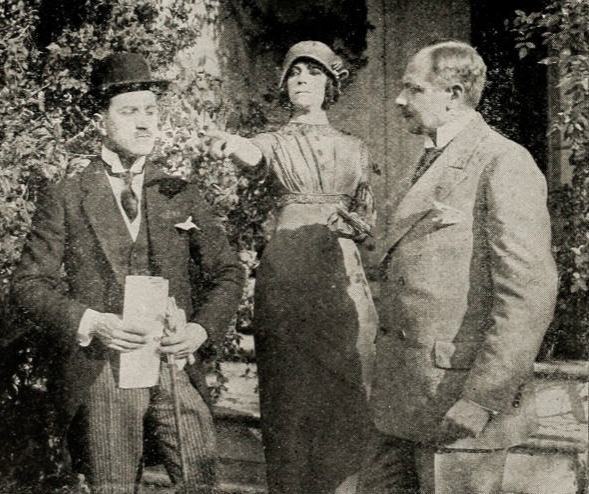
Urban Gad’s The Call of the Child—a title that sounds pastoral yet arrives like a scalpel—slipped into cinemas in February 1913, a Danish winter on celluloid, and promptly vanished into the peat bog of lost prints. Yet even in whispered synopsis the film detonates: a parable of mercantile hubris, filial barter, and the lethal algebra of debt. What survives is not a reel but a reverberation, carried chiefly by the stunned reviews of Berlin critics who saw Asta Nielsen’s face implode into madness frame by frame.
Watch the surviving stills and you witness a visual grammar still wet with invention. Gad and cinematographer Alfred Lind lace every interior with chiaroscuro so aggressive it borders on gangrene: the Schiller drawing room is a mausoleum of overstuffed settees, their burgundy velour swallowing candlelight like arterial blood. When the Count—Hans Lanser-Ludolff in epaulettes sharp enough to slice bread—leans toward Bertha, the shadow of his bicorne帽 engulfs her throat, a blackmail in silhouette. Meanwhile the lovers’ garret is filmed against a blown-out window, winter sky bleaching the frame so that their embrace appears scorched onto parchment. This is not mere mood; it is class warfare shot through aperture.
Other European divas still telegraph every emotion as if afraid the back row might miss the mime. Nielsen, already notorious for Balletdanserinden, operates on the infra-red spectrum of feeling. Notice the engagement banquet: her smile is deployed like a reluctant coin dropped into a beggar’s hat—corners twitch, eyes stay glacier. The micro-shudder when the Count’s hand encircles her waist is so minuscule you could miss it, yet it vibrates through the entire narrative, a tuning fork struck against the viewer’s conscience.
Later, when madness nibbles her sanity, Nielsen abandons the wide-eyed clichés of hysteria. Instead she lowers her eyelids half-mast, as though listening to music only she can hear, and rocks an invisible cradle with the metronomic precision of a clock running down. The effect is more unnerving than any gnashing of teeth; you realize you are watching a psyche fray by millimeters, not meters.
Gad, ever the sociologist, lets props do the talking. A child’s coral teething ring becomes the Hamlet-skull of the third act, passed from nursemaid to mother to creditor’s ledger like a baton in a relay of doom. The Count’s calling card—ivory stock, copperplate script—arrives twice: first as invitation, finally as death warrant. Even the weather is editorialized; snowfall is not romantic fluff but a slow strangulation, each flake a creditor’s signature on an IOU.
Compare this to the American contemporaries grinding out nickelodeon fodder—Over Niagara Falls with its barrel-plunges, or A Trip to the Wonderland of America peddling postcard vistas. Gad’s Europe offers no wonderland, only winter ledgers where every warmth is itemized and repossessed.
Franz’s financial nosedive is sketched with merciless speed—three intertitles, a montage of ticker-tape and brow-furrowed clerks. Yet the film’s true engine is moral debt: the unquantifiable obligation a parent believes a child owes. Ernest Schiller (Max Agerty, walrus-moustached colossus) doesn’t merely crave a title; he thirsts for symbolic restitution against every aristocrat who ever sneered at his warehouse of colonial spices. His daughter’s uterus is the coin with which he intends to purchase historical amnesia. The savage irony—he ends up purchasing a grandchild’s coffin instead—lands like a corrective slap from a puritan god.
This thematic spine allies the film with the bruised naturalism of The Pit or In the Lion’s Den, yet Gad refuses the comforting determinism of those narratives. Here, chance is not fate but a loan-shark: it compounds, it calls, it collects.
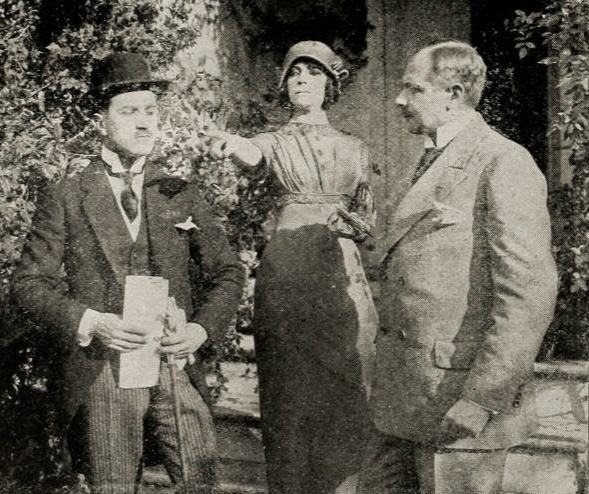
Infant mortality on screen usually arrives off-camera, a telegram read while someone clutches pearls. Gad drags it center-stage. The dying child is shot in tight close-up, gasping mouth a crimson O, skin mottled like old wax. Because 1913 censorship forbade graphic agony, the horror is displaced onto soundless absence: the sudden hush of rattles, the nurse’s lifted eyebrow, the way the camera dollies back as though respectfully ceding death its privacy. You fill the silence with your own remembered terrors, making the moment collaborative cruelty.
Later, Bertha’s hallucination sequences double-expose the child’s empty crib over her rocking chair, a spectral palimpsest that anticipates by a full decade the after-image tricks in Scandinavian horror. When she finally trudges into the snow, Gad overlays a translucent shot of the toddler’s mittened hand reaching from the grave; it lasts eight frames, hardly more than a heartbeat, yet it scalds the retina like molten wire.
Male insanity in early cinema is permitted swagger—see The Tyranny of the Mad Czar raving at court. Female madness must be fragile, perfumed, ultimately punishable. Bertha’s nocturnal pilgrimage to the graveyard thus becomes a danse macabre of trespass: she breaches domestic space, maternal duty, even meteorological prudence. The snowstorm is not obstacle but courtroom; nature itself stands judge and executioner. Her corpse, discovered at dawn with palms frozen around an iron gate, is framed like a pieta minus the Son—an inverted Madonna whose child preceded her into the tomb.
Contemporary viewers, especially women, reportedly exited the auditorium glassy-eyed, some claiming they heard phantom infant wails inside their own mouths. Whether mass suggestion or clever ballyhoo, the anecdote illustrates the film’s nerve-pinch power.
No print has surfaced in any archive, not even the Danish Film Institute’s vaults where nitrate ghosts of Gad’s other works smolder. Yet fragments propagate: a production still here, a censorship log there, a 1914 Vienna court case over a prohibited poster. Each shard keeps the myth breathing, proof that a movie need not exist to haunt. Cine-essayists invoke it as proto-feminist tragedy; economic historians cite it when charting pre-war credit bubbles; psychoanalysts of loss appropriated the snow-walk sequence long before Lars von Trier flirted with similar iconography.
Meanwhile Nielsen, ever the sphinx, refused in later interviews to expound on the role, claiming she had "buried that child where cameras cannot dig." Her reticence only fertilizes legend, allowing The Call of the Child to exist in a Schrödinger limbo—simultaneously deceased and deathless.
Because its very absence teaches us that cinema is not reels but reverberation. Because every modern tale that trades a child’s life for adult revelation—Rabbit Hole, Manchester by the Sea, even horror offerings like Hereditary—owes this Danish phantom a filial debt. Because the next time a politician moralizes about "family values" while axing pediatric healthcare, the narrative skeleton of Bertha’s snow-blind march feels terrifyingly present. And because somewhere, in an attic trunk or a flea-market photo-album, a nitrate reel might still wait, curls of emulsion ready to burn if we keep the faith—and the fire extinguishers—handy.
Verdict: 9/10 for influence, 10/10 for the chasm it leaves in your chest. Seek the shadows; the child is still calling.

IMDb —
1932
Community
Log in to comment.