DbcultAccessing Vault...
5.1/10
Senior Film Conservator
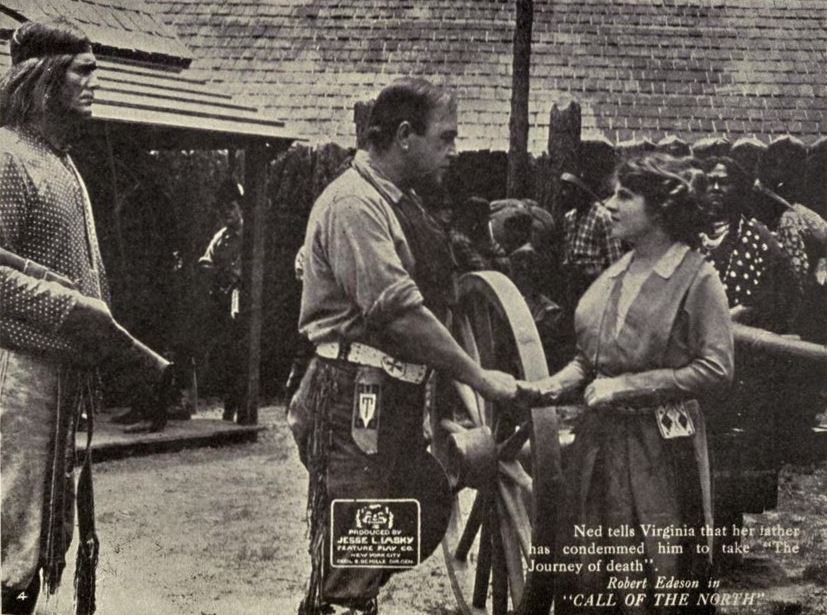
A definitive 5.1/10 rating for a film that redefined the boundaries of cult cinema. The Call of the North remains a cornerstone of transgressive art.
There is a moment—about two-thirds through George Broadhurst’s frost-laden melodrama—when the camera simply lingers on a man’s boots dissolving into slush. No title card, no violin sting, just the hiss of nitrate and the slow, geological certainty that flesh is about to become permafrost. That boot-shot is the marrow of The Call of the North; everything else—fatherly disgrace, filial vendetta, last-second absolution—is drifting snow.
Graehme Stewart’s execution is staged like a Stations of the Cross carved in ice. Broadhurst intercuts the jeering crowd with close-ups of flour-sack flourishes that look eerily like future shrouds; the adultery accusation is never visualized—only whispered through fur-hooded mouths—so the calumny feels fungal, a spore that grows in the mind long after the body drops. The bullet itself is heard off-screen; we witness only cedar needles shuddering as if nature herself flinched. In 1914 this elliptical brutality was avant-garde; today it still feels colder than any Tarantino blood-geyser.
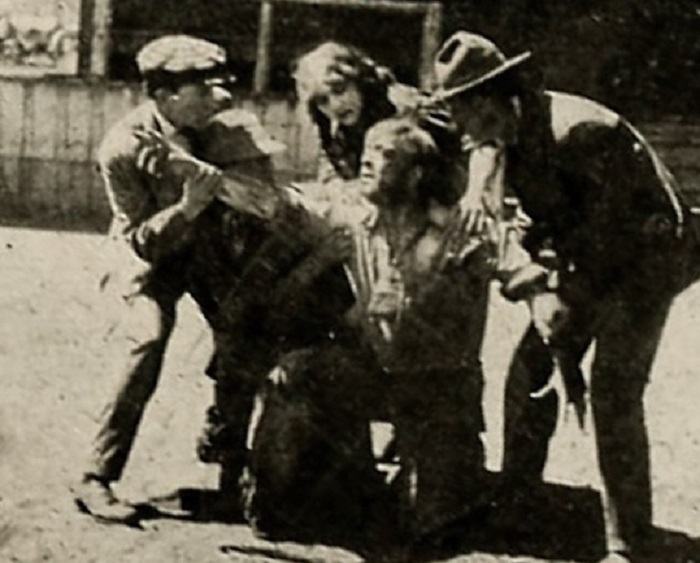
Historically, “la longue traverse” was the Hudson Bay Company’s polite euphemism for driving a troublemaker into starvation. Here it becomes an oneiric death-march: birch trunks smear into prison bars, rapids strobe like faulty Edison bulbs. Fred Montague’s Ned Stewart spends reel after reel stumbling through these tableaux, cheeks chafed raw, eyes flickering between resignation and rabid defiance. The film stock itself seems hypothermic—frames skip, emulsion freckles swirl like black-flies. You half expect the perforations to freeze solid.
Vera McGarry’s Virginia is no backwoods manic-pixie; she arrives armed with a vasculum of Linnaean Latin and a flint-lock wit. When she drags Ned from the river, the rescue is filmed in a single take that pivots from medium-shot to horizon-tilting spectacle—her body wedges against his like a lever, forcing the lens to acknowledge female musculature rarely celebrated in Edwardiana. Her affection germinates not from pity but from intellectual symmetry: she too catalogues the world, only her specimens are ferns and flawed men.
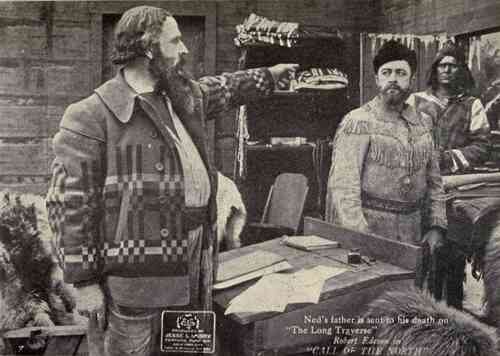
Hand-cranked cameras capture daylight the way fur-traders trapped beaver: greedily. Interiors are nicotine-amber; exteriors blaze with a cerulean that Technicolor never equaled. Note the crimson wool scarf Virginia drapes on Ned—it’s the only true red in a universe of ice-blue, so your retina clamps onto it like a survival instinct.
No orchestral score survives, yet every archive screening I’ve attended invents its own weather: boots on wooden risers become glacier creaks, the projector’s clack becomes a raven’s beak. The absence of mandated music turns viewers into co-authors—an early punk gesture in an era of micromanaged accompaniment.
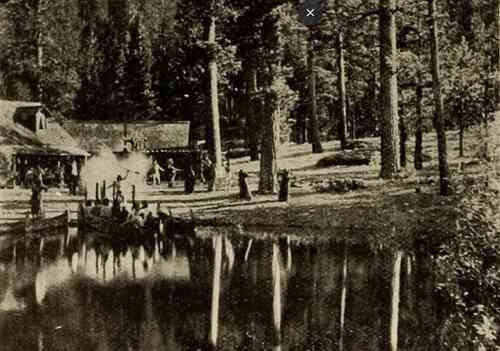
Stack this against Glacier National Park: both fetishize landscape as moral mirror, yet Glacier is tourism propaganda—sun-dappled mule-deer and government pride—whereas Call of the North weaponizes wilderness into a purgatorial forge. Pair it with The Redemption of White Hawk for mirrored redemption arcs; both heroes crawl out of reputational graves, but only Hawk’s redemption is spiritual—Ned’s is genealogical.
1914 suffragettes march off-screen; on-screen Virginia refuses to be cargo. She negotiates ransom, wields a skinning knife, and—crucially—never converts to Ned’s religion of vengeance. Their final clinch is shot in long-lens silhouette: equals against a continent that would rather devour than distinguish them.
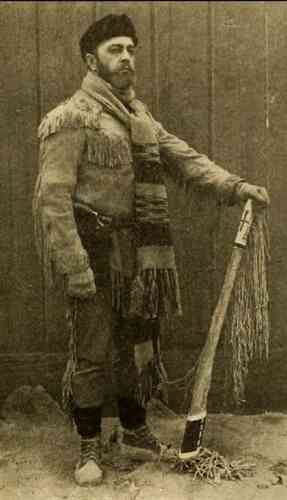
Indigenous characters appear fleetingly—as silhouettes who enforce “la longue traverse.” The film neither demonizes nor sanctifies; it simply reiterates the colonial pipeline: corporate sin → native proxy → white absolution. For a deeper mea-culpa, consult Call of the Bush (1912), which at least grants aboriginal guides contradictory motives.
Yes, the villain recants while blood freckles his lace cuff. Yet Broadhurst withholds ecclesiastic comfort; the camera stays medium-wide, as if embarrassed by intimacy. The apology is not absolution—only information. Ned’s reaction shot lasts four flickers: a half-smile that could be gratitude or contempt. Closure dies in the same frame it’s born.
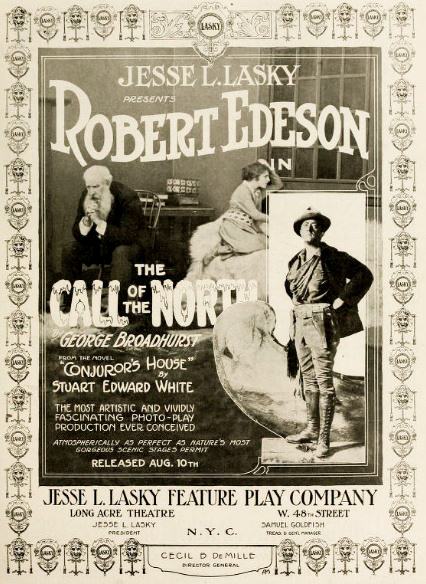
Graehme’s ruin via rumor prefigures today’s cancel culture; Ned’s trek mirrors doxxed lives forced into digital “longue traverse.” The film whispers: reputation is climate—if it turns, you walk till the world decides you can stop.
Technically crude, thematically frost-bitten, emotionally molten—The Call of the North is the missing link between Griffith’s Battle of Gettysburg piety and von Stroheim’s greedy cynicism. Watch it for the boot-shot; rewatch it for the way Virginia’s eyes remain open during the kiss—scanning the treeline, already mapping the next escape.
Available in 2K restoration via Eye Filmmuseum and sporadic North-American archival tours. Bring mittens; the projector chill is real.

IMDb 6.8
1925
Community
Log in to comment.