DbcultAccessing Vault...
5.1/10
Senior Film Conservator
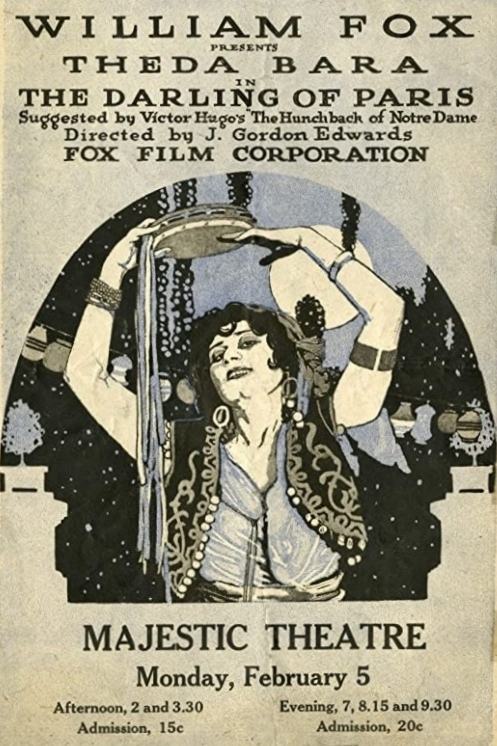
A definitive 5.1/10 rating for a film that redefined the boundaries of cult cinema. The Darling of Paris remains a cornerstone of transgressive art.
Picture a Paris where shadows still stink of tallow and the moon drips like molten pewter down slate mansards—this is the world Adrian Johnson wrests from Victor Hugo’s marrow and transplants onto nitrate stock in 1917. The result, The Darling of Paris, refuses to behave like a quaint relic; instead it slithers under your ribcage and camps there, humming outlaw ballads. Lost for decades, the surviving 58-minute cut—scuffed, speckled, yet ferociously alive—feels less like a period curio and more like a blood transfusion from cinema’s jugular.
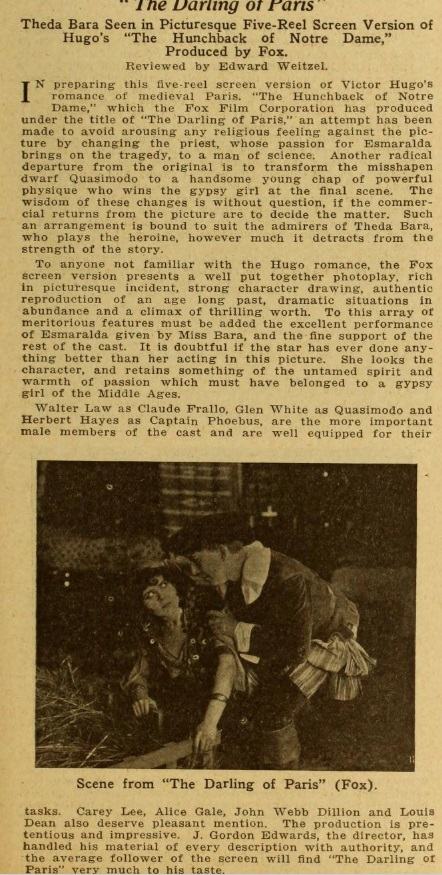
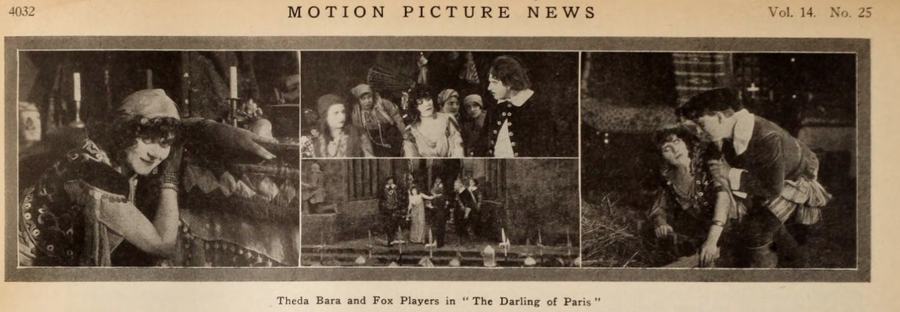
Johnson ditches Hugo’s sprawling social fresco and laser-focuses on erotic combustion: beauty as both currency and curse. Esmeralda—embodied by Theda Bara in full serpentine glory—doesn’t merely dance; she detonates. Every whip-curl of her skirt sends up a flurry of phantom moths that blind the Apaches, those velvet-blazered street piranhas who smell her foreignness and want to bottle it. Meanwhile Herbert Heyes plays Claude Frallo with the clammy precision of a man who has memorized every vertebra in the human spine yet never touched another soul. When his scalpel-slash obsession meets Phoebus’s sabre-sharp swagger, Paris becomes a laboratory of competing masculinities, all of them lethal.
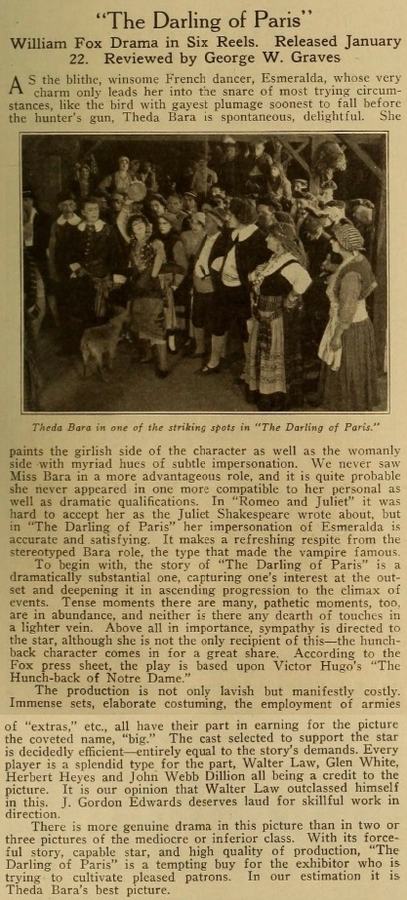
Cinematographer Robert Kurrle bathes interiors in umber pools, letting candlelight quiver on cheekbones like guilt. Exterior night scenes were shot day-for-night using cobalt filters, giving the Seine the texture of liquid slate. Note the moment Esmeralda first enters Notre-Dame: the camera dollies backward, a rare flourish for 1917, so the pillars seem to inhale her. The effect anticipates German expressionism by at least three years, outcreeping even The Sons of Satan’s tilted alleys.
No synced score survives, but modern festivals often commission new accompaniment. I caught a 2019 Brussels screening with a seven-piece ensemble using flamenco guitar, handpan, and glass harmonica; each toll of Quasimodo’s bell became a vertebra cracking in my back. Silence, paradoxically, amplifies the film’s erotic charge: every pant, rustle, and foot-scuff is conjured inside your skull until you become an accomplice to the crime.
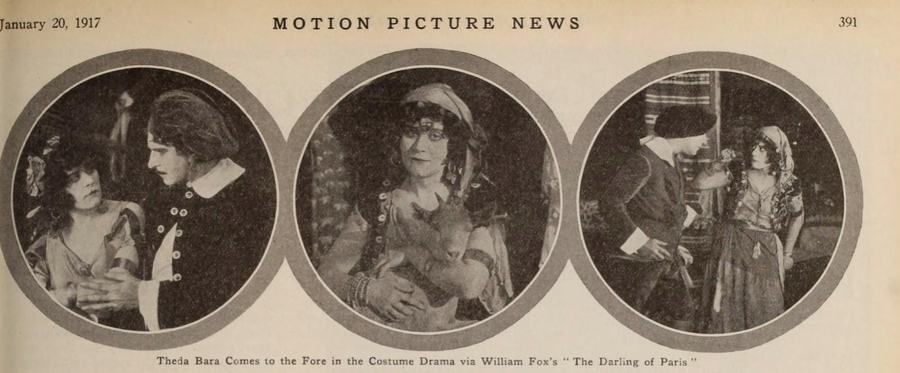
Bara was marketed as "the woman you love to hate," yet here she’s more wounded predator than vamp. Watch her pupils in the torture chamber: they widen not from pain but from the realization that innocence is a myth men concoct to justify ropes. Opposite her, Glen White’s Quasimodo eschews histrionic grotesquerie; instead he shrinks his body inward, making the hump a black hole that swallows light. The result is a tenderness so raw you half-expect the screen to bruise.
Forget Disney’s sanitized gargoyles—this narrative understands that desire is never symmetrical. Esmeralda’s beauty is a loaded gun passed among men who think pulling the trigger counts as seduction. Yet the film also grants her moments of strategic complicity: she flirts with the Apaches to secure safe passage, weaponizes Frallo’s obsession, and ultimately accepts Quasimodo’s rescue not as passive damsel but as exhausted revolutionary cashing in the only ally left standing. The final marriage, so cloying on paper, plays onscreen like a treaty signed in scar tissue.
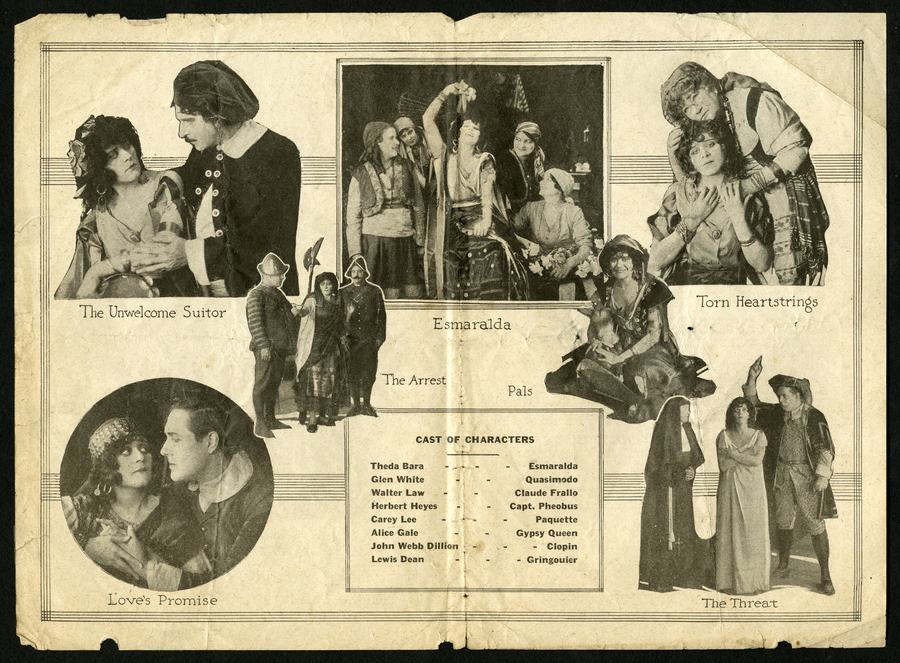
Film stocks of the late-Teens had a silver content so high that blacks shimmer like anthracite when lit correctly. Digital scans flatten those depths into tar. If you ever get the chance to see a 35 mm print—however splice-sore—run, don’t walk. The emulsion’s decay becomes a meta-narrative: Paris itself corroding under the weight of its own folklore.
Released while Europe dug mass graves, the picture’s preoccupation with public executions feels eerily topical. Crowd scenes buzz with a bloodlust that mirrors newspaper tallies from the Marne. Frallo’s laboratory, stocked with beakers that look like mustard-gas canisters, casts science as both salvation and slaughterhouse. No wonder audiences flocked to this gothic catharsis—it externalized a continent-wide death-drive into a single, consumable myth.
Trade papers of the era called it “a riot of lubricious grime,” demanding municipal bans. One Ohio preacher swore the film turned his daughter into a flamenco anarchist. Today critics hail its proto-feminist nuances, comparing Esmeralda’s arc to The Salamander’s rebellious heroines, though Bara’s character predates them by a half-decade and bleeds more profusely.
The restored 4K is licensed to Classix app in North America, complete with a choice of three scores. For Euro readers, Gaumont-Pathé occasionally tours a gorgeous sepia print; bookmark their retros page and pray it lands within train distance. Bootleg rips on archive.org are watchable but missing the amber intertitles that give the narrative its perfume of antiquity.
If you’re chasing similar cocktails of moral rot and visual splendor, sample Kiss of Death for its chiaroscuro sadism, or The Oval Diamond for another tale where beauty becomes a death warrant. On the softer side, Life’s Harmony offers redemption without amnesia, but frankly it’s skim milk after the absinthe of Darling.
I’ve watched it six times in twelve years, and each pass tattoos a new scar. First viewing: intoxicated by Bara’s kohl-lashed carnality. Third: terrified by the realization that torture chambers look identical whether run by inquisitors or democracies. Sixth: hypnotized by Quasimodo’s wedding grin—an expression so naked it feels like trespassing on someone’s resurrection. Great movies mutate alongside you; they are not consumed but contracted, like sympathetic viruses. The Darling of Paris is now part of my antibody count, and I’m not seeking a cure.
"To love beauty in a broken world is to set oneself up for murder, yet to refuse beauty is to die before the blade is raised." — Esmeralda’s unspoken catechism
Seek this film not for nostalgia’s comfort but for its thorns. Let its bells fracture your complacency. Let Bara’s gaze linger until you question every time you’ve mistaken ownership for affection. Then, and only then, will you understand why Paris, for all its bougie sparkle, remains the capital of beautiful disasters.
Whether you arrive for the tragic bells, the erotic dagger-play, or simply to ogle Theda Bara’s hypnotic waist-length mane, The Darling of Paris will greet you with open veins and a grin. Enter at your own ethical peril.
IMDb 6.4
1923
Community
Log in to comment.