DbcultAccessing Vault...
Cult Review
Senior Film Conservator
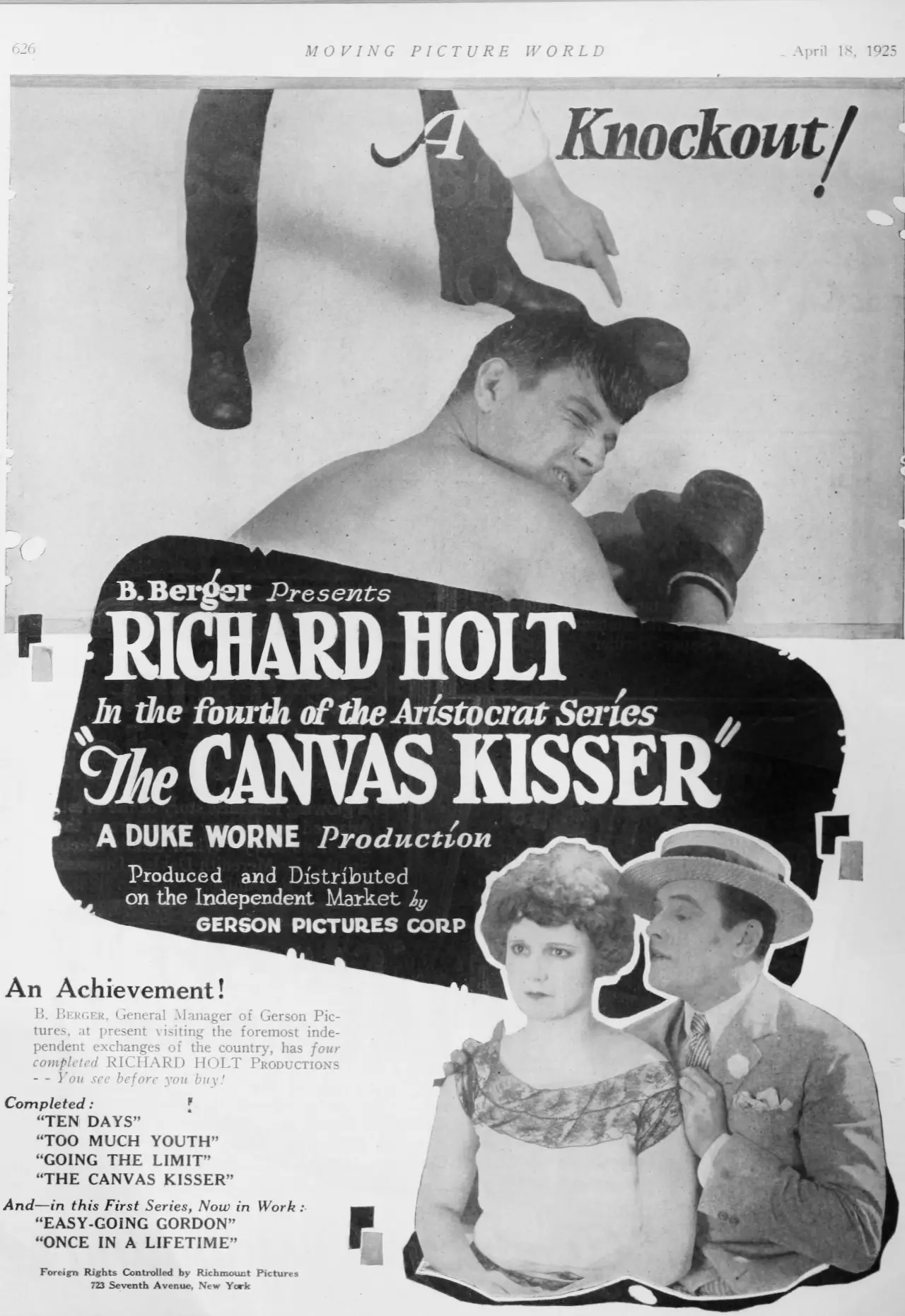
Is The Canvas Kisser worth your time today? The short answer is a qualified yes, but only if you approach it with the right expectations. This film is a fascinating historical artifact for silent film enthusiasts and those curious about the roots of sports drama, yet it will likely test the patience of viewers accustomed to modern pacing and storytelling.
It's a compelling watch for cinephiles who appreciate the nuances of early cinema and character-driven morality plays, but those seeking high-octane action or complex narrative twists will find themselves wanting.
The silent era, often dismissed by casual viewers, was a crucible for storytelling, where visual language and exaggerated performance carried the weight of narrative. The Canvas Kisser, a 1920 production, stands as a testament to this period, offering a simple yet potent tale of redemption and the high cost of integrity. It’s a film that, despite its age, grapples with themes that remain startlingly relevant: the corrupting influence of easy money, the redemptive power of love, and the dangerous repercussions of defying a system built on deceit.
Our protagonist, Jimmy, is not a villain, but a man trapped in a morally ambiguous profession. He's a prizefighter, a 'canvas kisser' in the parlance of the time, known not for his victories, but for his calculated defeats. He earns his living by throwing fights, a practice that, while ensuring financial stability, erodes his self-respect and places him firmly in the crosshairs of unscrupulous figures.
The film's central conflict ignites with the introduction of Ruth, Jimmy's girlfriend, whose unwavering moral compass acts as the catalyst for his transformation. Her influence is not subtle; it’s an exacting force that demands honesty and compels Jimmy to abandon his fraudulent career. This pivot, from calculated loser to honest man, is the narrative engine, setting in motion a chain of events that exposes the dangerous underbelly of his world.
In silent cinema, acting is a demanding art, relying heavily on facial expressions, body language, and pantomime to convey emotion and intent. Ruth Dwyer, as Ruth, delivers a performance that is both earnest and commanding. Her portrayal is the emotional anchor of the film, conveying a sincerity that transcends the typical melodrama of the era. One can almost feel her quiet disapproval, her subtle encouragement, and later, her palpable fear for Jimmy’s safety. Her eyes, often wide with concern or firm with conviction, speak volumes without uttering a single word. It’s a masterclass in silent stoicism, a performance that grounds the more theatrical elements of the plot.
Ashton Dearholt, playing Jimmy, embodies the internal struggle of a man caught between his past and his desire for a better future. His early scenes, depicting a man comfortable in his deception, contrast effectively with his later portrayal of a man burdened by newfound integrity. The subtle shifts in his posture, the slight hesitation in his movements, and the growing intensity in his gaze effectively communicate his moral awakening and subsequent peril. While some of his more dramatic expressions might strike modern viewers as overstated, within the context of 1920s acting conventions, they are entirely appropriate and effective.
Edward Cecil, as Jimmy's manager, is the quintessential silent film antagonist. His menacing glares, tight-lipped smiles, and sudden bursts of frustrated gesticulation are clear indicators of his villainy. He perfectly embodies the threat that Jimmy faces, his presence alone radiating a palpable sense of danger. The film excels in delineating character through these unspoken cues, a hallmark of the era that is often underappreciated today. This is a film where the actors truly *perform* rather than merely recite, a distinction that gives it a unique charm.
Grover Jones, as both writer and director, crafts a narrative that is straightforward yet effective. The pacing, while slower than contemporary films, allows for a deliberate build-up of tension. Jones utilizes classic silent film techniques to great effect, particularly in establishing character motivations and escalating the conflict. Close-ups are employed judiciously, focusing on the expressive faces of Dwyer and Dearholt to convey their inner turmoil or resolve. The visual composition, though often simple, is always functional, guiding the viewer's eye and reinforcing the narrative beats.
One might argue that the fight scenes themselves are somewhat understated, relying more on implication and the reactions of the onlookers than on brutal physicality. This is not a film about the spectacle of boxing, but rather about the moral battles fought outside the ring. The true 'fights' are internal, or the silent confrontations between Jimmy and his manager, conveyed through tense standoffs and calculated movements. This choice, whether born of technical limitations or artistic intent, shifts the focus from physical prowess to ethical fortitude, enriching the film's thematic depth.
The cinematography, typical of its time, uses stark lighting to create atmosphere, particularly in the dimly lit offices where Jimmy’s manager operates, hinting at the shadowy dealings taking place. While not pushing visual boundaries like some of its more experimental contemporaries, The Canvas Kisser remains a competently shot picture that serves its story well.
Absolutely, but with caveats. If you are a devotee of early cinema or have a keen interest in the evolution of moral storytelling on screen, then The Canvas Kisser offers significant value. It provides a window into a bygone era of filmmaking, showcasing the techniques and narrative priorities of its time. The film’s earnestness, particularly through Ruth Dwyer’s performance, is genuinely affecting.
However, for viewers accustomed to the rapid-fire editing and complex narratives of modern cinema, the film's deliberate pace and reliance on visual pantomime might prove challenging. It requires a willingness to engage with a different cinematic language, one that prioritizes emotional clarity over narrative complexity. It works. But it’s flawed.
It’s a film that asks you to slow down, to observe, and to appreciate the subtle artistry of its performers. It’s certainly more engaging than some other relics of the period, such as Pick and Shovel, which often felt more like a series of sketches than a cohesive narrative. It has a narrative spine, however simple, that holds it together.
What makes The Canvas Kisser resonate, even a century later, is its unwavering focus on the human struggle for integrity. Jimmy’s journey is archetypal, a classic tale of a man choosing the harder, more righteous path. While the narrative beats might seem predictable to a modern audience, this predictability is a strength, not a weakness, within the context of silent film. It allows the audience to focus on the emotional journey of the characters rather than getting lost in intricate plot points.
The film, in its quiet way, foreshadows the perennial struggle of athletes balancing personal ethics with the financial pressures of their sport, a theme still painfully relevant today.
It’s a powerful reminder that some moral dilemmas are timeless, regardless of the era or the medium. While it doesn't possess the grand scale of Komödianten or the intricate character work of Her Love Story, its strength lies in its unpretentious delivery of a universal truth.
While The Canvas Kisser might not be a lost masterpiece, it is far from a mere cinematic curio. It’s a solid, emotionally resonant silent film that effectively tells a story of moral redemption and the perils of choosing honesty over convenience. Its strength lies in its earnest performances, particularly that of Ruth Dwyer, and its clear, impactful thematic core. It’s a film that deserves to be seen, not just as a historical artifact, but as a testament to the enduring power of simple, well-told stories.
It's a foundational piece for understanding how moral dilemmas were explored in early cinema, and it offers a surprisingly potent message that transcends its black-and-white origins. While it won't be for everyone, those willing to invest in its unique rhythm will find a rewarding experience. Give it a chance; you might be surprised by the quiet power of this early boxing drama.
IMDb —
1915
Community
Log in to comment.