DbcultAccessing Vault...
Cult Review
Senior Film Conservator
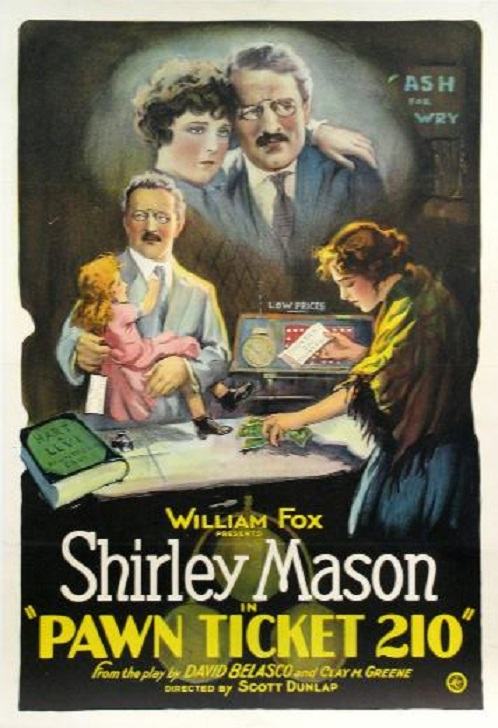
Noir before noir had a name, Pawn Ticket 210 is a 55-minute pocket symphony of regret—played on out-of-tune heartstrings and the cash-register chime of destiny. Director Jules Furthman, moonlighting from his usual scribbling duties, treats celluloid like pawnshop glass: every frame smeared with fingerprints of those who once touched it.
Imagine a city where streetlights hum like weary baritones and the river swallows suicides without so much as a shrug. Inside this chiaroscuro, Harris Levi—played by Fred Warren with stooped shoulders that seem weighed down by ledger ink—guards the family pawnshop as though it were the Vatican of second chances. One winter night, a woman wrapped in desperation deposits her infant daughter and a brass pawn ticket, then evaporates into flurries. Harris, whose own wife has already absconded with another man, decides the universe owes him one act of fiduciary grace; he rears the child, names her Meg, and schools her in the arithmetic of collateral: everything has negotiable value, even sorrow.
Years dilate. Meg (now incarnated by Shirley Mason, eyes wide as nickelodeon portals) blooms into flapper-hood, all coltish curiosity and piano-leg gams. Harris, sensing the shop’s mildewed shadows will stunt her, ships her off to Robert’s townhouse—a Versailles of chandeliers and repressed gasps. Robert, silk-scarved and serpent-smooth, embodies the genteel façade society applauds; beneath, he is a ledger of unpaid moral debts. When Meg’s birth mother returns—tattered but breathing—she demands the girl back. The confrontation detonates like a nitrate reel: Robert is unveiled as both Meg’s sire and the homewrecker who eloped with Harris’s spouse. The triangle folds into itself, origami of shame, until Harris realizes the very man he trusted is the architect of his cuckoldry.
Resolution arrives not with pistols or poison, but with a communal sigh: Meg forgives, parents reunite, and Chick Saxe—the pawnbroker’s apprentice whose cheekbones could slice ticker tape—claims her hand. The pawn ticket, once a contract of abandonment, transmutes into dowry. Fade-out on a kiss so luminous it could redeem every unredeemed pledge in the shop.
Shirley Mason navigates adolescence with the tremulous electricity of a bulb about to blow. Watch her in the pawnshop’s rear corridor: shoulders hunched, she listens to adults lie—her pupils pulse like silent-movie Morse. She never overplays; instead she compresses, letting the audience decompress her heartbreak in real time. Contrast this with the broad histrionics common in 1922 (Cooks and Crooks springs to mind), and you see a performer trusting micro-gesture over macro-flail.
Fred Warren’s Harris is a study in fiduciary fatigue. His fingers—ink-stained, trembling—count coins as if each clink were a Hail Mary. When he finally smiles, the creases look carved by a chisel gone dull; you sense happiness is another currency he can’t afford to exchange. Meanwhile Robert Agnew, as the caddish Robert, wears villainy like a boutonnière: decorative, fragrant, but ultimately disposable. The film refuses to hiss at him; instead it lets him stew in the broth of his own contrition, a choice that feels almost modern.
Cinematographer J.O. Taylor lenses the pawnshop as Caravaggio might: shafts of top-light skewer airborne dust, turning it into floating doubloons. Note the sequence where young Meg first sees Chick: the camera racks focus from her face to the boy’s reflection in a cracked countertop mirror—a visual haiku announcing the shattering of innocence. Later, when Robert’s perfidy is exposed, the parlor’s French doors swing open, vomiting nocturnal fog; the outside world invades like unpaid interest.
Intertitles—penned by David Belasco and Clay M. Greene—glint with penny-press poetry. “A mother’s goodbye is a coin too thin to weigh,” reads one, hovering over a shot of the abandoned infant. The font resembles typewriter keys struck by trembling hands, each serif a tiny dagger.
Most circulating prints carry a 1971 organ score by William Perry, all basso profundo chords and repentant minors. Yet silent-film devotees who’ve caught archival 16-mm screenings report a different experience: the rustle of jackets, collective breathing, the projector’s clatter becoming percussive heartbeat. In that vacuum, Pawn Ticket 210 feels less like a relic and more like a séance—viewers conjuring emotions through the candle-flicker of celluloid.
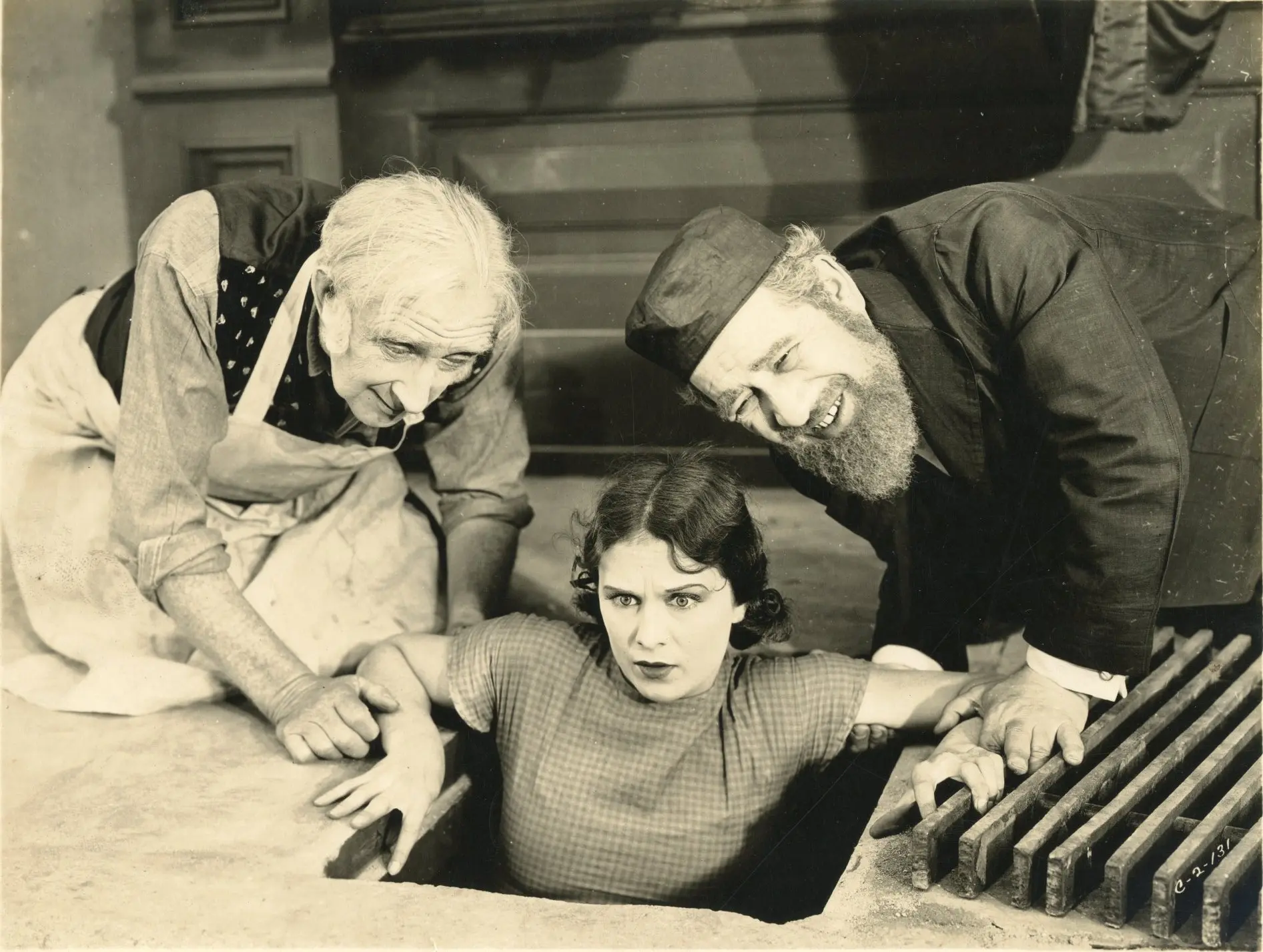
Released the same year as Kino-pravda no. 6, Vertov’s cerebral newsreel, Pawn Ticket 210 seems antithetical—melodrama versus manifesto. Yet both share an obsession with receipts: Vertov tallies societal contradictions; Furthman tallies emotional IOUs. Stack it against The Man Who Was Afraid and you find parallel anxieties: male humiliation, paternal anxiety, the dread of being swapped for a better model.
Curiously, the film also rhymes with Dusk to Dawn—both hinge on guardianship upended by the reappearance of biological parents. But where Dusk externalizes conflict across western mesas, Pawn Ticket internalizes it within parlor walls, making claustrophobia its principal set.
The picture is both progressive and punitive. Meg’s agency lies in choosing Chick, yet her destiny is still brokered by men—Harris, Robert, Chick—who negotiate her worth like brokers on the trading floor. Irene Hunt, as the wayward mother, functions as deus-ex-machina wrapped in fox-fur: her return catalyzes resolution but strips her of complexity. She’s the ticking promissory note finally called due.
Still, 1922 audiences—many fresh from suffrage victories—might have read Meg’s ultimate autonomy as feminist triumph. She stands at the center of the final tableau, flanked by reconciled parents and devoted beau, the pawn ticket fluttering from her fingers like a butterfly discarding chrysalis.
Belasco’s theatrical roots show: the third act relies on the mother’s sudden reappearance, a contrivance that would make modern screenwriting gurus wince. Yet the film’s brisk runtime cushions the blow; we barely have time to nitpick before the next emotional blowtorch arrives. Furthman’s pacing—learned, perhaps, from his later masterpieces like The Big Sleep—keeps exposition humming like a well-oiled adding machine.
For decades, Pawn Ticket 210 floated in celluloid limbo, rumored lost like so many Bar Nothing westerns. Then, in 2018, a 35-mm nitrate print surfaced in a Slovenian monastery—yes, really—its reels tucked inside a crate labeled “Altar Candles.” The Ljubljana Silent Revival Festival oversaw a 4-K scan, revealing details previously smothered by dupes: the glint of a locket, the half-moon sweat stain under Harris’s armpit. You can now stream the restoration on boutique platforms, though the HD transfer retains a patina of scratches—battle scars that whisper, “I survived.”
In an era of DNA-test revelations and Reddit ancestry forums, the film’s paternity bombshell feels ripped from today’s headlines. Swap the pawnshop for a thrift store, swap intertitles for text bubbles, and you have a story ready to trend. Its central metaphor—life as a ledger—resonates in gig-economy gigabytes where every swipe accrues existential debt.
Moreover, the movie anticipates the “found family” trope now bingeable across streaming services. Harris, a secular saint, prefigures the guardian angels of Paddington or Ted Lasso, proving kindness can be a form of subversive heroism.
I award Pawn Ticket 210 four out of five brass rings. The missing ring? The underwritten maternal role and a denouement too tidy for the chaos that precedes it. Yet these blemishes fade beside the film’s bravura performances, chiaroscuro lyricism, and thematic audacity. It is a slender volume in the encyclopedia of silent cinema, but every page crackles with the static of lived lives—lives spent, lent, and ultimately redeemed.
So if your nightly scroll leaves you anesthetized by algorithmic mush, pawn some time for this relic. You’ll exit with pockets jingling—coins of empathy, tokens of wonder, and maybe a ticket stub that reminds you every debt, emotional or fiscal, demands its day of reckoning.
IMDb 7.3
1926
Community
Log in to comment.