DbcultAccessing Vault...
5.6/10
Senior Film Conservator
A definitive 5.6/10 rating for a film that redefined the boundaries of cult cinema. The Capture of a Sea Elephant and Hunting Wild Game in the South Pacific Islands remains a cornerstone of transgressive art.
Stepping back into the nascent days of cinema, when film was less an art form and more a curious tool for documentation, we encounter a relic that stirs both fascination and discomfort: The Capture of a Sea Elephant and Hunting Wild Game in the South Pacific Islands. This isn't your meticulously crafted, high-definition nature documentary. Oh no. This is raw, unpolished, and utterly unapologetic footage from a bygone era, offering a window into a world where human interaction with nature was often a stark, survivalist drama rather than a conservationist dialogue. It’s a powerful, if challenging, piece of history, demanding contextual understanding rather than modern judgment.
The very title itself is a grand declaration, a promise of adventure and an unvarnished look at life in the remote corners of the world. For audiences of its time, likely accustomed to staged narratives or simple actualities of urban life, this film must have been nothing short of electrifying. Imagine the gasps as the flickering images transported them from their familiar, gas-lit streets to the sun-drenched, rugged shores of the South Pacific, a realm of exoticism and untamed wildness. It wasn't just entertainment; it was an education, an ethnographic expedition delivered right to their local picture house. And for us, today, it serves as an invaluable, if sometimes unsettling, historical document.
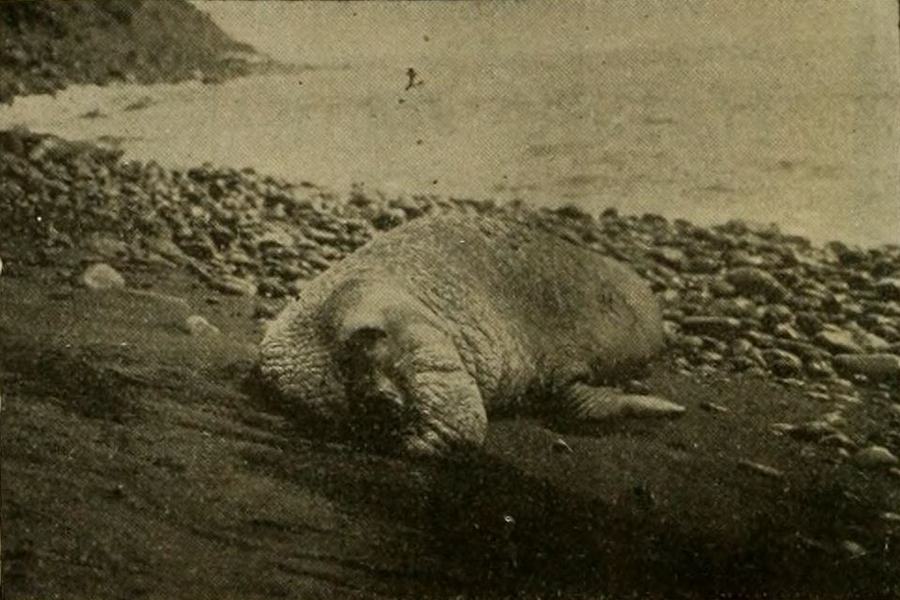
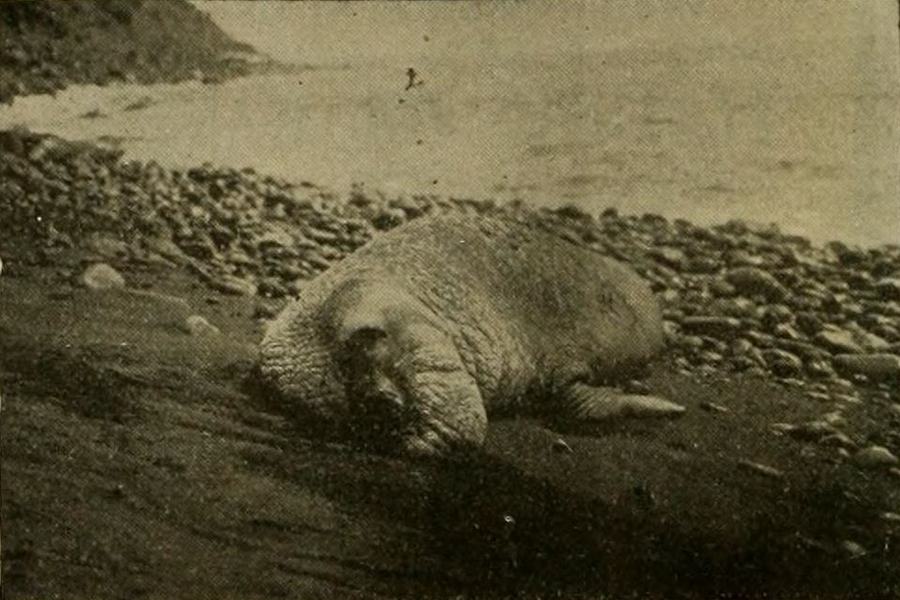
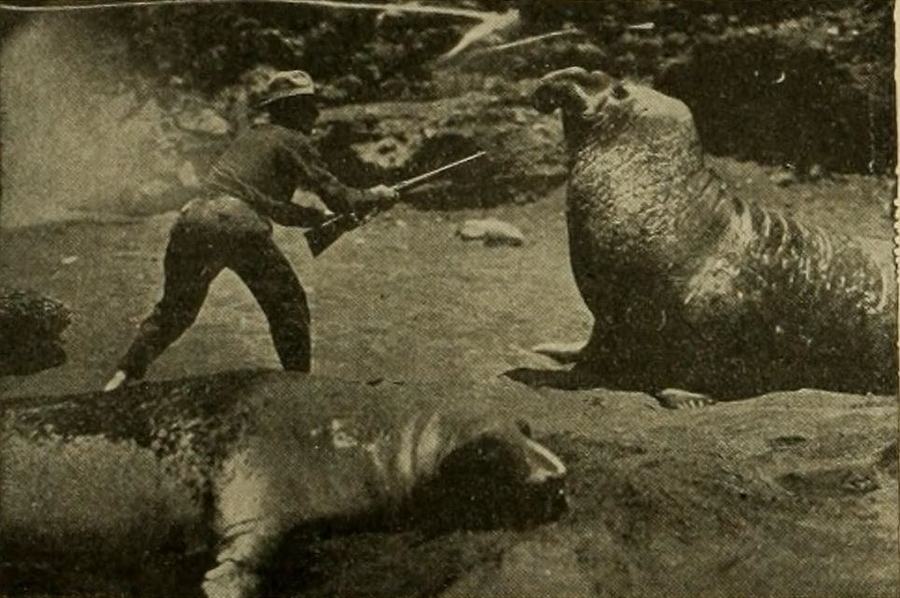
The segment focusing on the sea elephant capture is, without a doubt, the film's centerpiece. Sea elephants, with their colossal size and somewhat grotesque proboscis, are creatures of immense power and surprising agility in their aquatic domain. On land, however, they become vulnerable, their enormous bulk a disadvantage. The film captures this vulnerability with a stark realism that is both captivating and difficult to watch. We see the methodical, almost ritualistic approach of the hunters – whether they be local inhabitants or expedition members – as they navigate the treacherous shoreline. The sheer physical effort involved in subduing such a massive creature is palpable even through the grainy, silent footage. It's a testament to human ingenuity and perseverance, but also a stark reminder of the power imbalance between man and beast.
One cannot help but draw parallels, however tenuous, to other early cinematic explorations of man versus nature. While not directly comparable in narrative, the raw struggle in this film echoes the perilous encounters in something like In the Python's Den, where the untamed wilderness presents formidable, life-threatening challenges. Both films, in their own ways, are about confronting the 'otherness' of nature, albeit with vastly different outcomes and intentions. Here, the intent is clearly one of capture, perhaps for scientific study, for resources, or simply for the sheer spectacle of it. The camera, a silent observer, doesn't shy away from the brutality, presenting it as an undeniable fact of life in that environment.
Beyond the dramatic sea elephant encounter, the film broadens its scope to encompass the hunting of wild game across the South Pacific Islands. This section is perhaps even more valuable from an anthropological perspective. Without the benefit of modern narration or extensive intertitles, we are left to interpret the actions on screen, piecing together the narrative of daily life and survival. We might see various hunting techniques, the use of traditional tools, and the communal aspects of the hunt. These moments, however fleeting, offer tantalizing glimpses into the cultural practices and resourcefulness of island communities, or indeed, the logistical challenges faced by visiting expeditions.
The landscapes themselves become characters in this unfolding drama. The lush, verdant interiors, the rugged coastlines, the sparkling azure waters – all are captured, albeit imperfectly, by the early cinematographic equipment. These are not merely backdrops; they are integral to the narrative of survival and exploration. The very isolation of these islands, which made them objects of fascination for the outside world, is conveyed through the untamed beauty and the formidable challenges they present. In a sense, the film shares a spirit of remote discovery with more fictionalized adventure tales of the era, though its commitment to 'actuality' sets it apart.
It's impossible to watch a film like this through a contemporary lens without a certain degree of ethical unease. Our modern sensibilities, shaped by decades of conservation efforts and a greater understanding of ecological fragility, recoil at the direct, often brutal, depictions of animal capture and hunting. However, to truly appreciate the film's significance, we must contextualize it within its historical moment. This was an era before widespread environmentalism, when the natural world was often viewed as a resource to be exploited or a wilderness to be conquered. The concept of 'wildlife conservation' as we know it today was in its infancy, if it existed at all in popular consciousness.
Filmmakers and explorers of this period often saw their role as documenting the 'unspoiled' world before it was irrevocably changed by modernity. While their methods might seem crude or even cruel now, their intent was often to record, to learn, and to bring these distant realities to a curious public. This film, therefore, is not just a record of hunting; it's a record of a particular human relationship with nature, one that has largely shifted over the past century. It invites us to reflect on how far we've come, and indeed, how much we've lost or changed in our perception of the wild.
From a purely technical standpoint, The Capture of a Sea Elephant and Hunting Wild Game in the South Pacific Islands showcases the limitations and triumphs of early cinematography. The cameras were bulky, the film stock temperamental, and the conditions in the remote South Pacific undoubtedly challenging. Yet, despite these hurdles, the filmmakers managed to capture dynamic, compelling sequences. The framing might be rudimentary, the editing perhaps abrupt, but the sheer fact that these images exist, preserved for posterity, is a marvel. The shaky handheld shots, the sudden shifts in perspective – these aren't artistic choices in the modern sense, but rather the raw imprint of a camera struggling to keep pace with the action in an unpredictable environment.
The film’s historical value cannot be overstated. It stands as a testament to the early ambition of documentary filmmaking, an ancestor to every nature program and travelogue we consume today. It provides a rare visual archive of specific ecological and cultural interactions that are likely impossible to replicate or even observe in the same way now. Much like how films such as One Hundred Years Ago offer a glimpse into the past, this film offers a direct, unmediated connection to a world that existed long before our own, a world where the lines between survival, exploration, and exploitation were often blurred.
While the film's methods might be jarring to modern eyes, it inadvertently laid groundwork for future understanding. By bringing these distant spectacles to the public, it sparked curiosity about the natural world and the diverse cultures inhabiting it. This initial spark, over decades, would evolve into a more nuanced appreciation for biodiversity and the urgent need for conservation. It’s a foundational piece, a stepping stone from an era of unbridled resource extraction to one of cautious stewardship. Without films like this, our collective visual memory of these past interactions would be significantly diminished.
The sheer audacity of these early expeditions, often fraught with danger and logistical nightmares, is something to ponder. The individuals behind these cameras were pioneers, venturing into the unknown with equipment that by today's standards would seem impossibly cumbersome. Their dedication to capturing these moments, however they chose to frame them, is a significant part of cinematic history. This film, in its unpolished glory, is a celebration of that early adventurous spirit, even as it forces us to confront uncomfortable truths about humanity's past relationship with the wild.
Ultimately, The Capture of a Sea Elephant and Hunting Wild Game in the South Pacific Islands is more than just a historical curiosity. It's a potent reminder of humanity's enduring fascination with the wild, a fascination that manifests in vastly different ways across time. It forces us to confront the primitive instincts that still lie dormant within us, the drive to explore, to subdue, and to understand. It’s a piece of cinema that doesn't offer easy answers or comforting narratives; instead, it presents a stark reality, demanding that we, as viewers, engage with its complexities and draw our own conclusions.
For those interested in the evolution of documentary film, the history of exploration, or simply a raw, unfiltered look at a world that has largely vanished, this film is an essential, if challenging, watch. It stands as a monument to early cinema's power to transport, to inform, and to provoke, proving that even without a narrative arc or polished production, the sheer act of witnessing can be profoundly impactful. It's a film that lingers, prompting reflection on our place in the natural order, both then and now, and the ever-shifting boundaries of human ambition and responsibility.
The legacy of such films is complex. They are artifacts of their time, reflecting prevailing attitudes and technologies. Yet, they also serve as vital records, offering insights into environmental conditions, human cultures, and the very dawn of visual media. This particular work, with its focus on the dramatic and often brutal interactions between humans and megafauna, is a particularly poignant example. It’s a film that doesn't just show us what happened; it makes us think about why it happened, and how our understanding of such events has profoundly changed.
So, if you ever have the chance to witness this rare piece of cinematic history, prepare yourself not for a gentle stroll through a pristine wilderness, but for a vigorous, sometimes unsettling, journey into a past where the lines between scientific endeavor, adventurous pursuit, and raw survival were often indistinguishable. It’s a film that resonates with the echoes of a louder, wilder world, captured for all time by the pioneering spirit of early filmmakers.
Community
Log in to comment.