DbcultAccessing Vault...
5.7/10
Senior Film Conservator
A definitive 5.7/10 rating for a film that redefined the boundaries of cult cinema. The Habit of Happiness remains a cornerstone of transgressive art.
Stepping back into the nascent years of cinema, one encounters a peculiar charm in films like "The Habit of Happiness". This 1916 feature, a vibrant showcase for the burgeoning stardom of Douglas Fairbanks, offers far more than a simple comedic romp; it’s a fascinating socio-cultural artifact, brimming with a then-radical optimism and a disarmingly earnest belief in the transformative power of joy. In an era often characterized by melodramatic excess or slapstick simplicity, this film carves out a unique niche, presenting a narrative that, while ostensibly lighthearted, delves into surprisingly prescient themes of class disparity, the pursuit of genuine contentment, and the inherent value of human connection over superficial status. It’s a testament to the enduring appeal of a story that champions the underdog, celebrates unconventional wisdom, and ultimately, posits laughter as the most potent medicine.
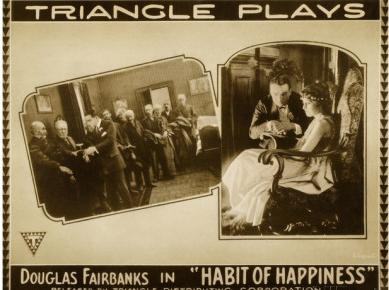
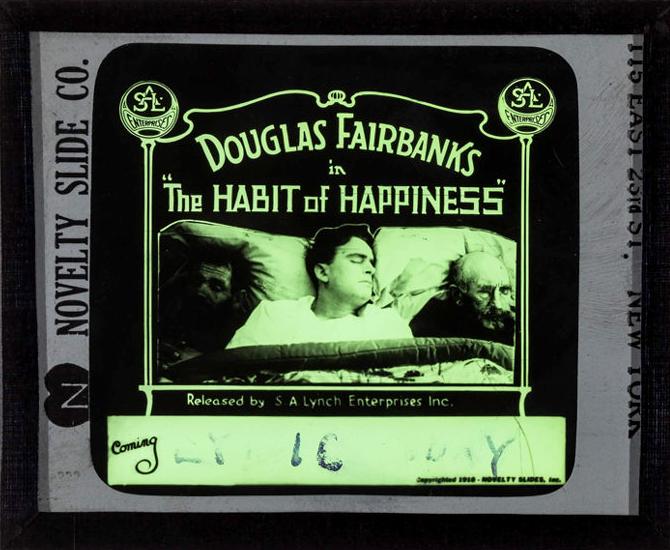
At its core, "The Habit of Happiness" is a character study of Sunny Wiggins, played with effervescent charm by Fairbanks. Sunny is an anomaly within his own family—a clan obsessed with social climbing, whose every aspiration is meticulously calibrated to impress a higher echelon of society, even as they themselves are snubbed by "the best people." His family's frantic pursuit of status stands in stark contrast to Sunny's own relaxed, almost bohemian ethos. While his sister meticulously arranges a party designed to solidify her engagement to a rather vacuous, "mentally lacking beanpole" of a suitor, Sunny is orchestrating his own brand of social experiment. His bedroom transforms into a sanctuary for the downtrodden, a motley assembly of individuals recruited directly from the breadline. Two share his bed, others recline on the carpet, and one even finds solace in the bathtub. This scene, rendered with a light comedic touch, is nonetheless a powerful visual statement on Sunny's democratic spirit, his profound empathy for those society deems unworthy, and his rejection of the rigid social stratification that defines his family’s existence. It's a delightful subversion of expectations, a playful poke at the pretensions of the upper crust, and a clear indication of where the film's moral compass truly lies. The subsequent chaotic breakfast, where Sunny's uninvited guests devour the elaborate spread intended for the socialites, is not merely a moment of physical comedy but a symbolic act of consumption, a playful dismantling of the superficiality that his family so ardently embraces. The clash between Sunny's authentic, if unconventional, hospitality and his sister's horrified snobbery sets the stage for the film's central conflict: the collision of genuine human connection with performative social standing.
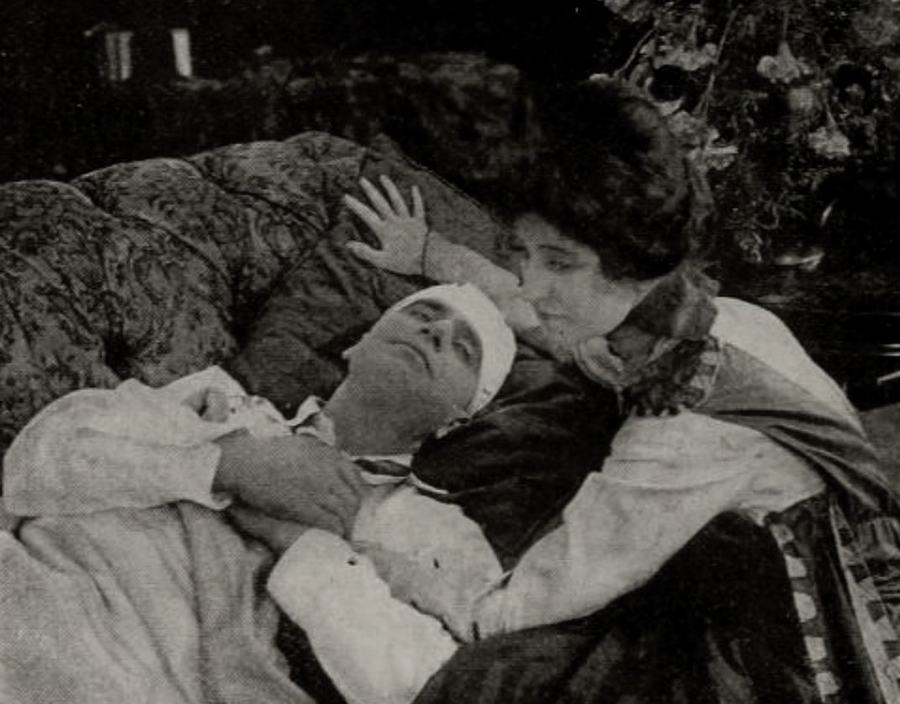
Douglas Fairbanks, even in these early years, embodies a kinetic energy that is simply captivating. His portrayal of Sunny Wiggins is less about nuanced emotional depth and more about an infectious, almost acrobatic zest for life. He moves with a boundless enthusiasm, a physical manifestation of the optimism his character espouses. This vivacity was a hallmark of Fairbanks' early career, distinguishing him from many of his contemporaries. His ability to convey complex ideas—like the inherent dignity of all people, regardless of their social standing—through expressive physicality and a winning smile is central to the film's success. When Sunny is, predictably, reprimanded by his father and cast out to "try his sociological theories along the Bowery," it's not a punishment but an opportunity. This expulsion, far from being a moment of despair, becomes the catalyst for Sunny's true calling. Here, in the grimy lodging houses of the city's underbelly, Sunny finds his true purpose: teaching derelicts to laugh. This simple act, seemingly trivial, is presented as a profound revolutionary act. It’s a powerful endorsement of the idea that happiness, even in the direst circumstances, is not a luxury but a fundamental human right, a tool for empowerment. The film, through Fairbanks' charismatic performance, suggests that a shift in internal disposition can precede and even facilitate external change. This theme resonates even today, offering a timeless message about resilience and the human spirit's capacity for joy amidst adversity. The sheer magnetism of Fairbanks ensures that Sunny’s often outlandish ideas never feel preachy, but rather, genuinely inspiring.
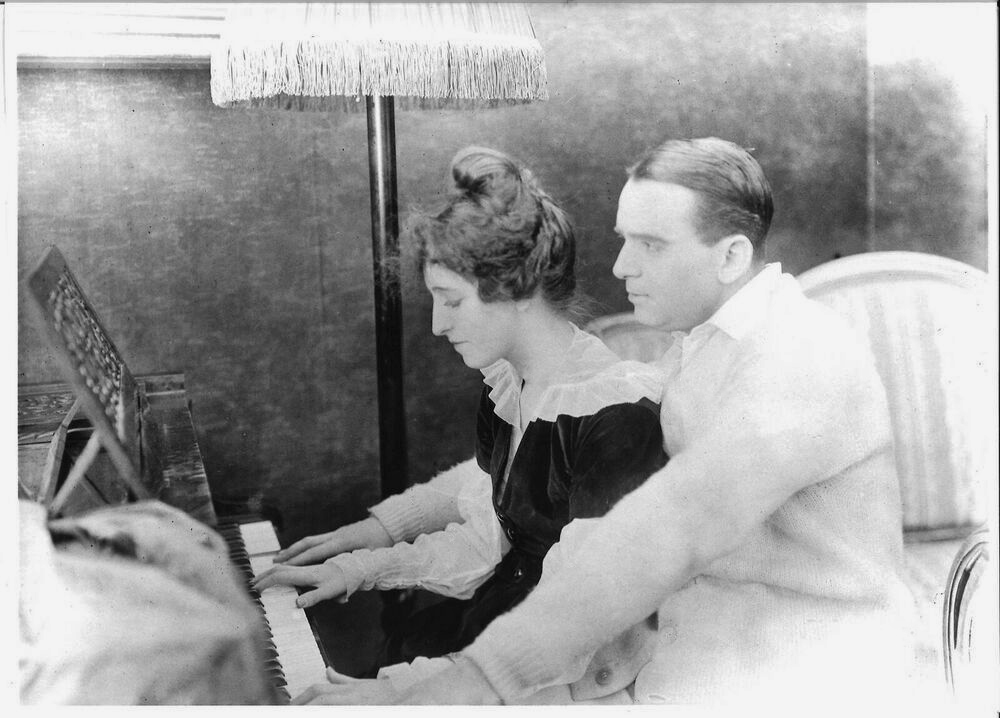
Sunny’s unexpected success on the Bowery, transforming a den of despair into a vibrant space of shared mirth, catches the attention of an "eminent specialist." This plot point, while convenient, serves to elevate Sunny's methods from mere eccentricity to a recognized, albeit unorthodox, form of therapy. He is drafted to cure a millionaire "grouch" of dyspepsia, a condition often linked in early 20th-century popular culture to stress, anxiety, and a general lack of zest for life. This transition from the gritty streets to the opulent, yet emotionally barren, mansion of the dyspeptic millionaire is a clever narrative device. It allows the film to extend its social critique beyond the superficiality of Sunny's own family to the spiritual emptiness that can afflict even the most materially successful. The millionaire’s home, despite its grandeur, is a place devoid of genuine joy, a stark contrast to the boisterous camaraderie Sunny fostered in the lodging house. It is here that Sunny discovers his lone admirer from his sister's ill-fated party is none other than the millionaire's daughter. This serendipitous reunion adds a romantic dimension to the narrative, providing Sunny with a spirited accomplice who "enters heartily into his plans." Their burgeoning connection, however, is not without its obstacles. The household is dominated by an aged 'cellist, a figure whose melancholic devotion to Chopin's "Funeral March" perfectly encapsulates the pervasive gloom of the millionaire's existence. This 'cellist isn't just a minor character; he's a symbolic antagonist, representing the entrenched negativity and resistance to change that Sunny must overcome. His mournful melodies are a constant auditory reminder of the household's emotional stagnation, a direct challenge to Sunny's philosophy of laughter and light. The film, in this segment, skillfully juxtaposes the vibrant promise of youth and optimism (Sunny and the daughter) against the rigid, joyless traditions of the old guard (the millionaire and the 'cellist).
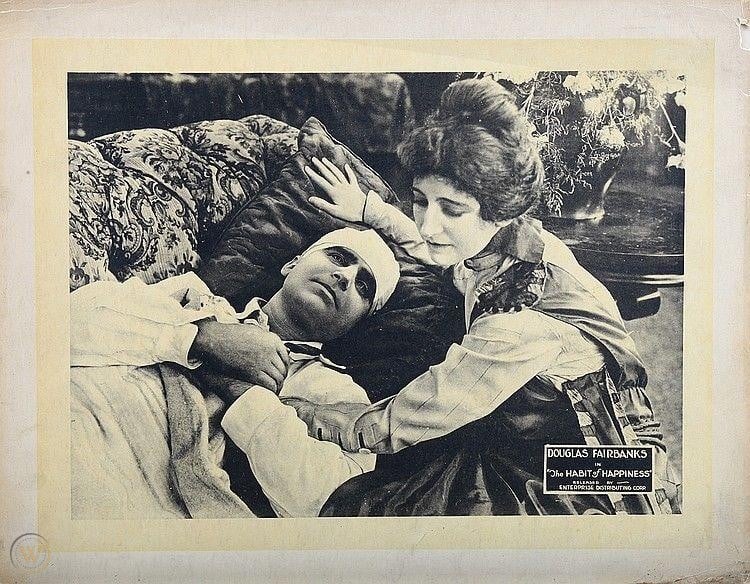
The narrative escalates with a delightful comedic confrontation. The millionaire father, discovering his daughter and the supposed physician in a "fond embrace," reacts with predictable outrage. What ensues is a farcical battle of wills, culminating in the father's humorous imprisonment in his own room, subjected to Sunny's unorthodox "starvation cure" – a metaphorical purging of his negativity. This scene brilliantly utilizes physical comedy, a hallmark of silent film, to convey a deeper thematic point: sometimes, radical intervention is necessary to break entrenched habits of unhappiness. It's a playful yet pointed commentary on paternal authority and the stubbornness of the human spirit when confronted with change. Simultaneously, a parallel plot of capitalist intrigue unfolds. A spurned suitor, a broker whose offer of marriage was refused by the daughter, plots to ruin her father in Wall Street. This adds a layer of genuine peril and urgency to the comedic proceedings, elevating the stakes beyond mere personal happiness to financial ruin. It allows Sunny to demonstrate his capabilities not just as a social reformer or a romantic lead, but as an astute problem-solver capable of navigating the treacherous waters of high finance. His ability to thwart the broker's nefarious scheme, curing the grouch's financial woes as effectively as his dyspepsia, solidifies his position as a true hero, capable of operating effectively in both the emotional and material realms. This duality is crucial; it shows that Sunny's philosophy of happiness isn't just whimsical idealism but a practical, effective approach to life's challenges.

While "The Habit of Happiness" stands on its own as a compelling early Fairbanks vehicle, it also resonates with broader trends and thematic explorations within silent cinema. The film's sympathetic portrayal of the downtrodden and its critique of rigid social hierarchies find echoes in the works of other cinematic titans. One cannot help but draw comparisons to the profound humanity and social commentary present in Charlie Chaplin's films, particularly masterpieces like "The Immigrant". Both films, albeit with different comedic styles, use the plights of the marginalized to highlight societal injustices and celebrate the resilience of the human spirit. Where Chaplin often portrays the tramp as a victim of circumstance who finds fleeting moments of grace, Fairbanks' Sunny actively seeks to uplift and transform. The optimism inherent in Sunny's approach, his belief in the power of individual agency to effect change, also aligns with a certain strain of American idealism prevalent in the era, a can-do spirit that permeated much of popular culture.
Furthermore, the film's engagement with social issues, even through a comedic lens, places it within a tradition that saw cinema as a powerful medium for observation and commentary. While not as overtly dramatic or investigative as a film like "Dope" (1917), which directly tackles the grim realities of drug addiction, "The Habit of Happiness" subtly critiques the moral failings of a society that values wealth over well-being and appearance over authenticity. Sunny's "sociological theories" might be delivered with a wink and a smile, but their underlying message about community and shared humanity is deeply serious. The film, in its own way, participates in the ongoing cinematic conversation about how individuals navigate the complexities of modern life and the challenges posed by industrialization and urbanization.
The depiction of the millionaire's household, suffocated by its own wealth and the somber influence of the 'cellist, also allows for a comparison to films that explore the psychological toll of rigid societal expectations or personal melancholy. While not a direct parallel, one might consider how other films of the period, like certain dramatic works or even the more fantastical elements of early cinema such as "The Fairylogue and Radio-Plays" (1917), sought to transport audiences out of mundane realities, albeit through different means. Sunny's method is to bring joy into reality, transforming it from within. His approach is less about escapism and more about active engagement and transformation. The film's lighthearted tone, yet its capacity to address serious underlying issues, also finds a kindred spirit in the more optimistic and visually engaging narrative of a film like "Springtime" (1914), which similarly utilizes a cheerful disposition to overcome adversity, though perhaps with less overt social commentary.
The resolution of "The Habit of Happiness" is as satisfying as it is predictable for a film of its era, yet it feels earned. Sunny successfully thwarts the broker's attempts to ruin the millionaire, cures the "grouch" of his dyspepsia (and perhaps more importantly, his general misanthropy), wins the hand of the insightful daughter, and becomes both his son-in-law and business partner. This multi-layered triumph is not merely a conventional happy ending; it's a validation of Sunny's entire philosophy. His unconventional methods, once derided as worthless by his own family, are now not only accepted but are shown to be the very foundation of prosperity and familial harmony. He is reinstated in the good graces of his own family, not by conforming to their superficial values, but by proving the profound efficacy of his own.
The film, through this triumphant arc, suggests that true wealth lies not in material possessions alone, but in robust health, genuine human connection, and an unyielding capacity for joy. It’s a powerful, albeit saccharine, message that resonates across generations. In an age grappling with mental health, social isolation, and the relentless pursuit of material success, Sunny Wiggins’s simple, yet profound, "habit of happiness" feels remarkably relevant. The film is a charming reminder that sometimes, the most effective solutions to life's complex problems are found not in grand schemes or rigid adherence to tradition, but in the cultivation of inner joy and the courageous sharing of that joy with others. It's a delightful cinematic confection that, beneath its layers of gentle comedy, offers a surprisingly potent and enduring prescription for a better life. The vibrant spirit of Douglas Fairbanks, coupled with a narrative that champions kindness and optimism, ensures that "The Habit of Happiness" remains a compelling watch, an early cinematic beacon advocating for the profound power of a positive outlook. Its status as an early comedy classic is well-deserved, not just for its entertainment value, but for its timeless and deeply humanistic message.
The film’s legacy also lies in its contribution to the shaping of the Fairbanks persona. Before he became the swashbuckling hero of adventure epics, he was the energetic, optimistic everyman, challenging societal norms with a smile and a good heart. This film is a crucial step in that evolution, demonstrating his ability to carry a narrative that blends social commentary with lighthearted romance and a dash of adventure. It’s a film that, despite its age, feels fresh in its earnestness and its belief in humanity’s better angels. For anyone interested in the foundational works of American cinema, or simply in a story that leaves you with a smile, "The Habit of Happiness" is an absolute must-see, a masterclass in how to infuse a simple plot with enduring thematic weight.
IMDb —
1926
Community
Log in to comment.