DbcultAccessing Vault...
Cult Review
Senior Film Conservator
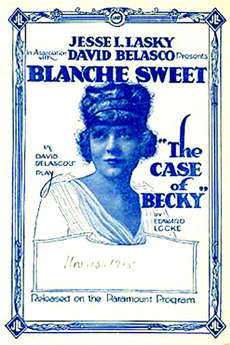
In the annals of early cinema, where narratives often leaned towards grand adventure, sweeping romances, or broad comedies, there occasionally emerged a work that dared to peer into the more unsettling chambers of the human psyche. One such audacious venture was The Case of Becky, a 1915 silent film that, even a century later, retains a chilling resonance. This isn't just a story; it's an early cinematic expedition into the then-mystifying world of hypnotism and the profoundly unsettling concept of a fragmented self, an exploration that feels remarkably prescient for its era. It asks fundamental questions about identity, agency, and the hidden layers beneath our conscious perception, all without uttering a single spoken word.
The premise is deceptively simple, yet its implications are vast. We are introduced to a young woman whose delicate constitution and seemingly inexplicable outbursts lead her to the care of a physician specializing in the burgeoning field of hypnotism. It is under this hypnotic trance, a state often viewed with a mixture of scientific curiosity and superstitious dread in the early 20th century, that a truly shocking revelation comes to light: she harbors a distinct, malevolent personality. This isn't merely a mood swing or a momentary lapse; it is a fully formed, antagonistic entity residing within her, waiting for its opportunity to emerge and wreak havoc. The film thus transforms from a simple medical drama into a psychological thriller, a battle for the very soul of its protagonist, played with astonishing duality by Gertrude Kellar.
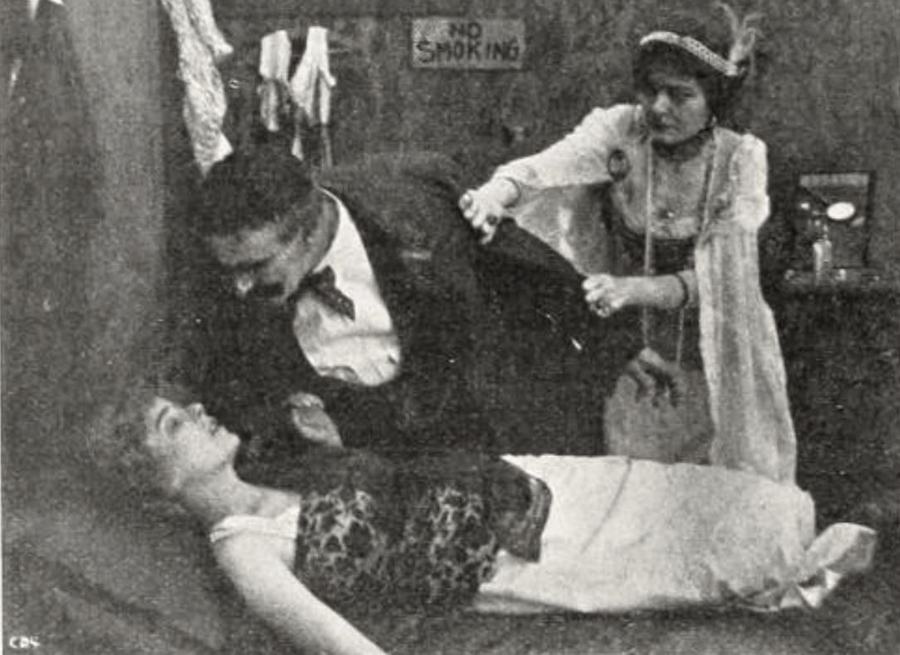
Central to the enduring power of The Case of Becky is the captivating performance of Gertrude Kellar. Tasked with embodying not one, but two diametrically opposed personalities within the same physical form, Kellar delivers a masterclass in silent film acting. Her portrayal of the 'primary' self, a fragile and often tormented young woman, is imbued with a delicate vulnerability. Her eyes convey a deep-seated fear and confusion, her posture often withdrawn, hinting at a constant internal struggle. Yet, when the malevolent alter ego surfaces, Kellar undergoes a startling transformation. Her features harden, her gaze becomes piercing and defiant, and her body language shifts to one of aggressive confidence, even cruelty. The subtle yet profound changes in her facial expressions, the slight adjustments in her gait, and the fierce intensity in her eyes are all the more remarkable given the absence of spoken dialogue. This required an immense command of physical and emotional expression, a testament to the rigorous training of stage actors who transitioned to the nascent film medium.
The brilliance of Kellar's performance lies in its ability to make these transitions believable and terrifying. The audience isn't merely told there are two personalities; they witness the horrifying usurpation of one by the other, feeling the disquieting shift in presence. It's a performance that stands shoulder to shoulder with other intense dramatic portrayals of the era, perhaps even echoing the profound emotional depth seen in works like Jeanne Doré, where the lead actress carried the weight of an entire narrative through sheer expressive force. Kellar’s skill ensures that the psychological torment is not abstract but viscerally felt, making the audience complicit in the fear and confusion of the character. Her work is a stark reminder of the sophisticated artistry that flourished in the silent era, often overlooked in contemporary discussions of film history.
The film's compelling narrative owes much to its origins. Penned by Margaret Turnbull, Edward Locke, and the renowned theatrical impresario David Belasco, The Case of Becky was initially a successful stage play. This theatrical pedigree is evident in the film's structure and its emphasis on character-driven drama. Belasco, known for his meticulous attention to detail and his ability to create immersive stage experiences, undoubtedly influenced the cinematic adaptation's focus on psychological realism, even within the confines of silent film. The writers crafted a story that was not only sensational for its time but also delved into then-contemporary scientific fascinations with the subconscious mind, a theme that would continue to captivate audiences for decades to come.
The transition from stage to screen for such a psychologically dense narrative presented unique challenges. Without the benefit of spoken dialogue to articulate internal thoughts or complex medical explanations, the filmmakers relied heavily on visual cues, intertitles, and the expressive power of their actors. The narrative arc, which slowly unveils the sinister truth behind the protagonist's affliction, is carefully paced, building suspense through revelation rather than overt action. This methodical approach allows the audience to gradually grasp the horror of the situation, making the eventual confrontation with the malevolent personality all the more impactful. The role of Carlyle Blackwell, playing the sympathetic doctor, provides a crucial anchor of reason and determination against the tide of psychological chaos, his earnest expressions guiding the audience through the scientific investigation.
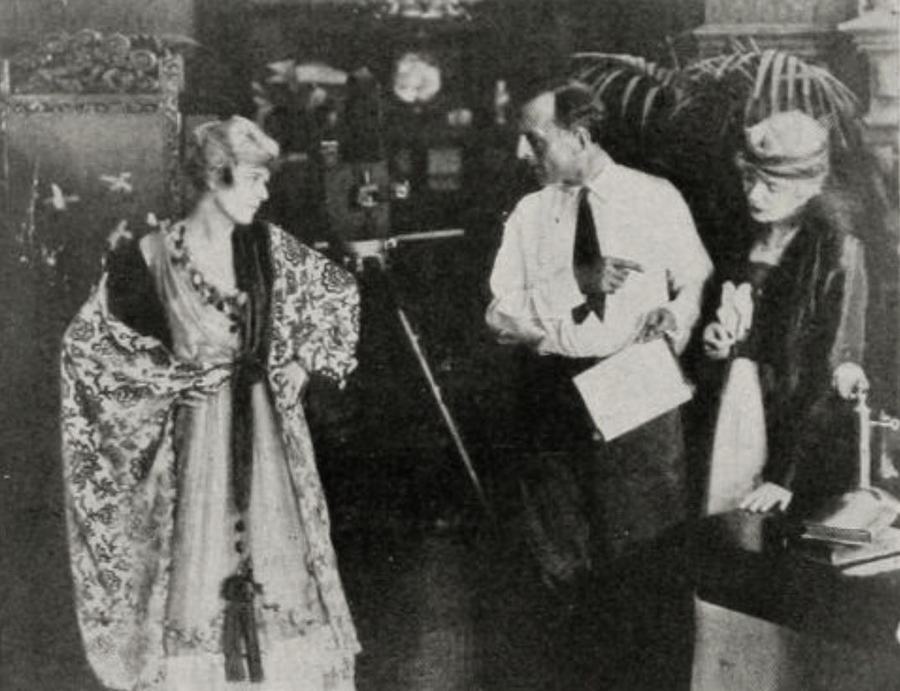
Despite the technical limitations of 1915 filmmaking, the production employed its cinematic language with remarkable ingenuity to convey the film's complex psychological themes. The use of close-ups on Kellar's face, for instance, becomes a powerful tool to emphasize the shifts in personality, allowing the audience to witness the subtle contortions of her features as one self recedes and another emerges. Lighting, too, plays a crucial role, often casting shadows that hint at the darkness lurking within, or illuminating the protagonist in a way that accentuates her vulnerability or her newfound malevolence. The visual storytelling extends beyond the lead performance, with other cast members like Frank Reicher, Raymond Hatton, and Theodore Roberts contributing to the atmosphere of scientific inquiry and dramatic tension. Blanche Sweet and Jane Wolfe, though perhaps in less central roles, further flesh out the supporting cast, providing additional layers to the unfolding drama.
The portrayal of hypnotism itself is handled with a blend of theatricality and an attempt at scientific gravitas. The mesmerist's gaze, the swirling patterns, and the gradual descent into an altered state are all rendered visually, creating a sense of both wonder and apprehension. This film, like many of its contemporaries, tapped into a widespread public fascination with the mystical and the scientific, blurring the lines between the two. The very act of placing someone under hypnotism to uncover hidden truths was a powerful narrative device, representing a frontier of human understanding. In a similar vein of unraveling hidden mysteries, though perhaps of a more conventional nature, films like The Circular Staircase also leveraged suspense and revelation to captivate audiences, demonstrating a shared appetite for uncovering concealed truths in early cinema.
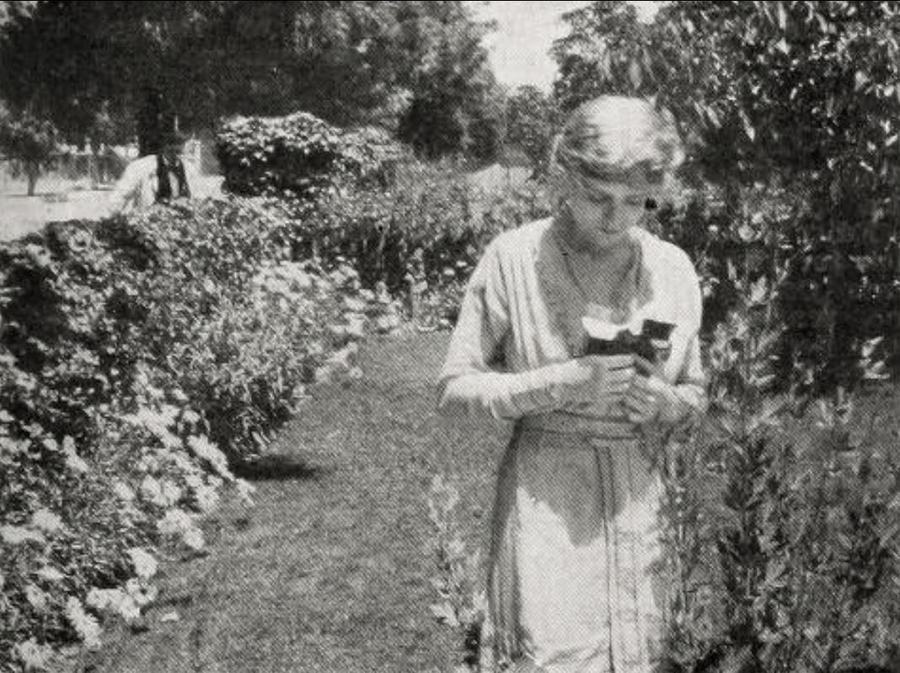
At its core, The Case of Becky is a profound meditation on identity. What constitutes the 'self' when it can be fragmented, invaded, or even entirely replaced by an unwelcome inhabitant? The film grapples with the terrifying notion that one's own mind, the very seat of consciousness, can become a battleground. This was a particularly potent theme in an era where Freudian psychology was beginning to gain traction, introducing the public to the unsettling concept of the subconscious and its powerful, often irrational, influence on human behavior. The film effectively dramatizes these nascent psychological theories, making them accessible and viscerally frightening to a mass audience.
Furthermore, the film explores the theme of control, or rather, the terrifying loss of it. The protagonist is a victim not only of her condition but also of the forces beyond her understanding. The struggle to regain control over her own mind and body forms the central dramatic tension. This resonates with broader societal anxieties of the early 20th century, a period of rapid industrialization, social change, and scientific discovery that often left individuals feeling disoriented and powerless in the face of larger forces. The film's depiction of a young woman's vulnerability to internal and external psychological manipulation would have struck a chord with audiences grappling with their own sense of agency in a rapidly modernizing world. James Neill's presence, though perhaps not as prominent as Kellar's, rounds out the cast, adding to the ensemble's ability to convey a sense of a community grappling with an extraordinary affliction.
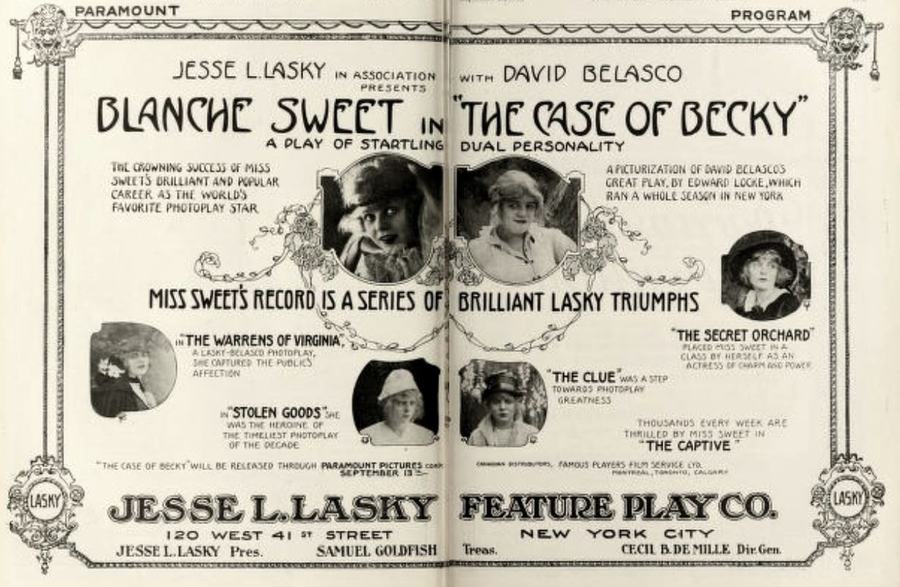
The Case of Becky stands as a significant precursor to the psychological thrillers that would become a staple of cinema in later decades. Its willingness to delve into the darker aspects of the human mind, to explore mental illness (even if through a dramatized, somewhat sensational lens), and to use cinematic techniques to convey internal states, set a precedent. It demonstrates that even in its infancy, film possessed the capacity to explore complex, disturbing themes with considerable depth and impact. The film's influence can be seen in countless subsequent narratives involving split personalities, hypnosis, and the battle between good and evil residing within a single individual.
Looking back, it's astonishing how effectively this silent film manages to convey such intricate psychological drama. It's a powerful reminder of the ingenuity and artistry of early filmmakers who, without the benefit of sound or advanced special effects, crafted compelling stories that continue to resonate. While films like The New Exploits of Elaine might have focused on more external, serialized thrills, The Case of Becky chose to journey inward, proving that the most terrifying landscapes can often be found within the human mind itself. It's a film that deserves to be revisited, not just as a historical curiosity, but as a genuinely unsettling and thought-provoking piece of cinematic art.
In an era where film was rapidly evolving, The Case of Becky carved out a niche for psychological horror and drama, proving that the silent screen could be a canvas for profound exploration of the human condition. Its legacy is not just in its pioneering subject matter, but in its masterful execution, offering a timeless glimpse into the fragile nature of identity and the enduring mysteries of the mind.
IMDb 7.1
1928
Community
Log in to comment.