DbcultAccessing Vault...
Cult Review
Senior Film Conservator
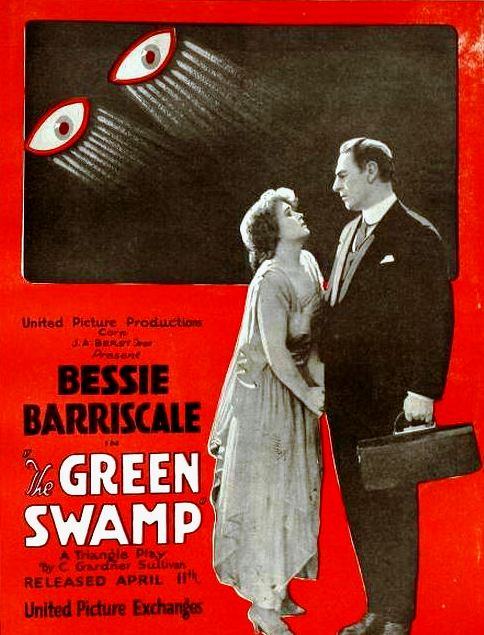
In the annals of early cinema, where narratives often grappled with the nascent expressions of human drama, 'The Green Swamp' emerges as a particularly potent, if somewhat overlooked, artifact. Released in 1916, amidst a burgeoning film industry still finding its voice, this C. Gardner Sullivan-penned feature delves into the insidious corrosive effects of suspicion and the devastating impact of concealed truths within the gilded cages of societal expectation. It is a film that, even a century later, retains a certain chilling resonance, reminding us that the human heart, in its darkest corners, has always harbored complexities far beyond the superficial.
At its core, 'The Green Swamp' unfurls a tale of domestic discord, pivoting on the increasingly fraught relationship between Dr. Ward Allison, portrayed with a subtle, disquieting ambiguity by J. Barney Sherry, and his wife, Margery, whose emotional turmoil is brought to vivid life by Bessie Barriscale. Sherry, a seasoned performer of the era, imbues Dr. Allison with an aura of professional competence that thinly veils a deeper, more troubling interiority. His character is the quintessential pillar of the community, a man of science and healing, yet his relentless devotion to his predominantly female clientele sows seeds of profound jealousy in Margery’s heart. This isn't merely a trivial domestic squabble; it's an existential crisis for Margery, whose sense of security and marital fidelity is eroded by each passing hour her husband dedicates to his patients. Barriscale, with her expressive eyes and nuanced gestures—hallmarks of silent era acting—masterfully conveys Margery's escalating paranoia, drawing the audience into her spiraling world of doubt.
The initial premise, while seemingly straightforward, is a masterclass in psychological build-up. Margery's jealousy isn't presented as irrational histrionics but as a creeping dread, a slow-burning fuse ignited by her husband's evasiveness and the sheer volume of his female patients. It speaks to a common anxiety of the time, where women, often confined to the domestic sphere, found their identities inextricably linked to their husbands' perceived faithfulness and social standing. The film deftly exploits this vulnerability, making Margery's internal struggle palpably real. It invites us to question how much of her suspicion is borne of genuine intuition and how much is a product of her own anxieties, a narrative ambiguity that serves to heighten the tension.
The narrative truly shifts gears when Dr. Allison announces a seemingly innocuous trip out of town. This is the catalyst, the moment the domestic drama morphs into something far more sinister. Margery, already on edge, receives intelligence that contradicts her husband's story. He isn't away on a professional engagement; he is, in fact, at the home of Dr. Hendon, a friend and colleague, played by Bruce McRae, whose presence adds another layer of complicity and moral ambiguity to the unfolding events. The initial rumor—that the two doctors are hosting 'wild parties' with their female patients—is designed to shock and titillate, a scandalous suggestion that would have resonated powerfully with contemporary audiences. This perceived betrayal, a double affront of infidelity and professional misconduct, propels Margery into action. Her journey to uncover the truth is not merely a quest for personal vindication but a desperate search for clarity in a world suddenly turned upside down.
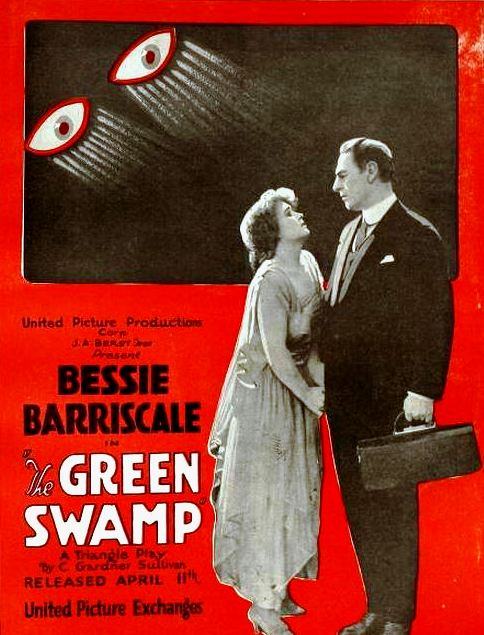
The film, under C. Gardner Sullivan's thoughtful scripting, uses this setup to explore the societal facades prevalent in the early 20th century. Doctors, as figures of authority and trust, were held to a higher moral standard. The mere suggestion of such impropriety would have been devastating, not just for the individuals involved but for the community's faith in its institutions. This thematic exploration of trust and its betrayal can be seen in other films of the era, such as The Ticket of Leave Man, which similarly delves into the shattering of public image and the consequences of hidden lives. However, 'The Green Swamp' takes this a step further, hinting at something far more disturbing than mere debauchery.
What Margery ultimately discovers transcends the initial, scandalous rumor. The film masterfully builds suspense, allowing the audience to anticipate a certain type of revelation—perhaps a sordid affair, a secret gambling habit, or even a descent into moral decay. Yet, the truth she uncovers is depicted as 'even more shocking than what she expected,' a narrative promise that the film endeavors to fulfill. This suggests a darker, more profound betrayal, one that might involve a violation of professional ethics on an unprecedented scale, perhaps even a criminal enterprise disguised beneath the veneer of medical practice. This kind of narrative pivot, where the audience's expectations are subverted for a more impactful twist, is a hallmark of effective dramatic storytelling, a technique that Sullivan and the filmmakers clearly understood.
The performances of Louise Brownell, Lola May, and Milton Ross, though perhaps in supporting roles, would have been crucial in establishing the atmosphere of the Hendon household and the nature of the 'patients' involved. Their portrayals, even if brief, would have contributed to the verisimilitude of the unfolding horror, making Margery's eventual discovery all the more impactful. The silent film era relied heavily on exaggerated expressions and body language to convey emotion and plot, and it is in these supporting roles that the full texture of the narrative's grim reality would have been painted.
The challenge of conveying such a complex, psychologically charged narrative without spoken dialogue is immense, yet 'The Green Swamp' reportedly rises to the occasion. The director, often relying on visual storytelling, would have employed a range of techniques: close-ups to emphasize Margery's distress and Allison's duplicity, strategic editing to build suspense during her investigation, and evocative set design to reflect the moral decay underpinning the plot. The 'green swamp' of the title itself likely serves as a powerful metaphor—a murky, dangerous place where truth is obscured and morality is mired, a fitting symbol for the murky depths of deception Margery must navigate.
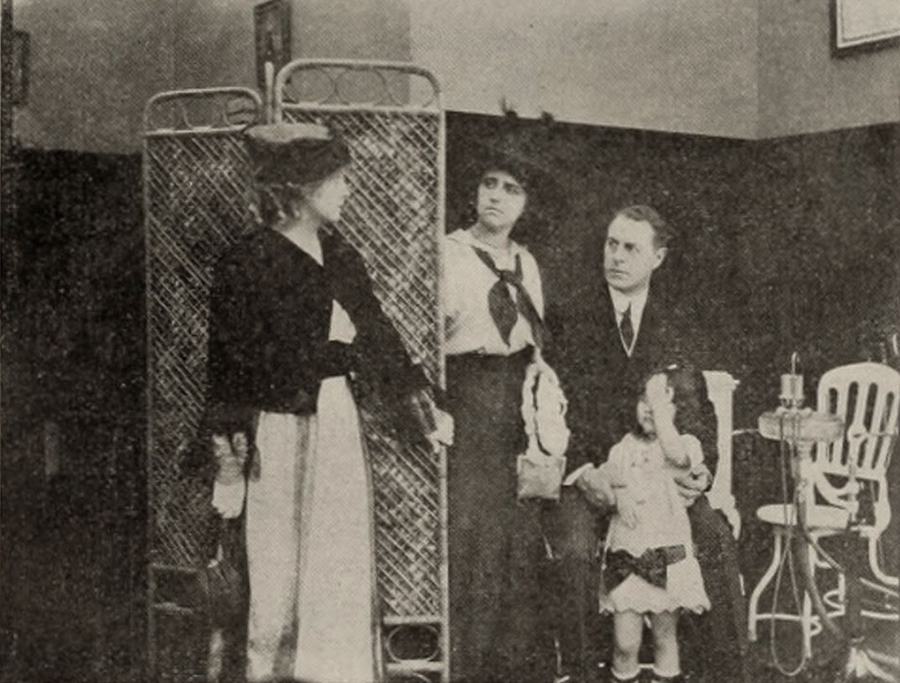
The reliance on intertitles would have been crucial for exposition and dialogue, but the true artistry lies in how these textual interruptions are integrated with the visual flow, never overpowering the emotional performances. The pacing of a silent film, often dictated by the live musical accompaniment, could dramatically alter the audience's experience. A skilled accompanist would have underscored Margery's mounting dread with dissonant chords, or highlighted moments of shocking revelation with sudden, dramatic shifts in melody, making the film a truly immersive, multi-sensory experience for its original viewers.
Beyond its thrilling plot, 'The Green Swamp' offers a fascinating glimpse into the social anxieties of the early 20th century. The film subtly critiques the patriarchal structures that often placed women in vulnerable positions, reliant on male figures whose integrity might be compromised. Margery's journey from a jealous wife to a relentless investigator is, in its own way, an assertion of agency, a refusal to remain a passive victim of her husband's deceptions. This proto-feminist undercurrent, where a woman challenges the male-dominated status quo, can be vaguely paralleled with the spirit of questioning authority seen in works like Jane Eyre, though through a distinctly different lens of marital betrayal rather than gothic romance.
C. Gardner Sullivan, a prolific writer of the era, was known for his ability to craft compelling dramas and mysteries. His work often explored themes of moral compromise, justice, and the darker aspects of human nature. In 'The Green Swamp,' his narrative structure, building from domestic strife to a grander, more horrifying revelation, showcases his particular talent for escalating tension and delivering impactful twists. His contributions were vital in shaping the nascent language of cinematic storytelling, demonstrating how complex psychological narratives could be effectively translated to the screen without the benefit of synchronized sound.
The film also engages with the nascent public fascination with medical ethics, a theme that would continue to evolve in cinema. While not a direct comparison, other films like Sentenced for Life or even Unto the Darkness, though perhaps in different genres, explored the consequences of hidden misdeeds and the pursuit of justice against powerful or seemingly untouchable figures. 'The Green Swamp' taps into this vein, using the medical profession as a backdrop for a more profound moral failing, hinting at abuses of power and trust that resonate even in contemporary discussions.
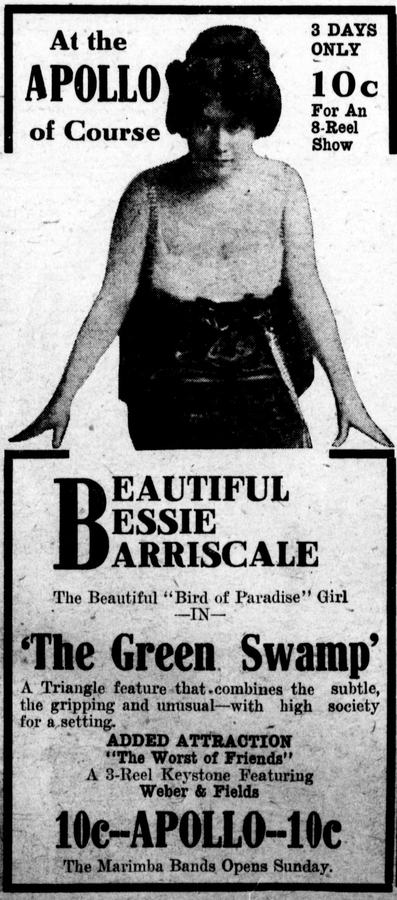
While 'The Green Swamp' might not enjoy the widespread recognition of some other silent era classics, its narrative ambition and psychological depth make it a compelling subject for study. The performances by Sherry and Barriscale, in particular, would have been pivotal in anchoring the film's emotional core. Barriscale, known for her dramatic roles, would have channeled Margery's anguish and determination with compelling force, making her journey of discovery relatable and heart-wrenching. Sherry’s portrayal of Allison, on the other hand, would have required a delicate balance, presenting a character who is initially perceived as merely unfaithful but gradually revealed to be far more sinister, demanding a performance rich in subtle menace.
The film serves as a testament to the sophistication of early cinematic narratives, demonstrating that even in its infancy, the medium was capable of exploring complex themes of morality, betrayal, and the human psyche. It wasn't just about spectacle; it was about storytelling that could grip an audience, provoke thought, and elicit strong emotional responses. The 'shocking' revelation, whatever its precise nature, would have aimed to leave a lasting impression, forcing viewers to confront the dark possibilities lurking beneath polite society.
Comparing it to a film like Infatuation, which might explore the obsessive aspects of love, 'The Green Swamp' pushes beyond mere romantic entanglement into the realm of criminal or deeply unethical behavior. The jealousy in 'The Green Swamp' is not just about a rival for affection but a catalyst for uncovering a profound moral decay. Similarly, while films like Saving the Family Name might focus on reputation, 'The Green Swamp' delves into the destruction of a personal and professional legacy from within, through heinous acts rather than mere social gaffes.
Ultimately, 'The Green Swamp' offers more than just a historical curiosity; it presents a meticulously crafted psychological drama that speaks to timeless fears and anxieties. The fear of being deceived by those we trust most, the terror of discovering a monstrous truth lurking beneath a familiar facade, and the courage required to confront such a reality—these are universal themes that transcend the silent film era. The film's ability to evoke such powerful emotions through purely visual means, supported by impactful intertitles and strong performances, solidifies its place as a significant, if understated, contribution to early cinematic history.
For contemporary audiences willing to engage with the unique language of silent cinema, 'The Green Swamp' promises a rewarding experience. It's a journey into the heart of darkness, a testament to the enduring power of narrative, and a reminder that the most profound horrors often reside not in fantastical monsters, but in the twisted depths of the human soul. The film, through its compelling performances and C. Gardner Sullivan's intricate plot, manages to create a palpable sense of dread and a satisfying, albeit disturbing, resolution, making it a valuable piece for any cinephile interested in the origins of cinematic suspense and psychological drama. Its exploration of moral ambiguity and the devastating consequences of hidden lives ensures its continued relevance, cementing its status as a compelling, if unsettling, watch.
IMDb —
1919
Community
Log in to comment.