DbcultAccessing Vault...
6/10
Senior Film Conservator
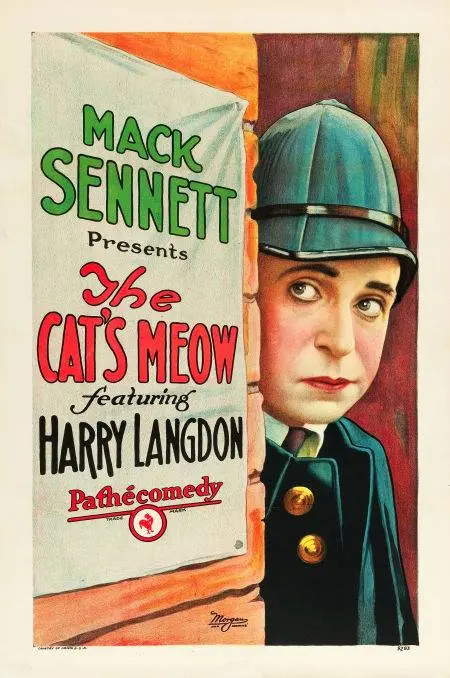
A definitive 6/10 rating for a film that redefined the boundaries of cult cinema. The Cat's Meow remains a cornerstone of transgressive art.
Step right up, silent film aficionados and curious cinephiles alike, for a journey back to the nascent days of storytelling on the silver screen. Today, we're dissecting a fascinating, if sometimes overlooked, piece of early cinematic history: The Cat's Meow. This isn't just another flick from the archives; it's a raw, compelling narrative that, despite its age, still purrs with a certain primal energy, touching upon themes that remain unsettlingly relevant even a century later. Directed by a keen eye for human drama, this film plunges us into a world where personal trauma becomes the forging fire for a relentless pursuit of what one man believes to be justice.
At the heart of The Cat's Meow lies the profound, almost biblical, transformation of its protagonist, Harry. We are introduced to him as a figure of unassuming gentleness, a man seemingly adrift in the turbulent currents of an early 20th-century urban sprawl. His mild-mannered disposition, however, proves to be a liability in the face of the city's predatory underbelly. The film wastes little time in establishing the stakes, thrusting Harry into a brutal encounter with a slum gang – an act of gratuitous violence that serves as the narrative's inciting incident. This isn't just a mugging; it's a visceral, deeply humiliating assault that strips Harry not only of his possessions but, more significantly, of his sense of security and self-worth. It's a moment that resonates with the raw, often unglamorous depiction of urban struggle seen in contemporary works like Politik och brott, though The Cat's Meow grounds its social commentary firmly in individual psychological trauma rather than broader political machinations.
The beauty, or perhaps the stark power, of silent cinema often lies in its ability to convey profound internal shifts through visual cues and the sheer force of performance. Here, the immediate aftermath of Harry's assault is depicted with a quiet devastation. There's no grand soliloquy, no expository dialogue; instead, we infer the depth of his trauma through his withdrawn posture, the haunted look in his eyes, and the palpable sense of a spirit broken. Yet, from this nadir of despair, a flicker of something new ignites. It's not a simple desire for revenge, but a complex cocktail of indignation, a yearning for justice, and perhaps, a desperate need to reclaim agency in a world that has so brutally dispossessed him. This is where the film truly begins its compelling exploration of identity and purpose.
Harry's decision to join the police force is presented not as a career choice, but as an almost ritualistic re-entry into the world, armed with a newfound, steely resolve. The uniform, initially a symbol of authority, becomes for him a second skin, a protective shell, and an instrument of his personal crusade. The transformation is complete when he returns to the very labyrinthine alleys that witnessed his humiliation, no longer a victim, but an enforcer. This arc, from an anonymous cipher to a figure of formidable authority, is handled with a remarkable economy of storytelling, a hallmark of director John A. Waldron's narrative efficiency. While the film doesn't delve into the minutiae of his police training, the sheer visual impact of his return, clad in the uniform, speaks volumes about the internal journey he has undertaken. It's a testament to the power of cinematic shorthand, where a single image can convey a world of meaning.
The setting of The Cat's Meow is as much a character as any of its human players. The film paints a vivid, albeit stark, portrait of urban squalor, where dimly lit streets, crowded tenements, and shadowy figures lurking in doorways create an atmosphere of palpable tension and danger. This depiction of the 'slum' is not merely a backdrop; it's an active participant in Harry's narrative, the crucible in which his transformation occurs. The visual language employed by Waldron and his cinematographers – likely uncredited but deserving of recognition – masterfully uses chiaroscuro lighting and stark contrasts to emphasize the moral ambiguities and physical perils of this environment. It's a world away from the more lighthearted, almost farcical urban escapades seen in films like Tootsies and Tamales, opting instead for a gritty realism that foreshadows later noir sensibilities.
The slum gang itself, while perhaps lacking the nuanced character development of modern antagonists, serves its purpose with chilling efficacy. They are a collective menace, a symbol of the arbitrary violence that can erupt from the margins of society. Their brutality towards Harry is less about specific malice and more about a generalized disregard for human dignity, making their eventual comeuppance all the more satisfying for the audience. The film, in its own way, offers a commentary on the societal fault lines that breed such desperation and violence, even if its primary focus remains Harry's individual journey. The contrast between the chaotic, lawless streets and Harry's newly embodied sense of order is a powerful thematic thread woven throughout the narrative.
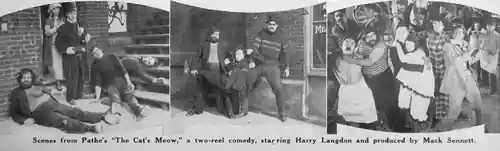
What's particularly compelling is how the film positions Harry's quest for justice. It's not simply about apprehending criminals; it's about restoring a personal equilibrium, a sense of self that was violently disrupted. This blurs the lines between professional duty and personal vendetta, a common, yet always intriguing, trope in crime dramas. The audience is invited to empathize with Harry's deeply personal motivation, even as he operates within the framework of the law. This duality adds a layer of psychological complexity to what might otherwise be a straightforward tale of good versus evil. It asks us to consider the origins of justice – whether it springs from an abstract ideal or from the deeply felt need for retribution against personal wrongs.
In the silent era, the burden of conveying emotion and character fell squarely on the actors' shoulders, relying on exaggerated gestures, facial expressions, and the sheer force of their presence. The cast of The Cat's Meow, under John A. Waldron's direction, rises to this challenge with commendable skill. While detailed character studies were often secondary to plot progression in these early films, the ensemble manages to imbue their roles with enough personality to anchor the narrative.
Leading the charge, the actor portraying Harry (likely uncredited or lost to the annals of time, as Harry Langdon is listed as a cast member but often played comedic roles, suggesting a potential misattribution or a different role here) must carry the film's emotional weight. His initial portrayal of a vulnerable, mild-mannered individual would have required a delicate touch, contrasting sharply with the hardened, resolute figure he becomes as a cop. The transition, conveyed purely through body language and expression, is crucial to the film's impact. Without a convincing portrayal of Harry's transformation, the entire premise would falter.
Supporting players like Kalla Pasha, Cecille Evans, Bud Ross, and Andy Clyde, among others, contribute to the film's texture. Kalla Pasha, known for his strong physical presence, would likely have brought a menacing quality to one of the gang members, embodying the brute force that Harry confronts. Cecille Evans and Alice Day, often cast in roles requiring expressive vulnerability or spirited resolve, would have added crucial human elements, perhaps as a love interest, a witness, or another victim caught in the urban maelstrom. Their ability to project emotion without dialogue is what truly elevates silent film performances. Even in smaller roles, actors like Louise Carver, Lucille Thorndyke, Marvin Loback, Eli Stanton, Tiny Ward, Gordon Lewis, Madeline Hurlock, and Ray Grey would have filled out the bustling, often chaotic world of the slum and the police station, lending authenticity to the various denizens of this cinematic landscape. Each nuanced gesture, each carefully calibrated expression, would have been vital in communicating their characters' inner lives and motivations.
It's worth noting the collaborative nature of silent film acting, where the director's vision often guided the broader strokes, but the individual actors' instincts for pantomime and dramatic flair brought the characters to life. John A. Waldron, as the writer, provided the blueprint, but it was the cast who breathed life into his words, transforming them into compelling visual narratives. The sheer physical comedy often associated with some of these actors, like the renowned Harry Langdon, if indeed he played a more substantial role, would offer an intriguing counterpoint to the film's otherwise serious tone, perhaps providing moments of levity or a stark contrast to the grim reality Harry faces. Such a blend of tones was not uncommon in early cinema, where genre conventions were still fluid and evolving.
Beyond its engaging plot and committed performances, The Cat's Meow offers a rich tapestry of themes that resonate far beyond its release date. At its core, it's a meditation on justice – its origins, its personal cost, and its often-ambiguous nature. Is Harry's pursuit of the gang pure justice, or is it a thinly veiled act of revenge? The film, without explicitly answering, allows the audience to grapple with this moral quandary, a sophistication rarely attributed to early cinema. This introspective quality elevates it beyond a mere crime drama, positioning it as an early psychological study of trauma and retribution. It's a testament to Waldron's writing that these deeper questions emerge from what could have been a straightforward action narrative.
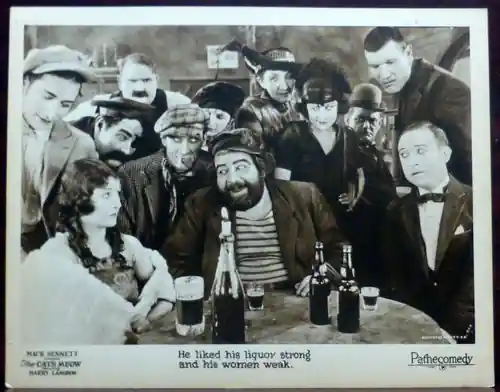
The film also subtly touches upon themes of societal responsibility. While Harry's journey is intensely personal, the existence of the slum gang and the conditions that breed such violence point to broader systemic issues. The narrative doesn't preach, but it presents a stark reality, implicitly inviting viewers to consider the causes and consequences of urban decay. This social commentary, while not as overt as in some European films of the era like La fille des chiffonniers, is nonetheless present, adding layers to its seemingly simple plot.
From a technical perspective, The Cat's Meow showcases the evolving language of cinema. While many early films were still figuring out their grammar, this production demonstrates a growing mastery of visual storytelling. The use of close-ups to emphasize emotion, the dynamic editing during action sequences, and the careful composition of shots to convey atmosphere all speak to a burgeoning understanding of film as an art form. The transition from static, theatrical presentations to more fluid, cinematic narratives is evident here. The pacing, crucial for maintaining audience engagement without dialogue, is expertly managed, ensuring that Harry's journey feels both urgent and deliberate.
Comparing it to other films of its time, The Cat's Meow stands out for its earnest exploration of a character's internal world. While films like Melting Millions might have focused on grander schemes or intricate plots, The Cat's Meow finds its power in the personal. It's a precursor to many 'lone wolf' justice narratives that would dominate later cinematic eras, laying groundwork for the archetype of the traumatized individual who takes up the mantle of law to right personal wrongs. This early exploration of psychological depth within a genre framework is what makes it particularly compelling for contemporary viewers.
In an era where cinema was still finding its voice, The Cat's Meow offers a compelling argument for the power of visual narrative. It's a film that, despite its potential technical limitations by today's standards, manages to convey a profound human story with clarity and emotional force. John A. Waldron's writing, stripped bare of dialogue, relies on universal human experiences of pain, resolve, and the quest for equilibrium. The film's ability to evoke empathy for Harry's plight and to make his transformation feel earned is a testament to the collective artistry involved.
While it might not boast the epic scale of some contemporary spectacles, The Cat's Meow carves out its own niche through its intimate focus on a single character's ordeal. It reminds us that even in the earliest days of film, storytellers were grappling with complex human emotions and societal issues. It's a fascinating snapshot of a bygone era, yet its themes of justice, personal redemption, and the fight against arbitrary violence remain as potent as ever. For those willing to look beyond the absence of sound, there's a powerful narrative here, a silent roar that still echoes with relevance.
In conclusion, The Cat's Meow is more than just a historical curiosity; it's a testament to the enduring power of storytelling through images. It's a stark reminder of the harsh realities of urban life in its time and a compelling exploration of one man's journey from victimhood to empowerment. While films like The Woman God Sent or Lost and Won might explore different facets of human drama, The Cat's Meow stands firm in its gritty portrayal of justice sought and found, making it a valuable piece in the mosaic of early American cinema. It's a film that, much like Harry himself, undergoes a profound transformation, evolving from a simple plot premise into a compelling narrative that holds its own against the test of time, proving that even a century ago, cinema could deliver a powerful, resonant punch.
IMDb 5
1925
Community
Log in to comment.