DbcultAccessing Vault...
Cult Review
Senior Film Conservator
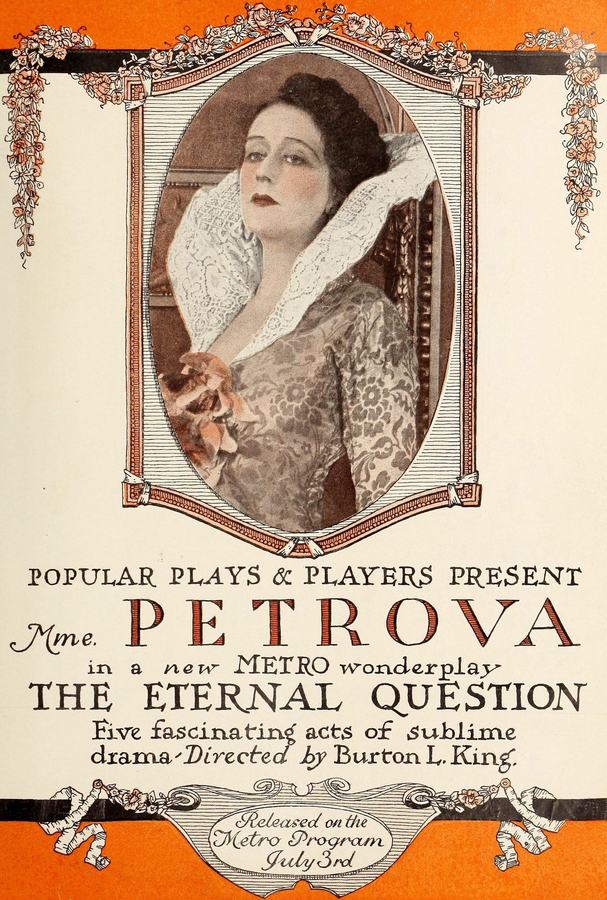
Ah, the roaring twenties! A time of profound social shifts, burgeoning freedoms, and, paradoxically, an enduring fascination with the rigid structures of class and identity. In the midst of this dynamic era, a film like The Eternal Question (the-eternal-question) emerges not merely as entertainment, but as a vibrant, cinematic debate, framed by the very societal anxieties and aspirations of its time. It’s a narrative that dares to ask: what truly makes a gentlewoman? Is it the accident of birth, the meticulous cultivation of breeding, or something far more intrinsic, more human?
From the outset, we are drawn into this philosophical quandary, not in a dusty academic hall, but within the plush, leather-bound confines of a Fifth Avenue club. Here, two titans of divergent worlds—Ralph Courtland, embodying old money and inherited status, and Pierre Felix, a couturier with an artist's vision and a pragmatist's belief in transformation—lock horns. Ralph, played with a certain patrician confidence by Mahlon Hamilton, champions the unassailable fortress of lineage. For him, a lady is born, not made. But Pierre, brought to life with intriguing complexity by Howard Missimer, possesses a designer's conviction in the transformative power of artifice and environment. He believes a woman can be fashioned, molded, and presented as an aristocrat, regardless of her origins. This isn't just a casual conversation; it's a gauntlet thrown, a wager of a staggering $25,000 and expenses, mediated by the watchful eyes of young lawyer Allen Tait.
The subject of their audacious social experiment arrives serendipitously in the form of Bianca, a street performer, leading a monkey on a string, her world confined to the meager earnings from an organ-grinder. Evelyn Dumo, in the role of Bianca, delivers a performance that is nothing short of captivating. Her initial portrayal of a street-hardened yet innocent waif provides a stark contrast to the sophisticated 'Russian Countess' she is destined to become. Pierre, with an almost Svengali-like zeal, whisks Bianca away from her humble existence. He outfits her in the most exquisite gowns, installs her in a lavish apartment, and begins the arduous, yet surprisingly swift, process of her societal re-education. What's truly remarkable is Bianca's innate adaptability; she wears her new garments not as a costume, but as if they were her birthright, embodying an elegance that belies her recent past. It's a testament to the film's nuanced characterization that Bianca isn't merely a passive subject but possesses an inherent grace that Pierre merely unlocks.
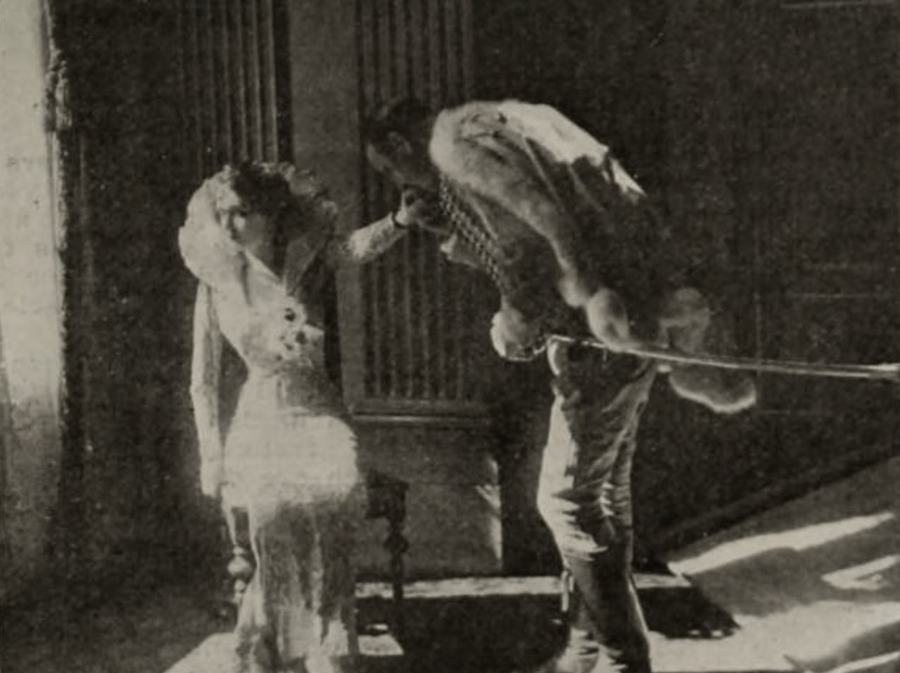
Her grand unveiling at a charity ball, hosted by Ralph's own mother, is a masterclass in social engineering. Pierre introduces her as a Russian Countess, an exotic, alluring figure that immediately captures the imagination of the city's elite. Ralph, returning just in time from his California aeroplane race, is instantly smitten. Unaware of the elaborate deception, he finds himself irresistibly drawn to Bianca’s charm and enigmatic beauty. Mahlon Hamilton’s portrayal of Ralph in these scenes is particularly effective, conveying a genuine admiration that transcends superficiality. He sees something in Bianca that resonates deeply, a connection that is, ironically, founded on a lie, yet feels profoundly true.
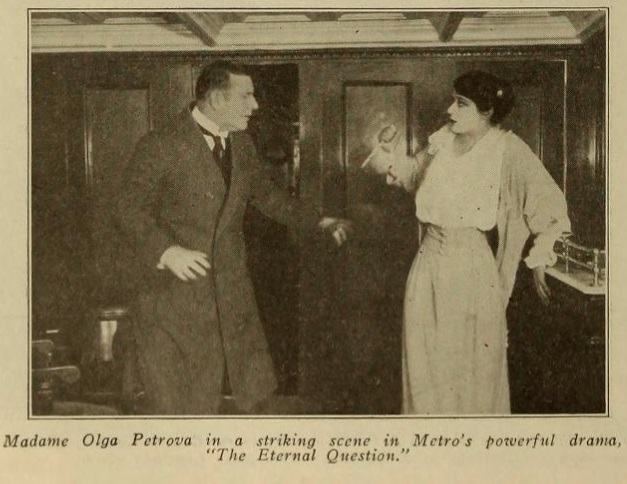
This burgeoning romance, however, ignites a dangerous spark of jealousy in Pierre. His artistic creation, his social triumph, begins to slip from his grasp, drawn into the orbit of his rival. Missimer’s Pierre Felix transitions from a confident social architect to a man consumed by possessiveness, a fascinating shift that adds layers to his character. The scene where he attempts to force an embrace upon Bianca, escorting her to her new apartments after the ball, is a pivotal moment. Bianca’s fury is palpable; her immediate flight back to the familiar, albeit humble, embrace of the old organ-grinder underscores her fierce independence and moral compass. This defiance is crucial; it reminds us that while her exterior may have been transformed, her core identity remains untamed. Pierre’s subsequent, profuse apology and desperate plea for her return highlight the precariousness of his experiment and his growing emotional investment.
The narrative then gracefully allows Ralph and Bianca’s relationship to deepen. Their time together, particularly the horseback riding sequence, feels genuinely romantic. The moment Ralph is thrown from his horse, and Bianca, overcome with genuine fear, rushes to him, pouring forth her love in a torrent of uninhibited words, is profoundly moving. It’s a raw, authentic expression of emotion that strips away all pretense. Ralph, regaining consciousness, hears her declaration and is overjoyed. His subsequent proposal of marriage, and her immediate acceptance, feels like a natural culmination of their shared affection, unburdened by the social artifice that initially brought them together. It’s a powerful scene, demonstrating that true love can cut through the most elaborate deceptions.
Yet, the shadow of the wager looms large. Pierre, ever the pragmatist, reminds Ralph that he has lost. Bianca has been unequivocally accepted by society, fulfilling the terms of the bet. Ralph, already in precarious financial straits, faces ruin. But the film has another twist in store. Bianca reveals her true identity, a revelation that recontextualizes everything: she is the daughter of the King of Montenaro, a princess on the run from a forced marriage to the Grand Duke Seridan. This sudden shift elevates the stakes dramatically, transforming a social experiment into a matter of international intrigue and royal destiny. Ralph, now understanding the full scope of the deception, rushes back to the club, preventing Allen Tait from paying Pierre. The wager, it turns out, is not merely about social acceptance, but about the fundamental truth of identity. Ralph, in fact, has lost nothing; Pierre's claim is nullified by Bianca's inherent, noble birth.
Pierre, infuriated by this turn of events, vows revenge. His character arc is a fascinating study in ambition corrupted by resentment. He forcibly abducts Bianca, intending to deliver her to the waiting Grand Duke, who has arrived in America in search of his intended bride. This sequence injects a thrilling dose of action into the narrative. Ralph, alerted by Bianca’s maid, springs into action, utilizing his aeroplane in a daring pursuit. The spectacle of an aerial chase, quite cutting-edge for its time, adds a dynamic visual element. Allen Tait, the lawyer, plays his part too, contacting government officials to intercept the Duke’s ship before it can escape international waters. A cruiser is dispatched, adding to the escalating tension. The climax is pure cinematic drama: Ralph, a true hero, drops from his airship onto the deck of the Duke's vessel, fighting his way to Bianca. Their immediate marriage, performed hastily to solidify their union and circumvent the Grand Duke’s claims, provides a triumphant resolution, securing their love against all odds.
The Eternal Question, at its core, is a deeply romantic adventure, yet it’s also a shrewd commentary on the superficiality of societal judgments and the inherent worth of an individual. Writers Wallace Clifton and Aaron Hoffman craft a narrative that, while embracing the tropes of melodrama, manages to explore complex themes with a surprising degree of insight. The film's central premise, the wager, serves as a compelling device to peel back the layers of class and expose the raw humanity beneath. It asks us to consider whether our perceptions are shaped by external appearances or by an innate understanding of character. Bianca, despite her humble origins and the subsequent royal revelation, consistently demonstrates an inner strength, dignity, and capacity for love that transcends any social construct.
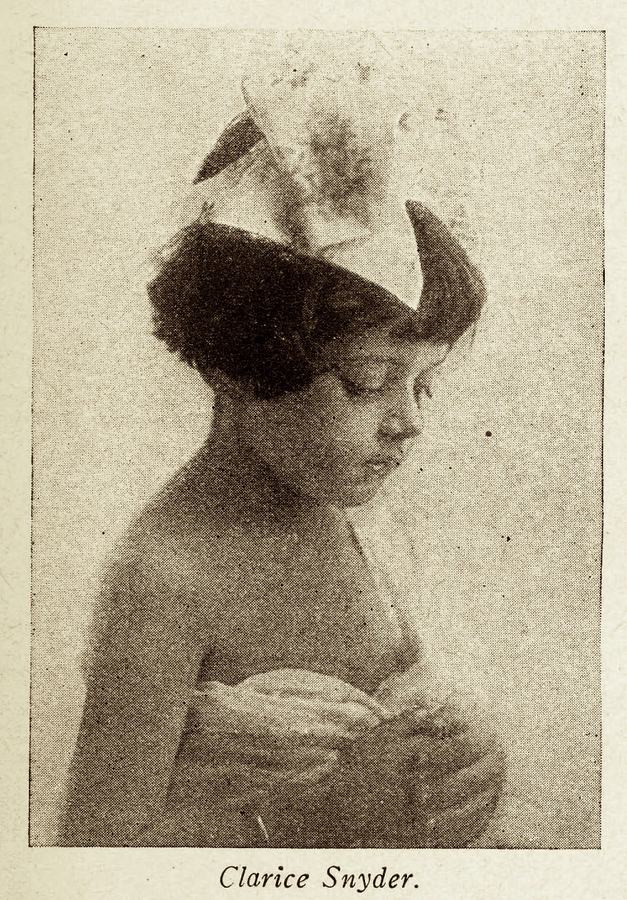
The cast, including Clarice Snyder, Arthur Hoops, Edward Martindel, Warner Oland, and Henry Leone in supporting roles, contribute to the rich tapestry of this cinematic world. While specific roles for all cast members aren't detailed in the plot, their collective presence undoubtedly adds depth to the society Bianca navigates. Evelyn Dumo's performance as Bianca is particularly noteworthy. She carries the emotional weight of the film, transitioning convincingly from a street urchin to a sophisticated lady, and finally to a princess in love. Her expressive face and nuanced gestures, vital in the silent era, convey a wide range of emotions, from defiance to vulnerability, making her character utterly believable and sympathetic.
Comparing The Eternal Question to other films of its era, one cannot help but draw parallels to narratives that similarly explore social transformation and the blurring of class lines. The most obvious comparison is to Trilby, a story often adapted for the screen, which delves into the Svengali-like influence of an artist over a working-class woman, transforming her into a captivating singer. While Pierre Felix shares some of Svengali's manipulative tendencies, his motivation in The Eternal Question is rooted more in a philosophical debate and later, personal jealousy, rather than a purely artistic or exploitative drive. Bianca’s agency and eventual defiance also set her apart from Trilby’s more passive transformation. Similarly, films like Judge Not; or the Woman of Mona Diggings often tackled themes of societal judgment and the redemption or re-evaluation of women based on their pasts, resonating with Bianca's journey from presumed street girl to accepted society figure.
The film also touches upon the romantic ideals prevalent in silent cinema, where grand gestures and dramatic rescues were often the order of the day. Ralph's aerial pursuit and daring rescue, for instance, evokes the heroic spirit seen in many adventure films of the period. While not a direct comparison, the themes of escaping societal expectations for love can be found in films such as The Wishing Ring: An Idyll of Old England, albeit in a different historical setting. The idea of a woman’s power and agency, as seen in Bianca’s resolute refusal of Pierre’s advances and her ultimate decision to marry Ralph, also finds echoes in contemporary narratives like A Woman's Power, exploring the emerging strength of female characters on screen.
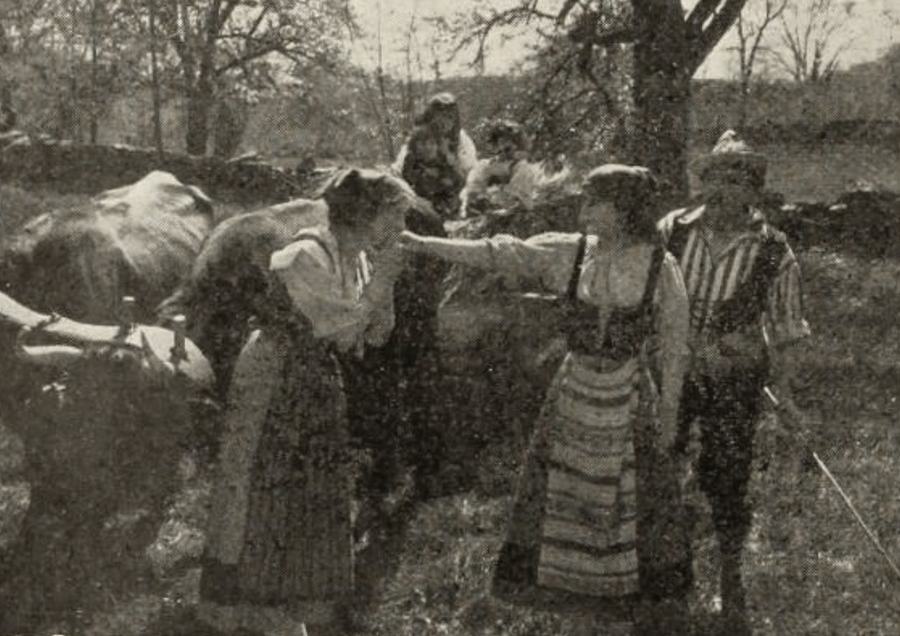
Ultimately, The Eternal Question leaves us pondering its central inquiry long after the credits roll. Does birth truly dictate destiny, or can an individual's intrinsic character and the right opportunities forge a new path? The film, through Bianca's journey, argues for the latter, demonstrating that true nobility resides not in titles or tailored garments, but in courage, integrity, and the capacity for genuine affection. It's a reminder that while society may impose its classifications, the human spirit often transcends them. The resolution, with the immediate marriage, is a triumphant declaration of love over duty, and personal choice over inherited obligation. It neatly ties up the loose ends, ensuring a happy ending for our protagonists while underscoring the film's progressive message about individual freedom.
The film’s technical achievements, particularly the aerial sequences, would have been quite impressive for audiences of the time, showcasing the rapidly evolving capabilities of cinema. The storytelling, while rooted in the melodramatic conventions of the era, remains engaging due to its strong characterizations and a plot that continually introduces new twists and turns. It's a testament to the enduring appeal of stories that challenge societal norms and celebrate the triumph of love and authenticity.
In an era that was constantly redefining itself, The Eternal Question served as both a mirror and a catalyst, reflecting the societal debates of its time while offering a hopeful vision of individual agency. It stands as a compelling artifact from the silent film era, a vibrant narrative that, even today, prompts us to consider the perennial debate about what truly defines us. It's a film that asks us to look beyond the superficial, to question the established order, and to celebrate the inherent dignity and transformative power of the human heart. And in that, its 'eternal question' remains as relevant now as it was a century ago.
IMDb 5.5
1930
Community
Log in to comment.