DbcultAccessing Vault...
7.7/10
Senior Film Conservator
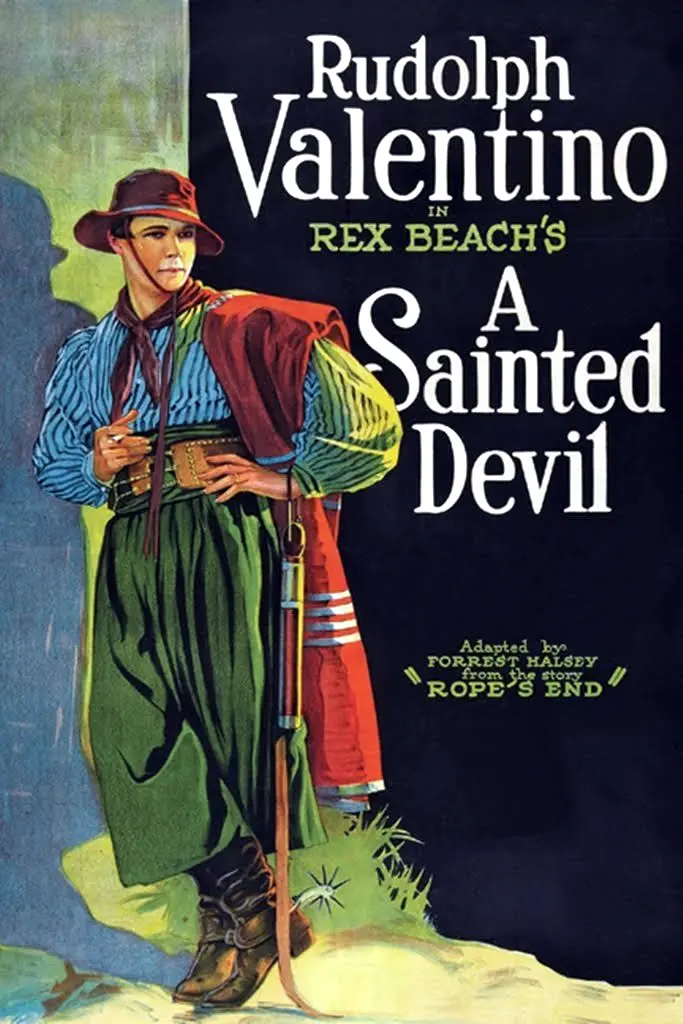
A definitive 7.7/10 rating for a film that redefined the boundaries of cult cinema. A Sainted Devil remains a cornerstone of transgressive art.
The year 1924 represented a pivotal juncture for Rudolph Valentino, an era where the 'Great Lover' sought to transcend the suffocating constraints of his own iconography. In A Sainted Devil, we witness an ambitious attempt to deconstruct the very magnetism that made him a global phenomenon. This film, directed by Joseph Henabery and adapted by Forrest Halsey from Rex Beach’s 'Rope’s End,' functions as a dark mirror to Valentino’s earlier successes, swapping the sun-drenched romance of the desert for the brooding, atmospheric tension of a South American gothic tragedy. It is a work of profound stylistic density, one that demands an appreciation for the nuances of silent-era histrionics and the burgeoning language of cinematic melodrama.
The narrative architecture of A Sainted Devil is built upon the volatile foundations of class privilege and atavistic jealousy. Valentino’s Don Alonzo Bolivar is introduced as a man of immense spiritual and social standing, a paragon of the old world whose fall from grace is as spectacular as it is inevitable. Unlike the more straightforward heroics found in The Man Worthwhile, Alonzo’s journey is defined by a visceral disintegration of the self. When Carlotta, played with a serpentine, predatory grace by Nita Naldi, orchestrates the kidnapping of Julietta (Helena D'Algy), she isn't merely stealing a bride; she is dismantling the moral framework of a man who believed himself untouchable.

Nita Naldi’s performance here is a masterclass in the 'vamp' archetype, yet it possesses a psychological depth that elevates it beyond mere caricature. She represents a force of chaotic nature, a woman whose rejection by the aristocracy has fueled a desire to see the entire social order burn. Her chemistry with Valentino is electric, reminiscent of their collaboration in Bella Donna, though here the stakes feel more personal, more grounded in the dirt and blood of a rural vendetta. The involvement of George Siegmann as El Tigre adds a layer of physical menace that contrasts sharply with Valentino’s refined movements, creating a dynamic tension that sustains the middle act’s slower pacing.
The transition from Don Alonzo the noble to the 'Sainted Devil' of the cabarets allows Valentino to flex muscles rarely seen in his more romantic outings. There is a weariness in his eyes, a calculated slouch in his posture that suggests a man who has looked into the abyss and found it familiar. This performance shares a certain DNA with the brooding intensity of A Tüz, where the internal fire of the protagonist consumes his external reality. Valentino navigates this duality with a sophistication that belies the often-simplified view of his acting range. He moves through the underworld scenes with a ghost-like detachment, his 'sainted' qualities now serving as a mask for a 'devilish' indifference to life.

The film’s visual palette, as described in contemporary accounts and seen in surviving stills, suggests a heavy reliance on chiaroscuro lighting to mirror Alonzo’s internal state. The contrast between the bright, white-washed walls of the Bolivar estate and the smoky, lamp-lit interiors of the Argentinian dive bars provides a visual metaphor for his descent. This stylistic choice echoes the dark romanticism of Man and His Soul, emphasizing the spiritual combat at the heart of the story. The cinematography doesn't just record the action; it seeks to externalize the psychic trauma of a man who believes he has lost his soul to a bandit's blade.
It is impossible to discuss A Sainted Devil without acknowledging the tragedy of its status as a lost film. In the pantheon of silent cinema, it exists as a phantom, a collection of memories, reviews, and a handful of evocative images. This absence lends the film a mythic quality, much like the elusive beauty found in Inspiration. However, the screenplay by Forrest Halsey provides a clear blueprint of what was once a sophisticated narrative structure. Halsey, who also worked on the screenplay for The Ne'er-Do-Well, understood the rhythms of Rex Beach’s prose, translating the author’s rugged masculinity into a more stylized, operatic cinematic form.
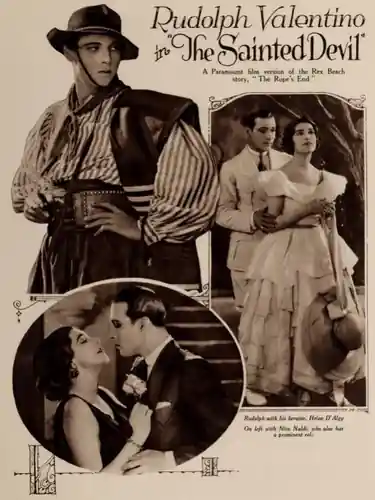
The supporting cast, featuring stalwarts like Dagmar Godowsky and Jean Del Val, populated a world that felt lived-in and dangerous. The inclusion of Helena D'Algy as Julietta offered a necessary counterpoint to Naldi’s Carlotta; where Naldi was fire and shadow, D'Algy was light and vulnerability. Her presence in the film, though often sidelined by the plot’s focus on Alonzo’s revenge, provides the emotional anchor for the climax. The search for Julietta is not just a quest for a lost bride, but a quest for the restoration of Alonzo’s own humanity, a theme explored with similar gravitas in Humility.
Thematically, A Sainted Devil grapples with the concept of 'purity' in a way that feels surprisingly modern. Alonzo’s 'saintliness' is initially a product of his privilege—he is good because he has never been tested. Once the veneer of his comfortable life is stripped away, his true character emerges, forged in the fires of suffering. This exploration of the dual nature of man is a recurring trope in the works of this period, seen in films like Body and Soul. However, Valentino brings a unique vulnerability to this struggle. His Alonzo is not a stoic hero; he is a man who bleeds, who weeps, and who eventually finds a jagged kind of peace.
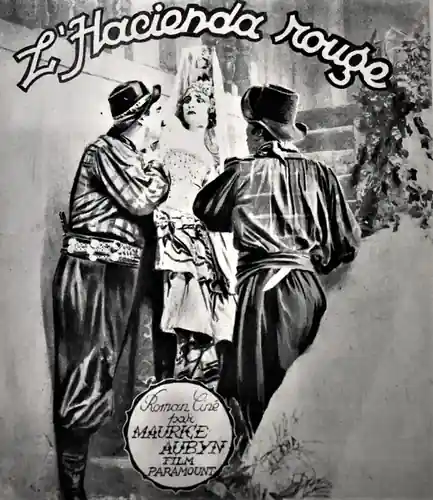
When compared to the lighter, more whimsical fare of the era, such as Distilled Love or the playful Fresh Paint, A Sainted Devil stands out as a somber, almost funerary piece of art. It shares more in common with the grand historical tragedies like Pyotr Velikiy, where the weight of destiny crushes the individual. Even in its quieter moments, there is a sense of impending doom, a feeling that the characters are trapped in a cycle of vengeance that can only end in catharsis or total annihilation. This sense of fatalism is what gives the film its lasting power, even in its fragmented state.
By 1924, Valentino was attempting to steer his career away from the 'sheik' typecasting that threatened to turn him into a parody of himself. A Sainted Devil was a crucial step in this evolution. By playing a character who is fundamentally broken, he challenged his audience to look past his physical beauty and engage with his emotional depth. This was a risky move, as audiences of the time often preferred the escapism of films like Alias Ladyfingers. Yet, for those willing to follow him into the darkness, the rewards were significant. The film demonstrated that Valentino was a capable dramatic actor, one who could anchor a complex, multi-generational saga like Trois familles if given the opportunity.
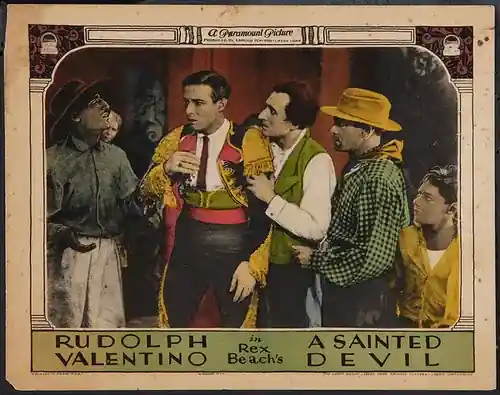
The film’s climax, a breathless sequence involving a rescue attempt and the final reckoning with Carlotta and El Tigre, reportedly showcased some of the most kinetic action of Valentino’s career. Unlike the courtly intrigue of Bride of Vengeance, the violence here was presented as something raw and unrefined. The resolution, which sees Alonzo reunited with Julietta, is not a simple 'happily ever after.' It is a scarred reunion, the joining of two people who have been irrevocably changed by their ordeal. This bittersweet ending is a hallmark of the film’s commitment to a more mature form of storytelling, one that avoids the easy resolutions of Forbidden Paths.
In the final analysis, A Sainted Devil remains one of the most intriguing 'what ifs' of the silent era. It represents a collision of top-tier talent: the screen’s greatest male icon at the height of his powers, a definitive femme fatale in Nita Naldi, and a script that dared to explore the darker recesses of the human heart. While we may never again see the full interplay of light and shadow that Henabery crafted, the film’s reputation as a daring, psychologically complex melodrama remains intact. It is a testament to Valentino’s enduring charisma that even a lost film can continue to cast such a long and influential shadow over the history of cinema.
The 'Sainted Devil' is more than just a title; it is a description of the human condition as presented in this 1924 masterwork. We are all, the film suggests, capable of both the highest sanctity and the lowest villainy, depending on the pressures applied to our souls. Don Alonzo Bolivar’s journey from the altar to the underworld and back again is a universal story of fall and redemption, told with a flair and a ferocity that few films of any era have managed to replicate. It stands as a haunting reminder of the ephemeral nature of film and the permanent impact of a truly great performance.
IMDb 5.6
1925
Community
Log in to comment.