DbcultAccessing Vault...
7.8/10
Senior Film Conservator
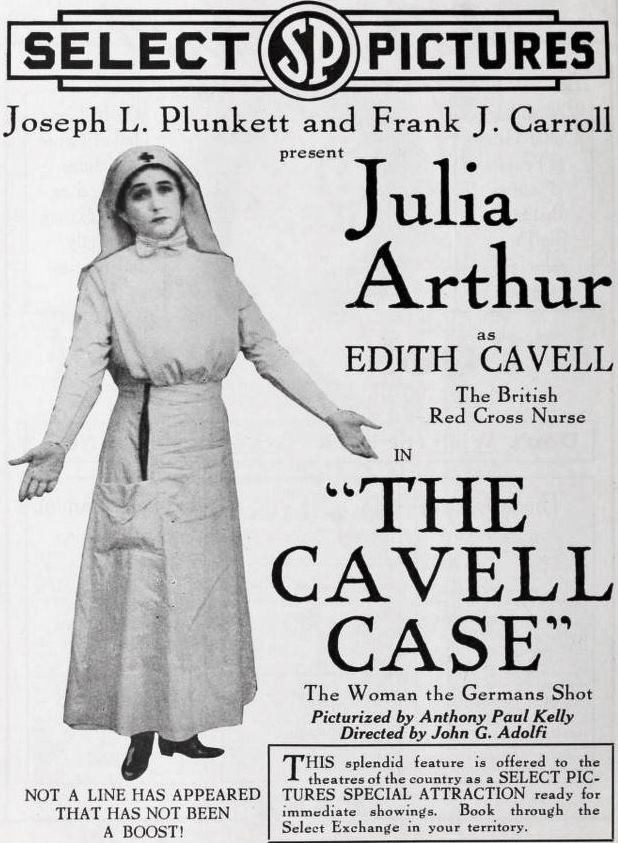
A definitive 7.8/10 rating for a film that redefined the boundaries of cult cinema. The Cavell Case remains a cornerstone of transgressive art.
The annals of cinematic history are replete with tales of heroism, but few resonate with the quiet, profound dignity of The Cavell Case. This 1917 production, a poignant and powerful dramatization of the true story of Edith Cavell, a British nurse executed by the Germans during World War I, stands as a testament not only to her indomitable spirit but also to the nascent power of film to immortalize such extraordinary lives. At its core, the film is a stark, unvarnished look at moral courage under duress, a narrative that transcends the mere recounting of historical events to delve into the very essence of human compassion in the face of brutal conflict.
Directed with a deliberate hand, the film, driven by Anthony Paul Kelly's compelling screenplay, doesn't shy away from the grim realities of wartime occupation. Instead, it meticulously reconstructs the atmosphere of fear and clandestine resistance that permeated Belgium during the Great War. Julia Arthur, in the titular role, delivers a performance that is nothing short of transcendent. Her portrayal of Edith Cavell is imbued with a serene strength, a quiet resolve that speaks volumes without need for histrionics. Arthur captures Cavell's essence – not as a firebrand revolutionary, but as a woman driven by an unwavering humanitarian ethos, a Hippocratic oath that superseded national boundaries and military decrees. Her eyes, often downcast yet radiating an inner light, convey the immense burden of her clandestine activities, the constant threat of discovery, and the profound empathy she felt for every soul she helped.
The supporting cast, though perhaps less celebrated, provides a robust framework for Arthur's central performance. Martin Faust, Jack W. Johnston, Fred Melville, and George Majeroni, among others, contribute to the tapestry of characters, each embodying a facet of the wartime experience – from the stoic resistance fighters to the stern, unyielding German authorities. The ensemble work creates a believable, lived-in world, essential for a historical drama of this magnitude. One can feel the tension in every hushed conversation, the palpable fear in every shadowy alleyway, and the crushing weight of impending doom that hangs over Cavell's humanitarian efforts.
What sets The Cavell Case apart from many contemporary war-time propaganda pieces is its nuanced approach. While undoubtedly designed to evoke patriotic sentiment, it avoids simplistic jingoism. Instead, it focuses on the universal themes of duty, sacrifice, and the moral complexities inherent in war. Cavell’s story is not just about a British nurse aiding Allied soldiers; it’s about a human being offering succor to others, regardless of their uniform or allegiance, a principle that ultimately leads to her tragic fate. This focus on individual conscience against institutional might gives the film a timeless quality, allowing it to resonate beyond its immediate historical context.
The film’s narrative arc follows Cavell’s journey from a dedicated nurse to a central figure in an underground network, harboring and facilitating the escape of hundreds of Allied soldiers and Belgian civilians from German-occupied territory. These are not grand, cinematic escapes filled with explosions and chases, but rather quiet, perilous maneuvers, relying on secrecy, trust, and the kindness of strangers. The tension builds incrementally, a slow tightening of the net around Cavell and her associates. The depiction of the trial, though constrained by the cinematic conventions of the era, is particularly harrowing. It underscores the clash between military law, which viewed Cavell’s actions as treasonous, and the moral imperative that guided her. Her conviction and subsequent execution sent shockwaves across the globe, transforming her into a martyr and a symbol of German brutality.
Visually, the film, despite its age, employs techniques that effectively convey its message. The cinematography, while not as sophisticated as later works, skillfully uses shadow and light to enhance the clandestine nature of Cavell’s work. The sets and costumes, to the best of the era's capabilities, strive for historical accuracy, immersing the viewer in the period. One can only imagine the impact such imagery had on contemporary audiences, many of whom were still living through the war or had direct connections to its horrors.
Comparing The Cavell Case to other films of its time reveals its unique position. While epics like Quo Vadis? (1913) dazzled with their scale and spectacle, The Cavell Case found its power in human intimacy and moral gravitas. It shares a thematic kinship with films that explore individuals standing against overwhelming forces, much like the defiant spirit often portrayed in early Westerns, though with a distinctly different moral compass. Unlike the more overtly propagandistic films that emerged during the war, this film offers a more reflective, albeit still emotionally charged, account of sacrifice. It’s less about demonizing the enemy and more about celebrating the profound humanity of one individual.
The legacy of Edith Cavell herself is immense, and this film played a crucial role in cementing her place in public consciousness. Her final words, “Patriotism is not enough. I must have no hatred or bitterness towards anyone,” are not explicitly stated in the film, but her actions and Arthur's portrayal embody this very sentiment. It’s a powerful message that transcends the immediate conflict, urging a broader understanding of human connection. The film serves as a historical document, a window into how an important historical figure was interpreted and presented to the public at a critical juncture in history.
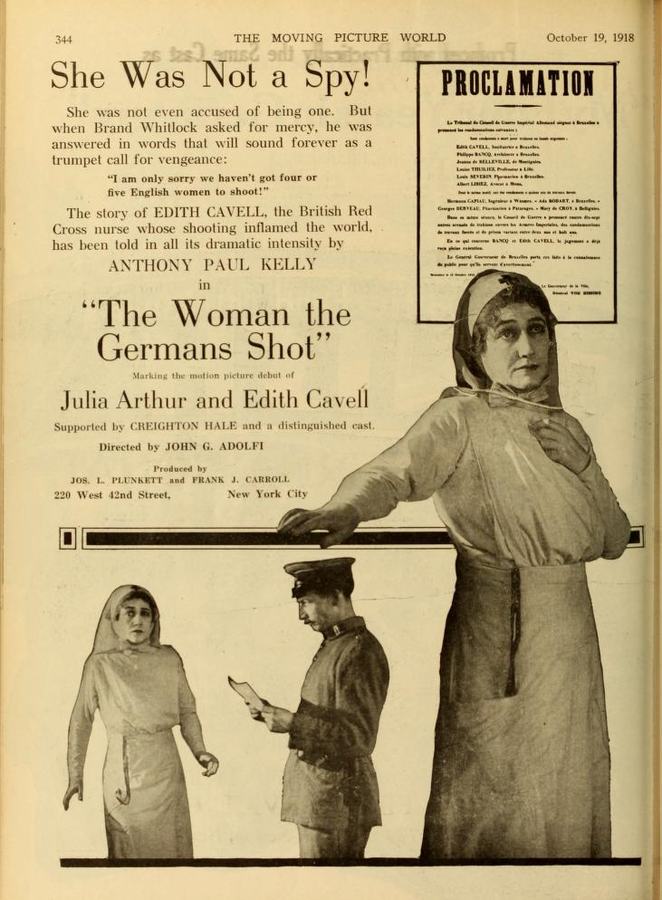
In an era where cinema was still finding its voice, The Cavell Case demonstrates a remarkable capacity for storytelling that is both emotionally resonant and historically significant. It foregoes sensationalism for a dignified, almost reverent, treatment of its subject. The pacing, characteristic of silent films, allows for moments of quiet contemplation, letting the emotional weight of Cavell's choices sink in. The dramatic tension is often derived from the moral stakes rather than overt action, a sophisticated approach for its time. The meticulous attention to the process of her arrest, interrogation, and trial, though perhaps simplified for narrative purposes, still conveys the gravity of the situation.
The film's impact was undoubtedly profound, solidifying Edith Cavell's image as a courageous martyr in the Allied cause. It harnessed the burgeoning medium of film to shape public opinion and galvanize support, not just for the war effort, but for the ideals of compassion and justice that Cavell represented. While other films of the period, such as Hearts United, might have focused on collective national spirit, The Cavell Case zeroes in on the individual's moral fortitude, making it a compelling character study wrapped in a historical drama.
Revisiting The Cavell Case today offers a unique perspective on early filmmaking and its ability to tackle complex ethical dilemmas. It’s a stark reminder of the costs of war and the enduring power of humanity in its darkest hours. Julia Arthur’s performance remains a cornerstone of the film’s enduring appeal. She doesn’t just play Edith Cavell; she embodies her, lending the character an authenticity that transcends the limitations of silent cinema. Her subtle gestures, her expressive eyes, and her dignified bearing communicate a depth of character that many modern actors would struggle to achieve without dialogue.
The narrative’s strength lies in its ability to humanize the often-abstract concept of wartime heroism. Edith Cavell was not a soldier; she was a healer. Her weapon was compassion, her battlefield the hospital ward and the clandestine routes to freedom. The film meticulously illustrates how these acts of kindness, seemingly small in isolation, collectively amounted to a significant act of resistance. It’s a powerful argument for the idea that heroism manifests in many forms, often in the quiet, unassuming actions of individuals who simply refuse to stand by while others suffer.
The historical context of the film's release is also crucial. Premiering mid-war, it served not only as a tribute but as a powerful piece of cultural messaging. It highlighted the perceived barbarity of the German forces while simultaneously elevating a figure of immense moral rectitude. Yet, critically, it avoids becoming a mere caricature. The German officers, while portrayed as stern and unyielding, are not necessarily depicted as inherently evil, but rather as agents of a rigid legal system. This nuance, however subtle, adds a layer of complexity often missing from wartime cinema.
The lasting impact of The Cavell Case is a testament to its compelling narrative and powerful central performance. It solidified Edith Cavell's place in history and in the collective memory as a symbol of courage and defiance. Even without the benefit of sound, the film manages to convey the emotional intensity and moral weight of her story, making it a pivotal piece in the early history of cinematic biography and war drama. It reminds us that some stories are so inherently powerful, so deeply human, that they transcend the limitations of their medium and era, continuing to inspire and provoke thought long after their initial release.
In conclusion, The Cavell Case is more than just a historical film; it is a profound meditation on ethics, sacrifice, and the unwavering strength of the human spirit. Julia Arthur's portrayal of Edith Cavell is a masterclass in silent acting, capturing the quiet dignity and immense courage of a woman who chose compassion over conformity, ultimately paying the ultimate price. It remains a vital watch for anyone interested in early cinema, the history of World War I, or the timeless stories of moral heroism. The film serves as a poignant reminder that even in the darkest of times, the light of human kindness can shine through, leaving an indelible mark on history and on our collective consciousness.
The themes explored in The Cavell Case — personal conviction versus state authority, the ethics of aid in wartime, and the profound impact of individual acts of courage — resonate deeply even today. It stands as a powerful counterpoint to films that glorify conflict, instead highlighting the quiet, often unacknowledged heroism that takes place away from the front lines. The film's message, delivered with such understated power, is a timeless call to empathy and a profound tribute to a woman whose legacy continues to inspire generations. It is a work that, despite its age, feels remarkably current in its exploration of humanitarian principles in a world often consumed by conflict. The courage of Edith Cavell, so eloquently captured by Julia Arthur and the creative team, shines through every frame, making The Cavell Case an essential, if often overlooked, cinematic achievement.

IMDb 6
1927
Community
Log in to comment.