DbcultAccessing Vault...
5.9/10
Senior Film Conservator
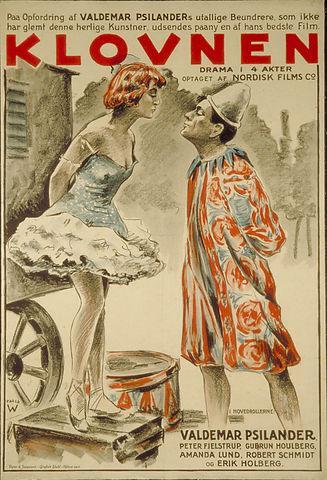
A definitive 5.9/10 rating for a film that redefined the boundaries of cult cinema. The Clown remains a cornerstone of transgressive art.
The first time you witness Daniel Blumenfeldt’s painted grin fracturing into silent sobs, you understand why Danish critics in 1917 called the picture “a stiletto inserted between the ribs of the soul.”
There is, perhaps, no more exquisite agony in early cinema than the moment in The Clown when the eponymous buffoon—mid-bow, roses raining like blood-red snowflakes—spots his wife on the arm of Count Valdemar Psilander’s silk-gloved seducer. The orchestra in the pit might as well have switched to a funeral dirge; the gaslights overhead suddenly burn with the chill of morgue lamps. Director A.W. Sandberg, only twenty-four yet already a surgeon of melodrama, holds the close-up until the smile becomes a rictus, until the white greasepaint itself seems to curdle. No intertitle intrudes; none is needed. The entire history of heartbreak is written in those trembling pixels.
Silent film novices often assume the absence of dialogue equals emotional poverty; The Clown is the riposte that silences every skeptic.
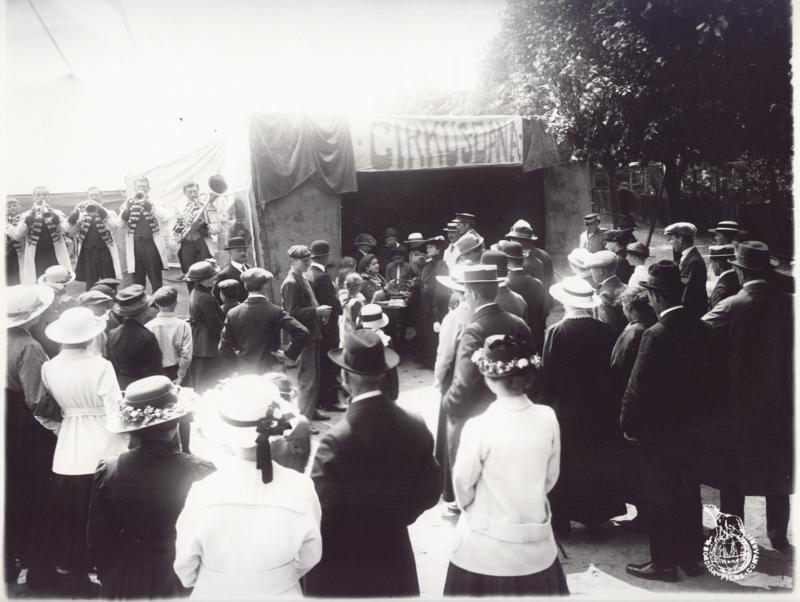
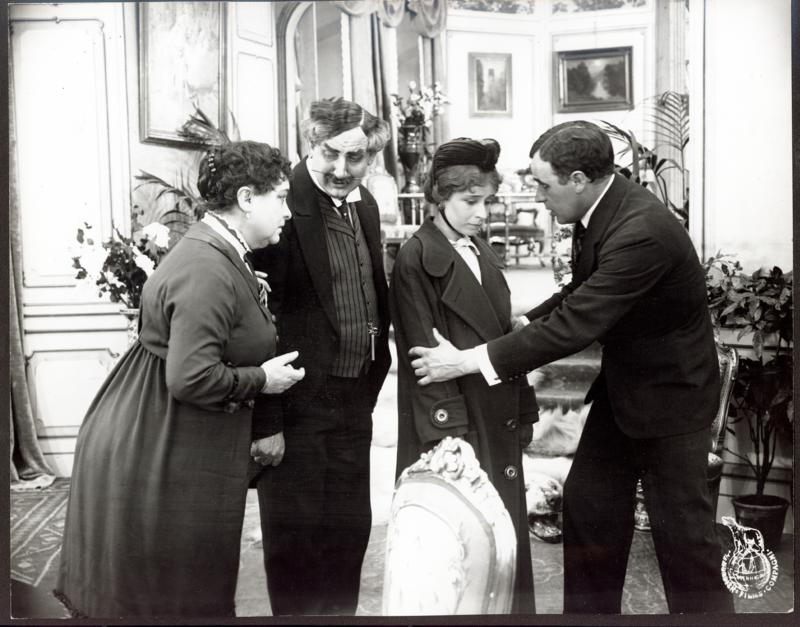
Sandberg and co-writer Laurids Skands borrow the bones of a stock cuckoldry plot, then proceed to fracture them into cubist anguish. Their protagonist, known only as Bimbo in the surviving Danish programs, is a sell-out sensation whose every pratfall pays for chandeliers and champagne breakfasts. Yet the screenplay refuses to grant him the dignity of a name; he is fame’s faceless lackey, a marionette whose strings are woven from ticket sales. When his wife—credited merely as Elvira and played by Ebba Lorentzen with porcelain fragility—abandons him for the Count’s aristocratic smirk, the narrative does not pivot to revenge or reclamation. Instead, it descends—spiral by spiral—into a purgatory of self-laceration. The film’s true revolution lies in denying the clown the solace of rage; he is too conditioned to please, too addicted to applause, to do anything but turn the pain into another routine.
Watch how Blumenfeldt’s shoulders quiver after the curtain call: the laugh-track persists, but the shoulders confess everything.
Cinematographer Axel Boesen shoots the cabaret scenes like a fever dream of gilt and grime. The camera glides past velvet tiers where baronesses fan themselves with programs, then dives backstage into a labyrinth of cracked mirrors and kerosene fumes. In one bravura tracking shot—unthinkable in 1917 Denmark—the lens follows Bimbo from spotlight to dressing room, the aperture narrowing until his reflection multiplies into a Greek chorus of selves, each more desolate than the last. The visual rhymes are lethal: confetti becomes snow, laughter becomes the baying of wolves, a broken bottle echoes the snap of a marriage certificate torn in two.
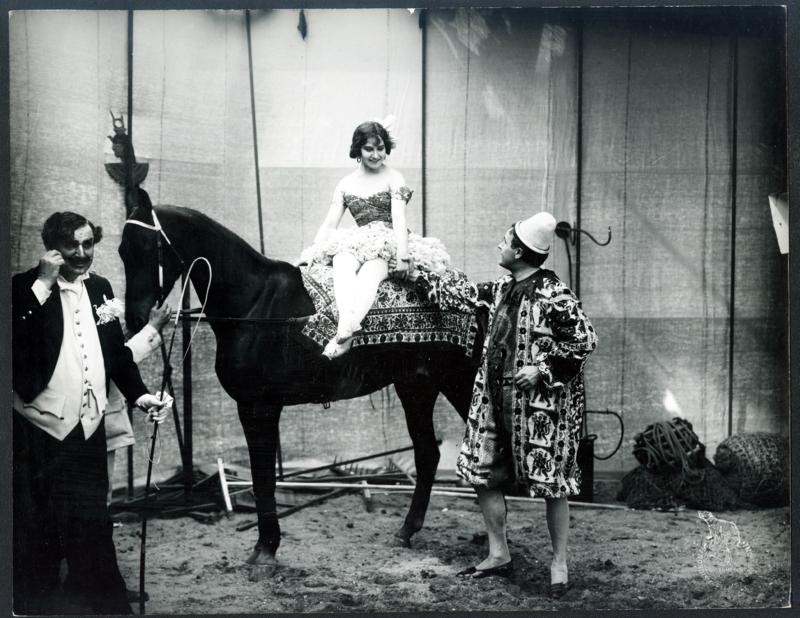
Compared to the muscular agit-prop of Strike or the ecclesiastical guilt of The Hypocrites, The Clown feels almost illicit in its intimacy. Where Fifty-Fifty fractures its narrative into dialectical montage, Sandberg clings to the unbroken gaze, believing—correctly—that the human face, stripped of dialogue, is the most volatile special effect ever invented.
The supporting cast operates like a sinister commedia troupe. Erik Holberg’s stage manager, all mutton-chop whiskers and ledger columns, embodies capitalism’s ledger-hearted accountant; Peter Jørgensen’s strongman flexes biceps the size of Christmas hams yet shrinks from emotional confrontation; Gudrun Houlberg’s cigar-girl exhales smoke rings that look like miniature halos gone rogue. Each could have anchored their own tragedy; together they form a kaleidoscope of moral entropy.
Notice the recurring motif of white: clown flour, bridal veil, cocaine on a silver spoon—innocence weaponized into a blinding shroud.
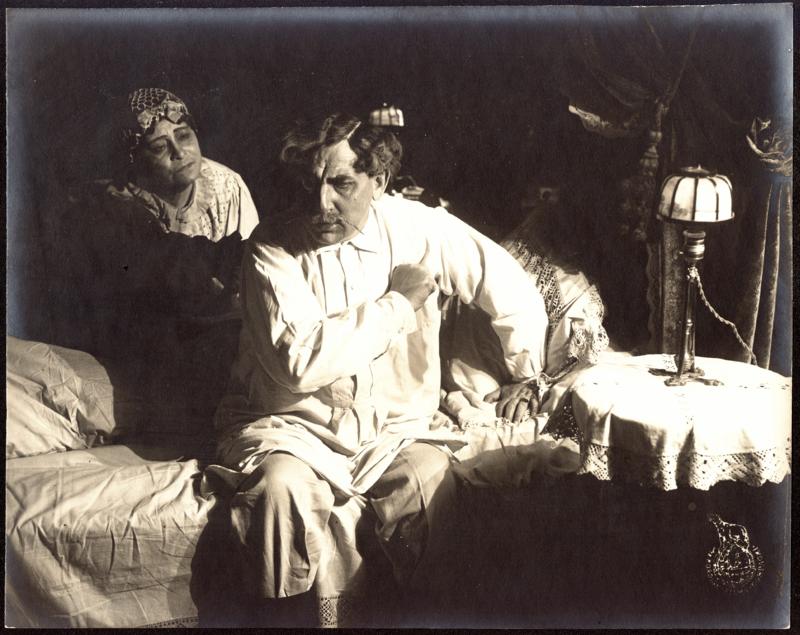
Musically, the original Danish premieres featured a bespoke score by Robert Schmidt (who also cameos as a blind fiddler). Contemporary screenings often substitute Chaplin-esque waltzes, a criminal dilution. Schmidt’s orchestration—reconstructed in 2018 from fire-damaged sheets—alternates between barrel-organ jauntiness and atonal shrieks that prefigure Bernard Herrmann. When Bimbo, ruined and trembling, re-enters the ring for his last performance, the strings hold a single discordant note for thirty seconds, the aural equivalent of a throat slashed yet refusing to bleed out.
Film historians still feud over the final tableau. Does Bimbo die onstage, poisoned by theCount’s planted henchman, or does he merely collapse from spiritual attrition? The nitrate of the last minute is too deteriorated to yield certainty; what remains is a freeze-frame of his gloved hand, fingers splayed toward the spotlight as if caressing a ghost. The ambiguity is the point: celebrity devours identity so thoroughly that even death becomes another encore.
In the words of a 1918 Politiken review: “One exits the cinema carrying one’s own ribs in a pocket—such is the precision of the extraction.”
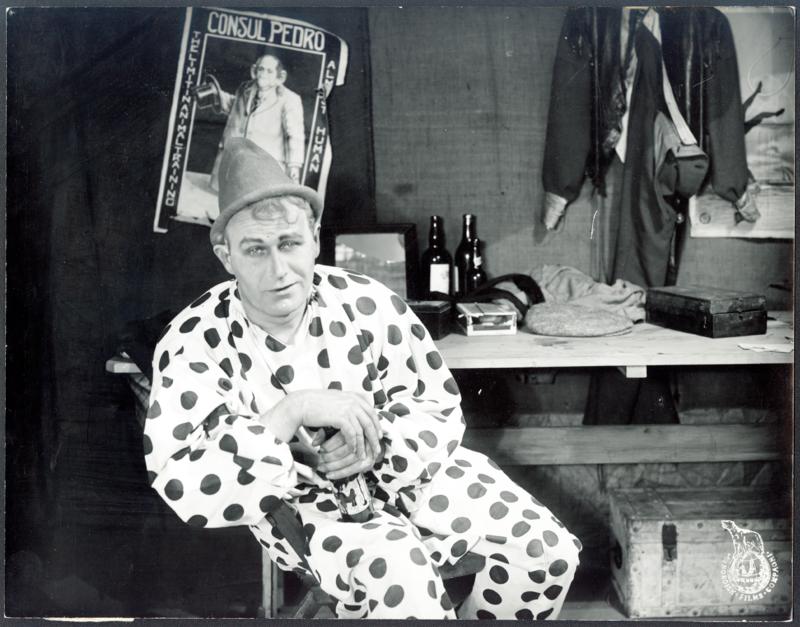
Restoration-wise, the 2022 4K scan by the Danish Film Institute is revelatory. Boesen’s chiaroscuro—once murky as soot—now glimmers with candlelit texture; you can count the sequins on Elvira’s gown, the pores beneath the Count’s powder. The tinting, guided by a lone surviving reels’ edge codes, alternates between amber for interiors and viridian for exteriors, creating a subconscious mood compass. Yet the restoration team wisely retains the chemical blemishes: the vertical scuffs that look like prison bars, the water stains resembling tear tracks. To erase them would be to Botox a widow’s grief.
For modern viewers marinated in the irony of The Black Box or the surreal swagger of Graustark, The Clown may scan as melodramatic. Resist the reflex. Strip away the century of cynicism and what remains is a primal scream about the cost of performance—how every public mask demands a pound of private flesh. In the age of influencer fatigue, the film feels prophetic: a warning that the algorithmic applause of strangers is a currency that devalues the moment it is minted.
Blumenfeldt, who died penniless in 1923, never saw a print of his masterwork after its initial run; legend claims he haunted Copenhagen’s dockyards offering to juggle for shots of aquavit.
Criterion’s upcoming Blu-ray—slated for October—promises an audio essay by Angela Dalle Vacche contextualizing the film within Danish fin-de-siècle anxieties, plus a video comparison with the thematically kindred Les Misérables, Part 2: Fantine. Most tantalizing is the inclusion of the alternate German ending (discovered in an abandoned circus wagon outside Hamburg) where Bimbo is resurrected by a bearded lady’s love. Sandberg reportedly disowned it as “a sop to Teutonic optimism,” yet scholars debate whether this apocryphal reel reframes the entire existential equation.
Viewing tips: watch alone, lights off, volume cranked until the violins feel like they’re sawing at your sternum. Keep a white handkerchief nearby; not for mopping tears, but to cover the screen during the final close-up—an act of mercy for those who fear witnessing their own soul’s reflection too starkly. Then, before the handkerchief drops, whisper the name of the person whose applause you most crave. You will understand why The Clown is not merely a film but a ritual—an exorcism staged under the big top of your most secret insecurities.
It ends, as all circuses do, with the seats empty, the sawdust sodden, the tent flapping like a wounded flag. Yet somewhere in the dark, a lone spotlight keeps burning, waiting for the next fool willing to pay for the privilege of being devoured by light.
IMDb 6.2
1934
Community
Log in to comment.