DbcultAccessing Vault...
7/10
Senior Film Conservator
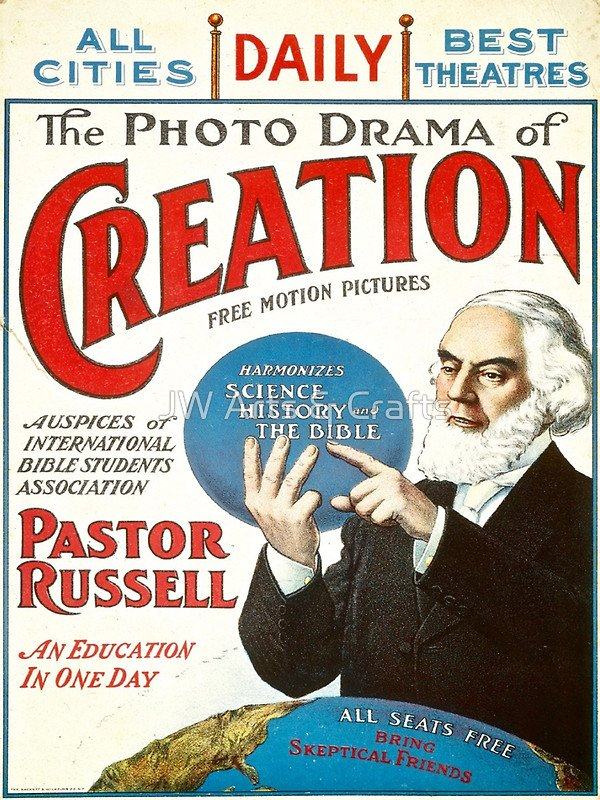
A definitive 7/10 rating for a film that redefined the boundaries of cult cinema. The Photo-Drama of Creation remains a cornerstone of transgressive art.
When the Watch Tower Bible and Tract Society released The Photo‑Drama of Creation in the early 1920s, it arrived not merely as a film but as a multimedia evangelistic project. The Society’s founder, Charles Taze Russell, appears both on‑screen and behind the scenes, guiding viewers through a sweeping retelling of the biblical narrative. The work is divided into four distinct parts, each corresponding to a major epoch of salvation history: the Creation, the Flood, the Exodus, and the Millennial Kingdom. This structural rigor mirrors the theological framework of Jehovah’s Witnesses, offering a visual catechism that seeks to cement doctrinal belief through spectacle.
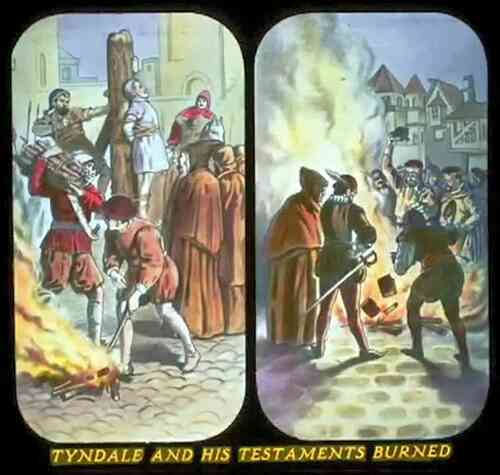
The Photo‑Drama was conceived at a time when cinema was still discovering its language. The Society invested heavily in a custom‑built Kinora camera and a purpose‑built theater equipped with a synchronized organ and a massive screen. The result was a hybrid of silent film, slide projection, and live narration—a precursor to today’s immersive experiences. While contemporaries such as Life and Passion of Christ (1919) relied on conventional narrative techniques, the Photo‑Drama pushed the envelope by integrating massive painted backdrops, elaborate costumes, and a chorus of live musicians to underscore each tableau.
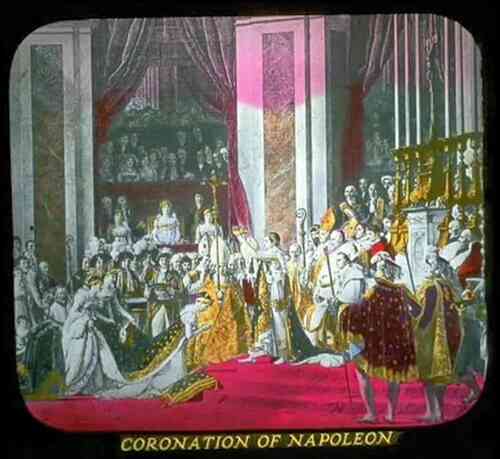
Visually, the film oscillates between static, almost theatrical compositions and sweeping panoramic shots that capture natural vistas—mountains, seas, and deserts—rendered in sepia tones that evoke a timeless quality. The opening sequence, depicting the six days of creation, employs a series of illuminated slides that dissolve into one another, each accompanied by a resonant organ chord in the deep hue of sea blue (#0E7490). This chromatic motif recurs during moments of divine revelation, reinforcing the sacred atmosphere. The flood segment showcases a meticulously constructed ark set against a storm‑tossed sea, rendered in dark orange (#C2410C) to suggest both danger and divine wrath. The use of chiaroscuro—contrasting light and shadow—creates a visual metaphor for the moral dichotomy at the heart of the narrative. The Exodus portion is perhaps the most dynamic, featuring a massed crowd of actors traversing a desert landscape, their silhouettes bathed in a golden yellow (#EAB308) that suggests both the harshness of the wilderness and the promise of deliverance.
Narratively, the Photo‑Drama is less concerned with character development than with doctrinal exposition. Intertitles, rendered in ornate script, quote directly from the King James Bible, while a disembodied narrator (voiced by Russell himself in later releases) offers exegesis that aligns each visual segment with the Society’s eschatology. This didactic approach situates the film alongside other religious epics such as Pilgrim's Progress (1912), yet its emphasis on a literal, chronological reading of scripture sets it apart. The final act, depicting the thousand‑year reign of Christ, employs a luminous tableau of restored Edenic gardens, populated by actors in flowing white robes. Here, the sea‑blue lighting softens, suggesting a harmonious culmination of divine purpose. The scene is punctuated by a chorus of organ chords that swell into a triumphant finale, underscoring the theological promise of a restored world.
When measured against its peers, the Photo‑Drama’s ambition is evident. While From the Manger to the Cross (1912) focuses on the human drama of Jesus’ life, the Photo‑Drama expands its scope to encompass the entire biblical arc. Its use of live narration anticipates the later development of sound cinema, making it a transitional work between silent epics and the talkies of the late 1920s. Moreover, the film’s visual language shares affinities with the grand historical panoramas of D.W. Griffith, yet it diverges by prioritizing theological fidelity over cinematic realism. The result is a piece that feels both reverent and, at times, didactically rigid—a characteristic that has both endeared it to adherents and alienated secular critics.
Upon its debut, the Photo‑Drama attracted sizable audiences, particularly within the burgeoning Jehovah’s Witnesses community. Contemporary newspaper reviews praised its "magnificent scale" and "devout sincerity," though some secular critics dismissed it as "propaganda masquerading as art." Over the ensuing decades, the work fell into obscurity, largely due to the Society’s decision to limit its distribution to members. In recent years, film scholars have revisited the Photo‑Drama as an early example of immersive religious media. Its blend of live narration, organ accompaniment, and large‑format visuals prefigures modern multimedia worship experiences. Academic articles now cite it alongside works like The Fairylogue and Radio‑Plays (1908) as a pivotal moment in the evolution of audiovisual evangelism.
The film’s greatest strength lies in its audacious scope. By attempting to visualize the entirety of biblical history, it offers a rare, holistic perspective that few other early 20th‑century productions dared to tackle. Its production values—especially the elaborate sets and costuming—are impressive given the limited budget and technology of the era. Conversely, its didactic nature can feel oppressive. The heavy reliance on intertitles and narration leaves little room for interpretive nuance, reducing complex theological concepts to straightforward visual metaphors. Additionally, the acting, while earnest, often borders on the theatrical, reflecting the influence of stagecraft more than cinematic realism.
The Photo‑Drama of Creation stands as a monumental artifact at the intersection of faith and film. It is a testament to the Watch Tower Society’s commitment to using emerging media for doctrinal dissemination, and it foreshadows the multimedia evangelism that would become commonplace in later decades. While its artistic merits may be debated, its historical significance as an early, large‑scale religious epic is undeniable. For scholars of cinema history, religious studies, and media archaeology, the Photo‑Drama offers a rich case study in how visual storytelling can be harnessed to convey theological narratives with both grandeur and controversy.

IMDb 8.2
1920
Community
Log in to comment.