DbcultAccessing Vault...
Cult Review
Senior Film Conservator
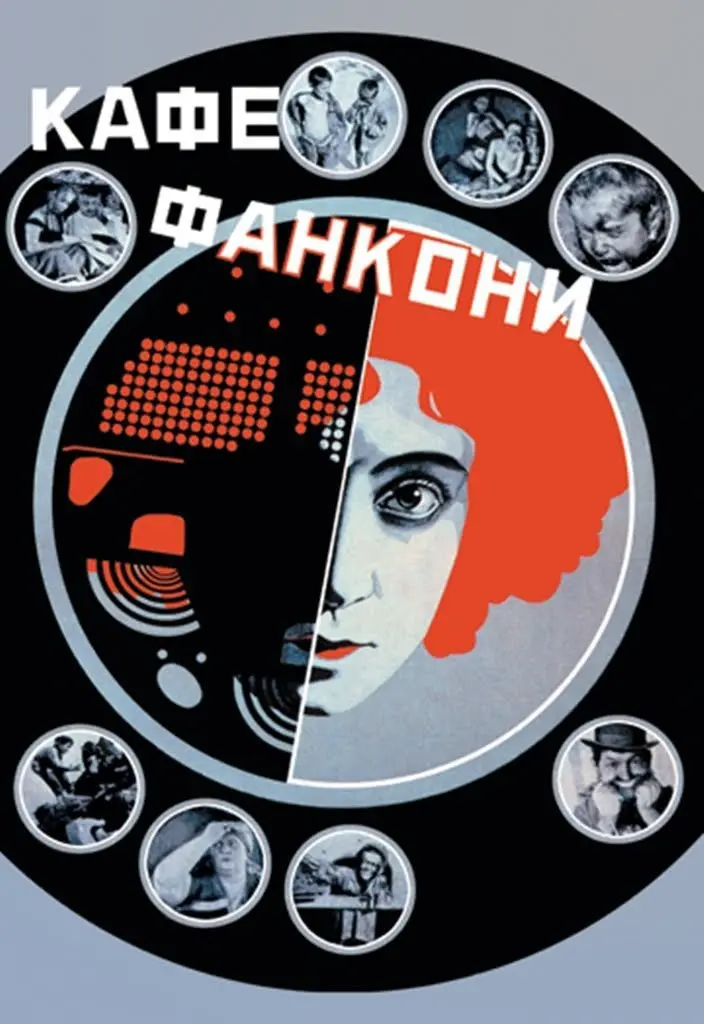
Is Kafe Fankoni worth your time today? Short answer: yes, but only if you have the stomach for a relentless, soot-covered descent into the darkest corners of human greed. This isn't a film designed to make you feel good; it is a cinematic bludgeon intended to wake the conscience.
This film is for historians of the silent era and fans of gritty social realism who appreciate cinema as a tool for social change. It is absolutely NOT for anyone seeking a lighthearted evening or a traditional narrative with a tidy, happy resolution. It is raw, it is uncomfortable, and it is essential viewing for those who want to see the early power of the Soviet lens.
This film works because it creates a visceral, claustrophobic atmosphere that makes the viewer feel the soot in their own lungs during the boiler-cleaning sequences. This film fails because its secondary characters are often painted with such broad strokes that they feel like archetypes rather than people. You should watch it if you are interested in how early cinema captured the transition from imperial decay to industrial desperation.
Yes, Kafe Fankoni remains a powerful piece of historical testimony. While many films from 1927 have aged into kitsch, this one retains a jagged edge. The central conflict—the literal consumption of children by the machines of industry—feels hauntingly relevant in an age of globalized labor exploitation. It is a difficult watch, but a rewarding one for those who value substance over spectacle.
The film’s greatest strength lies in its geography. Odessa is not just a setting; it is a protagonist and a villain. The directors masterfully contrast the airy, bourgeois atmosphere of the titular Cafe Fanconi with the subterranean hell of the shipping docks. In one particularly striking scene, we see the affluent patrons sipping coffee while the camera cuts sharply to a child, covered in black ash, gasping for air inside a narrow pipe. This isn't subtle, but silent cinema rarely was.
The use of location shooting gives the film a documentary-like quality. Unlike the stylized sets found in German Expressionism or the polished Hollywood productions of the same year, such as Disraeli, Kafe Fankoni feels lived-in. The grime on the children's faces isn't stage makeup; it’s a reflection of a very real post-revolutionary struggle. The port of Odessa becomes a labyrinth of iron and steam, where human life is the cheapest fuel available.
Vasili Kovrigin’s portrayal of Korova is a masterclass in understated menace. He doesn't twirl a mustache or cackle. Instead, his evil is found in his indifference. He is a man who views a child’s life as a line item on a ledger. This performance stands in stark contrast to the more theatrical acting found in contemporary films like Cheated Hearts. Kovrigin plays Korova as a man who believes he is doing the world a favor by giving these 'street urchins' a job.
There is a brutal simplicity to his logic. It works. But it’s flawed. The film forces us to confront the fact that Korova is not a monster born of a vacuum; he is a product of a system that rewards the exploitation of the weak. When he walks through the cafe, the lighting is warm and inviting. When he descends to the docks, the shadows stretch and distort, reflecting his true nature. It is a visual shorthand that remains effective nearly a century later.
The most harrowing moments of the film occur inside the steam boilers. The cinematography here is revolutionary for 1927. The camera is placed within the narrow confines of the pipes, capturing the sheer terror of the children as they crawl through the darkness. You can almost feel the heat radiating off the screen. These scenes share a DNA with the tension found in Le rêve, but with a much more grounded, political weight.
One specific shot stays with the viewer: a young boy’s hand reaching out from a pipe, clawing at the air before going limp. It is a moment of pure, unadulterated tragedy. The editing here is rapid, mimicking the panicked heartbeat of the child. This use of montage—a hallmark of Soviet cinema—elevates the film from a mere social drama to a high-stakes thriller. It makes the viewer an accomplice to the crime through the act of watching.
To understand Kafe Fankoni, one must understand the era of its birth. 1927 was a pivotal year for the Soviet film industry. The government realized that film was the most powerful tool for educating a largely illiterate population. As a result, films like this were often funded with a specific ideological goal. However, unlike some of the more heavy-handed 'tractor films' of the later Stalinist era, Kafe Fankoni feels genuinely angry. It isn't just following a script; it’s screaming at an injustice.
The writers—Rubinshteyn, Matyash, and Weiting-Radzinsky—crafted a narrative that functions as both a critique of the past and a warning for the future. While films like Open Your Eyes focused on public health and morality, Kafe Fankoni focuses on the structural violence of capitalism. It is a fascinating artifact of a time when cinema was being reinvented as a weapon of the proletariat.
The film’s pacing is its only significant drawback. The middle act tends to linger too long on the administrative dealings of the cooperative, which can feel dry compared to the high-intensity scenes at the port. There is a sense that the film is trying to cover too much ground—part social expose, part character study, part political manifesto. In this regard, it lacks the tight, focused narrative drive of something like The Conquest of Canaan.
However, the tonal shifts between the luxury of the cafe and the misery of the boiler rooms keep the audience engaged. The directors use these shifts to create a rhythmic tension. Just as you begin to settle into the domestic drama of the cafe, the film yanks you back into the soot. It is a jarring experience, but a necessary one to convey the film’s central message: that luxury is often built on a foundation of suffering.
The film features an incredible sense of place, making 1920s Odessa feel vibrant and dangerous. The acting is surprisingly modern, avoiding the over-the-top gesticulation common in many silent films of the period. The political message, while clear, is delivered through powerful visual storytelling rather than just title cards.
The narrative can feel episodic at times, jumping between different groups of characters without enough connective tissue. Some of the supporting roles are underdeveloped, serving more as symbols than as three-dimensional people. The film’s unrelenting bleakness may be a deterrent for casual viewers.
While most critics focus on the child labor aspect, there is a subtle, almost hidden subtext regarding the 'Cafe Fanconi' as a liminal space. It is a place where the old world and the new world collide. The way the camera lingers on the steam from the coffee cups—mirroring the lethal steam of the boilers—is a sophisticated visual metaphor that suggests the directors were thinking far beyond simple propaganda. They were exploring the physics of exploitation.
Kafe Fankoni is a punch to the gut that hasn't lost its power in nearly a hundred years. It is a vital piece of cinema that refuses to look away from the human cost of progress. While it lacks the polish of modern blockbusters, it possesses a soul and a fury that most contemporary films can only dream of. It is a haunting reminder that the comforts we enjoy are often paid for by those we choose not to see. If you want to understand the true potential of silent film as a social force, this is mandatory viewing.
"A searing indictment of industrial greed that transforms the port of Odessa into a purgatory for the innocent."

IMDb 5.7
1935
Community
Log in to comment.