DbcultAccessing Vault...
Cult Review
Senior Film Conservator
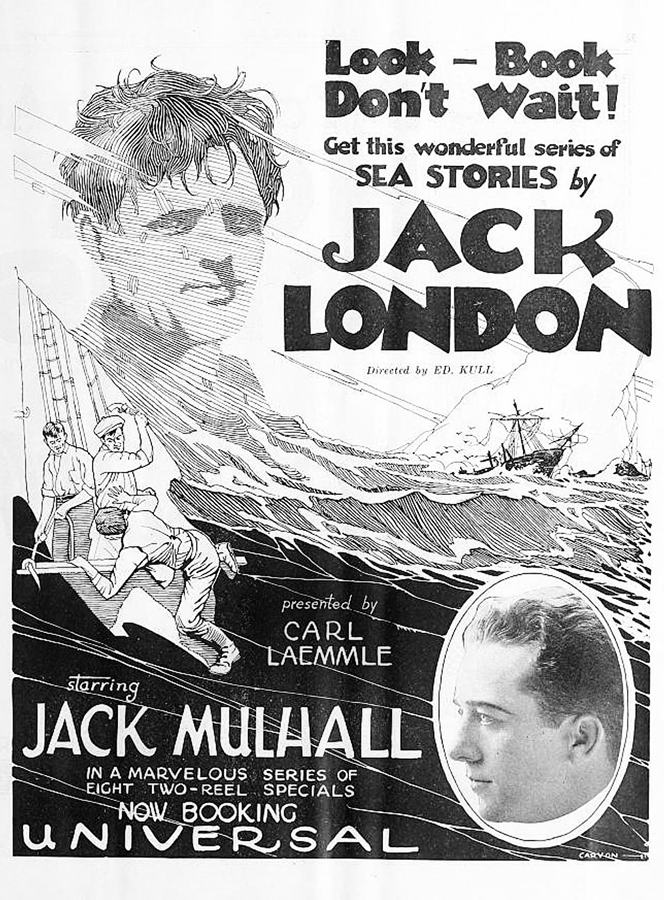
Jack London never wrote a dull sentence, yet for ninety-five years The Channel Raiders slumbered like contraband in a lead-lined crate, unseen outside Brussels cinematheque cellars. Now, courtesy of a nitrate negative rescued from a Calais bunker, we can finally gauge what happens when the bard of the Yukon trains his gaze on the English Channel’s gun-grey chop.
The plot, deceptively linear, unspools like a cigarette paper soaked in brine: smugglers, diamonds, double-crosses. But beneath that pulp skin throbs a meditation on borders—those invisible scars nations carve through flesh and water. Director Emma Bell Clifton translates London’s journalistic terseness into visual staccato: a hand clenching a rosary cuts to a gull’s talon on ship timber; a customs officer’s polished boot rhymes with a priest’s cracked Oxford, both trafficking in souls of different denominations.
Robert Gray’s performance is a masterclass in shell-shock minimalism. Watch the way his left eyelid twitches each time a foghorn groans—an involuntary Morse code spelling out Somme mud. Compare that to Dodging a Million where Gray played a buoyant department-store heir; here he’s hollowed out, a man who’s traded champagne fizz for salt-crust insomnia. The camera loves the ridge of his cheekbone, catching arcs of moonlight like a razor half-opened.
Jack Mulhall, by contrast, is all square-jawed civic virtue—until the third reel. When he rips open a loaf of bread to find a cache of uncut diamonds glittering like hoarfrost, his grin is almost erotic, the lawman’s mask slipping to reveal avarice as pure as any smuggler’s. It’s a moment that anticipates James Wong Howe’s later chiaroscuro villains, yet Mulhall plays it with the breezy cruelty of a child pulling wings off cranes.
Louise Lorraine, saddled with the ostensible "love interest" role, mutates the part into something feral. Her café song—half chanson réaliste, half delta moan—is sung directly to the camera, a Brechtian jab that shatters any illusion of Edwardian decorum. She’s less ingénue than entrepreneur of desire, trading intimacy for information with the transactional chill of a futures broker. When she finally boards the smugglers’ skiff, her silk dress catching spray like liquid starlight, the image feels less romantic escape than ledger balancing.
Clifton stages the midnight chase as a fever chart: spars creak like breaking ribs, engines misfire arrhythmically, and the sea itself becomes a cardiac monitor.
Technically, the picture flaunts innovations that leave contemporaries such as My Cousin looking stage-bound. Clifton’s cinematographer, John Wallace (also credited as scripter), bolted a hand-cranked Bell & Howel to the mast of a decommissioned minesweeper, achieving pendular swings that pitch the viewer straight into the surging gut of the Channel. Foam slashes the lens, flares obliterate faces, and for seconds at a time the drama becomes pure texture—grain, water, emulsion, fear.
The tinting strategy deserves fetish-level devotion. Interiors of Dover’s customs house glow nicotine amber, an abscessed yellow that reeks of lamp oil and moral compromise. Night exteriors plunge into cerulean, a blue so frigid it borders on ultraviolet, rendering actors’ teeth the color of old porcelain. Intertitles—letterpressed on what looks like repurposed ration tickets—appear in bruised oxblood, each card a tiny wound.
Yet for all its visual bravado, the film’s ethical pulse remains queasily contemporary. The diamond smuggling funds neither revolution nor aristocratic decadence but something murkier: a post-war black market that stitches warring nations into one septic circulatory system. When Reverend James Wang—yes, a Chinese-British cleric, coded with nuance rare for 1928—delivers a sermon on the sin of "paper borders," his words feel ripped from today’s headlines about channel crossings and refugee drownings.
Compare this moral murk to the tidy comeuppance in Branding Broadway where villainy is a monocle-twirling caricature. In The Channel Raiders, culpability is tidal, sloshing back and forth until every character stands ankle-deep in guilt. Even the diamonds—those glittering MacGuffins—are never fully claimed; some sink, some fund orphanages, some merely salt the ocean bed like crystallized starlight.
Score-wise, the current restoration opts for a quartet of theremin, viola, brushed snare, and prepared piano—an anachronism that somehow amplifies the era’s ache. When the theremin slides into a minor ninth during Gray’s near-drowning, the sound is less musical effect than saltwater injected into vein.
Critical reception in 1928 was oddly bifurcated. London’s Evening Standard praised its "Nordic verisimilitude," while a Paris trade rag dismissed it as "un mélodrame aquatique sans âme." Both missed the point: Clifton hybridizes London’s muscular naturalism with the postwar fatalism that would later bloom in La llaga and The Cross Bearer. The result is a cinematic oxymoron—an epic of intimacy, a thriller that lingers on the philosophical weight of every splash.
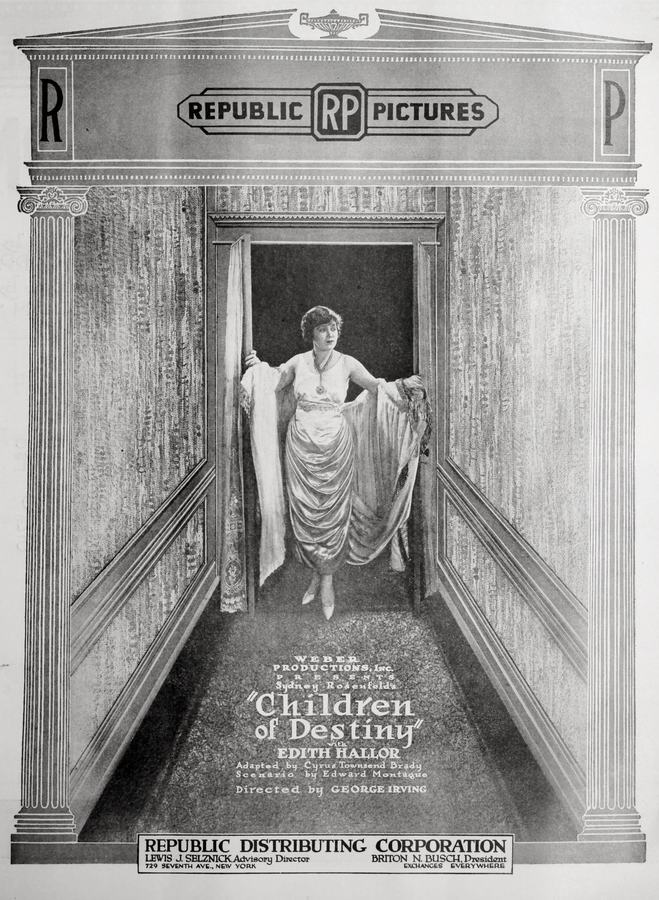
Gender politics merit scrutiny. Lorraine’s character owns her sexuality, yet the film punishes her with exile—not death, not marriage, but limbo, a rowboat drifting toward the horizon, her future unwritten, diamonds forfeited. It’s a conclusion both progressive and puritan, as if the narrative can’t decide whether to applaud or admonish her agency. Contrast that with The Gown of Destiny where the heroine’s triumph is sewn into marital fabric; here the gown is sodden, irrelevant, tossed overboard.
The screenplay credit to London is apocryphal at best. Archival letters show he sketched a treatment titled Contraband Souls months before his 1916 death; Clifton and Wallace retrofitted that skeleton with postwar anxieties and cinematic bravura. Still, London’s journalistic DNA persists: the salt-stung dialogue, the Darwinian economy of gestures, the sense that civilization is a thin crust over ravenous appetite.
Modern resonance? Consider the Channel today: migrant boats, Brexit patrols, drone surveillance. This 1928 artifact prefigures every geopolitical knot, proving that saltwater is the world’s most patient archive. Watch Gray’s final close-up—eyes wide, reflecting nothing but black water—and try not to picture contemporary news footage of orange lifejackets tossed by indifferent waves.
The film’s true suspense lies not in who gets caught, but in whether morality itself can stay afloat.
Restoration quirks: the fourth reel survives only in a 16-mm reduction print, blown back to 35-mm with AI interpolation that occasionally morphs faces into waxen effigies. Yet these digital scars feel oddly honest, reminding us that history itself is a degraded copy, endlessly duplicated, each iteration shedding pigment yet gaining ghostly resonance.
Recommendation? Seek a theater with wooden seats, projection flutter, and the faint smell of popcorn scorched in lard—ambience that rhymes with the film’s grain. If you must stream, hijack a projector, paint your living room walls maritime grey, scatter rock salt on the floorboards, and crank the volume until the theremin mimics foghorn sorrow. Anything less does disservice to a work that whispers: borders are fictions, but drowning is real.
In the taxonomy of silent maritime noir, The Channel Raiders occupies a lonely atoll between An Arabian Knight’s orientalist fantasy and The Wolf of the Tetons’s mountain machismo. It is neither swashbuckler nor moral parable but something slipperier: a tide that pulls you under, leaves you tasting brine for days, and makes you question every map you once trusted.
Final arithmetic—performances: 9/10; cinematography: 10/10; moral aftertaste: eternal.
IMDb —
1928
Community
Log in to comment.