DbcultAccessing Vault...
5.7/10
Senior Film Conservator
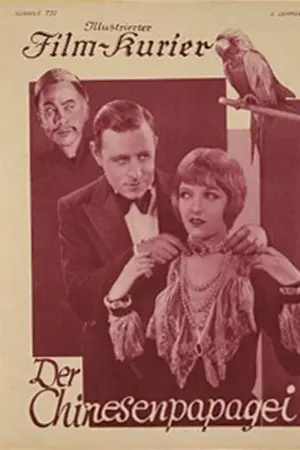
A definitive 5.7/10 rating for a film that redefined the boundaries of cult cinema. The Chinese Parrot remains a cornerstone of transgressive art.
Is this 1927 silent mystery still a mandatory watch for fans of the genre? Short answer: Yes, but only if you approach it as a historical artifact rather than a modern thriller.
This film is for those who appreciate the intersection of German Expressionism and American pulp; it is not for viewers who demand high-fidelity sound or fast-cut action sequences. It works. But it’s flawed.
This film works because Paul Leni treats the California desert like a haunted castle, using light and shadow to elevate a standard whodunit into something far more atmospheric.
This film fails because the surviving fragments and the inherent limitations of the 1920s racial depictions make for an occasionally jarring and uncomfortable viewing experience.
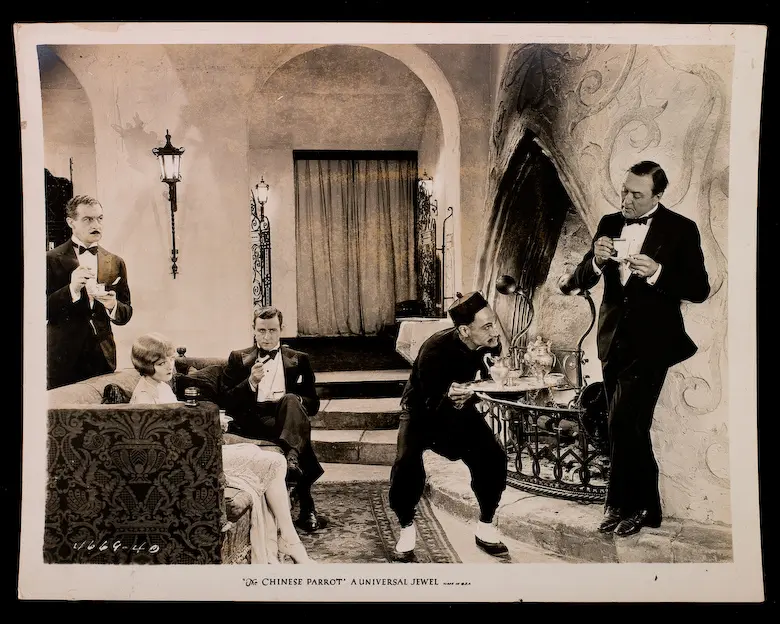
You should watch it if you want to see the roots of the procedural mystery and the only time an actual Asian actor played Charlie Chan in a major production.
Paul Leni was a visionary who migrated from the German UFA studios to Hollywood, bringing with him a toolkit of shadows and distorted perspectives. In The Chinese Parrot, he attempts something radical: marrying the grit of an American desert mystery with the psychological depth of European Expressionism.
Unlike the sprawling outdoor realism found in The Covered Wagon, Leni’s desert feels claustrophobic. He uses the vastness of the landscape to emphasize the isolation of the characters. Every rock and dune seems to hide a secret.
One specific scene involving the arrival at the 21-Mile House showcases Leni's mastery. The camera doesn't just record the arrival; it lurks. The use of low-angle shots makes the architecture of the desert lodge feel predatory, as if the building itself is waiting to swallow the characters whole.
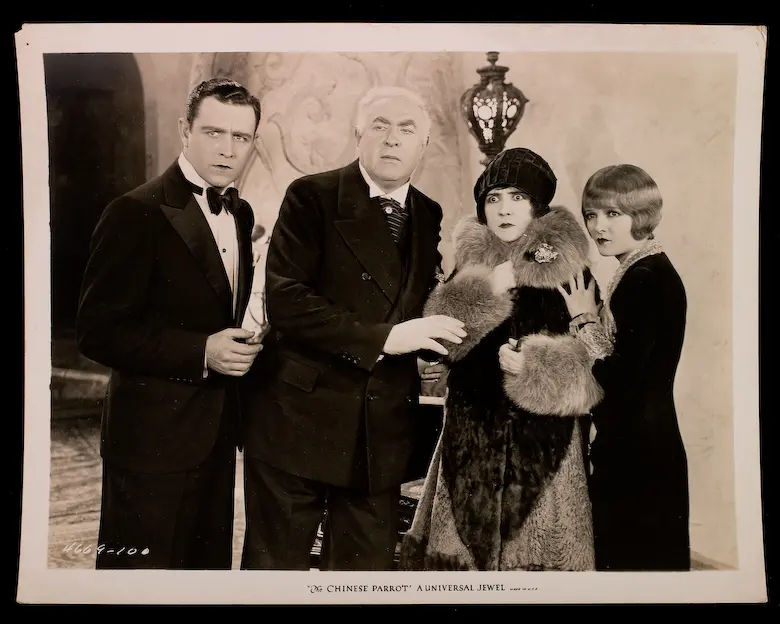
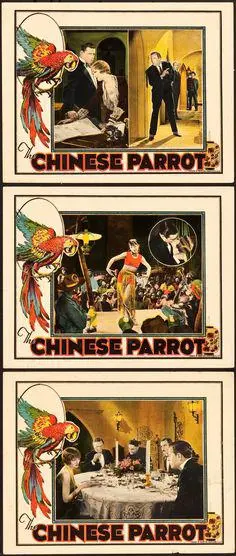
The most striking element of this film is George Kuwa. Long before the character was appropriated by white actors in yellowface, Kuwa brought a grounded, subtle dignity to the role. He doesn't play Chan as a caricature; he plays him as a professional.
His performance is remarkably restrained for a silent film. While others are flailing their arms in fits of melodrama, Kuwa uses his eyes. There is a moment when he first inspects the pearl necklace where his expression shifts from curiosity to a deep, weary understanding of human greed.
It is a tragedy of cinema history that this performance was largely forgotten. Kuwa’s Chan is observant and sharp, lacking the fortune-cookie aphorisms that would later plague the franchise. He is a man doing a difficult job in a hostile environment.
The cinematography by Benjamin H. Kline is nothing short of revolutionary for 1927. The way he captures the 'cursed' pearls is almost supernatural. They don't just sparkle; they glow with an unnatural, sickly light that seems to drain the color from the surrounding scenes.
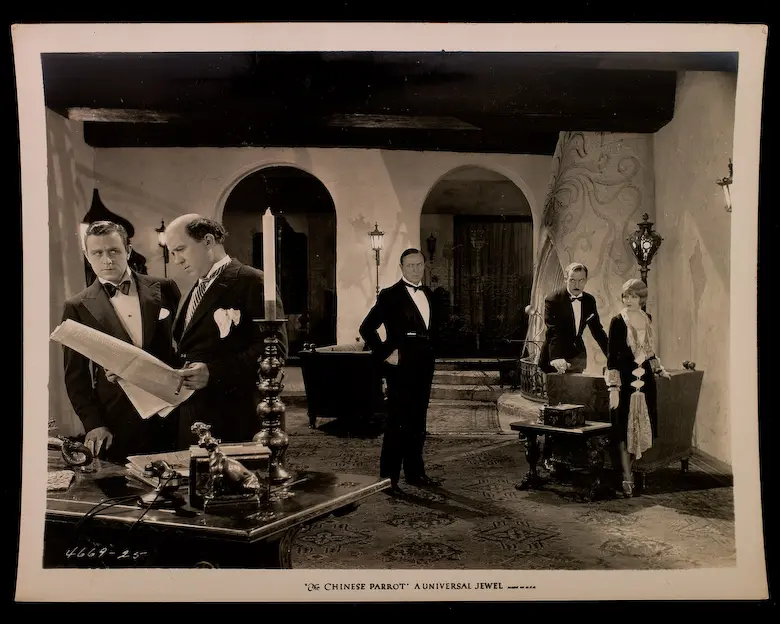
The pacing, however, is where the film struggles. Silent mysteries often rely on heavy title cards to explain complex plot points, and The Chinese Parrot is no exception. At times, the momentum halts completely to explain a lineage or a legal technicality.
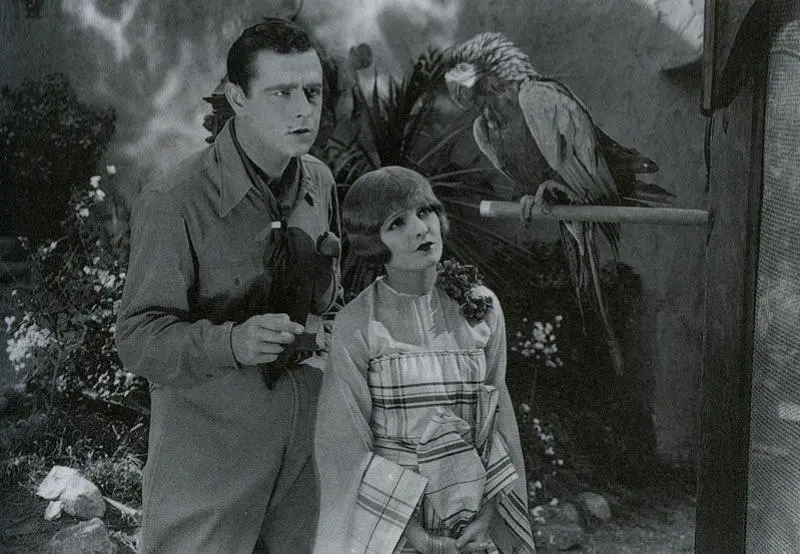
Despite this, the tone remains consistently eerie. The 'parrot' of the title isn't just a gimmick; it’s a witness. Leni uses shots of the bird’s unblinking eye to suggest that the characters are being watched by something older and more patient than the law.
Anna May Wong appears here in a smaller role, yet her screen presence is undeniable. Even in a limited capacity, she commands the frame. Her interaction with Hobart Bosworth provides a necessary tension that keeps the middle act from sagging.
The supporting cast, including Slim Summerville, provides the necessary levity. Summerville’s lanky, expressive face offers a counterpoint to the brooding atmosphere. However, the humor occasionally feels misplaced, clashing with Leni’s darker visual cues.
There is a specific moment where Summerville reacts to a 'ghostly' apparition that feels like it belongs in a different movie. It's a classic example of the studio system trying to balance a director’s artistic impulses with the need for broad commercial appeal.
We must address the elephant in the room: The Chinese Parrot is largely considered a lost film. Reviewing it requires a bit of forensic imagination, relying on surviving reels, production stills, and the original screenplay.
This status adds a layer of melancholy to the viewing experience. We are watching the ghost of a movie. The gaps in the narrative are filled by our own expectations of what Leni could achieve. It’s a fractured puzzle, much like the mystery Chan is trying to solve.
Even in its fragmented state, the film's influence is clear. You can see the DNA of this production in later noir films. The idea of the 'haunted' object and the detective who sees through the veil of reality became staples of the genre.
Leni’s use of light is his greatest weapon. He doesn't use it to illuminate; he uses it to obscure. In the scenes within the desert mansion, the light is always directional, creating harsh splits across the actors' faces.
This visual duality mirrors the theme of the movie: the pearls have two faces—beauty and destruction. The pacing, while slow, builds a sense of dread that is rare for 1920s American cinema. It’s a slow burn that pays off in a chaotic, shadow-filled climax.
The editing is deliberate. Leni isn't afraid to hold a shot for a second longer than necessary, forcing the audience to look into the corners of the frame. It’s a confident, if occasionally plodding, approach to storytelling.
Pros:
1. A unique visual style that sets it apart from other 1920s mysteries.
2. The historical significance of seeing the first on-screen Charlie Chan.
3. Atmospheric set pieces that still feel haunting today.
Cons:
1. Significant portions of the film are lost or damaged.
2. The racial stereotypes of the era can be difficult to stomach.
3. The plot is overly reliant on title cards for exposition.
The Chinese Parrot is a fascinating failure. It attempts to elevate the detective genre through visual artistry, and while it doesn't always succeed, its ambition is palpable. It is a film of shadows, both literally and figuratively.
If you can find the surviving footage, watch it for Paul Leni’s direction. Watch it for George Kuwa’s groundbreaking performance. But don't expect a polished, seamless experience. This is a rough-cut diamond—valuable, but sharp around the edges.
Ultimately, the film serves as a reminder of what could have been. Had Leni lived longer, and had Kuwa been allowed to continue the role, the history of the cinematic detective might have looked very different. It’s a haunting, imperfect piece of history that deserves its place in the conversation.
IMDb —
1914
Community
Log in to comment.