DbcultAccessing Vault...
Cult Review
Senior Film Conservator
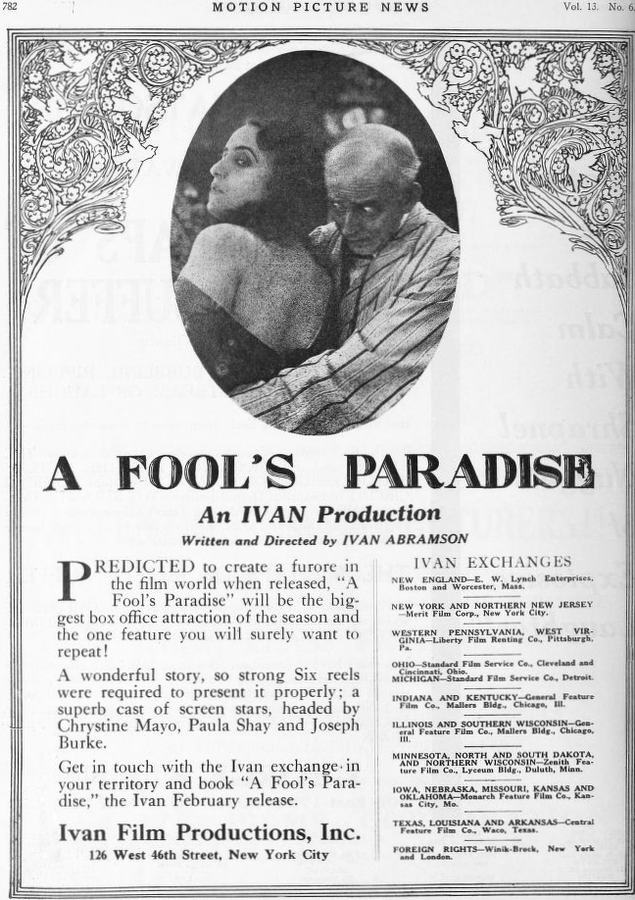
Stepping into the cinematic landscape of A Fool's Paradise is akin to entering a morality play unfolding on a grand, albeit silent, stage. Ivan Abramson's 1917 production, a poignant exploration of human frailty and the seductive allure of illusion, resonates with a timeless relevance that transcends its era. At its core lies the tragic unraveling of Daniel Morgan, a man whose profound grief after the loss of his wife, Paula, leaves him acutely vulnerable to the machinations of a cunning charlatan. This film, a stark reminder of the perils of infatuation and the corrosive power of greed, stands as a testament to the enduring human capacity for both self-deception and, eventually, profound awakening.
The narrative commences with a tableau of domestic tranquility, albeit one touched by impending sorrow. Daniel Morgan, a retired banker, shares a comfortable existence with his wife, Paula, and their daughter, June, who is married to the experimental scientist, John Lansing. The arrival of a new grandchild coincides tragically with Paula's final moments, her last wish – that the child bear her name and receive a cherished $50,000 necklace on her wedding day – casting a shadow of poignant responsibility over Morgan. He promises, as any devoted husband would, to uphold this sacred trust. For five years following Paula's passing, Morgan finds a semblance of peace in his steadfast devotion to his daughter and her burgeoning family. His life, while tinged with loss, appears stable, anchored by familial love. This idyllic, if somewhat melancholic, equilibrium is violently disrupted by a seemingly innocuous trip to Atlantic City.
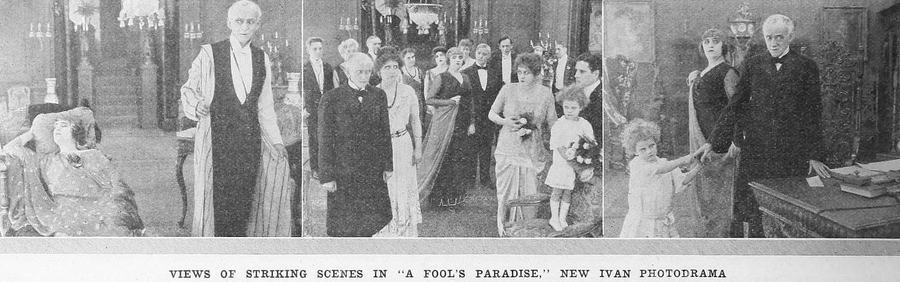
It is here, amidst the transient glamour of the seaside resort, that June, perhaps with a well-meaning but ultimately disastrous intent, persuades her father to visit Maxine, a clairvoyant. This single decision acts as the catalyst for Morgan's spectacular downfall. Maxine, a master manipulator, wastes no time in weaving a captivating prophecy: a second marriage, to a young woman, promising an "earthly paradise." The allure of recaptured youth and happiness, skillfully dangled before a lonely widower, proves irresistible. Morgan, caught in the charlatan's snare, succumbs with alarming swiftness. The next day, June discovers her father in Maxine's company, an unsettling prelude to the abrupt turn his life is about to take. While June rushes back to New York to attend to her husband, who has suffered an accident, Morgan remains in Atlantic City, citing a nebulous "business engagement." This engagement, of course, is his hasty marriage to Maxine, a union forged in delusion and destined for disaster.
Morgan's return home, two days later, with Maxine by his side, marks the end of any domestic harmony. June's reception is, understandably, frigid, an icy prelude to the escalating animosity between the two women. What begins as a cool disdain rapidly curdles into bitter enmity. Maxine, far from being a loving partner, reveals herself to be a creature of pure avarice, her eyes fixed on Morgan's wealth. Her ultimate transgression involves the very necklace Paula had bequeathed to her granddaughter. Through cunning persuasion, Maxine convinces Morgan to give it to her. The sight of this sacred heirloom adorning the throat of the woman who has usurped her mother's place and corrupted her father ignites June's fury into an inferno. In a moment of uncontrolled rage, she tears the jewel from Maxine's neck. Morgan, entering this volatile scene, is swayed by Maxine's histrionic reproaches, his judgment clouded by infatuation. In a frenzied outburst, he orders June, John, and their daughter from his home, effectively disowning his own flesh and blood. This act of profound cruelty is so egregious that even his loyal governess of three decades, a voice of moral conscience, rebukes him, warning him that he is "living in a fool's paradise." Her honesty, however, is met with the same harsh decree of banishment. The once-benevolent patriarch has become a tyrannical figure, his heart seemingly hardened by Maxine's venomous influence.
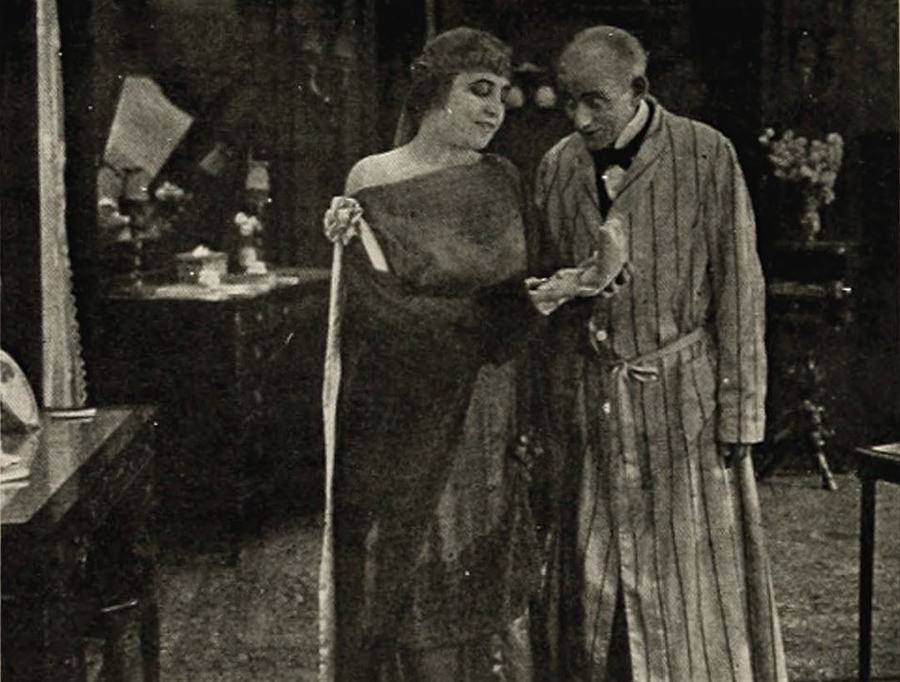
This segment of the film powerfully illustrates the destructive force of misplaced affection and the insidious nature of manipulative personalities. The swiftness with which Morgan’s character transforms from a sympathetic widower to a blind tyrant is genuinely unsettling. It echoes the themes explored in films like The Coquette, where a woman's perceived lack of virtue or social climbing can lead to ruin, though here the dynamic is reversed, with the manipulative female character leading the patriarch astray. The film doesn't shy away from depicting the stark consequences of Morgan's folly, plunging June and her family into abject poverty. Living in a cheap boardinghouse, June faces the terrifying prospect of another child, her despair fueled by the bitter realization that Maxine's malice has transformed her kind father into a brute. Her desperate plan to avoid motherhood, though fortunately thwarted by John, underscores the profound depths of her anguish and the moral quandary presented by the circumstances. This harrowing period serves as a stark contrast to the opulent, albeit toxic, world Morgan now inhabits, emphasizing the chasm between his "paradise" and his family's hell.
John, witnessing his wife's desperation, takes it upon himself to confront Morgan. His attempt to apprise Morgan of their dire situation and June's desperate notion is met with Maxine's predictable and venomous interference. She dismisses John as an unwelcome "pauper relative," further cementing her control over Morgan and isolating him from any potential truth-teller. This scene highlights Maxine's relentless hold, a psychological grip that seems almost unbreakable. However, the seeds of doubt have been sown. Morgan, though initially swayed by Maxine, cannot entirely shake off John's words. His moment of profound introspection arrives one evening while Maxine is out with her lawyer and confidant, Rufus Stone, attending a performance of "Faust." Alone, Morgan reflects on the classic tale, seeing his own life mirrored in its tragic narrative. He recognizes himself as Faust, his precious jewels (and his family's legacy) given to Maxine, his Marguerite, while Rufus, the Mephistophelean figure, laughs mockingly at his profound folly. This epiphany is a powerful dramatic device, a sudden, brutal clarity that shatters his "fool's paradise."
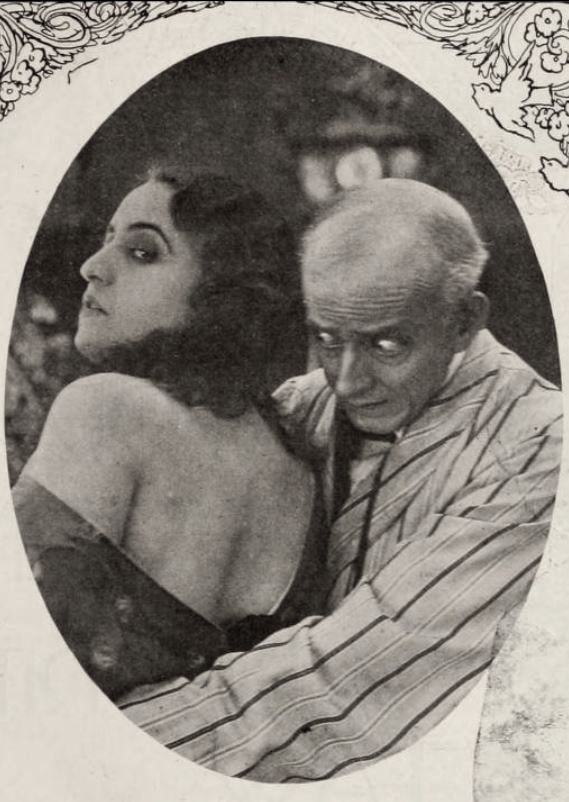
The realization is swift and devastating. Morgan, now awakened, understands the truth of his old governess's warning. The final, crushing blow comes late that night when he discovers Maxine in the arms of Rufus. His infatuation, built on a foundation of lies and self-deception, instantly transmutes into seething hatred. "You love my wife? Take her," he declares, his words cutting through the false facade of his marriage. He reclaims the stolen necklace, tearing it from Maxine's neck, a symbolic act of reclaiming his patrimony and his sanity, and orders both Maxine and Rufus from his home. This dramatic confrontation is a cathartic release, not just for Morgan, but for the audience, who have witnessed his long, agonizing descent. The swiftness of his transformation back to his senses, though perhaps a cinematic convenience, serves the narrative's moral imperative: truth, however painful, ultimately prevails over delusion. This sudden shift in fortune, driven by a shocking revelation, brings to mind other silent era dramas like Tainted Money, where financial and moral corruption similarly lead to dramatic unmaskings and reckonings.
With Maxine and Rufus banished, Morgan's first act of redemption is to restore his daughter and her family to their rightful place in his home. The reunion is undoubtedly fraught with unspoken pain and the lingering shadows of past grievances, yet it signifies a return to moral order. Maxine, ever the opportunist, attempts to salvage her situation by proposing marriage to Rufus, only to be met with a pragmatic rejection; she is now a liability, her manipulative game exposed. A week later, as the family celebrates their reunion, Maxine reappears, a spectral presence, an "ugly shadow from the past." This final, desperate attempt to regain her hold on Morgan is perhaps the most insidious. For a moment, the old man seems to waver, once again susceptible to her "poisonous charm." It is in this crucial instant that the film introduces a touch of almost mystical innocence: his little grandchild rushes to his aid, her "magic power" (a symbol of pure, unadulterated love and familial bond) overpowering the "vampire's pretense." This moment, perhaps slightly melodramatic for modern sensibilities, serves as a powerful metaphor for the triumph of genuine affection over calculated deception. It is the purity of the child, the very future Morgan almost sacrificed, that finally breaks Maxine's spell completely.
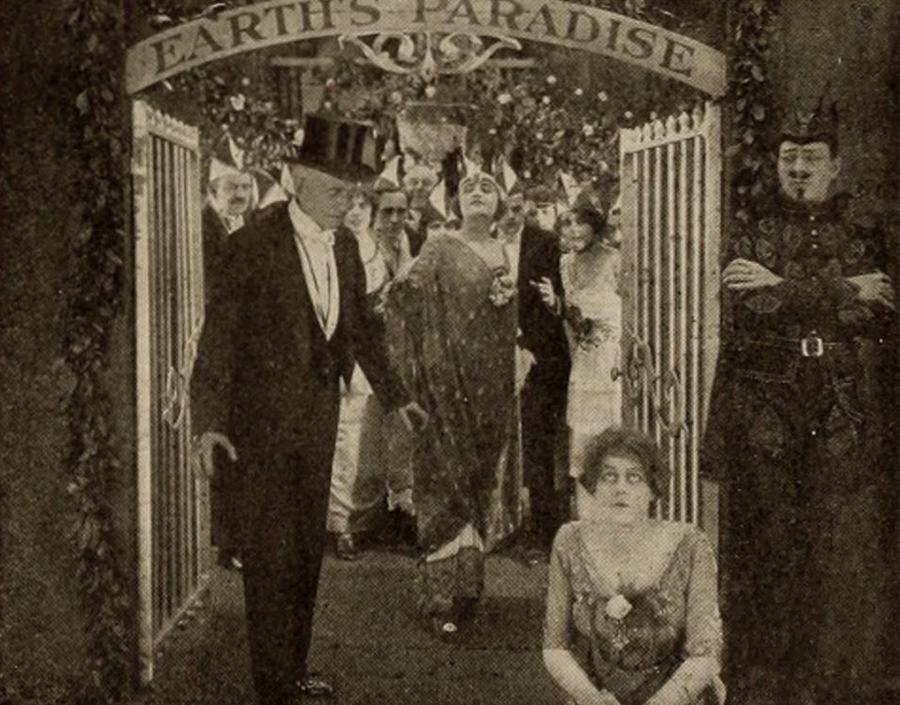
Morgan, now fully liberated, offers Maxine a liberal allowance and her freedom, a final act of magnanimity that underscores his regained composure and strength. He commands her to leave, and she vanishes into the night, a defeated specter. The ending, while restoring order, is not without its complexities. The scars of Morgan's folly undoubtedly remain, a testament to the profound damage wrought by his period of blindness. Yet, the film concludes on a note of hope, emphasizing the restorative power of family and the ultimate triumph of moral rectitude. The journey of Daniel Morgan in A Fool's Paradise is a compelling exploration of human weakness and the enduring strength of familial bonds. It reminds us that true paradise is not found in superficial promises or material gain, but in the unwavering love and loyalty of those who truly care.
While specific details on the performances of Joseph Burke as Daniel Morgan, Violet Axzelle as Maxine, and Paula Shay as June are scarce from this distance, the narrative structure itself demands strong, emotive portrayals characteristic of the silent era. Burke's Morgan would have required a nuanced transition from a grieving, benevolent patriarch to a deluded, tyrannical figure, and finally to a contrite, redeemed man. This arc, central to the film's emotional impact, would have relied heavily on expressive physicality and facial acting. Axzelle's Maxine, the antagonist, would have needed to embody a captivating yet sinister charm, her manipulations conveyed through subtle gestures and piercing gazes, making her a truly formidable cinematic villain. Shay's June, representing the wronged but resilient daughter, would have needed to convey both profound sorrow and righteous indignation, anchoring the audience's sympathy. The success of the film's moral message hinges on these stark contrasts and the audience's ability to empathize with the victims of Morgan's folly, even as they witness his own painful journey of self-discovery.
Ivan Abramson, known for his melodramatic and often morally instructive films, crafts a story that, despite its period trappings, speaks to universal themes. The film's title, A Fool's Paradise, is not merely descriptive but prescriptive, serving as a direct warning to anyone who might succumb to similar delusions. The narrative explores the destructive potential of unchecked grief, the insidious nature of manipulative individuals, and the profound importance of familial loyalty. It’s a story that could easily be updated to a modern setting, with a charismatic con artist replacing the clairvoyant, and the core message would remain just as potent. The film’s dramatic arc, moving from domestic bliss to utter chaos and then to a tentative restoration of order, is a classic template for moralistic cinema. It serves as a stark reminder that true wealth lies not in material possessions or fleeting pleasures, but in the enduring bonds of family and the clarity of moral conviction. For comparison, one might look at the moral complexities and the portrayal of societal pressures in The New South, which also delves into the consequences of personal choices within a specific cultural framework, albeit a different one.
The enduring power of A Fool's Paradise lies in its unflinching portrayal of human vulnerability. Morgan's initial goodness makes his fall all the more tragic, and his eventual awakening all the more resonant. The film's depiction of Maxine as a purely destructive force, lacking any redeeming qualities, simplifies the moral landscape, making her a clear villain against whom the forces of family and tradition must contend. This clear-cut dichotomy was a common feature of silent-era melodramas, designed to convey clear moral lessons to a broad audience. However, even within this framework, the film manages to explore the psychological toll of deception and the agonizing process of self-realization. The way Morgan's perception shifts, from seeing Maxine as his salvation to recognizing her as his tormentor, is the film's true psychological heart.
The film also subtly touches upon the fragility of promises and the weight of legacy. Paula's final wish, centered around the necklace, becomes a powerful symbol of the family's heritage and Morgan's betrayal of it. The necklace's journey from a sacred trust to a tool of manipulation, and finally back to its rightful owner, mirrors Morgan's own moral trajectory. Its symbolic value far outweighs its monetary worth, representing continuity, love, and the future. The very act of tearing it from Maxine's neck is not just about reclaiming a jewel; it's about reclaiming dignity, family honor, and a sense of self. In this regard, it shares a thematic thread with films where objects carry significant symbolic weight, influencing character actions and plot developments, much like certain artifacts in The Puppet Crown might symbolize power or legitimacy. The resolution, where the grandchild's innocence acts as the ultimate antidote to Maxine's lingering influence, is a poignant, if slightly idealistic, conclusion, emphasizing the enduring power of pure love over calculated malice. It underscores the idea that while adult folly can lead to profound suffering, the innocent spirit holds a unique power to heal and restore. Ultimately, A Fool's Paradise remains a compelling historical artifact, offering not just a glimpse into early cinematic storytelling, but a timeless narrative about the choices that define us and the enduring power of family.
IMDb —
1926
Community
Log in to comment.