DbcultAccessing Vault...
Cult Review
Senior Film Conservator
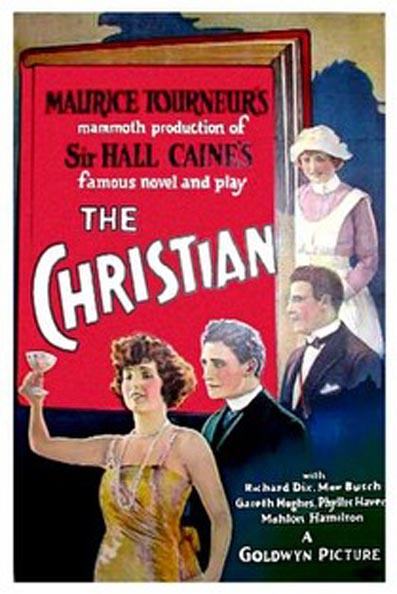
Stepping back into the cinematic landscape of 1923, one encounters 'The Christian,' a film that, even a century later, retains a compelling, if somewhat melodramatic, grip on its audience. This silent epic, penned by the formidable Hall Caine and Paul Bern, plunges viewers into a maelstrom of spiritual devotion, earthly desire, and societal hypocrisy, all set against the stark contrast of idyllic innocence and urban corruption. It's a grand narrative, ambitious in its scope, daring in its moral explorations, and ultimately, profoundly tragic in its resolution. For those accustomed to the nuanced psychological dramas of today, 'The Christian' offers a fascinating glimpse into the storytelling sensibilities of an earlier era, where emotions were writ large and moral dilemmas were often presented with stark, unforgiving clarity.
The film commences on the windswept, almost mystical shores of the Isle of Man, a setting that immediately imbues the narrative with a sense of ancient purity and untainted aspiration. Here, we meet Glory (Mae Busch) and John (Gareth Hughes), childhood sweethearts whose bond is as elemental as the island itself. Their dreams, however, are already diverging. Glory, with an innate compassion, envisions a life of service as a nurse, a path of healing and tangible good. John, on the other hand, is drawn to a more ascetic calling, aspiring to the spiritual rigor of the monastery. This initial dichotomy sets the stage for the profound conflicts that will soon engulf their lives, a struggle between the sacred and the profane, the spiritual and the deeply human. It’s a classic setup, yet handled with an earnestness that transcends mere cliché, laying the groundwork for a truly monumental fall from grace, or perhaps, a torturous path to a different kind of salvation.
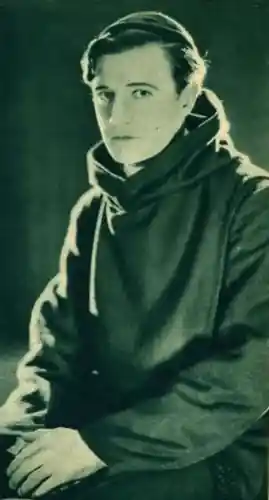
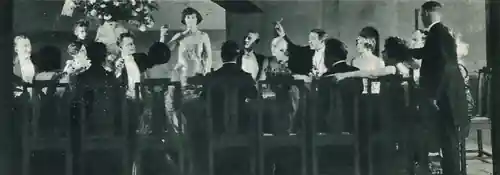
Their journey to London marks a pivotal turning point, a descent from the pastoral Eden into a metropolitan Babylon. This transition is deftly handled, visually contrasting the open, natural beauty of the island with the claustrophobic, often morally murky confines of the city. London, in 'The Christian,' is not merely a backdrop; it is a character in itself, a crucible that tests, tempts, and ultimately transforms its inhabitants. Glory, instead of finding her calling in the sterile wards of a hospital, is drawn into the dazzling, yet perilous, orbit of the theater. Mae Busch, with her expressive features, perfectly captures Glory’s transformation from wide-eyed ingenue to a celebrated stage star. Her rise is meteoric, but it comes at a cost, hinting at the compromises and moral ambiguities inherent in her newfound profession. This narrative arc, where an innocent is exposed to the corrupting influence of a grand city, is a timeless one, echoing through countless literary and cinematic works, but here, it feels particularly poignant, given the spiritual stakes involved.
Meanwhile, John's own spiritual journey takes an unforeseen detour. His commitment to monastic life, once seemingly inviolable, begins to fray under the relentless pull of his earthly love for Glory. Gareth Hughes portrays John's internal torment with remarkable intensity, his silent performance conveying the profound struggle between his vows and his heart. The film excels in showcasing this agonizing conflict, portraying John not as a weak-willed individual, but as a man caught between two absolute, irreconcilable forces. His eventual renunciation of his vows is not a moment of liberation, but of profound anguish, a testament to the power of human connection over even the most sacred of commitments. This struggle for spiritual purity against overwhelming human desire is a theme that resonates deeply, finding parallels in films that explore the human condition under duress, much like the intense personal battles fought in The Unknown (1921), where characters are pushed to their psychological limits.
The true antagonist emerges in the form of Lord Robert Ure (Harry Northrup), a character who personifies aristocratic decadence and manipulative malice. Ure is not merely a villain; he is a force of societal corruption, a man who preys on the vulnerable and delights in sowing discord. His prior betrayal of Glory's friend, Polly Love (Phyllis Haver), serves as a chilling prologue to his more expansive wickedness, establishing him as a clear and present danger. Polly's tragic fate underscores the precarious position of women in this era, highlighting the devastating consequences of societal indifference and male perfidy. This subplot, though secondary, adds a layer of grim realism to the film's moral landscape, suggesting that the city's glamour often conceals profound cruelty.
Ure's most insidious act involves inciting the London populace against John. He fabricates a malicious lie: that John has prophesied the world's end on the eve of the Epsom Downs Derby, a grand social event. This manipulation of public sentiment is chillingly effective, transforming John from a conflicted spiritual seeker into a perceived harbinger of doom. The film's depiction of mob mentality is particularly potent, showcasing how easily fear and misinformation can be weaponized to turn a crowd into a dangerous, unthinking entity. This theme of collective hysteria and its devastating consequences is remarkably prescient, resonating with the anxieties explored in films like The Golem, where societal fear manifests in destructive, uncontrollable forces. The sheer power of a rumor, amplified by a cynical manipulator, to derail a life is a stark warning that transcends the silent film era.

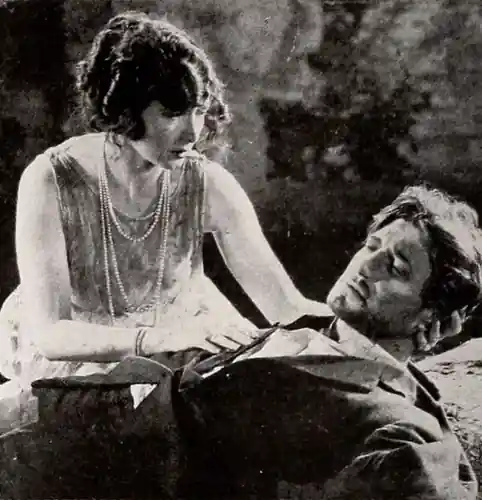
Driven by what he believes is a divine imperative to save Glory's soul from the perceived sinfulness of her theatrical life, John embarks on a desperate, misguided mission to kill her. This moment is the narrative's emotional zenith, a collision of extreme piety and profound human love. It’s a testament to the film's boldness that it dares to present such a morally ambiguous act, forcing the audience to grapple with the terrifying consequences of zealotry. However, in a powerful reversal, Glory, instead of succumbing to fear, confronts John with the undeniable truth of her love. Mae Busch's performance here is outstanding, her emotional honesty breaking through John's fanatical resolve. It's a moment of profound recognition, where the purity of human affection triumphs, however briefly, over dogmatic extremism. This scene, more than any other, encapsulates the film's central conflict: the tension between rigid spiritual doctrine and the boundless, often messy, reality of human connection. The raw emotionality recalls the intense, almost operatic dramas of the period, where personal conviction could lead to both salvation and ruin.
Confused, disoriented, and stripped of his misguided purpose, John wanders into the bustling streets, a solitary figure adrift in a sea of hostility. The mob, fueled by Ure's lies and their own burgeoning panic, descends upon him, delivering a mortal blow. This brutal, unceremonious end for John is a stark commentary on the destructive power of collective ignorance and the vulnerability of the individual against an incited populace. It's a tragic culmination, highlighting the film's unflinching exploration of human fallibility and the often-fatal consequences of societal prejudice. The violence is not gratuitous; it is a direct result of the narrative threads woven throughout, a stark, visceral reminder of the dangers of unchecked power and manipulated truth. In its depiction of an individual overwhelmed by external forces, it shares a thematic resonance with films like Stranded, where characters find themselves at the mercy of circumstances beyond their control.
In his dying moments, John and Glory are united in marriage, a poignant, bittersweet ceremony performed amidst the encroaching shadows of death. It's a final, desperate act of love, a symbolic triumph of their bond over the forces that sought to tear them apart. As John breathes his last in Glory's arms, the scene is imbued with a profound sense of tragic beauty, a testament to enduring affection even in the face of insurmountable odds. This ending, while devastating, offers a glimmer of redemption, suggesting that true love, even if tragically curtailed, possesses a power that transcends earthly suffering and societal condemnation. The emotional weight of this conclusion is immense, leaving a lasting impression that speaks to the timeless appeal of grand, romantic tragedies.
The performances across the board are commendable, particularly given the demands of silent acting, where every gesture, every facial expression, had to convey layers of meaning without the benefit of dialogue. Gareth Hughes as John embodies the internal conflict with a palpable intensity, his eyes often betraying the turmoil within. Mae Busch's Glory is a revelation, her journey from innocent islander to resilient star and devoted lover providing the emotional anchor of the film. Harry Northrup's portrayal of Lord Robert Ure is suitably villainous, a caricature of aristocratic malevolence that is both despicable and compelling. The supporting cast, including Joseph J. Dowling, William F. Moran, and Richard Dix, contribute to the rich tapestry of London society, each playing their part in the unfolding drama with conviction. The film's ability to extract such nuanced performances without spoken words is a testament to the actors' skill and the directorial vision that guided them.
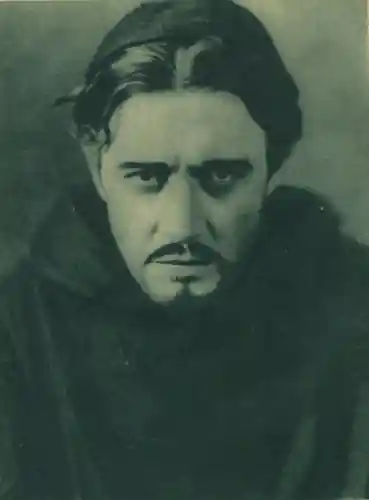
Visually, 'The Christian' is a fascinating artifact of its time. The cinematography effectively captures both the bucolic charm of the Isle of Man and the bustling, often oppressive atmosphere of London. The use of light and shadow, characteristic of the silent era, enhances the dramatic tension, particularly in scenes of John's internal struggles or Ure's conspiratorial machinations. The set designs for the theatrical sequences are particularly impressive, conveying the glamour and artificiality of Glory's new world. While some of the narrative pacing might feel deliberate to a modern audience, it allows for a deeper immersion into the characters' emotional states and the unfolding moral dilemmas. The scale of the production, with its large crowds and dramatic set pieces, speaks to the ambition of early Hollywood, seeking to tell stories of epic proportions with nascent cinematic tools. The visual storytelling, relying heavily on symbolic imagery and exaggerated expressions, is a masterclass in silent film technique, drawing the audience into the narrative without a single spoken word.
Thematically, 'The Christian' delves into profound questions that remain relevant today. It explores the nature of faith, questioning whether true spirituality lies in rigid adherence to doctrine or in the boundless capacity for human love and compassion. It critiques societal hypocrisy, exposing how easily moral pronouncements can be twisted for personal gain or to justify cruelty. The film's examination of mob mentality serves as a timeless warning against the dangers of misinformation and collective hysteria. And at its heart, it is a powerful, if tragic, love story, demonstrating the enduring strength of human connection against overwhelming odds. The conflict between spiritual aspiration and worldly temptation, a cornerstone of the narrative, echoes the dilemmas faced by characters in films like As Ye Repent, where moral choices have profound, lasting consequences.
One cannot discuss 'The Christian' without acknowledging its literary origins in Hall Caine's popular novel. The film adaptation manages to capture much of the novel's grand scope and moral earnestness, translating its complex themes into a visual language. While silent films often condensed or altered their source material, 'The Christian' largely retains the spirit and key dramatic beats of Caine's work, offering a faithful, yet distinctly cinematic, interpretation. The collaboration between Caine and Paul Bern in adapting the screenplay clearly aimed to preserve the narrative's integrity while making it accessible to a broader audience through the emerging medium of film. This fidelity to source material, while challenging, often resulted in films that felt rich and substantial, providing a depth that was sometimes lacking in purely original screenplays of the era.
In conclusion, 'The Christian' (1923) stands as a significant, albeit often overlooked, work of silent cinema. It is a film that bravely tackles complex moral and spiritual questions, presenting them through a compelling narrative and powerful performances. While its melodramatic flourishes might occasionally feel dated, its core themes of faith, love, betrayal, and the destructive power of societal prejudice remain remarkably pertinent. It serves as a potent reminder of the silent era's capacity for profound storytelling and its ability to engage audiences with weighty subject matter. For cinephiles and historians alike, it offers a rich tapestry of early 20th-century filmmaking, a testament to the enduring power of dramatic narrative. It’s a film that compels introspection, challenging viewers to consider the true meaning of devotion and the often-perilous journey of the human heart. The enduring impact of its tragic love story and its critique of societal failings secure its place as a fascinating and relevant piece of cinematic history, inviting contemporary audiences to reflect on timeless human struggles. The sheer ambition in its storytelling, much like the audacious narratives found in Peer Gynt, marks it as a film unafraid to explore the grand complexities of human existence.
The journey of John and Glory, from the pastoral idyll of the Isle of Man to the tumultuous streets of London, is more than just a plot; it's an allegory for the human soul's perennial struggle. Their story, rich with spiritual fervor, earthly passion, and societal condemnation, resonates with a timeless intensity. The film’s audacity in portraying a protagonist driven to such extremes by his faith, only to be redeemed by the very love he sought to suppress, is a powerful statement. It challenges the viewer to question the rigidity of dogma and embrace the messy, unpredictable, yet ultimately profound, nature of human connection. The film's legacy lies not just in its historical significance as a silent epic, but in its continued ability to provoke thought and stir emotion, proving that some narratives, like some loves, are truly immortal, even if their characters are not. The confluence of personal sacrifice and grand societal forces, much like the intricate moral landscapes explored in Der Stellvertreter, provides a profound reflection on humanity's often contradictory impulses.
IMDb —
1918
Community
Log in to comment.