DbcultAccessing Vault...
Cult Review
Senior Film Conservator
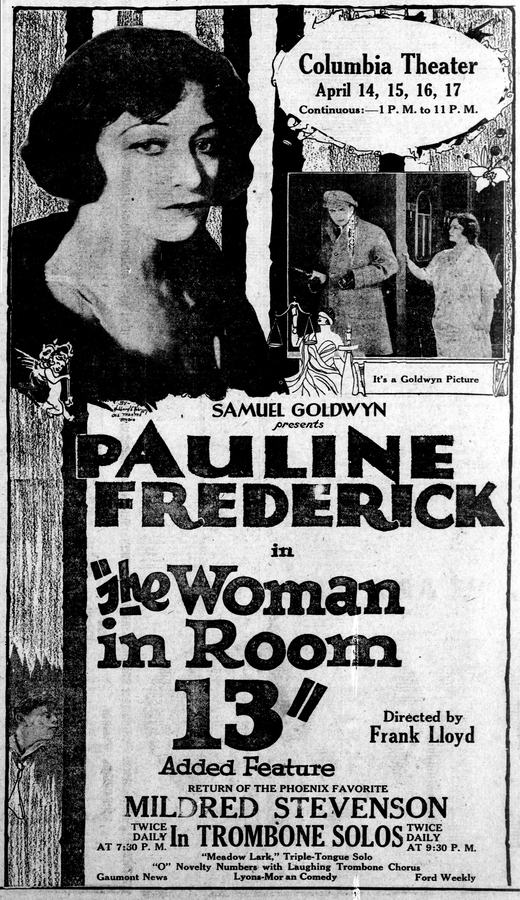
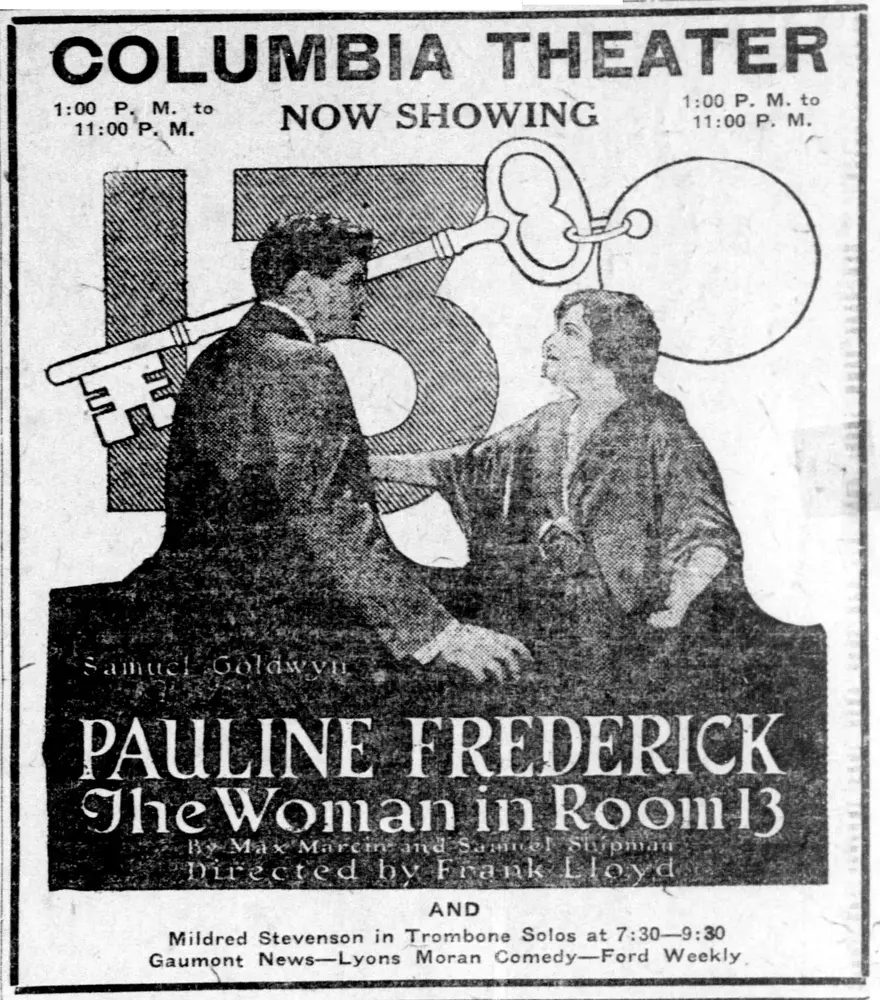
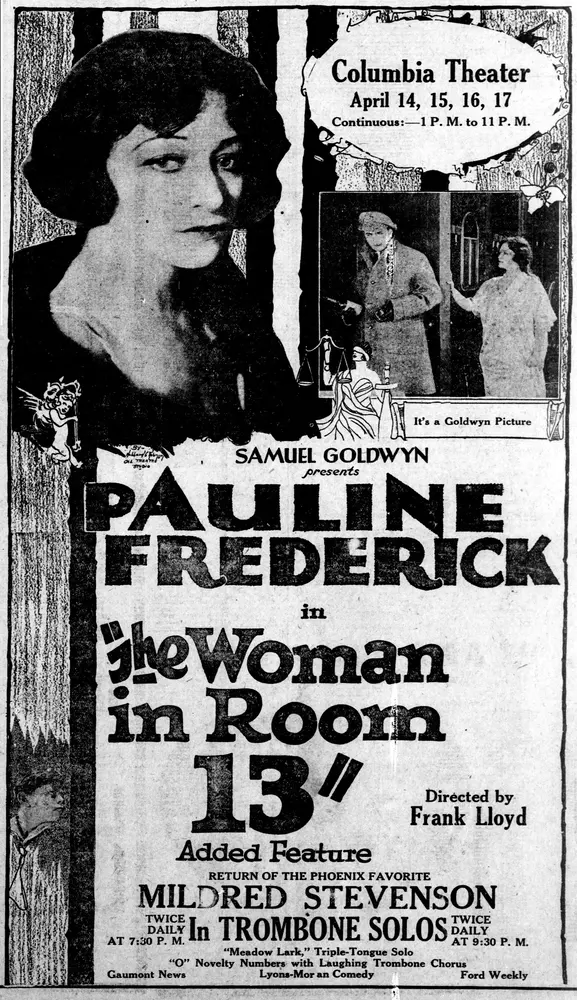
Somewhere between the clattering Charleston and the first sour waft of bootleg gin, The Woman in Room 13 stages a marital bloodletting so exquisitely calibrated it feels less like a narrative and more like a psychological vivisection. Director Henry Kolker—never elevated to the pantheon where Lubitsch and DeMille sip immortality—nevertheless wields silence here like a scalpel, carving open the corseted respectability of post-WWI America and revealing the writhing envy beneath.
Laura’s first glimpse of John Bruce—her badge-bedecked spouse—sprawled across another woman’s lap is framed through a keyhole iris, a visual gag that instantly weaponizes the audience’s voyeurism. The camera does not cut away; it lingers until discomfort metastasizes into complicity. In that single shot Kolker indicts both the cuckolded wife and every spectator peering through the nickelodeon’s invisible peephole. Divorce, in 1920, was social hemlock; Laura drinks it like sacramental wine.
Enter Paul Ramsey—played by Sidney Ainsworth with the brittle smile of a man who has read every self-help tract on masculinity yet remains terminally unsure where to place his hands during a kiss. Ramsey’s love is indistinguishable from acquisition: he courts Laura with the same methodical fervor he brings to closing balance sheets. Their second marriage is shot in a cathedral of paperwork, a registrar’s office so cavernous the echo of the stamping seal becomes a secular Amen.
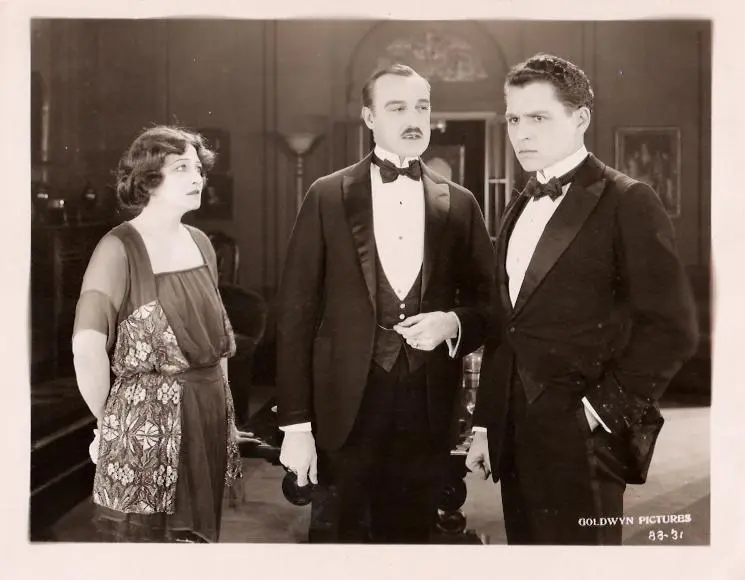
Dick Turner—Richard Tucker in rakish profile, mustache trimmed to lethal points—arrives like Lucifer in a tuxedo, promising Ramsey a frontier salary hefty enough to purchase Laura’s indefinite absence. Tucker’s body language is pure carnal algebra: he leans in fractions too close, calculates the angle of a gaze, solves for conquest. The actor’s most chilling moment is not when he grips Laura’s wrist but when he releases it, confident that gravity itself will deliver her back to him.
The film’s midpoint pivots on a spatial irony worthy of Hitchcock: Ramsey commissions a guardian for Laura without knowing the only available candidate is her forsaken first husband, John Bruce. Charles Clary plays Bruce like a man rehearsing his own resurrection—every cigarette flick, every doffed hat carries the stale perfume of reclaimed authority. When Laura recognizes him outside her brownstone, the recognition is wordless: a flicker of pupils, a spasm of gloved fingers. The scene is a masterclass in silent duet, two faces negotiating history without a single intertitle.
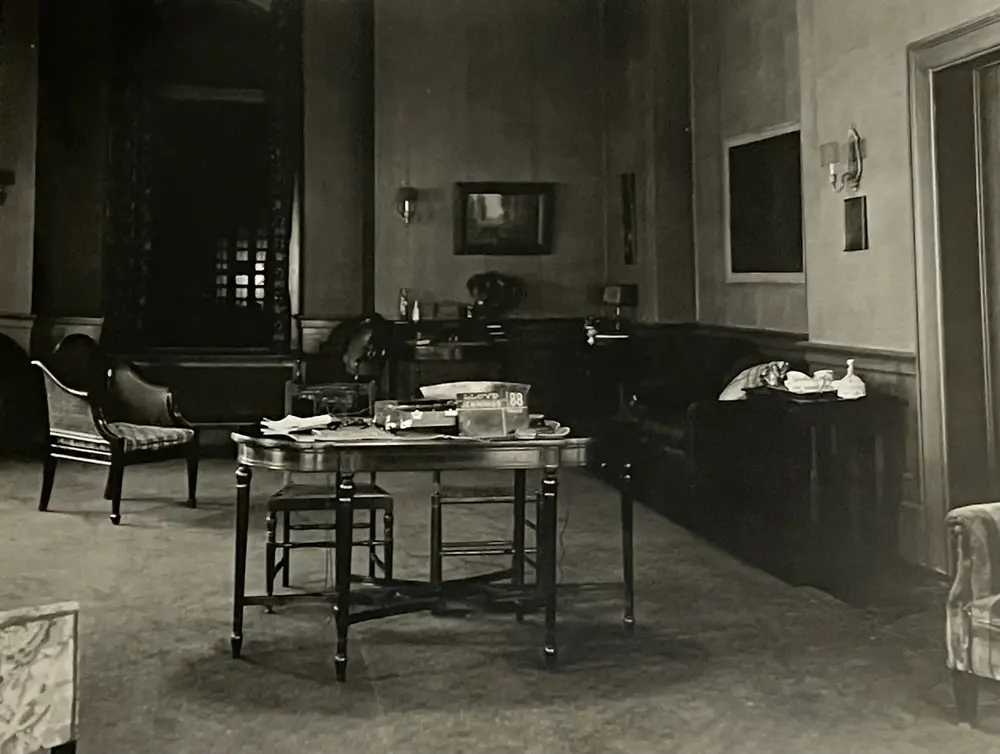
Room 13 itself is a Gesamtkunstwerk of dread: art-deco arabesques claw across wallpaper like ivy strangling a mausoleum; a gramophone horn yawns like a Cerberian maw; the number 13 is stenciled so aggressively it seems to vibrate. Turner’s former mistress—Marguerite Snow in a jet-beaded dress that drinks light—glides out, leaving Laura alone with the predatory host. Nothing overtly violent occurs; instead Kolker orchestrates a slow erosion of spatial integrity, the camera retreating until Laura is pinned inside a diminishing quadrilateral of floor.
The overheard conversation—Ramsey in the adjacent room, ear pressed to a water-glass against the wall—unfolds via a bravura auditory hallucination: we see no sound wave, yet the image quivers with imagined dialogue. It is cinema as synesthetic torture. When Ramsey finally blasts open the door, the splintering wood ejaculates not just splinters but the entire repressed narrative of American masculinity: ownership, suspicion, the pistol as wedding ring.
The courtroom coda—often dismissed as moralistic sop—plays more like public shaming as folk opera. Laura’s confession is shot from the jury’s POV: we become the twelve glaring faces, the spectral thirteenth juror. Her acquittal of Ramsey hinges on the premise that a woman’s humiliation is currency enough to purchase male freedom. The film does not endorse this calculus; it merely records it with the cold stare of an ethnographer dissecting a cargo cult.
Comparisons? If The Iron Woman flays industrial philanthropy, and The Black Stork weaponizes eugenics, then Room 13 cauterizes marriage itself. Its DNA echoes through Russian fatalism and anticipates noir’s post-war cynicism. Yet its true grandchildren are the post-MeToo melodramas where consent is retroactively excavated like dinosaur bone.
Technically, Kolker employs chiaroscuro like a renaissance apprentice let loose in a power plant: faces half-swallowed by umbra, eyeballs glazed with klieg-light sweat. The tinting—amber for domestic interiors, cadaverous cyan for nocturnal corridors—survives only in fragmentary 35-millimeters at Cinémathèque, yet even the stills throb with chromatic anxiety. The intertitles, penned by Percival Wilde, crackle with epigrammatic venom: “A promise broken is a bone reset wrong—forever aching before rain.”

Performances? Pauline Frederick’s Laura is a portrait in controlled corrosion; watch how her gloved hand trembles atop a banister yet voicelessly commands the frame. Ainsworth’s Ramsey exudes the brittle confidence of a man who has memorized etiquette manuals but mistrusts their footnotes. Tucker’s Turner is pure silk-sheathed id, the kind of man who would quote Oscar Wille while picking your pocket and thank you for the privilege.
The film’s disappearance for decades—only one reel resurfaced in a Slovenian monastery in 1998—has shrouded it in cultish mystique. Yet even in truncated form its ideological fangs remain unblunted. Contemporary viewers, marinated in Instagram confessionals, may smirk at the melodrama; but the core transaction—female humiliation as social lubricant—has merely migrated to newer platforms.
Restoration efforts by the San Francisco Silent Film Coalition have grafted a new 4K scan onto a percussive score by Laura Rossi—xylophones mimicking typewriter clatter, bass drums echoing gavel thuds. The result is less nostalgia than necromancy: a century-old skeleton dancing in digital sinew.
Verdict: The Woman in Room 13 is not a relic; it is a bruise that keeps re-blooming. It whispers that every marriage is a Room 13, every vow a loaded chamber. Enter at your own ethical peril, but enter you must—because the door, splintered though it is, has never truly closed.
IMDb 6.8
1930
Community
Log in to comment.