DbcultAccessing Vault...
6.6/10
Senior Film Conservator
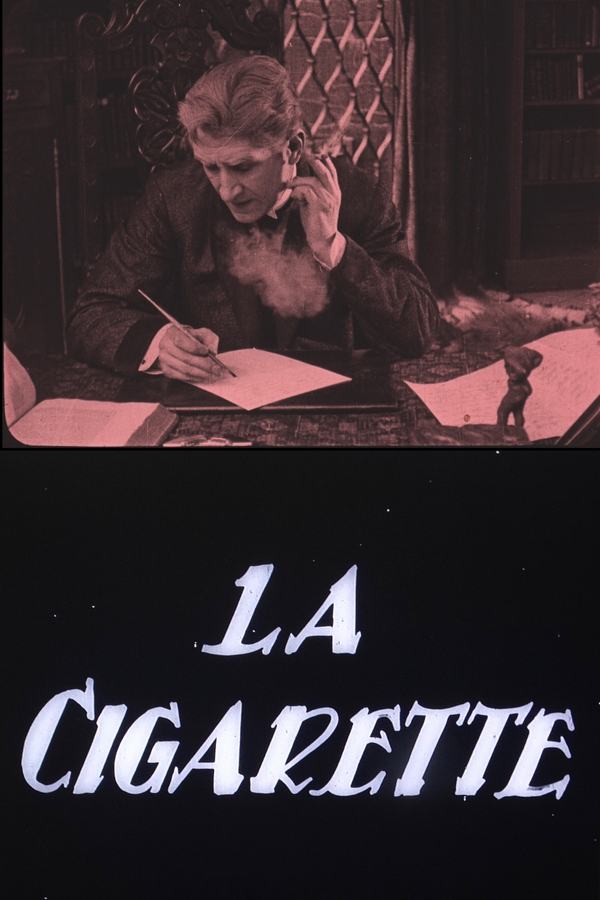
A definitive 6.6/10 rating for a film that redefined the boundaries of cult cinema. The Cigarette remains a cornerstone of transgressive art.
Cinema's silent era often conjures images of Chaplin's pathos or Murnau's shadows, yet Jacques de Baroncelli's The Cigarette (1919) remains a startlingly modern dissection of marital implosion. This isn't mere melodrama—it's a clinical study of emotional necrosis performed with surgical precision. Baroncelli transforms a simple premise—a man poisoning his own cigarette to let chance determine his expiration—into an agonizing exploration of how love curdles into something resembling abstract art. The museum setting becomes devastating metaphor: Henri Dubois (Gabriel Signoret) treats his marriage like one of his curated artifacts, something to be preserved behind glass rather than inhabited.
Signoret delivers a career-defining portrayal of aristocratic decay. Watch how his fingers tremble not when preparing the lethal cigarette, but when brushing against his wife's glove—a seismic tremor of longing disguised as accident. His Henri Dubois moves through palatial rooms like a ghost haunting his own life, the crisp tuxedo merely a burial shroud for living decay. Opposite him, Andrée Brabant's Élise remains the film's brilliant enigma. Her performance rejects the era's tendency toward hysterical telegraphing; instead, she weaponizes stillness. That faint smile during the opera isn't cruelty but tragic obliviousness—a woman navigating marital waters she doesn't realize have already evaporated.
The supporting cast orbits this dying star with devastating effect. Jules Raucourt's boisterous Comte de Vigny—unwittingly selecting the fatal cigarette during a post-opera brandy—embodies everything Henri believes himself no longer to be: virile, desired, alive. Genevieve Williams' turn as the housemaid Marie offers the film's moral compass through horrified glances, her trembling hands as she serves the poisoned case screaming what aristocratic manners forbid.
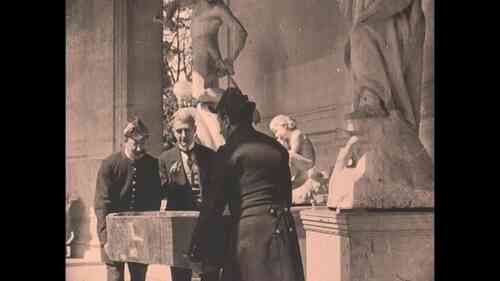
Baroncelli and cinematographer Georges Lucas employ poison as visual language. The notorious cigarette case gleams with malevolent opulence under key lights, its mother-of-pearl inlay resembling bone. When Henri places the poisoned cylinder among its brethren, the insert shot frames it like a coffin among flowers. This isn't the expressionist shadows of Dødsklokken but clinical illumination—despair viewed under museum-quality lighting.
The film's visual crescendo remains Henri's frantic midnight dash through Paris. Baroncelli cross-cuts between three movements: the Comte's languid smoking in a velvet armchair, Élise playing Debussy at the piano, and Henri's wild sprint through rain-slicked streets. The sequence anticipates Hitchcock's bomb-under-the-table theory by decades, transforming a simple cigarette's burn-down into unbearable suspense. Streetlights smear across wet asphalt like desperate brushstrokes, Henri's reflection fracturing in shop windows—a man literally coming apart at the seams.
Context transforms this marital chamber piece into historical artifact. Released barely a year after the Armistice, The Cigarette channels collective trauma through intimate apocalypse. Henri's Russian roulette with the cigarette case mirrors a generation's flirtation with oblivion—why not let chance decide when the world has proven life's fragility? This distinguishes it profoundly from the patriotic fervor of Her Country's Call or the battlefield reportage of On the Firing Line with the Germans. Baroncelli explores internal battlefields where shrapnel takes psychological form.
The film shares spiritual DNA with Still Waters' exploration of repressed emotion, yet escalates to suicidal theatrics. Henri doesn't merely contemplate self-destruction; he aestheticizes it, transforming his demise into a curated exhibition. The museum setting ceases to be backdrop and becomes central metaphor—this marriage belongs behind glass with descriptive placards. "Homo melancholicus, circa 1919. Note the ritualized self-destruction."
Modern viewers may initially perceive Élise as passive victim, but Baroncelli smuggles feminist critique into the subtext. Henri never confronts his wife—he constructs an elaborate suicide that frames her as murderer-by-neglect. The poisoned cigarette becomes ultimate passive-aggression, a bourgeois weapon demanding she shoulder eternal guilt for his existential crisis. Consider how the film contrasts with The Girl Who Came Back's female resilience or The Testing of Mildred Vane's examination of societal pressure. Élise's "crime" isn't infidelity but emotional independence—she reads poetry in the garden rather than hanging on Henri's every sigh.
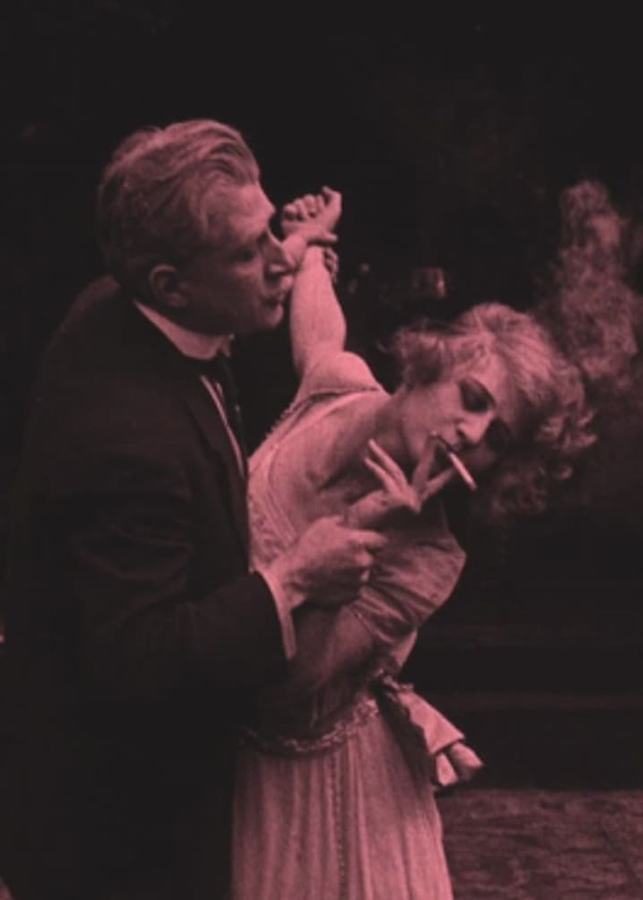
The true antagonist isn't marital discord but mathematics. Baroncelli visualizes probability with chilling elegance—twelve identical cigarettes become chambers in a revolver. When dinner guests avoid the poisoned one through arbitrary selection, the relief curdles into disappointment on Henri's face. He didn't truly want death; he wanted Élise to witness his near-death and repent. This psychological complexity distinguishes it from the moral certainties of The Long Arm of the Law. Henri isn't villain or victim but a man so detached from feeling he can only experience emotion through lethal theater.
The film's greatest miracle arrives when Henri realizes someone else might die by his hand. His sprint through Paris becomes the most passionate act of their marriage—a desperate, muddy, inelegant scramble to preserve life. Irony hangs thick as cigar smoke: only by nearly destroying his rival does Henri remember what desire feels like. The Comte's salvation becomes Henri's rebirth.
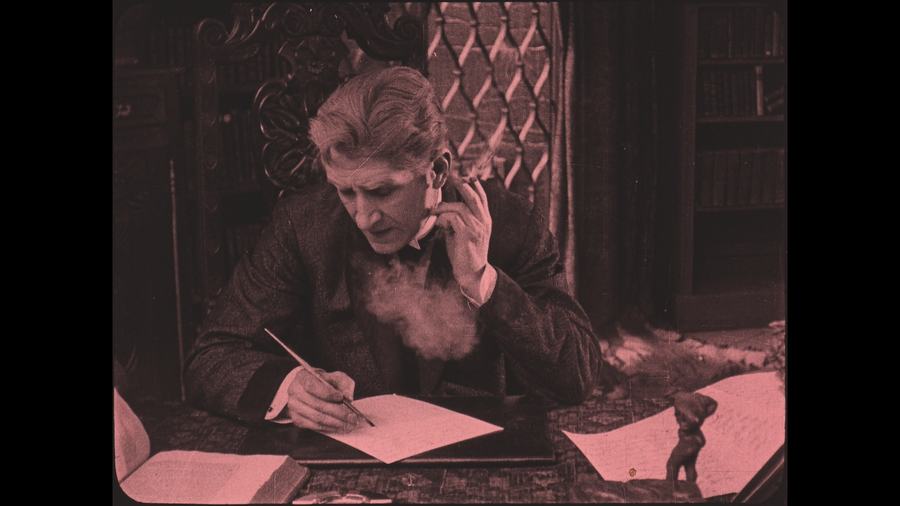
Contemporary viewers must recontextualize the cigarette's symbolic weight. In 1919, smoking represented sophistication, not cancer. The ritual—case presentation, selection, lighting—carried erotic and social significance. When Élise offers the case to guests, it's an intimate gesture bordering on flirtation. Henri's poisoning perverts this elegant social dance into something mortally dangerous, much like the war perverted Edwardian elegance into mechanized slaughter. Baroncelli understood that the greatest horrors occur when civilization's rituals hide poison.
That The Cigarette survives at all feels miraculous. Many contemporaries like Sonho de Valsa or Den skønne Evelyn exist only in fragments or stills. Its restoration reveals Baroncelli as Europe's answer to Von Stroheim—a poet of decay less interested in plot than psychological vivisection. The film's DNA surfaces in unexpected places: the marital gamesmanship of Who's Afraid of Virginia Woolf?, the suicidal theatrics of The Fire Within, even the contained suspense of Locke. Yet it remains sui generis—a film that treats marriage as both autopsy and seance.
The final scene lingers like nicotine stains on fingers: Henri staring at the soggy, ruined cigarette in his palm, the rain having washed away the poison. It's not absolution but transformation—the man who wanted to die by chance now realizes survival itself is the ultimate gamble. Élise watches from the doorway, her expression unreadable. Will they rebuild? Or has the poison merely changed form? Baroncelli leaves us in the gray zone between romantic tragedy and existential farce—the space where most real marriages reside.
IMDb 7.8
1916
Community
Log in to comment.